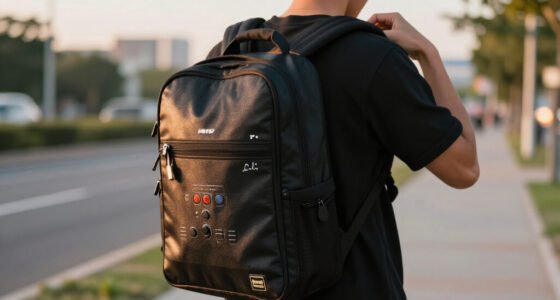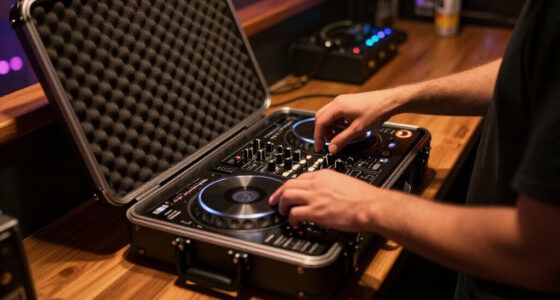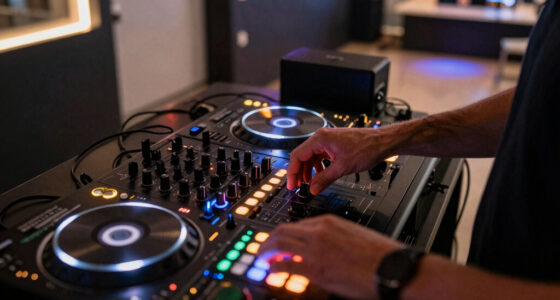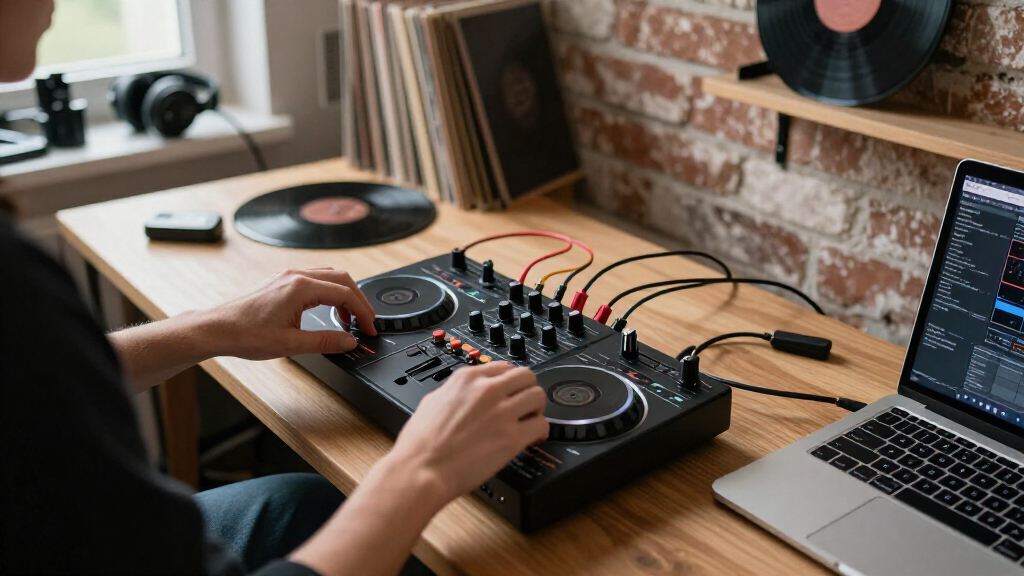
Compact DJ controllers let you mix, scratch, and perform without hauling a full rig, but the category splits sharply between ultra-portable practice tools and shrunken performance controllers that can handle real gigs. The Pioneer DJ DDJ-FLX4 stands out as the best overall pick because it keeps full-size jog wheels, 16 performance pads, and a proper layout in a body that still fits in a backpack. If you want to ditch the laptop entirely, the Numark Mixstream Pro Go is the strongest standalone option with built-in streaming and battery power, while the Hercules DJControl Starlight wins on sheer portability for practice anywhere. The main tradeoff you’ll face: the smaller the controller, the more you sacrifice jog wheel feel, pad count, and physical controls. Read on for the full breakdown of all 12 models and which one fits your setup.

Get audio and creator gear delivered free — and shop member deals
- Fast, free delivery on millions of items
- Access to Prime Big Deal Days deals on October 6–7
- Prime Video, Amazon Music and more included
Complete the kit


Key Takeaways
- The Pioneer DJ DDJ-FLX4 earned the top spot because it’s the only compact option here that scales from bedroom practice to paid gigs without feeling like a compromise — full-size jogs and 16 pads in a travel-friendly chassis.
- Standalone capability is the biggest dividing line in this lineup: the Numark Mixstream Pro Go and Mixstream Pro+ work without a laptop, while every other controller here depends on one, which changes where and how you can play.
- The smallest controllers (Numark DJ2GO2 Touch, Hercules Starlight) cost the least but have tiny touchstrips instead of jog wheels — great for learning beatmatching basics, frustrating for scratch technique.
- Two DDJ-FLX4 listings and two Starlight listings appear in this comparison; the bundles differ only in accessories, so the cheaper bare unit is usually the smarter buy unless you specifically need the case.
- Stems control is now reaching even budget compact controllers, as the Numark MixTrack Go shows, but the implementation on small hardware is limited compared with full-size units — don’t buy a compact controller primarily for stems.
| Numark Party Mix II DJ Controller with Built-in Lights |  | Best for Party-Focused Beginners | DJ Decks: 2 | Built-in Lights: Yes | Compatibility: Mac and Windows | VIEW LATEST PRICE | See Our Full Breakdown |
| Pioneer DJ DDJ-FLX4 2-Channel DJ Controller – Black Bundle with Carrying Case and Polishing Cloth |  | Best Overall | Number of Channels: 2 | Connectivity: USB Type-C, Bluetooth | Supported Software: rekordbox, Serato DJ Lite, djay | VIEW LATEST PRICE | See Our Full Breakdown |
| Numark Mixstream Pro Go Portable DJ Controller |  | Best Standalone Portable | Power: 12V/3.0A built-in rechargeable battery | Display: 7-inch HD touchscreen with adjustable brightness | Jog Wheels: 6-inch | VIEW LATEST PRICE | See Our Full Breakdown |
| Hercules DJControl Starlight Portable 2-Channel DJ Controller with USB-C to USB-A Adapter |  | Best Pocket-Sized Value | Channels: 2 | Connectivity: USB-C to USB-A | Performance Pads: 4 per deck | VIEW LATEST PRICE | See Our Full Breakdown |
| Hercules DJControl Starlight – Compact DJ Controller with Light Show |  | Best Ultra-Light Starter | Number of Channels: 2 | Connectivity: USB | Power Source: Battery powered | VIEW LATEST PRICE | See Our Full Breakdown |
| Numark MixTrack Go Compact Bluetooth DJ Controller with Stems Control |  | Best for Wireless Mobile Setup | Connectivity: Bluetooth MIDI, USB-C, 1/8-inch main and headphone outputs | Power: USB-C via laptop, tablet, smartphone, or power bank | Software: Serato DJ Lite, Algoriddim djay; supports Serato DJ Pro and VirtualDJ | VIEW LATEST PRICE | See Our Full Breakdown |
| Hercules DJControl Inpulse 200 MK3 – Beginner DJ Controller with Serato Lite |  | Best for Learning the Fundamentals | Decks: 2 | Jog Wheels: 2 | Pads: 2 x 4 with 4 modes (Hot Cue, Stems, FX, Sampler) | VIEW LATEST PRICE | See Our Full Breakdown |
| Numark Mixstream Pro+ DJ Controller |  | Best Standalone All-in-One | Jog Wheels: 6 inches | Display: 7-inch touchscreen with adjustable brightness | Connectivity: Wi-Fi, Bluetooth, 2x USB, SD card slot | VIEW LATEST PRICE | See Our Full Breakdown |
| Numark Party Mix III Bluetooth DJ Controller with Built-in Lights |  | Best Party-Starter Value | Decks: 2 | Connectivity: Bluetooth MIDI, USB-C, RCA main output, 1/8-inch headphone output | Power: USB-C from laptop, tablet, smartphone, or power bank | VIEW LATEST PRICE | See Our Full Breakdown |
| AlphaTheta Pioneer DJ DDJ-FLX2 2-Channel DJ Controller, USB-C |  | Best Software Ecosystem | Channels: 2-channel | Connectivity: Bluetooth and USB-C | Supported Software: rekordbox, Algoriddim djay, Serato DJ Lite | VIEW LATEST PRICE | See Our Full Breakdown |
| Pioneer DJ DDJ-FLX4 2-Channel DJ Controller, 16 Pads, Graphite |  | Best for Streaming and Mobile Gigs | Channels: 2 | Performance Pads: 16 | Connectivity: USB, Bluetooth | VIEW LATEST PRICE | See Our Full Breakdown |
| Numark DJ2GO2 Touch Compact DJ Controller |  | Best Ultra-Portable Pocket Setup | Channels: 2 | Jog Wheels: Touch-capacitive | Connectivity: USB, 1/8-inch headphone output, 1/8-inch main output | VIEW LATEST PRICE | See Our Full Breakdown |
| compact DJ controller | Connectivity | Jog Wheels | Performance Pads |
|---|---|---|---|
| Numark Party Mix II DJ Control | USB | — | Yes, with 4 DJ Pad FX |
| Pioneer DJ DDJ-FLX4 2-Channel | USB Type-C, Bluetooth | — | — |
| Numark Mixstream Pro Go Portab | Wi-Fi, Bluetooth, SD card slot, USB | 6-inch | 4 dual-layer pads per deck |
| Hercules DJControl Starlight P | USB-C to USB-A | 2 | 4 per deck |
| Hercules DJControl Starlight | USB | — | — |
| Numark MixTrack Go Compact Blu | Bluetooth MIDI, USB-C, 1/8-inch main and headphone outputs | Capacitive touch for navigation and scratching | Eight backlit pads per deck for cues, loops, samples, stems |
| Hercules DJControl Inpulse 200 | — | 2 | — |
| Numark Mixstream Pro+ DJ Contr | Wi-Fi, Bluetooth, 2x USB, SD card slot | 6 inches | — |
| Numark Party Mix III Bluetooth | Bluetooth MIDI, USB-C, RCA main output, 1/8-inch headphone output | Two large touch-capacitive jog wheels | Eight backlit pads per deck (Hot Cues, Auto Loops, Samples, FX) |
| AlphaTheta Pioneer DJ DDJ-FLX2 | Bluetooth and USB-C | — | — |
| Pioneer DJ DDJ-FLX4 2-Channel | USB, Bluetooth | — | 16 |
| Numark DJ2GO2 Touch Compact DJ | USB, 1/8-inch headphone output, 1/8-inch main output | Touch-capacitive | — |
More Details on Our Top Picks
Numark Party Mix II DJ Controller with Built-in Lights
The Numark Party Mix II stands out for one reason its rivals can’t match: built-in LED lighting that syncs with the music, turning a bedroom setup into an instant party atmosphere. Compared with the Hercules DJControl Starlight, which offers RGB accents, the Party Mix II goes further with a light show designed to be the centerpiece of a small gathering. It covers the fundamentals well for newcomers — pitch sliders, filter knobs, performance pads, and a 2-band EQ — all bundled with Serato DJ Lite so a first-time DJ can start mixing within minutes of unboxing. The tradeoff is clear: this is a learning tool with a party trick, not a growth path. Anyone who develops serious skills will outgrow its basic feature set, and the lighting gimmick won’t appeal to DJs who want a clean, professional look.
Pros:- Built-in LED light show syncs with the music for instant party atmosphere
- Covers all essential beginner controls including pitch sliders, filters, and performance pads
- Plug-and-play USB setup with included Serato DJ Lite software
- Built-in audio interface with headphone cueing for learning to beatmatch
Cons:- Only a 2-band EQ limits creative mixing as skills develop
- Advanced features are absent, so experienced DJs will find it restrictive
Best for: First-time DJs and casual hosts who want an all-in-one setup that entertains as much as it teaches
Not ideal for: Aspiring professionals — the basic EQ and limited effects will be outgrown quickly, and the lights may feel gimmicky at paid gigs
- DJ Decks:2
- Built-in Lights:Yes
- Compatibility:Mac and Windows
- Connectivity:USB
- Audio Interface:Built-in
- Performance Pads:Yes, with 4 DJ Pad FX
- Mixer Features:2-band EQ, channel faders, crossfader
- Outputs:Headphones, 1/8-inch main
Our verdict“A fun, low-commitment entry point for social DJs who care about vibes as much as technique.”
Pioneer DJ DDJ-FLX4 2-Channel DJ Controller – Black Bundle with Carrying Case and Polishing Cloth
The Pioneer DJ DDJ-FLX4 earns the top spot because it solves the problem every compact controller buyer eventually faces: outgrowing their first purchase. Where the Numark Party Mix II and Hercules DJControl Starlight are endpoint products, the DDJ-FLX4 is a stepping stone to professional gear — its layout mirrors Pioneer’s club-standard CDJ and mixer setups, so skills learned here transfer directly. Triple software support for rekordbox, Serato DJ Lite, and djay means you’re never locked into one ecosystem, a flexibility no other pick in this lineup matches. The bundle’s carrying case also makes it genuinely portable. The tradeoffs: pushing sound to a large PA system benefits from an external audio interface, and unlocking the controller’s full potential may mean paid software upgrades down the road.
Pros:- Layout mirrors Pioneer’s professional club gear, so skills transfer upward
- Works with rekordbox, Serato DJ Lite, and djay for maximum software flexibility
- Bluetooth audio input plus USB-C connectivity for modern laptops and phones
- Bundle includes a protective carrying case for transport
Cons:- An external DAC or audio interface is recommended for professional PA systems
- Full feature access may require paid software upgrades or subscriptions
Best for: Beginners who want a serious long-term foundation and hobbyists who may eventually play real venues
Not ideal for: Ultra-minimalists — it’s larger and pricier than pocket-sized options like the Numark DJ2GO2 Touch, and pros will still find its controls limited
- Number of Channels:2
- Connectivity:USB Type-C, Bluetooth
- Supported Software:rekordbox, Serato DJ Lite, djay
- Inputs:1 x MIC
- Outputs:RCA Master, 3.5 mm headphone jack
- Soundcard:16-bit/24-bit, 44.1/48 kHz
- Signal-to-Noise Ratio:103 dB
- Power:DC 9V (USB adapter) or DC 5V (USB bus)
Our verdict“The safest single purchase for anyone who wants room to grow without abandoning compact size.”
Numark Mixstream Pro Go Portable DJ Controller
The Numark Mixstream Pro Go plays a different game than everything else here: it doesn’t need a laptop at all. With a built-in rechargeable battery, onboard speakers, and Wi-Fi streaming, this is the only pick that can run an entire event from a tabletop with no computer in sight — something the otherwise-versatile Pioneer DDJ-FLX4 simply cannot do. The 7-inch touchscreen makes browsing tracks and streaming services feel like using a tablet, and dual-layer performance pads with stem separation push it well beyond beginner territory. The compromises are real, though. Stem functionality requires a separate license purchase, the onboard speakers are monitors rather than party-fillers, and you’ll want to verify battery runtime before committing to an event. This model makes the most sense for DJs whose priority is freedom from cables and computers, not maximum control density.
Pros:- True standalone operation with built-in battery and Wi-Fi streaming — no laptop needed
- 7-inch HD touchscreen makes track browsing and library management fast
- Onboard monitor speakers enable completely self-contained setups
- Dual-layer performance pads with vocal, melody, bass, and drum stems
Cons:- Stems functionality requires an additional software license purchase
- Battery life isn’t clearly specified, which is risky for longer events
- No DJ headphones included despite the premium positioning
Best for: Mobile DJs, backyard party hosts, and travelers who want a fully wireless setup with no laptop required
Not ideal for: Budget-conscious beginners — the stems license costs extra, and a simpler laptop-tethered controller delivers more control for the same learning curve
- Power:12V/3.0A built-in rechargeable battery
- Display:7-inch HD touchscreen with adjustable brightness
- Jog Wheels:6-inch
- Performance Pads:4 dual-layer pads per deck
- Connectivity:Wi-Fi, Bluetooth, SD card slot, USB
- Outputs:XLR, RCA, mic input, headphone out
- Speakers:Onboard monitor speakers with volume control
- Compatibility:Serato DJ, Virtual DJ, Engine DJ OS
- Lighting Control:Wireless smart home lighting (Philips Hue, Nanoleaf)
Our verdict“The pick for DJs who value portability and independence over deep control and expandability.”
Hercules DJControl Starlight Portable 2-Channel DJ Controller with USB-C to USB-A Adapter
For buyers whose priority is minimum size at minimum cost, this Starlight variant narrows the gap between toy and tool better than most ultra-compact options. Compared with the Numark DJ2GO2 Touch, the Starlight offers full-size-feeling dual jog wheels and four customizable performance pads per deck, which makes actual scratch practice and creative mixing possible rather than theoretical. The included USB-C to USB-A adapter is a small but thoughtful touch, keeping it compatible with both new laptops and older machines. Paired with Serato DJ Lite, the workflow is legitimate from day one. The catch is build quality: the lightweight chassis that makes it so portable also makes it feel less rugged than the Pioneer DDJ-FLX4, and the control set stays basic — no advanced EQ shaping or loop roll tricks here. This option is better suited to practice and casual sets than regular gigging.
Pros:- Genuinely compact and lightweight for mixing anywhere
- Four customizable performance pads per deck enable creative techniques
- USB-C to USB-A adapter covers both modern and legacy computers
- Includes Serato DJ Lite for a legitimate beginner workflow
Cons:- Lightweight construction feels less durable than full-size controllers
- Limited advanced controls constrain experienced DJs
Best for: Students and travelers who want real jog wheels and pads in a bag-friendly frame at a low entry cost
Not ideal for: Working DJs — the lightweight build won’t survive the rigors of regular transport, and the control set lacks professional depth
- Channels:2
- Connectivity:USB-C to USB-A
- Performance Pads:4 per deck
- Jog Wheels:2
- Included Software:Serato DJ Lite
- Backlighting:RGB
- Design:Compact and portable
Our verdict“A smart low-cost pick for practice-focused DJs who need real hardware they can toss in a backpack.”
Hercules DJControl Starlight – Compact DJ Controller with Light Show
At just 1.1 pounds, the original Starlight is the featherweight of this roundup, and that’s exactly its pitch. While the USB-C variant of the same controller targets slightly more serious practice, this version leans into fun: RGB and strobe lighting effects that pulse in sync with your set, echoing the approach of the Numark Party Mix II but in a far smaller footprint. Underneath the lights sit the actual essentials — hot cues, loops, effects, and pressure-sensitive jog wheels — which give beginners honest fundamentals rather than pure gimmick. Serato DJ Lite rounds out the package. The tradeoffs mirror its size: controls are cramped for larger hands, the feature ceiling is low, and vague battery and update documentation means you’re buying on faith in some areas. This pick makes the most sense for a first taste of DJing where portability trumps everything.
Pros:- Featherlight 1.1-pound design slips into any bag or backpack
- Synced RGB and strobe light show adds visual excitement to sets
- Pressure-sensitive jog wheels and hot cues teach genuine techniques
- Includes Serato DJ Lite software out of the box
Cons:- Feature set is basic and quickly outgrown by progressing DJs
- Sparse documentation on battery life and software update support
Best for: Complete beginners and younger DJs who want the lightest possible introduction to mixing with visual flair
Not ideal for: Anyone past the beginner stage — the basic feature set and small controls become limiting within months of serious practice
- Number of Channels:2
- Connectivity:USB
- Power Source:Battery powered
- Output Connector:RCA
- Audio Input:USB
- Weight:1.1 pounds
- Lighting:Built-in RGB and strobe effects
- Included Software:Serato DJ Lite
Our verdict“The lightest, simplest way to try DJing without committing money or desk space — just don’t expect it to grow with you.”
Numark MixTrack Go Compact Bluetooth DJ Controller with Stems Control
The Numark MixTrack Go stands out for its Bluetooth MIDI connectivity, which lets you pair it with a phone or tablet and mix with almost no cables in sight — something the Hercules Inpulse 200 MK3 simply can’t do. Powering it from a USB-C power bank means a genuine grab-and-go rig for beach sets, dorm rooms, or impromptu sessions. Feature-wise it punches above the Numark Party Mix III: capacitive touch jog wheels feel closer to a full-size controller, and dedicated stems control for vocals, drums, and instruments opens up live remixing that most budget compacts skip. The tradeoffs are real, though. It’s still a 2-deck controller, so four-deck mixers should look elsewhere, and there’s no internal battery — you’re always tethered to some power source. Compared with the Mixstream Pro+, you also lose standalone operation entirely.
Pros:- Bluetooth MIDI gives genuinely cable-free control from phones and tablets
- Capacitive touch jog wheels feel more precise than the price suggests
- Dedicated real-time stems control for vocals, drums, and instruments
- USB-C power works from laptops, phones, tablets, or power banks
Cons:- Limited to 2 decks, restricting advanced mixing workflows
- No internal battery — always dependent on an external power source
- Full feature set requires compatible paid software upgrades beyond the bundled Lite versions
Best for: Mobile and travel DJs who want a cable-light setup running off a phone, tablet, or power bank
Not ideal for: DJs who want standalone, screen-based mixing without a device attached — the Mixstream Pro+ fits that need better
- Connectivity:Bluetooth MIDI, USB-C, 1/8-inch main and headphone outputs
- Power:USB-C via laptop, tablet, smartphone, or power bank
- Software:Serato DJ Lite, Algoriddim djay; supports Serato DJ Pro and VirtualDJ
- Jog Wheels:Capacitive touch for navigation and scratching
- Performance Pads:Eight backlit pads per deck for cues, loops, samples, stems
- Stems Control:Dedicated buttons and pads to isolate or remove vocals, drums, instruments
- Audio Interface:Built-in sound card with main and headphone outputs
- Included Accessories:USB-C cable, software download card, stand, adapters, manuals
Our verdict“This pick makes the most sense for DJs who prioritize a wireless, pack-anywhere rig with pro-level stems control over standalone or four-deck capability.”
Hercules DJControl Inpulse 200 MK3 – Beginner DJ Controller with Serato Lite
Where the Hercules DJControl Inpulse 200 MK3 separates itself from the Numark Party Mix III is in teaching rather than just performing. Its built-in beatmatching guides and tempo tutorials actively coach new DJs toward manual mixing skills, while the Party Mix leans on automatic effects to sound good fast. The layout mirrors a proper club setup — tempo faders, crossfader, master and headphone cueing — so skills transfer directly when you upgrade to something like the Pioneer DDJ-FLX4 later. Direct streaming from Spotify, TIDAL, Beatport, and SoundCloud GO+ means beginners can practice with a full library before buying a single track. The compromises: it’s firmly a 2-deck learner board with no advanced performance controls, streaming requires a stable internet connection, and newcomers may find the initial software setup fiddlier than a plug-and-play option.
Pros:- Built-in beatmatching and tempo guides actively teach proper technique
- Streams from six major platforms including Spotify, TIDAL, and Beatport
- Layout mirrors professional club gear, so skills transfer on upgrade
- Lightweight, portable chassis with built-in audio and headphone cueing
Cons:- Feature set is capped at beginner level with no advanced performance controls
- Streaming requires a constant internet connection and paid subscriptions
- Software setup can frustrate first-time users despite the tutorials
Best for: Complete beginners who want guided beatmatching instruction and streaming-based practice without buying music
Not ideal for: Intermediate DJs who’ve outgrown tutorials — the limited pad count and beginner-focused controls will feel restrictive fast
- Decks:2
- Jog Wheels:2
- Pads:2 x 4 with 4 modes (Hot Cue, Stems, FX, Sampler)
- Tempo Faders:2
- Crossfader:Yes
- Outputs:Master and monitoring (headphones)
- Built-in Audio:Yes
- Streaming Platforms:Spotify, Apple Music, Beatport, SoundCloud GO+, TIDAL, Beatsource
- Included Software:Serato DJ Lite
Our verdict“The Inpulse 200 MK3 is the right choice for newcomers who want to actually learn DJing, not just trigger party effects.”
Numark Mixstream Pro+ DJ Controller
The Numark Mixstream Pro+ is the only controller in this batch that doesn’t need a laptop at all. Running Engine DJ OS on a 7-inch touchscreen, it streams from Wi-Fi, plays from SD or USB drives, and even drives its own built-in speakers — the MixTrack Go and DDJ-FLX2 both feel like accessories by comparison. Its party trick is wireless lighting control over Philips Hue, Nanoleaf, and DMX fixtures, turning one compact unit into a full event rig. Balanced XLR main outputs also make it gig-ready in a way the Party Mix III’s RCA-only outputs are not. But standalone freedom carries costs: the stems feature demands an additional software license purchase, the streaming service list is limited to whatever Engine DJ supports, and at this size it’s a tabletop unit — you won’t be slipping it into a backpack like the DJ2GO2 Touch.
Pros:- Fully standalone operation with Wi-Fi streaming — no laptop required
- Built-in speakers and 7-inch touchscreen make it a complete all-in-one system
- Balanced XLR outputs plus mic input make it genuinely gig-capable
- Wireless control of Philips Hue, Nanoleaf, and DMX lighting from the console
Cons:- Stems functionality requires an additional software license purchase
- Locked to streaming services supported by Engine DJ OS
- Heavier and less travel-friendly than true pocket controllers
Best for: Mobile event DJs and hosts who want computer-free mixing, streaming, and lighting control from a single unit
Not ideal for: Ultra-portable minimalists and scratch-focused DJs who need a laptop-tethered, jog-heavy workflow in a smaller footprint
- Jog Wheels:6 inches
- Display:7-inch touchscreen with adjustable brightness
- Connectivity:Wi-Fi, Bluetooth, 2x USB, SD card slot
- Outputs:Balanced XLR main, RCA main, 1/4-inch mic, headphone outputs
- Built-in Speakers:Yes
- Lighting Control:Wireless control of Philips Hue, Nanoleaf, and DMX lights
- Operating System:Engine DJ OS
- Streaming Services:Amazon Music Unlimited, Apple Music, TIDAL, Beatport, Beatsource, SoundCloud Go+
- Stems:High-quality stems on pre-rendered tracks and playlists
Our verdict“If your priority is a self-contained rig that mixes, streams, and controls lights without a computer, this is the compact option that replaces an entire setup.”
Numark Party Mix III Bluetooth DJ Controller with Built-in Lights
The Numark Party Mix III bets that a beat-synced built-in LED light show matters more to a casual host than raw pro features — and for dorm rooms and living-room gatherings, that bet pays off. Unlike the Hercules Inpulse 200 MK3, which focuses on teaching beatmatching, the Party Mix leans on Beat Align indicators, Smart Fader, and automatic Fade FX to make beginners sound polished within minutes. Its Bluetooth MIDI support and USB-C power from a power bank mirror the MixTrack Go’s wireless flexibility, and eight backlit pads per deck plus stems buttons give it surprising depth for a party board. The honest downsides: the 1/8-inch and RCA outputs are strictly consumer-grade, jog wheels are small and light, and the light show is a gimmick you may outgrow — anyone serious about technique should step up to the Hercules or the DDJ-FLX4 instead.
Pros:- Built-in beat-synced LED light show creates instant party atmosphere with no extra gear
- Smart Fader and Fade FX make clean transitions nearly automatic for novices
- Bluetooth MIDI plus USB-C power from laptops, tablets, or power banks
- Eight performance pads per deck with real-time stems control
Cons:- Consumer-grade RCA and 1/8-inch outputs limit connection to pro sound systems
- Small jog wheels and automation-heavy features can hinder skill development
- Light show adds novelty value but little utility once you progress
Best for: Casual hosts, students, and first-time DJs who want instant atmosphere and easy, fun mixing at small gatherings
Not ideal for: Aspiring technical DJs — the small jogs and automation-first design encourage shortcuts over real skills
- Decks:2
- Connectivity:Bluetooth MIDI, USB-C, RCA main output, 1/8-inch headphone output
- Power:USB-C from laptop, tablet, smartphone, or power bank
- Jog Wheels:Two large touch-capacitive jog wheels
- Performance Pads:Eight backlit pads per deck (Hot Cues, Auto Loops, Samples, FX)
- Stems Control:Dedicated buttons and pads to isolate or remove vocals, drums, instruments
- Lighting:Built-in, beat-synchronized LED light show
- Mixer:3-band EQ, filter knobs per channel, crossfader
- Included Software:Serato DJ Lite (Mac/Windows), Algoriddim djay
Our verdict“This model suits casual party hosts who want maximum fun and visual impact for minimal money, not DJs building long-term technique.”
AlphaTheta Pioneer DJ DDJ-FLX2 2-Channel DJ Controller, USB-C
The AlphaTheta DDJ-FLX2 earns its place through software pedigree rather than gimmicks. Native support across rekordbox, djay, and Serato DJ Lite means you can pick your ecosystem and grow into it — a flexibility the Hercules Inpulse 200 MK3, which is anchored to Serato, doesn’t offer. Smart Fader and Smart CFX handle transitions intelligently, letting casual DJs sound smooth while still learning, and its streaming integration with Apple Music, Spotify, and TIDAL keeps practice friction low. Compared with its sibling, the full-size DDJ-FLX4, the FLX2 trades pad count and physical presence for a chassis you can genuinely sling in a bag. That portability costs you: no built-in speakers like the Mixstream Pro+, fewer advanced controls than pricier boards, and streaming features locked behind subscriptions. It’s a confident on-ramp to the Pioneer ecosystem rather than a destination controller.
Pros:- Native support for rekordbox, djay, and Serato DJ Lite offers real software flexibility
- Smart Fader and Smart CFX produce polished transitions with minimal skill
- Streams from Apple Music, Spotify, and TIDAL for instant access to music
- Genuinely lightweight and portable with Bluetooth and USB-C connectivity
Cons:- No built-in speakers — external monitoring is always needed
- Feature set stops at beginner and casual level with limited advanced controls
- Streaming features depend on paid app subscriptions and compatible devices
Best for: Beginners who want to start in the Pioneer/rekordbox ecosystem and eventually upgrade to pro-level Pioneer gear
Not ideal for: DJs wanting an all-in-one solution — no built-in speakers or standalone mode means external gear is always required
- Channels:2-channel
- Connectivity:Bluetooth and USB-C
- Supported Software:rekordbox, Algoriddim djay, Serato DJ Lite
- Smart Features:Smart Fader, Smart CFX
- Streaming Services:Apple Music, Spotify, TIDAL
- Device Compatibility:Smartphone, tablet, and computer
- Design:Compact, lightweight, portable chassis
Our verdict“The DDJ-FLX2 makes the most sense for new DJs who want a compact on-ramp into the Pioneer ecosystem with room to grow.”
Pioneer DJ DDJ-FLX4 2-Channel DJ Controller, 16 Pads, Graphite
The DDJ-FLX4 stands out as the most platform-flexible compact controller in this lineup, with Bluetooth and streaming support that lets you pull tracks from subscription services instead of maintaining a local library. Compared with the Hercules DJControl Starlight, the FLX4 keeps a similarly travel-friendly footprint but adds 16 performance pads and a smart auto-adjusting fader, which translates into smoother transitions when you’re mixing in unpredictable environments. Where the Numark Mixstream Pro Go pushes toward standalone operation, this model leans on a phone or laptop — that dependency is the real tradeoff, since a dead battery ends your set. The two-channel ceiling also means scratch battlers and four-deck performers will outgrow it. Still, for DJs whose music lives in the cloud, this pick makes the most sense in the roundup.
Pros:- Streaming support means no managing a local music library
- 16 performance pads give real creative room for cues, loops, and samples
- Smart auto-adjusting fader smooths out transitions for newer DJs
- Works across PC, Mac, iOS, and Android for maximum flexibility
Cons:- Two-channel limit caps growth for multi-deck and advanced setups
- Always tethered to a companion device, unlike standalone options
- Included software and learning materials are thin for true first-timers
Best for: Beginner and intermediate DJs who mix from streaming services and want a full-size feel in a travel-ready deck
Not ideal for: DJs who need standalone operation away from any phone, tablet, or laptop — this controller requires a connected device
- Channels:2
- Performance Pads:16
- Connectivity:USB, Bluetooth
- Compatibility:PC, Mac, iPhone, iPad, Android
- Built-in Sound Card:Yes
- Color:Graphite
Our verdict“If your library lives on streaming platforms and you want compact hardware that feels professional, this is the controller to beat.”
Numark DJ2GO2 Touch Compact DJ Controller
Nothing else in this roundup shrinks a playable DJ rig down quite like the DJ2GO2 Touch. It is smaller than the already-tiny Hercules DJControl Starlight, yet it still delivers touch-capacitive jog wheels that respond to real scratching — a genuine surprise at this scale. The built-in audio interface with headphone and main outputs means you can cue tracks properly, something the Starlight handles less gracefully. Four pad modes covering cue points, loops, and samples keep it usable for practice and small gigs alike. The compromises are physical: jog wheels this small demand precise fingering, and several controls live in software because there simply isn’t panel space for knobs. Compared with the DDJ-FLX4, this is a backup deck and a practice tool first, not a primary controller.
Pros:- Genuinely pocketable — the smallest fully functional setup in the roundup
- Touch-capacitive jog wheels enable actual scratching despite the size
- Built-in audio interface with dedicated headphone and main outputs
- Ships with Serato DJ Lite and supports MIDI mapping to other software
Cons:- Miniature controls leave no room for physical knobs on EQ and effects
- Two channels only, with limited room to grow beyond basic mixing
- Depends entirely on external software for full functionality
Best for: Mobile DJs, frequent travelers, and anyone who wants a practice rig that fits in a laptop bag
Not ideal for: DJs who want tactile, knob-heavy control — much of the mixing surface here exists only in software
- Channels:2
- Jog Wheels:Touch-capacitive
- Connectivity:USB, 1/8-inch headphone output, 1/8-inch main output
- Built-in Audio Interface:Yes
- Pad Modes:Four modes for cue points, loops, and samples
- Software Compatibility:Serato DJ Lite included; MIDI mapping for Virtual DJ and others
- Design:Low-profile, portable
Our verdict“Buy it as the ultimate travel and backup controller; skip it if you want a full mixing surface under your hands.”
How We Picked
I ranked these 12 controllers on five factors that matter most once size is off the table: portability (weight, footprint, and whether it runs on battery or bus power), software ecosystem (which DJ apps are supported and whether licenses are included), control surface (jog wheel or touchstrip size, pad count, and how much hands-on mixing you actually get), build quality (plastic practice gear versus gig-worthy components), and expansion room (whether you’ll outgrow it in six months).
The ranking logic favors controllers that solve the compact problem without creating new ones. A model like the DDJ-FLX4 ranks above smaller units because it stays genuinely portable while keeping professional controls, whereas palm-sized controllers rank lower overall but earn spots for specific use cases like travel practice and scratch training. Standalone units like the Mixstream Pro Go were judged on a different axis — their screen, streaming, and battery features replace the laptop entirely, which is a legitimate trade some buyers should make.
Factors to Consider When Choosing Compact DJ Controllers
Compact controllers all look similar in product photos, but small design choices create very different day-to-day experiences. These are the factors I’d weigh before buying, based on where the models in this lineup genuinely differ.Laptop-Dependent or Standalone?
The single biggest decision is whether the controller needs a computer at all. Most models here — the DDJ-FLX4, DDJ-FLX2, Inpulse 200 MK3, Starlight, and Party Mix lines — are control surfaces that do nothing without DJ software running on a laptop, phone, or tablet. The Mixstream Pro Go and Mixstream Pro+ break that rule with onboard screens, internal storage, and streaming built in, which means you can play a house party with nothing but the controller and a speaker. The tradeoff is price and weight: standalone units sit at the top of this category’s budget range and aren’t pocketable. If you already carry a laptop everywhere, a dependent controller gives you far more control per dollar.
Jog Wheels vs. Touchstrips
This is the feature that quietly ruins compact purchases. True jog wheels like those on the DDJ-FLX4 and DDJ-FLX2 allow pitch bending, scratching, and nudging with real tactile feedback — the closer to full-size, the more natural your technique transfers to club gear. Touchstrips, found on the DJ2GO2 Touch, Starlight, and MixTrack Go, save enormous space but make scratching nearly impossible and pitch riding imprecise. My advice: if you ever intend to play on CDJs or club-standard equipment later, learn on jog wheels from the start, because touchstrip habits don’t transfer. If you only mix house or disco with synced beats, a touchstrip is a reasonable sacrifice.
Software Licensing and Lock-In
A cheap controller can become expensive if the DJ software costs extra or locks you into one ecosystem. Most entry units here bundle a limited version of Serato or rekordbox, and the restrictions — smaller libraries, no extras — usually push you toward a paid subscription within months. Check which full application your chosen controller supports before buying: the Pioneer units are built for rekordbox and Serato, Hercules units lean on their own DJUCED ecosystem alongside Serato, and Numark’s Mixstream line runs Engine DJ. Switching ecosystems later means re-prepping your entire music library, so this choice deserves as much thought as the hardware itself.
Power and Connectivity for Real Situations
Bus-powered USB controllers are brilliantly convenient until you try to use them with a phone, or a venue’s USB port can’t supply enough current. Check whether the model you’re eyeing supports USB-C power delivery, works with iOS and Android if that’s your plan, and offers the outputs your speakers need — many compact units only have RCA master outs, with no booth output or XLR. The Mixstream Pro Go sidesteps all of this with an internal battery, which is why it dominates for truly mobile use. Bluetooth audio on the Party Mix III and MixTrack Go is handy for casual listening but adds latency that makes beatmatching by ear unreliable, so treat it as a bonus, not a core feature.
Growth Room and Resale Reality
The most common mistake with compact controllers is buying the smallest unit, then replacing it within a year when skills outgrow the hardware. Entry models like the DJ2GO2 Touch and Starlight have almost no headroom — two channels, minimal pads, no hardware FX — so they’re practice tools, not long-term instruments. The DDJ-FLX4 and Mixstream Pro+ sit at the sweet spot where you could realistically play small gigs for years. Also consider resale: mainstream lines from Pioneer DJ and Numark hold demand on the secondhand market far better than niche models, which softens the cost of upgrading later. Buying one step above your current skill level usually saves money over buying twice.
Bundles: When the Extras Are Worth It
This roundup includes near-duplicate listings because retailers bundle the same controller with cases, cloths, or cables. A padded carrying case is the only bundle extra with real value for compact controllers, since these units get tossed into backpacks and their plastic faders and knobs don’t love abuse. Polishing cloths, generic cables, and headphone adapters are typically worth a few dollars and inflate bundle prices far beyond their cost. Compare the standalone unit’s price against the bundle and ask whether you’d buy that accessory separately at the difference — most of the time, the answer is no, and a third-party case does the same job for less.
Frequently Asked Questions
Can a compact DJ controller actually be used for real gigs, or are they just for practice?
It depends entirely on which model you pick. The DDJ-FLX4 has enough physical control, pad count, and output options to play small bar gigs and house parties credibly, and the standalone Mixstream Pro+ can run a whole event without a laptop. Below that tier, models like the Party Mix and Starlight lines are honest about being practice and party tools — their mini jog wheels, limited I/O, and lightweight plastic build make them fragile bets in front of a crowd. A reasonable rule: if the gig pays, bring a controller with full RCA master outputs, solid faders, and a case. If it’s your living room, anything in this lineup works.
Is the Pioneer DDJ-FLX2 worth buying if I could stretch to the DDJ-FLX4?
The FLX2 is the newer, smaller, USB-C-native sibling, and it makes sense if portability or phone-based DJing is your priority — it’s noticeably lighter and better suited to iPad and iPhone setups. But the FLX4 keeps larger jog wheels, more performance pads, and a fuller layout, which matters the moment you want to develop scratch technique or use more cue points and samples live. If the price gap between them is small at the time you buy, the FLX4 is the safer long-term purchase because you’re less likely to outgrow it. Choose the FLX2 only if minimum size and mobile-device use genuinely outweigh control depth for you.
Do I need a laptop with the Numark Mixstream Pro Go, and what do I give up by going standalone?
No laptop needed — the Mixstream Pro Go runs Engine DJ on its built-in screen, stores music internally or on USB drives, streams from Wi-Fi sources, and even runs on an internal battery. What you give up is flexibility: standalone systems lag behind laptop software for features like advanced stems, remix decks, and the newest FX, and updating your workflow means waiting on firmware rather than installing new software. Library management is also slower without a keyboard and mouse. Standalone suits DJs who want to show up with one device and play; laptop setups suit DJs who like deep preparation and constant new tools.
What’s the difference between the two Hercules Starlight listings and which should I buy?
Functionally, the DJControl Starlight is the same controller in both listings — a two-channel, touchstrip-based unit with the signature light show — and one listing simply includes a USB-C to USB-A adapter. That adapter matters only if your computer has USB-C ports exclusively and you don’t own a cable or dongle already, which is increasingly common on modern laptops. If you do need it, compare whether the bundle costs less than buying a generic adapter separately, because they’re inexpensive as standalone purchases. Otherwise, treat these as the same product and just take the lower-priced option.
Are the built-in light shows on the Numark Party Mix line a gimmick or actually useful?
Honestly, they’re somewhere in between. The lights on the Party Mix II and III sync to your mix and create genuine atmosphere in a dark room at a house party, which is exactly the scenario these controllers are designed for — casual, fun, social mixing rather than club performance. They don’t add anything to your technique, and they consume battery headroom on bus-powered units, so serious learners will eventually find them irrelevant. If you’re buying for a teenager or for party hosting, the lights are a legitimate selling point. If your goal is developing real DJ skills, spend the same money on a Starlight or save toward an Inpulse 200 MK3, which teaches you more with its guided features.
Conclusion
Mapping these 12 controllers to buyer types: the Pioneer DJ DDJ-FLX4 is the best overall pick because it’s the one compact controller here you won’t outgrow, with professional controls in a portable frame. For best value, the Hercules DJControl Inpulse 200 MK3 packs guided learning features and real jog wheels into a beginner-friendly price. The best premium option is the Numark Mixstream Pro+, which buys you laptop-free independence and a proper screen. For true beginners on a budget, the Numark Party Mix II makes learning fun without intimidation, while the best ultra-compact pick is the Numark DJ2GO2 Touch for DJs who need something that fits a laptop sleeve. And for the specific need of battery-powered, bring-it-anywhere mixing, the Mixstream Pro Go stands alone. Match the controller to how and where you’ll actually play, and even the cheapest option on this list will serve you well.
Fall Picks
fall essentials
As an affiliate, we earn on qualifying purchases.