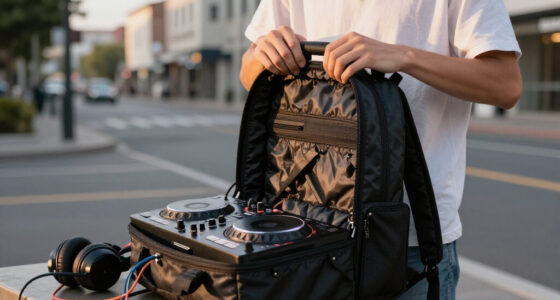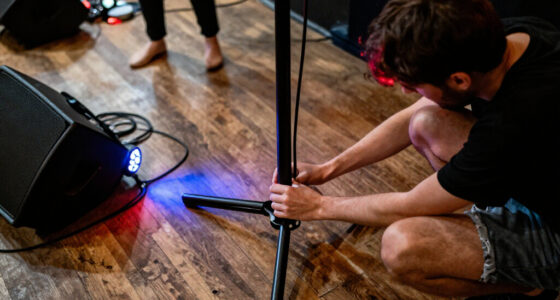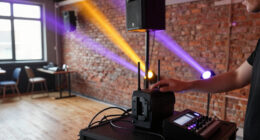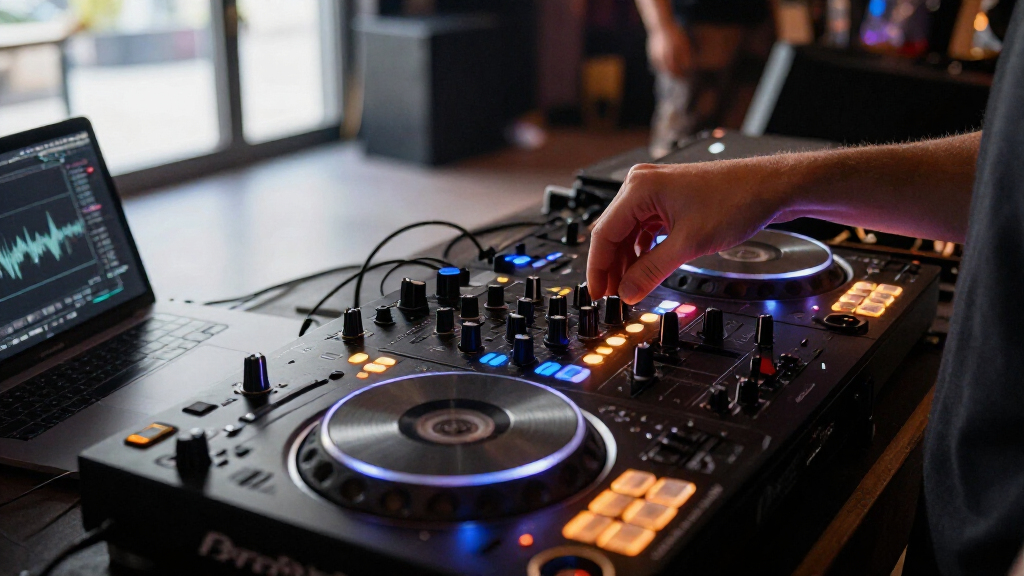
DJ controller lighting systems range from software-linked DMX control to ready-to-run light bars, so the right choice depends on whether you want precise programming or a quick setup. My best overall pick is the SoundSwitch Control One for DJs who want lighting control integrated with their performance workflow. The CHAUVET DJ GigBAR 3 ILS is a standout for a more complete all-in-one rig, while the Rockville ROCKFORCE 384 suits DJs who prefer hands-on DMX and MIDI control. The main tradeoff is between easy setup and greater control over fixtures, scenes, and timing. Keep reading for the full comparison and guidance on matching a system to your gear and gigs.

Get audio and creator gear delivered free with Prime
- Fast, free delivery on millions of items
- Prime Video, Amazon Music and more included
- Member-only deals all year
Complete the kit


Key Takeaways
- SoundSwitch Control One is the clearest pick for DJs prioritizing software-oriented lighting control; it differs from the hardware-first DMX desks by centering the controller in a DJ performance workflow.
- CHAUVET DJ GigBAR 3 ILS combines lights and control in one system, reducing the work of assembling separate fixtures and a controller, though it offers a different kind of flexibility than a modular rig.
- The 192-channel controllers from Wiwreenm, CO-Z, MAD OWL, and MINGJIE share a basic control format, so buyers should compare usability and setup fit rather than assume channel count alone makes one a better match.
- Umelody’s wireless DMX kit addresses cable runs between compatible gear; it does not replace the lighting controller or make every fixture wireless by itself.
- The fixture bundles vary in what they solve: PartyBar PL-29A and the GigBAR offer more consolidated setups, while multi-pack pars and moving-head options make more sense when coverage or movement matters.
| SoundSwitch Control One DMX Lighting Controller |  | Best Overall for Software-Synced DJ Lighting | DMX universes: 2 | USB connections: Dual USB | Supported lighting: DMX and Philips Hue smart lights | VIEW LATEST PRICE | See Our Full Breakdown |
| Wiwreenm 192-Channel DMX 512 Stage Lighting Controller |  | Best for Budget-Conscious Basic DMX Rigs | DMX channels: 192 | Fixture capacity: 12 fixtures, 16 channels each | Scenes: Up to 240 | VIEW LATEST PRICE | See Our Full Breakdown |
| Umelody Wireless DMX512 Transmitter and Receiver Kit, 2.4 GHz, 1 Transmitter and 7 Receivers |  | Best Wireless DMX Add-On | Wireless protocol: DMX512 | Frequency: 2.4 GHz | Included units: 1 transmitter and 7 receivers | VIEW LATEST PRICE | See Our Full Breakdown |
| Rockville ROCKFORCE 384 DMX Lighting Controller with MIDI |  | Best for Larger Programmable Rigs | DMX channels: 384 | Maximum fixtures: 24 | Channels per fixture: 16 | VIEW LATEST PRICE | See Our Full Breakdown |
| CHAUVET DJ Obey 40 DMX Light and Fog Machine Controller |  | Best for Scene and Fog Control | Fixture capacity: Up to 12 fixtures | Channels per fixture: Up to 16 | DMX channels: 192 | VIEW LATEST PRICE | See Our Full Breakdown |
| Telbum PartyBar PL-29A DJ Stage Lights with Stand |  | Best All-in-One Portable Bar | Light sources: 4 RGBW LED par lights | Total wattage: 240 watts | Stand height: 7 ft, adjustable | VIEW LATEST PRICE | See Our Full Breakdown |
| Moiseth 8-Pack RGB LED Par Lights with DMX512 Controller |  | Best for Multi-Position Coverage | Number of lights: 8 | LEDs per light: 18 | LED wattage: 3 W | VIEW LATEST PRICE | See Our Full Breakdown |
| 6-Arm RGBW Moving Head DJ Stage Light with DMX512 and Sound Activation |  | Best for Moving Effects | Light source: LED | Wattage: 80 W | Voltage: 245 V AC | VIEW LATEST PRICE | See Our Full Breakdown |
| ClypsoReign 120W RGBW LED Stage Lights with Stand |  | Best Lightweight Stand Kit | Power: 120 watts | Number of lights: 4 | LED beads: 12 RGBW | VIEW LATEST PRICE | See Our Full Breakdown |
| CO-Z 8-Pack RGB LED Stage Lights with DMX Controller |  | Best Compact Eight-Light Kit | Number of lights: 8 | LEDs per light: 18 | LED wattage: 3 watts | VIEW LATEST PRICE | See Our Full Breakdown |
| CO-Z 192-Channel DMX 512 Stage Light Controller |  | Best for Voice-Activated Control | DMX channels: 192 | Maximum fixtures: 12 intelligent lights | Maximum channels per light: 16 | VIEW LATEST PRICE | See Our Full Breakdown |
| MAD OWL WK-192 192-Channel DMX512 Lighting Controller |  | Best for Programmable Chases | DMX channels: 192 | Fixture capacity: Up to 12 fixtures, each with 16 channels or fewer | Programmable scenes: 23 banks of 8 scenes | VIEW LATEST PRICE | See Our Full Breakdown |
| Party Fusion RGBWA+UV LED DJ Stage Lights with Adjustable T-Bar Stand |  | Best Beginner-Friendly Complete Setup | Light source: LED | Color sources: RGBWA+UV | Wattage: 100 W | VIEW LATEST PRICE | See Our Full Breakdown |
| CHAUVET DJ GigBAR 3 ILS All-in-One DJ Lighting System |  | Best Premium All-in-One System | Light sources: LEDs | Lighting effects: LED derby, RGB+UV wash, LED strip, and strobe | Control: Wireless DMX, ILS, Master/Slave, RF remote, wireless footswitch | VIEW LATEST PRICE | See Our Full Breakdown |
| MINGJIE DMX512 192-Channel Stage Lighting Controller |  | Best Value for Flexible Power Compatibility | DMX channels: 192 | Maximum fixtures: 12 | Scenes: 240 across 30 banks | VIEW LATEST PRICE | See Our Full Breakdown |
More Details on Our Top Picks
SoundSwitch Control One DMX Lighting Controller
I rank the SoundSwitch Control One first for DJs who want lighting to respond as part of a performance, rather than simply play stored scenes. Its touch strip, encoders, and customizable RGB pads give the operator hands-on control of effects, while live BPM detection can help match lighting changes to the music. It also supports both DMX fixtures and Philips Hue lights, a broader mix than the conventional channel-and-scene approach of the CHAUVET DJ Obey 40. Two DMX universes leave room for more elaborate rigs, and compatible Engine DJ setups can run without a computer. The tradeoff is that it depends on SoundSwitch software for its wider workflow, and PRO DJ LINK Bridge requires a laptop. Choose it for connected, reactive control; skip it if you want a standalone controller with no software dependency.
Pros:- Tactile touch strip, encoders, and RGB performance pads support adjustments during a set.
- Two DMX universes and Philips Hue support accommodate a varied lighting rig.
- Compatible Engine DJ devices can operate without a computer.
- Live audio BPM detection supports music-responsive lighting effects.
Cons:- PRO DJ LINK Bridge use requires a laptop running SoundSwitch.
- Its software-centered workflow may be more involved than a basic scene-and-chase controller.
- DJ platform compatibility limits its appeal for operators with unrelated setups.
Best for: DJs using compatible Engine DJ or AlphaTheta setups who want tactile, music-responsive control of DMX fixtures and Philips Hue lights.
Not ideal for: Operators seeking a fully standalone conventional DMX desk, especially if they need PRO DJ LINK Bridge without a laptop.
- DMX universes:2
- USB connections:Dual USB
- Supported lighting:DMX and Philips Hue smart lights
- Compatibility:Engine DJ devices, compatible AlphaTheta setups, and SoundSwitch software
- Controls:Touch strip, encoders, customizable RGB performance pads
- Dimensions:10.68 × 6.6 × 2.16 in
- Weight:1.76 lb
- Material:Stainless steel
Our verdict“Choose the Control One for hands-on, software-synced DJ lighting; choose a conventional desk like the Obey 40 if standalone scene playback matters more.”
Wiwreenm 192-Channel DMX 512 Stage Lighting Controller
The Wiwreenm 192-channel controller is a straightforward fit for a small rig built around conventional 3-pin DMX fixtures. It handles up to 12 fixtures with 16 channels each and offers 240 scenes plus six chases, giving an operator programmed looks to call up without a DJ-software workflow. Compared with the SoundSwitch Control One, it lacks music-responsive DJ integration and smart-light support, but its scene-and-slider layout is a simpler match for manually controlled stage lights. The limit of 12 fixtures makes the capacity clear before a rig grows, and the listed 90-day warranty is brief. It also needs compatible 3-pin equipment, so this is not a wireless add-on or an all-in-one light package. I’d pick it for basic, repeatable control; larger or more performance-focused rigs should look elsewhere.
Pros:- Controls up to 12 fixtures with 16 channels each.
- Stores up to 240 scenes and supports six programmable chases.
- Includes a power adapter and 3-pin connection cable.
- Manual sliders provide direct channel control.
Cons:- Fixture capacity is limited to 12.
- Requires compatible 3-pin DMX lighting equipment.
- The listed warranty is 90 days.
Best for: Mobile DJs and small venue operators with up to 12 compatible 3-pin DMX fixtures who want programmable scenes and chases.
Not ideal for: DJs seeking laptop-free music synchronization, smart-light support, wireless DMX, or capacity beyond 12 fixtures.
- DMX channels:192
- Fixture capacity:12 fixtures, 16 channels each
- Scenes:Up to 240
- Programmable scenes:23 sets of 8
- Programmable chases:6
- Power input:DC 9–12 V, 500 mA
- Mounting type:Rack mount
- Dimensions:7 × 6 × 12 in
- Weight:1.65 kg
Our verdict“Pick the Wiwreenm for a small, conventional DMX setup with stored looks, but choose the SoundSwitch Control One for DJ-platform integration and responsive effects.”
Umelody Wireless DMX512 Transmitter and Receiver Kit, 2.4 GHz, 1 Transmitter and 7 Receivers
The Umelody wireless DMX kit solves a different problem from the other picks: it carries a DMX signal to fixtures without a cable run between each receiver and the transmitter. With one transmitter and seven receivers, it can reduce floor cabling across a small stage or event layout. Its seven ID groups help separate lighting setups, while 126 frequency-hopping channels are intended to support signal reliability. Unlike the Wiwreenm 192-Channel controller, this kit does not create scenes, run chases, or replace a lighting desk; it transports DMX control signals. That makes it a useful companion to a compatible controller, not a complete lighting-control system by itself. Wireless results can also vary with venue conditions and interference, so buyers who need predictable wired connections should stick with cables.
Pros:- Includes one transmitter and seven receivers for multiple fixtures.
- Seven ID groups can support separate lighting setups.
- 126 frequency-hopping channels are designed to help maintain a stable signal.
- Plug-and-play setup reduces configuration work.
Cons:- Does not provide scene programming, sliders, or chase control.
- Wireless reliability may vary with venue layout and surrounding interference.
- Requires a separate DMX controller and compatible fixtures.
Best for: DJs and event technicians who already have a DMX controller and want to reduce cable runs to as many as seven lighting fixtures.
Not ideal for: Buyers who need a standalone controller for programming scenes, or operators whose venues require a fixed wired DMX connection.
- Wireless protocol:DMX512
- Frequency:2.4 GHz
- Included units:1 transmitter and 7 receivers
- ID groups:7
- Frequency-hopping channels:126
- Item weight:2.86 lb
- Package dimensions:7.36 × 5.47 × 4.21 in
- Color:Black
Our verdict“Choose Umelody to cut DMX cable runs in an existing rig, not as a replacement for a controller such as the Wiwreenm.”
Rockville ROCKFORCE 384 DMX Lighting Controller with MIDI
For a DJ or venue running more fixtures than a 192-channel desk can accommodate, the Rockville ROCKFORCE 384 offers room for up to 24 lights at 16 channels each. Its 30 scene banks, six chases, and adjustable fade and speed controls provide more scope for building and sequencing looks than the 12-fixture Wiwreenm. MIDI and music-triggered modes add control options, while the metal housing, manual override, and power-failure memory suit a more permanent or mobile setup. This is still a conventional DMX programming desk, not a plug-in DJ lighting system like the SoundSwitch Control One; setting up complex fixtures calls for familiarity with DMX addressing and programming. Its 20.71-inch width also takes more space than the compact Control One. I’d favor it when fixture capacity and manual programming matter more than a streamlined DJ workflow.
Pros:- Controls up to 24 fixtures across 384 DMX channels.
- Scene banks, chases, fade times, and speed controls support detailed programming.
- MIDI and music-triggered modes add control choices.
- Metal housing, manual override, and power-failure memory suit regular operation.
Cons:- Complex fixture setups require familiarity with DMX programming.
- Its larger desk format takes more space than compact DJ-focused controllers.
- Fixture capacity is specified for up to 24 lights with 16 channels each.
Best for: DJs, clubs, and event operators programming up to 24 DMX fixtures who want MIDI, music-triggered modes, and stored chases.
Not ideal for: Beginners who want automatic DJ-software synchronization, or compact setups with little room for a full-size control desk.
- DMX channels:384
- Maximum fixtures:24
- Channels per fixture:16
- Scene banks:30 banks of 8 scenes
- Programmable chases:6
- Connectivity:3-pin XLR DMX in/out; MIDI
- Dimensions:20.71 × 7.28 × 3.15 in
- Weight:5.4 lb
- Included components:LED gooseneck lamp, 3-pin XLR DMX in/out cables
Our verdict“Choose the ROCKFORCE 384 for a larger manually programmed rig; pick the SoundSwitch Control One for a more DJ-software-led lighting workflow.”
CHAUVET DJ Obey 40 DMX Light and Fog Machine Controller
The CHAUVET DJ Obey 40 suits operators who want a familiar scene-based desk with extras for fog and strobe equipment. It controls up to 12 fixtures across 192 channels, matching the Wiwreenm on fixture capacity, but adds USB and MIDI connectivity alongside fog and strobe functions. Its 240 scenes across 30 banks and six chases give DJs repeatable looks to trigger during a set without requiring the software-driven approach of the SoundSwitch Control One. That simplicity is also the tradeoff: it does not offer SoundSwitch’s BPM-focused DJ workflow or the ROCKFORCE 384’s capacity for up to 24 fixtures. Buyers should also plan around its external power supply, and USB or MIDI operation depends on compatible devices or software. It makes most sense for a conventional small rig that includes fog or strobe control.
Pros:- Controls up to 12 fixtures with 16 channels each.
- Stores up to 240 scenes across 30 banks and supports six chases.
- Fog, strobe, USB, and MIDI features broaden its control options.
- Reversible sliders accommodate operator preference.
Cons:- Requires an external power supply.
- USB and MIDI features depend on compatible equipment or software.
- Its 12-fixture limit is below the Rockville ROCKFORCE 384’s capacity.
Best for: Mobile DJs and small venues with up to 12 DMX fixtures who want stored scenes, chase playback, and fog or strobe control.
Not ideal for: Operators who need more than 12 fixtures, software-synchronized lighting, or a self-contained power setup.
- Fixture capacity:Up to 12 fixtures
- Channels per fixture:Up to 16
- DMX channels:192
- Scene storage:Up to 240 scenes across 30 banks
- Chases:6 sets
- Connectivity:USB and MIDI
- Input voltage:9 VDC, 500 mA
- Weight:6.7 lb
- Material:Metal
Our verdict“Choose the Obey 40 for a small conventional rig where fog and strobe controls matter; choose the ROCKFORCE 384 for more fixtures or the Control One for DJ software integration.”
Telbum PartyBar PL-29A DJ Stage Lights with Stand
The Telbum PL-29A is the most self-contained choice here for DJs who want a raised four-light setup without piecing together a stand and controls separately. Its adjustable 7-foot stand, carry bag, IR remote, and wireless footpedal make it easier to move between small events than the eight-fixture Moiseth kit, which needs more individual placement. Wireless DMX and three channel modes also leave room to add it to a more programmed lighting rig. The tradeoff is that its four RGBW pars offer less fixture coverage than either eight-light package, and the stated 10-meter control range can limit where the operator stands. It still needs corded power, so wireless controls do not make the whole system cable-free.
Pros:- Four RGBW par lights, adjustable stand, and carry bag are included as a coordinated kit.
- Wireless footpedal and IR remote offer hands-free or basic control without a separate DMX board.
- Wireless DMX and 5-, 8-, and 20-channel modes support different control setups.
- Music-reactive and blackout settings suit quick changes during a DJ set.
Cons:- Four fixtures provide less coverage flexibility than the eight-light Moiseth and CO-Z kits.
- The system still needs corded electric power.
- Wireless control is specified for only a 10-meter range.
Best for: Mobile DJs who want one stand-mounted four-light bar, included transport gear, and simple footpedal or remote control for small events.
Not ideal for: DJs lighting a wide stage who need more fixture positions, or operators who need to control lights from beyond the stated 10-meter range.
- Light sources:4 RGBW LED par lights
- Total wattage:240 watts
- Stand height:7 ft, adjustable
- DMX modes:5CH, 8CH, 20CH
- Control options:Wireless DMX, IR remote, wireless footpedal
- Control range:10 meters
- Power source:Corded electric
- Included components:Carry bag, remote, stage lights bar, tripod lighting stand, wireless footpedal
Our verdict“Choose the Telbum if you want a portable, stand-based four-light system with several control options rather than the wider placement of an eight-par kit.”
Moiseth 8-Pack RGB LED Par Lights with DMX512 Controller
For a DJ who wants to distribute fixtures around a room instead of relying on a single bar, the Moiseth eight-pack offers the broadest placement options in this group. The included 192-channel DMX512 controller and cables make coordinated control possible across all eight pars, while adjustable brackets allow floor or mounted placement. Compared with the stand-based Telbum and ClypsoReign kits, this layout can cover more corners or stage positions, but it requires more setup decisions and power connections. Its plastic construction is a practical tradeoff against the metal-bodied Telbum bar: the fixtures are easier to position as separate units, but may be less reassuring for frequent transport. Sound, auto, and master-slave modes provide simpler alternatives when programming every light is unnecessary.
Pros:- Eight pars allow more flexible room and stage placement than the four-light bar kits.
- A 192-channel DMX512 controller and connecting cables are included.
- DMX, sound-activated, automatic, and master-slave modes suit different levels of setup complexity.
- Adjustable brackets support floor placement or mounting.
Cons:- Plastic construction may be less suited to rough handling than the metal Telbum bar.
- Eight separate fixtures can take longer to place and connect than a stand-mounted light bar.
- Corded power limits placement unless outlets and cable runs are planned.
Best for: DJs and small event crews who need eight separate fixtures for wider room coverage and want a DMX controller included.
Not ideal for: Mobile operators who prioritize a quick, single-stand setup or prefer fixtures with metal construction.
- Number of lights:8
- LEDs per light:18
- LED wattage:3 W
- Controller:192-channel DMX512
- Control modes:DMX512, sound-activated, automatic, master-slave
- Power source:Corded electric
- Materials:Plastic
- Dimensions per light:7.3 × 4 × 7.8 in
- Included accessories:DMX controller and connecting cables
Our verdict“Pick the Moiseth kit when room coverage and independent fixture placement matter more than the speed of a single-bar setup.”
6-Arm RGBW Moving Head DJ Stage Light with DMX512 and Sound Activation
Unlike the fixed par arrays in the Moiseth and CO-Z kits, this six-arm moving-head fixture is aimed at DJs who want changing patterns and motion from one unit. RGBW color mixing, kaleidoscope effects, star patterns, and white and amber strobes give it a more varied visual character than a conventional wash-focused par. DMX512 with 26 channels allows programmed control, while auto, sound-reactive, and master-slave modes offer less hands-on ways to run it. That variety comes with a planning tradeoff: the listing gives no beam coverage or operating-noise details, so it is harder to judge how it will suit a particular room. The listed 1 × 1 × 1-inch dimensions also appear unreliable, making size checks especially important before purchase.
Pros:- Combines RGBW color mixing with kaleidoscope, star, and strobe effects.
- 26-channel DMX512 control supports detailed programming compared with basic sound-reactive pars.
- Auto, sound-activated, and master-slave modes provide simpler operating options.
- Includes a mounting bracket and overheat protection.
Cons:- No beam coverage or operating-noise details are provided, which complicates venue planning.
- The listed 1 × 1 × 1-inch dimensions appear unusually small and may be inaccurate.
- A single moving-effect fixture does not offer the distributed coverage of the Moiseth eight-pack.
Best for: DJs and small venues seeking animated patterns, strobes, and moving effects from a single bracket-mounted fixture.
Not ideal for: Buyers who need predictable wash coverage, quiet-operation information, or dependable listed dimensions before planning a rig.
- Light source:LED
- Wattage:80 W
- Voltage:245 V AC
- Control modes:DMX512 (26 channels), auto, sound-activated, master-slave
- Mounting type:Bracket mount
- Materials:Metal and plastic
- Special effects:RGBW color mixing, kaleidoscope effects, red and green star effects, white and amber strobes
- Protection:Overheat protection
Our verdict“Choose this moving head for animated patterns and strobes, not as a substitute for a multi-fixture par system when broad coverage is the priority.”
ClypsoReign 120W RGBW LED Stage Lights with Stand
The ClypsoReign 120W kit takes a straightforward portable-bar approach: four RGBW lights, a two-section tripod, a carry bag, remote, and power cord arrive together. At 8 pounds, it is a useful option for mobile DJs who move between events and want a stand that reaches 7.2 feet without managing eight separate fixtures. Like the Telbum PL-29A, it supports DMX and sound activation, but the supplied details list remote control rather than Telbum’s wireless footpedal and wireless DMX. Its 0–20 Hz strobe range adds a defined adjustment for fast or restrained flashes. The key compromise is that it offers four lights rather than the broader placement choices of the Moiseth kit, and the listed 33-inch length may still call for a dedicated storage space.
Pros:- Four-light RGBW bar, tripod, carry bag, remote, and power cord are included.
- Listed weight of 8 pounds supports transport between gigs.
- Stand extends to 7.2 feet for raised positioning.
- DMX, sound activation, dimming, and adjustable strobe give several control options.
Cons:- Four lights provide fewer placement options than the Moiseth eight-pack.
- No wireless DMX or footpedal control is listed, unlike the Telbum PL-29A.
- The 33-inch listed length may require more storage room than a compact-fixture kit.
Best for: Mobile DJs who want a lightweight, complete four-light tripod kit with DMX, sound activation, and a carry bag.
Not ideal for: Operators seeking wireless DMX or hands-free footpedal control, or those who need eight separately placed fixtures for wide coverage.
- Power:120 watts
- Number of lights:4
- LED beads:12 RGBW
- Controls:DMX, sound-activated, remote control
- DMX protocols:CH5, CH8, CH20
- Strobe rate:0–20 Hz
- Maximum stand height:7.2 feet (2.2 meters)
- Weight:8 lbs (3.6 kg)
- Included accessories:Tripod, carry bag, remote control, power cord
Our verdict“The ClypsoReign suits mobile DJs who value a light, complete tripod kit more than wireless control or the coverage of eight individual pars.”
CO-Z 8-Pack RGB LED Stage Lights with DMX Controller
The CO-Z eight-pack is the compact-fixture option for buyers who want several lighting positions without carrying a stand-mounted bar. Its eight pars each use 18 LEDs, and the included 192-channel DMX controller can control up to 12 par lights, leaving room to expand beyond the supplied set. Sound activation and built-in buttons offer simpler operation when a full DMX program is more than a small event needs. Compared with the similar Moiseth kit, the CO-Z listing adds a specified 4.4-pound item weight and a one-year warranty; both use plastic fixtures and corded power, so neither is a rugged, cable-free solution. This set is a practical fit for portable multi-point setups, but separate fixtures mean more placement and cable management than the Telbum or ClypsoReign bars.
Pros:- Eight compact pars provide more placement flexibility than four-light stand kits.
- The 192-channel controller can control up to 12 par lights.
- Sound activation and built-in buttons allow operation without extensive DMX programming.
- Listed item weight is 4.4 pounds, and a one-year warranty is specified.
Cons:- Plastic construction is less suited to rough handling than a metal-bodied option.
- Corded electric power requires outlet and cable planning for each setup.
- Separate fixtures take more placement and connection work than the Telbum or ClypsoReign bar kits.
Best for: DJs who want eight lightweight, separately placeable pars, an included DMX controller, and the option to control more fixtures later.
Not ideal for: Buyers who want one fast tripod-bar setup, metal fixtures, or lighting that can be placed without corded power.
- Number of lights:8
- LEDs per light:18
- LED wattage:3 watts
- Total wattage:54 watts
- DMX channels:192
- Control:DMX controller and built-in buttons
- Item weight:4.4 pounds
- Material:Plastic
- Warranty:1 year
Our verdict“Pick the CO-Z when compact, separately positioned pars and expandable DMX control matter more than the simplicity of a tripod light bar.”
CO-Z 192-Channel DMX 512 Stage Light Controller
For DJs who want a conventional DMX console with a sound-responsive option, the CO-Z 192-Channel stands out for its stated voice control and capacity for 12 fixtures with up to 16 channels each. Its 240-scene support gives a show room for stored lighting looks, while dedicated controls for fixtures, channels, scenes, speed, and functions provide direct access during a set. Compared with the MINGJIE DMX512 controller, the CO-Z listing does not specify a broad input-voltage range, and its stated 130-volt requirement may narrow where it can be used. It also offers less programming detail than the MAD OWL WK-192, which spells out banks and chase steps. I’d shortlist this for sound-led, straightforward setups, but buyers should confirm power compatibility and be ready to learn the programming workflow.
Pros:- Controls up to 12 intelligent lights with up to 16 channels each
- Supports up to 240 scenes for storing lighting looks
- Includes voice control for sound-responsive operation
- Dedicated controls cover fixture, channel, scene, speed, and function selection
Cons:- Listed 130-volt power requirement may limit compatibility
- Programming workflow and chase capabilities are not detailed in the product information
Best for: DJs running a small DMX rig who want voice-responsive operation and stored scenes without moving to a more complex console.
Not ideal for: Traveling DJs or venues with uncertain mains voltage, since the listed 130-volt requirement may not match their power supply.
- DMX channels:192
- Maximum fixtures:12 intelligent lights
- Maximum channels per light:16
- Maximum scenes:240
- Power:Corded electric; listed voltage 130 V
- Material:Plastic
- Weight:3.9 lb
- Dimensions:19.1 × 5.3 × 2.8 in
- Warranty:1 year
Our verdict“Choose the CO-Z if voice-responsive control and scene capacity matter more than clearly documented programming details or broad voltage compatibility.”
MAD OWL WK-192 192-Channel DMX512 Lighting Controller
The MAD OWL WK-192 is the clearest pick here for DJs who want to build sequences rather than rely only on sound-activated effects. It supports 23 banks of eight scenes and six chases with up to 240 steps, giving operators a defined structure for programming changes across a show. That detail sets it apart from the CO-Z 192-Channel controller, which lists 240 scenes but provides less information about chase programming. The metal construction and rack-mount design also suit a fixed booth or an equipment case better than a lightweight desktop setup. The tradeoff is a firm ceiling of 12 fixtures, each limited to 16 channels, so larger or more demanding rigs may need another console. Its 22-inch width also calls for rack or table space, and buyers should check fixture compatibility before building a show around it.
Pros:- Provides 23 banks of eight programmable scenes
- Supports six chases with up to 240 steps
- Controls up to 12 compatible fixtures
- Metal construction, rack-mount design, and included 6.6-foot DMX cable
Cons:- Limited to fixtures with 16 channels or fewer
- Wide, rack-oriented footprint may be awkward in compact mobile setups
Best for: DJs and small venues that want to program repeatable lighting scenes and multi-step chases for DMX fixtures with 16 channels or fewer.
Not ideal for: Operators with fixtures requiring more than 16 channels, or mobile DJs who need a compact controller that takes up little booth space.
- DMX channels:192
- Fixture capacity:Up to 12 fixtures, each with 16 channels or fewer
- Programmable scenes:23 banks of 8 scenes
- Programmable chases:6 chases, up to 240 steps
- Included cable:6.6 ft DMX cable
- Mounting:Rack mount
- Material:Metal
- Weight:4 lb
- Dimensions:22.44 × 7.28 × 4.72 in
Our verdict“Pick the WK-192 if structured scene and chase programming is your priority and your fixtures fit its channel limit.”
Party Fusion RGBWA+UV LED DJ Stage Lights with Adjustable T-Bar Stand
Unlike the CO-Z and MAD OWL controllers, which are consoles for managing compatible fixtures, Party Fusion supplies the lights, stand, remote, and storage bag as a portable package. That makes it a practical starting point for DJs who want a visible stage wash without sourcing every component separately. Its RGBWA+UV color sources and sound activation offer quick variety, while selectable 4-, 7-, or 40-channel DMX modes leave room to use simpler control or more detailed programming. The adjustable T-bar and bag also make setup and transport easier than assembling a rig from separate fixtures. The compromise is that it is an indoor, cord-powered system, not a standalone battery solution. Buyers seeking a dedicated console for a larger DMX network should choose a controller such as the MAD OWL WK-192 instead.
Pros:- Combines RGBWA+UV lighting with sound activation, strobe, fade, and color mixing
- Offers 4-, 7-, and 40-channel DMX modes
- Includes an adjustable T-bar stand, remote control, and storage bag
- Portable package supports quicker setup than sourcing fixtures and a stand separately
Cons:- Designed for indoor events
- Requires a power connection during operation
- A self-contained light package is less suited to controlling a larger, separately assembled fixture network
Best for: New and mobile DJs who want an all-in-one indoor lighting setup with a stand, sound activation, remote control, and an option to add DMX control.
Not ideal for: DJs building a large, independently programmable DMX rig or performers who need lighting for outdoor events without dependable power.
- Light source:LED
- Color sources:RGBWA+UV
- Wattage:100 W
- DMX channel modes:4, 7, or 40 channels
- Power:Corded electric; AC and Type-C
- Mounting:Tripod stand mount
- Included accessories:Retractable T-bar stand and storage bag
- Weight:12.4 lb
- Dimensions:22.44 × 19.69 × 57.48 in
Our verdict“Choose Party Fusion if you want a ready-to-set-up indoor light rig rather than a standalone DMX controller.”
CHAUVET DJ GigBAR 3 ILS All-in-One DJ Lighting System
The CHAUVET DJ GigBAR 3 ILS is the most integrated choice in this group: derby effects, RGB+UV wash lights, an LED strip, and strobe effects sit in one system, with automated and sound-activated programs for DJs who want less fixture-by-fixture setup. Its wireless DMX and ILS control also make it better suited than the Party Fusion RGBWA+UV set to a coordinated lighting setup that may grow beyond one stand. A wireless footswitch, RF remote, tripod, and carry bags are included, though the system’s 35.7-pound weight makes it a substantial load for frequent solo transport. Unlike a standalone console such as the MINGJIE DMX512, this is a lighting system rather than a general-purpose 192-channel controller. It also needs corded power, so convenience comes from integration, not cordless operation.
Pros:- Combines derby effects, RGB+UV wash lights, LED strip, and strobe
- Automated and sound-activated programs reduce manual operation during a set
- Wireless DMX and ILS support coordinated lighting setups
- Includes tripod, wireless footswitch, RF remote, and carry bags
Cons:- At 35.7 lb, it is cumbersome for frequent solo transport
- Requires corded electric power
- An integrated lighting system is less flexible than a standalone console for managing unrelated fixtures
Best for: DJs who want several coordinated effects in one portable package, with automated programs and wireless control for a more involved show.
Not ideal for: Solo mobile DJs who prioritize lightweight gear, or buyers seeking a standalone DMX console to operate a separate collection of fixtures.
- Light sources:LEDs
- Lighting effects:LED derby, RGB+UV wash, LED strip, and strobe
- Control:Wireless DMX, ILS, Master/Slave, RF remote, wireless footswitch
- LED strip:74 red, green, and blue LEDs; 5 W; 50,000-hour stated life expectancy
- Power:Corded electric
- Material:Metal
- Weight:35.7 lb
- Dimensions:7.48 × 21.26 × 50.2 in
- Included accessories:Tripod, wireless footswitch, RF remote, and carry bags
Our verdict“Choose the GigBAR 3 ILS if you want a coordinated multi-effect system and can accommodate its weight and power needs.”
MINGJIE DMX512 192-Channel Stage Lighting Controller
The MINGJIE DMX512 earns its place as a practical standalone console for DJs who need familiar 192-channel control but may use the system in venues with different mains supplies. Its stated 100–240 V input is a useful distinction from the CO-Z 192-Channel controller, whose product data lists 130 V. The MINGJIE also supports up to 12 fixtures, 240 scenes across 30 banks, and six chases, giving it a solid toolkit for programming a compact show. A 4-foot DMX cable is included, so a basic wired connection is ready to go. Compared with the MAD OWL WK-192, its description gives less detail about chase steps and programming workflows, making setup expectations harder to judge. I’d favor it for voltage flexibility, but not for buyers who need clearly documented programming guidance.
Pros:- Controls up to 12 fixtures across 192 channels
- Supports 240 scenes across 30 banks and six chases
- 100–240 V input offers broad power compatibility
- Includes a 4-foot, 3-pin DMX cable and has an alloy chassis
Cons:- Programming workflow details are limited
- Compatible fixtures must use DMX512
- The included 4-foot cable may be short for some stage layouts
Best for: Mobile DJs and small event operators who need a 192-channel DMX console that can accept a broad range of input voltages.
Not ideal for: First-time DMX users who want detailed guidance on programming scenes and chases, or anyone using non-DMX512 fixtures.
- DMX channels:192
- Maximum fixtures:12
- Scenes:240 across 30 banks
- Chases:6
- DMX cable:4 ft (1.2 m), 3-pin
- Input voltage:100–240 V
- Chassis:Alloy
- Weight:3.09 lb
- Warranty:1 year
Our verdict“Pick the MINGJIE if broad voltage compatibility and a compact DMX console matter more than detailed programming instructions.”
How We Picked
I ranked these options by how directly they solve a DJ’s lighting-control problem: coordinating lights with a set, controlling DMX fixtures, or providing a ready-made rig. I weighed control style, setup demands, compatibility considerations, portability, and the usefulness of bundled fixtures. A lighting controller and a lighting package are not interchangeable, so the roundup distinguishes control hardware from systems that include lights.
The order favors products with a clearer role and a more coherent path from setup to show. SoundSwitch Control One leads for DJs seeking a performance-oriented control approach; the GigBAR 3 ILS ranks highly for an integrated lighting package, while the ROCKFORCE 384 offers a more hands-on controller route. Lower-ranked options can still suit specific needs, but generic channel counts, broad fixture bundles, and limited detail about workflow make them harder to recommend as a first choice without checking compatibility and intended use.
Factors to Consider When Choosing DJ Controller Lighting Systems
Before choosing a system, decide whether you need a controller, lights, or both. Product names in this category can blur that distinction, and a bundle that looks complete may not match the way you want to program a show. These factors help separate a convenient starter rig from a control setup you can build around.
Decide Whether You Need a Controller or a Complete Lighting Rig
A DMX desk or software-oriented controller sends commands; it does not necessarily include fixtures that produce light. A package such as the CHAUVET DJ GigBAR 3 ILS groups lighting and control in one system, which can simplify transport and setup. Separate controllers and fixtures provide more choice, but also mean more compatibility checks and cables. A common mistake is buying a controller first and assuming it can operate any light without configuration. Make an inventory of the fixtures you already own, or list the coverage you need if you are starting from scratch. Choose a bundle for speed and a separate controller when expansion or fixture choice matters more.
Match the Control Method to Your DJ Workflow
Consider whether you want to trigger looks from dedicated buttons, build scenes on a DMX console, or coordinate lighting through DJ software. SoundSwitch Control One represents a different approach from traditional desks such as the Obey 40 or 192-channel units. Software-linked control may suit DJs who want lighting to follow a performance workflow, while a hardware desk can appeal to operators who prefer direct controls. Neither method removes the need to map fixtures and learn their modes. Check software, operating-system, and hardware compatibility before buying, especially if lighting needs to respond to music or set changes. Pick the control style you are more likely to use consistently, not simply the one with the longest feature list.
Check DMX Compatibility Before Adding Wireless Links
DMX products may use different channel modes, fixture profiles, and connection arrangements, so matching the DMX label alone is not enough. Confirm the number of channels each fixture uses and how many units the controller can address in your planned layout. Umelody’s wireless transmitter and receiver kit can reduce cable runs where the equipment supports the same wireless setup, but it does not translate incompatible protocols or configure fixtures. Wireless links also add batteries, pairing, and signal placement to the setup. For small, fixed layouts, a cable may be simpler and easier to troubleshoot. Before purchasing, map the signal path from controller to every light and check the instructions for both ends.
Choose Fixtures for Coverage, Not Just Fixture Count
An eight-pack of pars may cover a wider area than a compact bar, but coverage depends on beam angle, placement, brightness, and the room. Moving heads add motion and visual variety, while fixed pars can be easier to position for steady color washes. A bundle with a stand can reduce the number of separate parts to source, yet it may be less adaptable to unusual venues. Avoid choosing by the number of lights alone: more fixtures can mean more addressing, power planning, and setup time. Think about whether your audience needs a broad wash, focused movement, or a simple visual accent. The best fixture mix is the one that fits your rooms and load-in routine.
Plan for Setup Time, Transport, and Power
A system that looks simple on paper still needs space, power outlets, mounting, and time for sound checks. Integrated options such as PartyBar PL-29A can reduce separate components, while multi-fixture packs may require more stands, cables, and addressing work. Check packed dimensions and how the stand or fixtures travel before committing to a setup for mobile gigs. Estimate the total power draw from the equipment specifications and plan cable routing to avoid trip hazards. If you frequently change venues, fewer components may matter more than adding another effect. For a fixed booth or dedicated room, a more modular arrangement may be worth the extra setup effort.
Pay for Control You Will Actually Use
More channels or additional fixture types do not automatically create a better show. A beginner may get more from clear controls and a manageable fixture setup than from a larger desk with functions they do not use. Experienced DJs building scenes or controlling varied fixtures may benefit from a more capable unit, such as the ROCKFORCE 384, if its control approach fits their workflow. Consider how much time you can spend programming and troubleshooting between gigs. A practical setup should let you reproduce a reliable look without rebuilding it from scratch each night. Spend more for control depth only when it solves a real limitation in your current rig.
Frequently Asked Questions
Do I need a DMX controller if my DJ lights have sound activation?
No, sound activation can run compatible fixtures without a separate DMX controller, which can be convenient for a simple setup. Its responses are usually less deliberate than a programmed scene or manual cue, so it may not follow the structure of a set the way you want. A controller makes more sense when you need repeatable colors, coordinated changes, or control over multiple fixtures. Some lights offer both modes, letting you start with sound activation and add control later. Check each fixture’s manual to see which functions are available in standalone mode.
Can I use a wireless DMX kit with any DMX lighting controller?
Not automatically. The controller, transmitter, receiver, and fixtures need to support compatible connections and DMX operation, and the wireless kit must be set up according to its instructions. A wireless link replaces part of the cable path; it does not add DMX control to fixtures that lack it. It also does not remove the need to assign fixture addresses or select the right operating mode. Confirm the number of receivers included and whether you need one for each light or each linked group before choosing a kit.
Is a 192-channel controller enough for a mobile DJ lighting rig?
It can be enough for a modest setup, but the number of channels is only one part of the fit. Each fixture uses a channel count based on its selected DMX mode, so a rig with several feature-rich lights can consume channels faster than a basic par setup. You should also check how the controller stores scenes, handles fixture control, and fits your preferred operating style. A larger channel figure does not guarantee easier programming or better integration with DJ software. List your current fixtures and likely additions, then total their channel needs before deciding.
Should I buy an all-in-one light bar or separate fixtures and a controller?
An all-in-one bar is often the more straightforward choice when you want a contained package with fewer separate pieces to transport and mount. Separate fixtures and a controller give you more freedom to choose coverage, effects, and future additions, but they require more planning and setup. Consider your usual venue size, storage space, and comfort with DMX configuration. A light bar may be limiting if you later want to change fixture placement or build a larger rig. If expansion is part of the plan, check compatibility and connection options before buying a bundled system.
What should I check before buying lights to use with SoundSwitch Control One?
Start by checking that your intended lights and their DMX modes are supported by the software and control setup you plan to use. Fixture profiles affect which controls and effects are available, so a generic compatibility claim may not answer whether every feature is mapped. Confirm your computer and DJ software requirements, along with the needed interfaces and cables. If a fixture is not listed, check the manufacturer’s guidance on creating or importing profiles rather than assuming it will work as expected. Planning this before buying can prevent a rig that connects physically but takes extra work to control.
Conclusion
For most DJs seeking lighting control tied to a performance workflow, I would start with SoundSwitch Control One as the best overall. The best value depends on what you already own: the Wiwreenm, CO-Z, MAD OWL, and MINGJIE 192-channel desks are worth comparing for straightforward DMX control, while a fixture bundle may make more sense if you are starting without lights. For a more complete, consolidated setup, CHAUVET DJ GigBAR 3 ILS is my best premium-style pick; beginners who want fewer separate components should compare it with PartyBar PL-29A. Choose Umelody’s wireless DMX kit for a cable-reduction need, and look at multi-pack pars or moving-head fixtures when coverage or motion is the priority. Match the system to your existing fixtures and preferred control method before choosing by channel count or bundle size.
Fall Picks
fall essentials
As an affiliate, we earn on qualifying purchases.