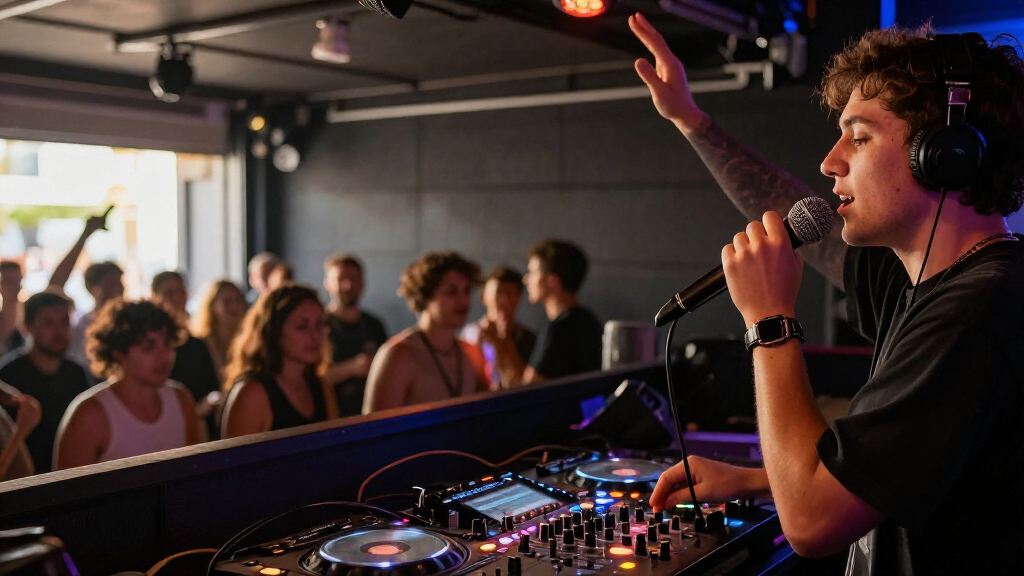

Wireless DJ microphones range from simple two-mic kits to four-channel systems, and my best overall pick is the Phenyx Pro PTU-71-2H for DJs who want a dedicated UHF setup with two handhelds. The Phenyx Pro PTU-5000-4H stands out when four performers need separate channels, while the JBL PartyBox Wireless Mic suits DJs using compatible PartyBox speakers who prefer a direct, rechargeable setup. The main tradeoffs are how many microphones you need, whether your venue and sound system suit UHF or 2.4GHz, and how much setup flexibility you want. A larger channel count can help with group hosting, but it also means more gear and coordination. Read on for the full breakdown of all 14 options and guidance on choosing for your setup.

Get audio and creator gear delivered free with Prime
- Fast, free delivery on millions of items
- Prime Video, Amazon Music and more included
- Member-only deals all year
Complete the kit

Key Takeaways
- Two-microphone UHF systems make the most sense for many DJ sets; the Phenyx Pro PTU-71-2H is my overall pick, while the PTU-52-2H offers another dual-handheld route within the same brand family.
- Four channels solve a specific problem: the Phenyx Pro PTU-5000-4H and Aveek four-microphone system are aimed at events with several active speakers, not DJs who only need an emcee mic and a spare.
- 2.4GHz models trade traditional receiver flexibility for a different setup style. JBL‘s PartyBox mic is tailored to compatible PartyBox speakers, while the GOLDEN MARS kit also uses 2.4GHz and is rechargeable.
- VHF is the notable outlier: the Pyle PDWM2135 may suit basic, straightforward use, but buyers should weigh its VHF connection against the UHF alternatives in this group.
- Compatibility matters as much as microphone count: a system with handheld transmitters still needs to connect appropriately to the DJ mixer, powered speaker, or PartyBox in the actual rig.
| Pyle PDWM2135 Dual-Channel VHF Wireless Microphone System |  | Best for Basic Two-Person Karaoke | Wireless technology: Fixed-frequency VHF | Frequency range: 174–216 MHz | Microphones: 2 handheld dynamic | VIEW LATEST PRICE | See Our Full Breakdown |
| Wireless Dual Handheld Dynamic Microphone Set, Gray |  | Best for Quick, Cable-Light Setup | Microphones: 2 handheld dynamic | Wireless range: Up to 200 feet line of sight | Receiver connector: 6.35 mm plug; 3.5 mm adapter included | VIEW LATEST PRICE | See Our Full Breakdown |
| TONOR TW-820 UHF Wireless Microphone System with Two Handheld Microphones |  | Best for Channel Flexibility | Wireless technology: UHF | Microphones: 2 handheld dynamic | Frequency channels: 15 per microphone | VIEW LATEST PRICE | See Our Full Breakdown |
| Aveek 4-Microphone Wireless System |  | Best for Group Performances | Microphones: 4 handheld dynamic microphones | Wireless range: Up to 262 ft | Battery life: Up to 40 hours | VIEW LATEST PRICE | See Our Full Breakdown |
| Boeska Dual-Channel UHF Wireless Handheld Microphone System |  | Best for Long Line-of-Sight Reach | Wireless technology: UHF | Channels: 2 | Selectable frequencies: 100 per microphone | VIEW LATEST PRICE | See Our Full Breakdown |
| Phenyx Pro PTU-71-2H Dual UHF Wireless Handheld Microphone System |  | Best for Frequency Flexibility | Channels: 2 | Microphones: 2 dynamic handheld microphones | Selectable frequencies: 100 per channel | VIEW LATEST PRICE | See Our Full Breakdown |
| Phenyx Pro PTU-5000-4H 4-Channel UHF Wireless Microphone System |  | Best for Four-Mic DJ Sets | Channels: 4 | Included microphones: 4 handheld dynamic cardioid microphones | Wireless frequencies: Fixed at 541.9, 546.3, 561.6, and 568.65 MHz | VIEW LATEST PRICE | See Our Full Breakdown |
| Phenyx Pro PTU-52-2H Dual UHF Wireless Microphone System |  | Best for Dual XLR Mixer Setups | Channels: 2 | Frequency range: 500–590 MHz | Tunable frequency groups: 30 | VIEW LATEST PRICE | See Our Full Breakdown |
| AURGIC Dual Handheld Wireless Microphone System |  | Best Rechargeable 2.4 GHz Pick | Wireless technology: 2.4 GHz | Channels: 2 | Microphones: 2 dynamic handheld microphones | VIEW LATEST PRICE | See Our Full Breakdown |
| ALPOWL Wireless Dynamic Microphone System |  | Best for USB-C Charging Convenience | Channels: 2 | Microphone type: Handheld dynamic | Polar pattern: Omnidirectional | VIEW LATEST PRICE | See Our Full Breakdown |
| Talomen K60-2 Dual Handheld Wireless Microphone System |  | Best Value for Flexible Inputs | Wireless technology: 2.4 GHz | Wireless range: Up to 160 ft (50 m) | Microphone type: Dynamic, unidirectional | VIEW LATEST PRICE | See Our Full Breakdown |
| JBL PartyBox Wireless Mic – 2X Digital Wireless Microphones, Rechargeable Battery (20hrs – 700mAh), Clear Voice, Crisp Sound, Stable 2.4GHz Connection, Compatible with All PartyBox Speakers (Black) |  | Best for JBL PartyBox Owners | Wireless technology: 2.4 GHz when using the digital wireless dongle | Wireless range: Up to 30 m with the digital wireless dongle | Microphones included: Two handheld digital wireless microphones | VIEW LATEST PRICE | See Our Full Breakdown |
| GOLDEN MARS Rechargeable 2.4GHz Wireless Microphone System with Two Handheld Microphones |  | Best for Long-Range Events | Wireless technology: 2.4 GHz | Transmission range: Up to 400 feet, line of sight | Microphones: Two handheld microphones | VIEW LATEST PRICE | See Our Full Breakdown |
| JBL Wireless Two-Microphone System with Dual-Channel Receiver, Black |  | Best Simple Pick for Select PartyBox Models | Channels: Two | Connectivity: Wireless with USB receiver connection | Polar pattern: Unidirectional | VIEW LATEST PRICE | See Our Full Breakdown |
| wireless DJ microphone | Microphones | Wireless range | Polar pattern | Wireless technology |
|---|---|---|---|---|
| Pyle PDWM2135 Dual-Channel VHF | 2 handheld dynamic | — | — | Fixed-frequency VHF |
| Wireless Dual Handheld Dynamic | 2 handheld dynamic | Up to 200 feet line of sight | Unidirectional | — |
| TONOR TW-820 UHF Wireless Micr | 2 handheld dynamic | — | Unidirectional | UHF |
| Aveek 4-Microphone Wireless Sy | 4 handheld dynamic microphones | Up to 262 ft | Unidirectional (cardioid) | — |
| Boeska Dual-Channel UHF Wirele | — | 290–328 ft line of sight | Unidirectional (cardioid) | UHF |
| Phenyx Pro PTU-71-2H Dual UHF | 2 dynamic handheld microphones | — | Cardioid (unidirectional) | — |
| Phenyx Pro PTU-5000-4H 4-Chann | — | Up to 260 ft | — | — |
| Phenyx Pro PTU-52-2H Dual UHF | 2 handheld, unidirectional microphones | — | — | — |
| AURGIC Dual Handheld Wireless | 2 dynamic handheld microphones | Up to 164 ft (50 m) | — | 2.4 GHz |
| ALPOWL Wireless Dynamic Microp | — | Up to 200 ft (60 m) | Omnidirectional | — |
| Talomen K60-2 Dual Handheld Wi | — | Up to 160 ft (50 m) | — | 2.4 GHz |
| JBL PartyBox Wireless Mic | — | Up to 30 m with the digital wireless dongle | — | 2.4 GHz when using the digital wireless dongle |
| GOLDEN MARS Rechargeable 2.4GH | Two handheld microphones | — | Hyper cardioid | 2.4 GHz |
| JBL Wireless Two-Microphone Sy | — | — | Unidirectional | — |
More Details on Our Top Picks
Pyle PDWM2135 Dual-Channel VHF Wireless Microphone System
I’d choose the Pyle PDWM2135 for a straightforward two-mic setup where karaoke or announcements matter more than frequency flexibility. It includes two handheld microphones with independent volume controls, so one voice can be adjusted without changing the other. The receiver’s RF/AF indicators also give a quick signal check during setup. Unlike the TONOR TW-820, this model uses fixed-frequency VHF rather than adjustable UHF channels, making it a less adaptable choice in crowded wireless environments. Its 1/4-inch mono output suits compatible mixers, amplifiers, and PA gear, but the receiver needs AC power and the cable and AA batteries are not included. I’d keep it for a simple, stationary rig rather than a mobile DJ setup that needs flexible frequency selection.
Pros:- Includes two handheld dynamic microphones and a receiver
- Independent volume control for each microphone
- Receiver has dual antennas and RF/AF signal indicators
- Standard 1/4-inch mono connection suits compatible PA equipment
Cons:- Fixed-frequency VHF offers less channel flexibility than the TONOR TW-820’s adjustable UHF system
- Microphone AA batteries and connection cable are not included
- Receiver requires AC power
Best for: Karaoke hosts and small-event DJs who need two handheld mics for a compatible PA or amplifier and can keep the receiver near AC power.
Not ideal for: Mobile DJs working in busy wireless environments or venues without an available AC outlet; the fixed-frequency VHF design offers less flexibility, and the receiver is not battery powered.
- Wireless technology:Fixed-frequency VHF
- Frequency range:174–216 MHz
- Microphones:2 handheld dynamic
- Microphone batteries:2 AA batteries per microphone; not included
- Receiver output:6.35 mm (1/4-inch) mono jack
- Receiver power:AC 120 V, 60 Hz
- Signal-to-noise ratio:>70 dB
- Receiver dimensions:8.07 × 5.75 × 1.64 inches
Our verdict“Choose the Pyle for simple two-person karaoke or announcements, but pick the TONOR TW-820 if adjustable wireless channels matter more.”
Wireless Dual Handheld Dynamic Microphone Set, Gray
This gray dual-mic set is the lineup’s simple plug-and-play pick for DJs who already have a speaker, amplifier, or karaoke machine with a microphone input. The stated 200-foot line-of-sight range offers room to move around a typical event space, while the included 3.5 mm adapter adds some connection flexibility alongside its 6.35 mm receiver plug. Its metal microphones and included rechargeable lithium-polymer batteries reduce the need to source separate cells. Compared with the Pyle PDWM2135, this set avoids the Pyle’s fixed-frequency VHF specification, but the provided details do not list selectable channels or a frequency band. It also cannot connect to phones, computers, or tablets, and an AUX input alone is not enough: the connected device needs a compatible microphone input.
Pros:- Includes two metal handheld dynamic microphones
- Up to 200 feet of stated line-of-sight range
- Lithium-polymer batteries are included
- Receiver plug and included adapter support compatible 6.35 mm and 3.5 mm microphone inputs
Cons:- Not compatible with phones, computers, or tablets
- Requires a microphone input; AUX connections are not supported
- Selectable frequencies or channels are not specified
Best for: Karaoke hosts and casual event DJs using a speaker or PA with a 6.35 mm or 3.5 mm microphone input who want two mics and included batteries.
Not ideal for: DJs who need to connect directly to a laptop, phone, tablet, or AUX-only speaker, or who need documented frequency selection for a busy wireless venue.
- Microphones:2 handheld dynamic
- Wireless range:Up to 200 feet line of sight
- Receiver connector:6.35 mm plug; 3.5 mm adapter included
- Polar pattern:Unidirectional
- Impedance:600 ohm
- Signal-to-noise ratio:70 dB
- Distortion:Less than 0.2%
- Power:Battery powered; 3 lithium-polymer batteries included
- Enclosure material:Metal
Our verdict“Pick this set for a quick two-mic setup with compatible PA gear, but skip it if you need device-direct connections or clear channel-selection details.”
TONOR TW-820 UHF Wireless Microphone System with Two Handheld Microphones
The TONOR TW-820 is the more adaptable choice here for DJs who need two wireless mics and want options when a venue’s radio environment gets crowded. It provides 15 adjustable UHF channels per microphone, automatic matching, and a stated open-space range of up to 60 m. Separate receiver volume controls let a DJ balance speakers independently, while the metal microphone bodies and steel mesh grilles suit regular event handling. Compared with the Pyle PDWM2135, the TONOR trades the Pyle’s simpler fixed-frequency setup for more channel choice and includes a 6.35 mm cable. It also offers XLR connections. The tradeoffs are AA batteries that are not included and the need for an amplifier, mixer, or PA speaker with a microphone input; setup and gain still matter to limit interference or feedback.
Pros:- 15 adjustable frequency channels per microphone
- Up to 60 m stated transmission range in open space
- Separate receiver volume controls for the two microphones
- Metal microphones and included 6.35 mm audio cable
Cons:- Requires an amplifier, mixer, or PA speaker with a microphone input
- Two AA batteries per microphone are not included
- Poor setup or excessive volume can contribute to interference or feedback
Best for: Event DJs who run a mixer, amplifier, or PA and want two handheld mics with adjustable UHF channels and separate receiver-level controls.
Not ideal for: Users who need a self-contained speaker, direct TV connection without a microphone input, or included microphone batteries.
- Wireless technology:UHF
- Microphones:2 handheld dynamic
- Frequency channels:15 per microphone
- Transmission range:Up to 60 m in open space
- Polar pattern:Unidirectional
- Connections:XLR and 6.35 mm jack
- Signal-to-noise ratio:96 dB
- Microphone power:2 AA batteries per microphone; not included
- Included accessories:Receiver, 6.35 mm audio cable, 2 anti-slip rings, 2 microphone covers, manual
Our verdict“Choose the TONOR if adjustable UHF channels and separate mic levels are priorities; choose the Pyle for a simpler fixed-frequency setup.”
Aveek 4-Microphone Wireless System
When a DJ needs more than a pair of mics, the Aveek four-microphone system fills a different role from the two-mic sets in this roundup. Four handheld cardioid microphones support group karaoke, hosting, or shared stage announcements, and individual volume controls help keep voices at different levels. Rechargeable batteries, Type-C charging, and a stated battery life of up to 40 hours make it easier to prepare for long events without buying disposable AA cells. Its stated range reaches up to 262 feet, though actual coverage depends on the venue. Unlike the TONOR TW-820, this system is designed around four mics rather than adjustable channels per microphone, and its receiver randomly assigns channels when paired. It also requires compatible PA equipment and cannot connect to laptops, phones, tablets, or AV receivers.
Pros:- Four handheld microphones support group use
- Rechargeable batteries with up to 40 hours of stated use
- Up to 262 feet of stated wireless range
- Individual microphone volume controls and standard 1/4-inch output
Cons:- Not compatible with laptops, tablets, cellphones, or AV receivers
- Receiver randomly assigns channels when paired
- Requires compatible equipment with a 1/4-inch input
Best for: Karaoke hosts, community-event DJs, and presenters who need four handheld microphones and use a compatible mixer, PA, amplifier, or speaker.
Not ideal for: DJs who need a laptop, tablet, phone, or AV receiver connection, or who want to choose and coordinate each microphone’s channel manually.
- Microphones:4 handheld dynamic microphones
- Wireless range:Up to 262 ft
- Battery life:Up to 40 hours
- Charging:USB Type-C
- Output:6.35 mm (1/4-inch) jack
- Polar pattern:Unidirectional (cardioid)
- Signal-to-noise ratio:85 dB
- Frequency response:15 kHz
- Compatibility:PA systems, mixers, karaoke machines, amplifiers, and speakers; not laptops, tablets, cellphones, or AV receivers
Our verdict“Choose the Aveek when four rechargeable mics matter more than channel selection, but opt for the TONOR if two mics with adjustable UHF channels are enough.”
Boeska Dual-Channel UHF Wireless Handheld Microphone System
The Boeska dual-channel UHF system is the reach-focused pick for event DJs who need two handheld mics to cover a large open area. Its stated 290–328-foot line-of-sight range is longer than the TONOR TW-820’s stated open-space range, and 100 selectable frequencies per microphone plus auto scanning and frequency lock give it more tuning options than the Pyle PDWM2135’s fixed-frequency VHF design. Cardioid pickup is intended to favor the speaker’s voice over surrounding sound. This makes the Boeska a stronger fit on paper for larger venues, but the range depends on clear line of sight and should not be read as guaranteed coverage through obstacles. The product data lists an XLR connector, so buyers should confirm their mixer or PA accepts that connection. Batteries are not included.
Pros:- Two handheld microphones with dual UHF channels
- 100 selectable frequencies per microphone
- Auto frequency scanning and frequency lock
- Up to 290–328 feet of stated line-of-sight range
Cons:- Batteries are not included
- Stated range depends on line-of-sight conditions
- XLR connection may not suit equipment without a compatible input
Best for: DJs and event hosts covering large open venues who need two UHF handheld mics, selectable frequencies, and compatible XLR input equipment.
Not ideal for: Indoor users who cannot maintain line of sight, buyers without XLR-compatible equipment, or anyone who wants batteries supplied with the system.
- Wireless technology:UHF
- Channels:2
- Selectable frequencies:100 per microphone
- Wireless range:290–328 ft line of sight
- Polar pattern:Unidirectional (cardioid)
- Signal-to-noise ratio:96 dB
- Frequency response:20 kHz
- Connector:XLR
- Power:Battery powered; batteries not included
Our verdict“Choose the Boeska for long open-space coverage and extensive frequency selection, but favor the TONOR TW-820 if its shorter stated range and included 6.35 mm cable better fit your setup.”
Phenyx Pro PTU-71-2H Dual UHF Wireless Handheld Microphone System
I’d choose the PTU-71-2H when a DJ needs two handhelds but also wants more control over frequency coordination than a fixed-frequency set offers. Its Auto Scan searches for a lower-interference frequency, and the system supports up to 16 transmitters operating simultaneously—a stronger fit for expanding setups than the four-channel PTU-5000-4H, which uses fixed frequencies and is not intended for multi-set operation. The stated 290–328-foot line-of-sight range also gives it room for larger event spaces, though walls and other obstacles can reduce that reach. The metal receiver and replaceable microphone heads support upkeep, but the listing conflicts on battery quantity and frequency range. I’d verify both before buying rather than assume the details are settled.
Pros:- Auto Scan and frequency locking help with frequency coordination.
- Supports up to 16 transmitters operating simultaneously.
- Cardioid pickup is designed to reduce ambient sound around the microphones.
- Metal receiver and replaceable microphone heads support maintenance.
Cons:- The listed battery requirement conflicts with the stated included battery count.
- The listed frequency ranges conflict with a broader range elsewhere in the product information.
- The system uses AA batteries rather than rechargeable microphones.
Best for: Mobile DJs running two vocal channels who may add compatible transmitters and need frequency scanning for busier RF environments.
Not ideal for: Buyers who want unambiguous battery and frequency specifications, or DJs who need a compact, rechargeable setup.
- Channels:2
- Microphones:2 dynamic handheld microphones
- Selectable frequencies:100 per channel
- Frequency range:Channel 1: 536.57–561.32 MHz; Channel 2: 562.37–587.12 MHz
- Operating range:290–328 ft line of sight
- Polar pattern:Cardioid (unidirectional)
- Outputs:XLR and 6.35 mm jack
- Power:AA batteries; product information conflicts on quantity included and required
Our verdict“Pick the PTU-71-2H if frequency scanning and expansion matter more than having fully consistent battery and frequency details.”
Phenyx Pro PTU-5000-4H 4-Channel UHF Wireless Microphone System
For a DJ who regularly hosts group karaoke, audience games, or several vocalists, I’d put the PTU-5000-4H ahead of the two-microphone systems here: it gives you four handhelds and four receiver channels, each with an individual volume control. Four separate XLR outputs make it easier to route voices independently through a mixer, while the PTU-52-2H offers only two XLR outputs for its two microphones. The tradeoff is less frequency flexibility: this model uses four fixed frequencies, unlike the PTU-71-2H’s selectable frequencies and scanning. Its stated range reaches 260 feet, and the metal construction suits a gear setup, but it still needs an amplifier or speaker for sound. I’d skip it if you usually work solo or need to coordinate multiple wireless systems.
Pros:- Four handheld microphones serve group vocals and event hosting.
- Individual receiver volume controls allow level adjustments per microphone.
- Four XLR outputs support separate routing to a mixer.
- Metal construction and included AA batteries make setup more straightforward.
Cons:- Fixed frequencies offer less interference-management flexibility than the PTU-71-2H.
- Requires an amplifier or speaker to produce sound.
- Not intended for multi-set operation.
Best for: DJs and karaoke hosts who need four simultaneous handheld vocal channels and a mixer with separate XLR inputs.
Not ideal for: Solo or two-mic DJs, and operators who need selectable frequencies or plan to run multiple PTU-5000-4H sets together.
- Channels:4
- Included microphones:4 handheld dynamic cardioid microphones
- Wireless frequencies:Fixed at 541.9, 546.3, 561.6, and 568.65 MHz
- Wireless range:Up to 260 ft
- Outputs:4 XLR outputs and 6.35 mm jack
- Construction:Metal
- Power:8 included AA batteries
- Battery life:Up to 8 hours
Our verdict“Choose this system when four independently controlled vocal channels matter more than frequency selection or multi-set flexibility.”
Phenyx Pro PTU-52-2H Dual UHF Wireless Microphone System
The PTU-52-2H is a practical middle ground for DJs who want two mics and straightforward mixer connections without needing the PTU-71-2H’s stated multi-transmitter capacity. It offers two individual XLR outputs plus a mixed 1/4-inch output, so a DJ can route each voice separately when the mixer allows it, or use a simpler combined connection. Its 30 tunable frequency groups give it more adjustment than the fixed-frequency PTU-5000-4H, while its 200-foot line-of-sight range is shorter than the PTU-71-2H’s stated reach. Automatic pairing and frequency hopping reduce setup work, but the range claim assumes an open path and the microphones need four AA batteries. I’d favor it for ordinary two-mic events where useful outputs matter more than maximum reach.
Pros:- Two XLR outputs support separate microphone routing.
- Mixed 1/4-inch output works with compatible simpler setups.
- Thirty tunable frequency groups offer more flexibility than the PTU-5000-4H’s fixed frequencies.
- Automatic pairing and frequency hopping simplify setup.
Cons:- The 200-foot range is specified for line-of-sight use.
- Requires four AA batteries.
- Supports fewer simultaneous transmitters than the PTU-71-2H.
Best for: DJs using a mixer with two XLR inputs who want separate vocal routing and tunable frequency options for a two-mic setup.
Not ideal for: DJs working across larger venues who need the longer stated range of the PTU-71-2H, or anyone seeking rechargeable microphones.
- Channels:2
- Frequency range:500–590 MHz
- Tunable frequency groups:30
- Operating range:Up to 200 ft line of sight
- Microphones:2 handheld, unidirectional microphones
- Outputs:2 XLR outputs and 1 mixed 1/4-inch output
- Signal-to-noise ratio:98 dB
- Power:4 AA batteries
Our verdict“Choose the PTU-52-2H for a two-mic DJ rig that benefits from separate XLR outputs and tunable frequencies without needing extended range.”
AURGIC Dual Handheld Wireless Microphone System
I’d shortlist the AURGIC dual system for DJs who want to avoid routine AA-battery swaps: it includes rechargeable batteries, charges over USB-C, and is specified for over eight hours of use. Its 2.4 GHz connection and plug-and-play pairing make the setup feel simpler than the tunable UHF PTU-52-2H, which offers more frequency groups and separate XLR outputs. AURGIC instead centers on a 6.35 mm receiver plug with a 3.5 mm adapter, so check that the venue’s mixer or PA accepts this connection before buying. The stated 164-foot range is below the PTU-52-2H’s 200 feet and the PTU-71-2H’s longer claim. Most importantly, this is not a general-purpose wireless link for phones, computers, Bluetooth, or AUX sources.
Pros:- Rechargeable batteries and USB-C charging reduce reliance on disposable batteries.
- Specified for over eight hours of use after charging.
- Two handheld microphones are included.
- Plug-and-play pairing works with compatible PA systems, mixers, speakers, and karaoke machines.
Cons:- Not compatible with Bluetooth or AUX connections.
- Not compatible with phones, computers, or tablets.
- Its 164-foot stated range is shorter than the PTU-52-2H’s range.
Best for: DJs and karaoke hosts using a compatible PA, speaker, or mixer who want rechargeable handhelds and a simple 6.35 mm connection.
Not ideal for: DJs who need XLR outputs, use phones or computers as the audio source, or require a longer stated range than 164 feet.
- Wireless technology:2.4 GHz
- Channels:2
- Microphones:2 dynamic handheld microphones
- Wireless range:Up to 164 ft (50 m)
- Battery life:Over 8 hours
- Charging:USB-C; 2–3 hours
- Included batteries:3 rechargeable AA lithium batteries
- Connectors:6.35 mm jack and 3.5 mm adapter
Our verdict“Choose AURGIC if your PA accepts its receiver connection and rechargeable convenience matters more than XLR routing or broad device compatibility.”
ALPOWL Wireless Dynamic Microphone System
The ALPOWL system suits DJs who value a rechargeable kit and a simple connection to compatible mixers, speakers, or karaoke equipment. Both microphones and the receiver recharge by USB-C, with a stated up-to-10-hour battery life and range of up to 200 feet. That makes it a useful alternative to the AA-powered PTU-52-2H, though the Phenyx system gives clearer UHF frequency-group and output details for buyers planning mixer routing. ALPOWL’s listed pickup pattern is omnidirectional, unlike the cardioid PTU-5000-4H microphones designed to reject ambient sound; that may be less suitable for loud DJ booths where nearby noise needs control. Pairing can take one to three minutes, and the receiver must plug into a MIC jack, so check the input before choosing it.
Pros:- Microphones and receiver recharge via USB-C.
- Stated battery life reaches up to 10 hours.
- Up to 200 feet of stated wireless range.
- Designed for use with compatible mixers, speakers, amplifiers, and karaoke machines.
Cons:- Initial pairing may take one to three minutes.
- Receiver must connect to a MIC jack.
- The listed omnidirectional pattern may capture more surrounding sound than the cardioid PTU-5000-4H.
Best for: DJs and karaoke hosts with compatible MIC inputs who prefer USB-C-rechargeable microphones and receiver over AA-powered gear.
Not ideal for: DJs in noisy booths who prioritize cardioid pickup, or buyers whose equipment lacks a compatible MIC jack.
- Channels:2
- Microphone type:Handheld dynamic
- Polar pattern:Omnidirectional
- Wireless range:Up to 200 ft (60 m)
- Battery life:Up to 10 hours
- Charging:USB-C; 3–4 hours to fully charge
- Connector:6.35 mm jack
- Frequency response:0.05–18 kHz
Our verdict“Choose ALPOWL if USB-C charging and a compatible MIC input suit your DJ setup better than cardioid pickup or detailed UHF frequency controls.”
Talomen K60-2 Dual Handheld Wireless Microphone System
The Talomen K60-2 makes sense for DJs who need two handheld mics and want a choice of 6.35 mm or 3.5 mm microphone inputs. Its stated range of up to 160 feet suits many event spaces, while noise reduction and more than 10 hours of battery life support speeches, announcements, and karaoke sets without frequent charging. Compared with the GOLDEN MARS KM-KU103, it offers a shorter stated range but lists both 3.5 mm and 6.35 mm connections, which may fit a wider mix of compatible mic inputs. The tradeoff is strict input compatibility: it does not work with AUX or line inputs, nor directly with phones, computers, or tablets. I’d choose it for a compatible mixer or PA, not as a plug-in solution for general-purpose devices.
Pros:- Includes two handheld microphones and a receiver
- Offers both 3.5 mm and 6.35 mm microphone connections
- Stated wireless range reaches up to 160 feet
- Rechargeable batteries and noise reduction support extended event use
Cons:- Does not support AUX or line inputs
- Cannot connect directly to phones, computers, or tablets
- Its stated range is shorter than the GOLDEN MARS system’s line-of-sight claim
Best for: Mobile DJs and event hosts who need two handheld microphones for a PA or mixer with a compatible 3.5 mm or 6.35 mm microphone input.
Not ideal for: DJs planning to connect directly to a phone, computer, tablet, AUX input, or line input; this system requires a compatible microphone input.
- Wireless technology:2.4 GHz
- Wireless range:Up to 160 ft (50 m)
- Microphone type:Dynamic, unidirectional
- Frequency range:2402–2480 MHz
- Connectors:6.35 mm and 3.5 mm microphone inputs
- Battery life:More than 10 hours
- Charging time:2–3 hours
- Included batteries:Three rechargeable 1200 mAh lithium AA batteries
Our verdict“Choose the Talomen K60-2 for two rechargeable mics and flexible microphone-input options, provided your DJ system has a compatible input.”
JBL PartyBox Wireless Mic – 2X Digital Wireless Microphones, Rechargeable Battery (20hrs – 700mAh), Clear Voice, Crisp Sound, Stable 2.4GHz Connection, Compatible with All PartyBox Speakers (Black)
For a DJ or host already using a JBL PartyBox, this pair prioritizes easy setup over broad system compatibility. The microphones connect to PartyBox speakers, and the supplied wireless dongle provides a stated 2.4 GHz link up to 30 meters. A cardioid pickup pattern, pop filter, and shock mount are aimed at keeping vocals intelligible and reducing breath and handling noise—useful when a mic is passed between guests. The listing claims up to 20 hours of playtime, or up to 12 hours with the digital wireless dongle. That makes it a better fit for long sessions than the JBL Wireless Two-Microphone System, which is listed for up to six hours, but this model still ties you to the PartyBox ecosystem. Skip it if your DJ rig relies on a conventional mixer or non-JBL PA.
Pros:- Designed to work with JBL PartyBox speakers
- Cardioid pickup, pop filter, and shock mount help reduce unwanted vocal and handling noise
- Wireless dongle provides a stated range of up to 30 meters
- Claimed playtime reaches up to 20 hours, with continued use while charging from a PartyBox
Cons:- Its PartyBox-focused compatibility limits use with conventional DJ sound systems
- Playtime drops to up to 12 hours when using the digital wireless dongle
- The listing describes a dongle connection, so setup depends on using the appropriate PartyBox connection method
Best for: DJs and party hosts who own a JBL PartyBox and want a two-microphone setup with simple pairing and noise-conscious vocal features.
Not ideal for: DJs using a standard mixer, non-JBL PA, or a speaker outside the PartyBox range; compatibility is centered on JBL PartyBox speakers.
- Wireless technology:2.4 GHz when using the digital wireless dongle
- Wireless range:Up to 30 m with the digital wireless dongle
- Microphones included:Two handheld digital wireless microphones
- Pickup pattern:Cardioid
- Playtime:Up to 20 hours; up to 12 hours with the digital wireless dongle
- Charging:Rechargeable; can be used while charging from a PartyBox
- Noise-control features:Built-in foam pop filter and shock mount system
- Compatibility:JBL PartyBox speakers
Our verdict“Pick these JBL mics if your DJ setup is built around a PartyBox; choose a more general-purpose system if you need mixer or PA flexibility.”
GOLDEN MARS Rechargeable 2.4GHz Wireless Microphone System with Two Handheld Microphones
The GOLDEN MARS KM-KU103 is the range-focused choice here: its stated 400-foot line-of-sight reach gives a DJ more room to move across a large venue than the Talomen K60-2’s stated 160 feet. Two rechargeable handhelds, automatic connection, and more than 12 hours of use also suit events where changing batteries or managing setup mid-show is unwelcome. Its receiver provides 6.35 mm and XLR connections, making it a better match for many mixers and PA systems than the PartyBox-specific JBL PartyBox Wireless Mic. The compromise is that the impressive range is explicitly line-of-sight, not a promise through crowded rooms or obstacles. It also cannot connect directly to a phone, computer, or TV; those sources need additional audio equipment.
Pros:- Stated line-of-sight range reaches up to 400 feet
- Includes two handheld microphones with automatic connection
- Over 12 hours of claimed use per charge with USB-C charging
- 6.35 mm and XLR connections suit compatible PA and mixer setups
Cons:- The 400-foot range depends on line of sight
- Cannot connect directly to TVs, computers, or phones
- Requires compatible audio equipment, unlike the PartyBox-focused JBL option that plugs into its speaker ecosystem
Best for: DJs and event operators covering large, open venues with a compatible mixer, amplifier, PA, or speaker and a need for two rechargeable mics.
Not ideal for: Casual users who need direct phone, computer, or TV connections, or DJs whose venue has obstacles that prevent a clear line of sight.
- Wireless technology:2.4 GHz
- Transmission range:Up to 400 feet, line of sight
- Microphones:Two handheld microphones
- Receiver channels:Two
- Connectors:6.35 mm jack and XLR
- Polar pattern:Hyper cardioid
- Battery life:Over 12 hours
- Charging:USB-C; 2–3 hours
- Compatible devices:Amplifiers, audio interfaces, audio mixers, PA systems, and speakers
Our verdict“Choose the GOLDEN MARS system for long-range movement and rechargeable dual mics at compatible PA or mixer events, especially in open spaces.”
JBL Wireless Two-Microphone System with Dual-Channel Receiver, Black
The JBL Wireless Two-Microphone System is built around a straightforward job: send two voices through a compatible JBL PartyBox without a complicated setup. Its dual-channel receiver mixes both microphones, and the plug-and-play design is appealing for DJs who want quick announcements or occasional karaoke rather than a more configurable wireless rig. Compared with the newer JBL PartyBox Wireless Mic, this system has a shorter stated playback time—up to six hours—and uses replaceable AA batteries in the microphones. In exchange, its receiver handles both channels together for supported PartyBox models. That compatibility is the main limit: it is not a general-purpose receiver for any DJ mixer or PA. I’d shortlist it only after checking that the exact PartyBox model is supported.
Pros:- Two microphones feed a dual-channel receiver
- Plug-and-play setup suits quick announcements and casual karaoke
- Receiver is designed to mix both voices through compatible PartyBox speakers
- Unidirectional pickup pattern is suited to focused vocal use
Cons:- Works only with select JBL PartyBox models
- Up to six hours of playback is less than the newer JBL PartyBox Wireless Mic listing
- Microphones use replaceable AA batteries rather than rechargeable batteries
Best for: DJs and hosts with a supported JBL PartyBox who want two microphones, a shared receiver, and a simple setup for short events.
Not ideal for: Mobile DJs using non-JBL speakers, mixers, or PA systems, and anyone needing longer sessions than the stated six-hour playback window.
- Channels:Two
- Connectivity:Wireless with USB receiver connection
- Polar pattern:Unidirectional
- Frequency response:65–15,000 Hz
- Playback time:Up to 6 hours
- Microphone batteries:Replaceable AA batteries
- Receiver battery:Lithium polymer
- Compatibility:Select JBL PartyBox models
Our verdict“Choose this system for simple two-mic use with a supported PartyBox, but pick a broader-compatible or longer-running option for a full DJ PA setup.”
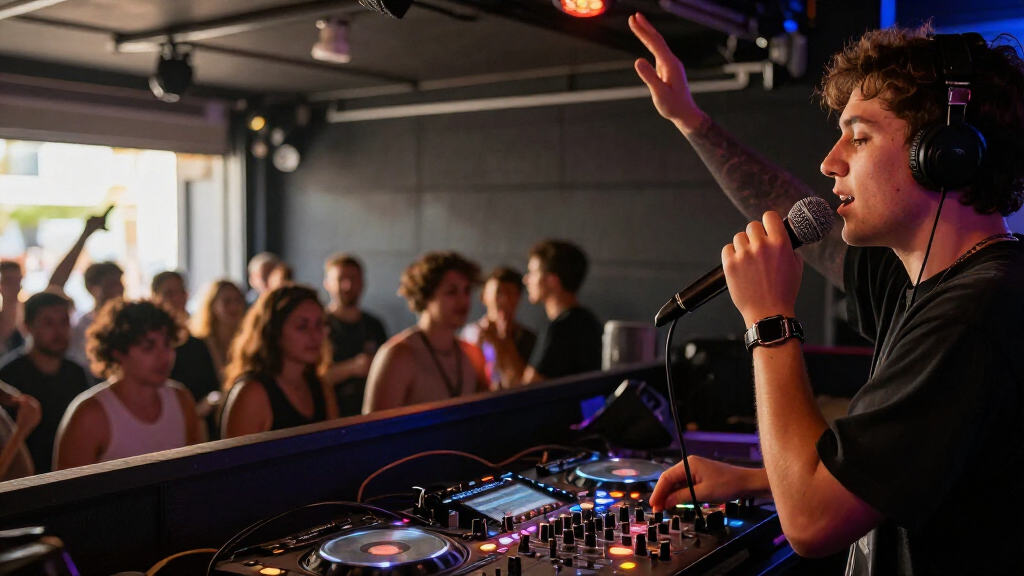
How We Picked
I ranked these systems around the needs of a working DJ: dependable live speech, practical setup, useful microphone count, and a receiver that can fit into a real sound system. I gave more weight to UHF options where the product listing identifies that band, while treating 2.4GHz systems as distinct choices whose fit depends on the venue and speaker setup. I also considered whether the listed design is aimed at standard DJ gear or a specific speaker ecosystem.
The order reflects how broadly useful each system appears for DJ and event work, not a claim that every option has been independently tested. Dual-handheld systems rise when they offer a straightforward fit for common hosting needs; four-mic kits rank higher for group use but lower for buyers who would carry unused equipment. Brand-specific compatibility, connection type, and the limits of available product details also shape the recommendations, so I flag options that make the most sense for narrower setups.
| wireless DJ microphone | Polar pattern |
|---|---|
| Pyle PDWM2135 Dual-Channel VHF | — |
| Wireless Dual Handheld Dynamic | Unidirectional |
| TONOR TW-820 UHF Wireless Micr | Unidirectional |
| Aveek 4-Microphone Wireless Sy | Unidirectional (cardioid) |
| Boeska Dual-Channel UHF Wirele | Unidirectional (cardioid) |
| Phenyx Pro PTU-71-2H Dual UHF | Cardioid (unidirectional) |
| Phenyx Pro PTU-5000-4H 4-Chann | — |
| Phenyx Pro PTU-52-2H Dual UHF | — |
| AURGIC Dual Handheld Wireless | — |
| ALPOWL Wireless Dynamic Microp | Omnidirectional |
| Talomen K60-2 Dual Handheld Wi | — |
| JBL PartyBox Wireless Mic | — |
| GOLDEN MARS Rechargeable 2.4GH | Hyper cardioid |
| JBL Wireless Two-Microphone Sy | Unidirectional |
Factors to Consider When Choosing Wireless DJ Microphones
Before choosing a wireless mic kit, map it to the whole signal path: who will speak, where the receiver will sit, and what input your mixer or speaker accepts. A microphone count alone does not tell you whether a system will suit a DJ booth or a venue with crowded wireless traffic.
Choose a Band With the Venue in Mind
UHF and 2.4GHz systems do not behave identically in every room, so match the connection type to where you work rather than treating one label as a guarantee. UHF products in this roundup include several dual-channel Phenyx Pro systems and the four-channel PTU-5000-4H. The JBL PartyBox mic and GOLDEN MARS kit use 2.4GHz, a common band that may share space with Wi-Fi and other devices. In a busy venue, test the system in the actual performance area when possible, with the receiver placed where it will be used. Do not assume a longer advertised range, if shown elsewhere, translates to clean audio through walls or a crowded room. A DJ who plays varied venues should favor a setup with a clear pairing and frequency-management process over a spec that sounds impressive on its own.
Buy for the Number of Active Speakers
Count the people who may speak at the same time, not everyone who might take a turn during the event. Two handhelds usually cover an emcee and guest, while a four-channel kit can serve panels, contests, or group announcements. Extra channels only help if each microphone can operate and be mixed as needed; confirm the product’s channel arrangement and receiver outputs before purchasing. A four-mic system can add setup, storage, and battery checks, so it is a poor fit if two microphones are enough. On the other hand, borrowing or swapping a single mic during a program can disrupt announcements. For occasional guest use, a dual system with one mic kept as a spare may be simpler than carrying four transmitters.
Check the Receiver-to-Sound-System Connection
Wireless describes the link between the microphone and receiver, not the receiver’s connection to your PA. Check whether the receiver output can connect to the DJ mixer, powered speaker, or input panel you actually use, and confirm which cables or adapters the package includes. A PartyBox-specific microphone system can be a tidy choice for a compatible JBL setup, but it is not automatically the most flexible pick for a mixer-centered rig. Consider where the receiver will live: a crowded booth may call for a compact unit, while a fixed venue may have room for a larger receiver with more controls. Do not rely on a microphone’s handheld appearance as proof that its receiver suits your gear. If your main speaker has only one available input, plan how the mic signal will be mixed with music before the event.
Treat Battery Routine as Part of the Setup
Battery needs can affect how smoothly a long event runs, especially when microphones pass between performers. Rechargeable models such as the JBL PartyBox Wireless Mic and GOLDEN MARS system reduce the need for disposable cells, but they still need a charging routine and a backup plan. Check whether the listing specifies battery type, charging method, and runtime for the exact model; do not infer these details from another kit in the same category. For replaceable-battery systems, carry fresh batteries and change them on a schedule rather than waiting for a weak signal or fading sound. A spare microphone is useful only if it is ready to use, so check its power state before doors open. DJs who work back-to-back events may prefer a clear charging workflow over a small convenience gain during setup.
Plan for Interference and Microphone Handoffs
Wireless microphones share radio space with other equipment, so a system that works at home may need adjustment in a hotel ballroom or club. Check whether the receiver provides channel selection or other frequency controls, and learn how to pair or change settings before the event. Keep the receiver away from large metal objects and avoid burying it behind a rack when the venue layout allows. Handheld mics also need a clear handoff routine: label each transmitter, keep unused microphones muted, and avoid switching on every unit when only one is needed. If several wireless systems are running together, coordinate channels rather than assuming separate boxes will coexist without planning. These habits can matter more than adding another microphone to the kit.
Pay More for Control You Will Actually Use
Higher channel counts and extra controls are useful only when they solve a regular job requirement. A DJ hosting trivia, panel events, or audience contests may benefit from four independent microphones, while a wedding or club emcee may be better served by a simpler dual kit. Brand-specific integration can justify a narrower choice when the rest of your system already belongs to that ecosystem, as with PartyBox users considering JBL’s dedicated mic. Before paying for added complexity, ask whether you need simultaneous microphones, more placement flexibility, or only a reliable way to make announcements. Also check what is included, since accessories and receiver connections can affect the total setup effort. The best fit is the system whose controls and channel count match your gigs, not the one with the longest feature list.
Frequently Asked Questions
Is a two-microphone system enough for most DJ events?
For many events, two handhelds cover the DJ or emcee and one guest, presenter, or backup microphone. That is the practical role of options such as the Phenyx Pro PTU-71-2H and TONOR TW-820. A four-mic system is more useful when several people need separate microphones at once, such as a panel or team game. If guests take turns rather than speaking simultaneously, two mics may be easier to manage and store. Count the maximum number of people speaking at the same time before choosing.
Should I choose UHF or 2.4GHz for DJ work?
Neither band is automatically right for every room. This roundup includes several UHF systems, including Phenyx Pro models, along with 2.4GHz options such as the JBL PartyBox mic and GOLDEN MARS kit. Your venue’s wireless traffic, the system’s channel controls, and your sound-system compatibility all affect the decision. If you perform in varied locations, learn how the receiver handles channel selection or pairing before relying on it for a show. For a fixed compatible PartyBox setup, the JBL option may be more convenient than a general-purpose receiver-based kit.
Can I connect these wireless microphones directly to a DJ controller?
That depends on the receiver outputs and the inputs available on your specific controller. A handheld microphone does not connect wirelessly to a controller by itself; its receiver needs a compatible cable connection. Check the product listing and your controller manual for connector type and input requirements, and plan for any adapter before the event. If your controller has no suitable input, a mixer or powered speaker with a compatible mic input may be needed. The JBL PartyBox system is aimed at compatible PartyBox speakers, so do not assume it will suit a conventional DJ-controller setup without checking its connection path.
Is a rechargeable microphone system a better choice for long events?
Rechargeable models can simplify battery supplies, but they are not automatically safer for a long or back-to-back schedule. You need to know the listed runtime, charging method, and how long recharging takes, then compare those details with your event length. The JBL PartyBox Wireless Mic is listed with rechargeable batteries, and the GOLDEN MARS system is also rechargeable. Have a charging plan and a backup option rather than relying on a single full charge. If the event runs longer than the system’s stated runtime, spare charged transmitters or another ready microphone can prevent a mid-set interruption.
When does a four-channel system make more sense than two separate dual-mic kits?
A four-channel system makes sense when several microphones need to be available together and you want them managed through one receiver setup. The Phenyx Pro PTU-5000-4H and Aveek four-microphone system target that kind of group use. Two separate dual kits may offer more flexibility across rooms or events, but they also mean more receivers and possible frequency coordination. Check whether the four-channel receiver provides the outputs and controls your mixer needs, rather than deciding by microphone count alone. For routine DJ announcements with only one or two active speakers, a dual kit is usually the simpler setup.
Conclusion
For a broadly useful DJ setup, I recommend the Phenyx Pro PTU-71-2H as best overall: its dual UHF handheld format fits common emcee and guest duties. For best value, compare the Phenyx Pro PTU-52-2H and the TONOR TW-820 around the features and connections you actually need rather than paying for unused channels. The Phenyx Pro PTU-5000-4H is my best premium-style choice for multi-speaker events, where four channels earn their place. For beginners, the JBL PartyBox Wireless Mic is a straightforward match if the sound system is a compatible PartyBox; otherwise, a dual-channel receiver kit is a more adaptable starting point. For specific needs, choose the Aveek four-mic system for group hosting, or consider the GOLDEN MARS rechargeable 2.4GHz kit when rechargeable operation is a priority. Check receiver compatibility and venue conditions before making the final call.
Halloween Picks

Spirit Halloween 54-Inch Sitting Scarecrow Animatronic

Gemmy 5.4 ft The Nun Animatronic Halloween Decoration

Vexalify 11-Inch Halloween Pumpkin Fog Machine with 12-Color Lights
As an affiliate, we earn on qualifying purchases.