
TL;DR

Get audio and creator gear delivered free — and shop member deals
- Fast, free delivery on millions of items
- Access to Prime Big Deal Days deals on October 6–7
- Prime Video, Amazon Music and more included
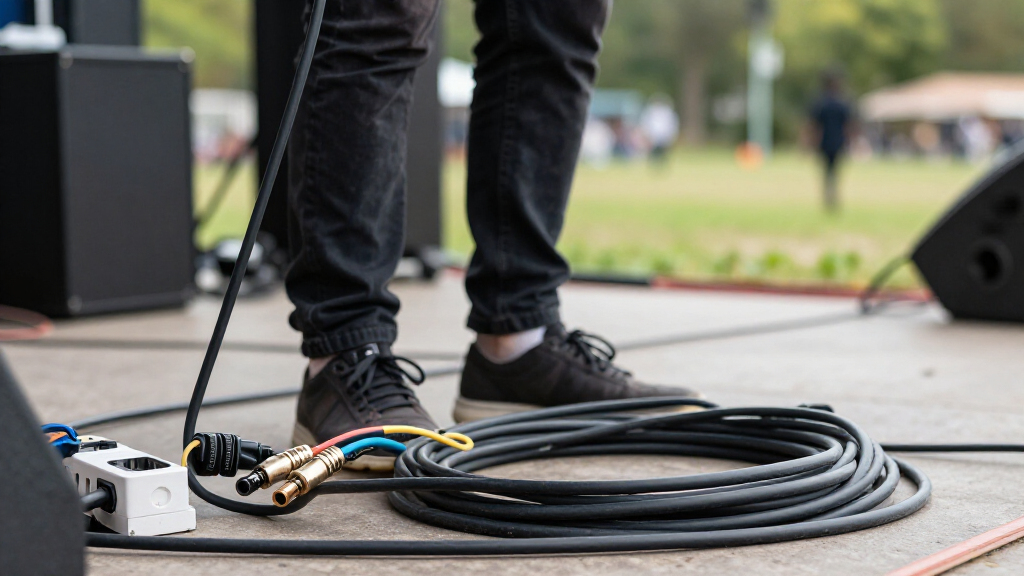
For outdoor gigs, use cords rated for outdoor use with the right gauge based on load and distance. Protect connections from water and traffic, and avoid daisy-chaining cords. Proper selection prevents equipment damage and safety hazards.
Imagine setting up for a lively outdoor wedding or festival. The sun is shining, but the rain could roll in any minute. Your gear? Expensive, sensitive, and vital to the show. The right extension cords aren’t just about reach—they’re about safety, reliability, and peace of mind.
In this guide, you’ll learn how to pick cords that can handle weather, long distances, and heavy loads. Get it wrong, and you risk equipment failure, electric shocks, or worse. Get it right, and your setup runs smoothly—rain or shine.
Choose outdoor-rated cords marked with W, SJTW, or SOOW for weather durability.
Use 12 AWG cables for most outdoor gigs—longer runs and high loads demand heavier gauge.
Calculate your total load carefully—overloading cords or circuits causes safety hazards.
Protect connections from water with covers, drip loops, and elevation.
Never daisy-chain multiple extension cords—use proper distribution systems for large setups.
Choosing the right extension cords for outdoor gigs
The right cord is more than extra reach. It protects sensitive gear from voltage drop, keeps wet environments safer, and helps the show run reliably from soundcheck to the final song.
Strong capacity and lower voltage drop for demanding outdoor setups.
A 1,200-watt load draws approximately 10 amps at 120 volts.
Possible with 12 AWG versus 16 AWG on comparable long, demanding runs.
Outdoor-rated means marked, not merely orange
Weather, sunlight, dirt, abrasion, and repeated handling punish cable jackets. Read the full jacket marking before trusting a cord outside.
Weather suitable
The “W” designation identifies a cord intended for outdoor service. Confirm it is printed on the jacket.
Event-ready utility
A junior-service thermoplastic cord designed for weather exposure, suitable for many mobile setups.
Heavy-duty flexibility
Weather- and oil-resistant cable built for demanding handling. Rubber-jacketed SOOW is common in professional event work.
Reality check: A bright jacket improves visibility, but color alone proves nothing. The complete printed rating is what counts.
Smaller AWG number, thicker conductor
Resistance rises with distance. A heavier conductor helps preserve voltage, limits heat, and reduces dim lighting, audio distortion, shutdowns, and motor stress.
Match the cord to the job
These are practical planning signals, not a substitute for the cord manufacturer’s rating, local code, or a qualified electrical professional.
| Gauge | Best fit | Short run | Long run | High-demand gear | Outdoor gig verdict |
|---|---|---|---|---|---|
| 16 AWG | Small accessories | ✓ Suitable | ✗ Avoid | ✗ Avoid | Limited use only |
| 14 AWG | Moderate loads | ✓ Suitable | ~ Check load | ~ Limited | Acceptable with margin |
| 12 AWG | PA, lighting, DJ rigs | ✓ Strong | ✓ Preferred | ✓ Strong | Best all-round choice |
| 10 AWG | Very long or heavy runs | ✓ More than enough | ✓ Preferred | ✓ Preferred | Heavy but highly capable |
Count everything sharing the circuit
A heavy cord does not increase the capacity of the outlet or breaker. Several receptacles may share one branch circuit, so verify the entire power path.
At 120V, 1,200W ÷ 120V = 10A. Add every connected device, then leave operating margin instead of planning at the absolute maximum.
Build safety into the full power path
Reliability comes from a connected system. One weak link—an overloaded circuit, submerged plug, or damaged jacket—can compromise the entire setup.
Breaker, voltage, grounding, and available capacity.
Running current plus peaks and startup demand.
Balance distance, current, voltage drop, and handling.
Use GFCI, covers, elevation, and drip loops.
Fully uncoil, inspect, energize, and watch for heat.
Control water, traffic, and connections
An outdoor jacket does not make an energized plug safe in standing water. Protect the connector and route every cable as carefully as you select it.
Use and test GFCI protection
Essential around damp ground, outdoor stages, kitchens, tents, fountains, and conductive environments.
Keep plugs dry and elevated
Use listed connection covers, add drip loops, and keep energized connections away from puddles and runoff.
Guard every traffic crossing
Use suitable cable ramps and route away from wheels, doors, sharp edges, pinch points, and guest walkways.
Do not daisy-chain cords
Use one continuous correctly sized cord or a professional temporary power-distribution system for larger setups.
Fast answers before soundcheck
When the load, source, weather exposure, or distribution plan is uncertain, pause and involve a qualified electrician or experienced event-power technician.
What gauge should I use for an outdoor gig?
12 AWG is the practical default for many DJ, PA, and lighting setups. Move to 10 AWG for very long runs or high-current equipment.
Is 14 AWG enough for powered speakers?
It may work for short, moderate-load runs. High-output speakers and longer distances benefit from the extra margin of 12 AWG.
How long can a cord safely be?
There is no universal length without knowing the gauge and load. Around 100 feet, reassess voltage drop and consider heavier cable or proper distribution.
Can outdoor cords be used in rain?
The cable can resist weather, but plugs still require suitable covers and elevation. Never leave energized connections in water.
Can I connect two extension cords?
Avoid it. A single correctly sized cord or professional distribution box is safer and more reliable. Never treat joined household cords as a permanent event-power solution.
Treat extension cords as the veins of the event: specify the outdoor jacket, calculate the combined load, size for current and distance, protect every connection, and keep traffic under control. The payoff is safer people, healthier equipment, and uninterrupted performance—rain or shine.
Why outdoor-rated cords matter — what makes a cord suitable for outside?
Outdoor-rated extension cords are built to withstand weather, dirt, and rough handling. Look for markings like W, SJTW, or SOOW on the jacket. These indicate the cord’s jacket is designed for outdoor exposure.
For example, a typical indoor cord might crack or melt if it gets wet or exposed to sunlight. An SJTW cord, with its thermoplastic jacket, can handle rain, mud, and UV rays without falling apart. When setting up at a muddy festival or in a rainy backyard, outdoor-rated cords aren’t optional—they’re mandatory.
Remember: a bright orange jacket doesn’t automatically mean outdoor. Check the markings to be sure.
As an affiliate, we earn on qualifying purchases.
Picking the right wire gauge — what size cord do you really need?
Extension cords in North America follow the AWG system. The smaller the number, the thicker the wire. For outdoor gigs, 12 AWG is the sweet spot for most heavy-duty applications.
Say you’re running a powerful PA system with subwoofers and multiple lighting fixtures. A 16 AWG cord might handle light loads over a short distance, but over 50 feet, voltage drops can cause dim lights or audio distortion. A 12 AWG cord reduces voltage drop significantly—by up to 50% over 16 AWG—keeping your gear performing at its best.
Choosing the correct gauge isn’t just about capacity—it influences performance and safety. Undersized cords can overheat, leading to potential fires or equipment damage. Conversely, using a heavier gauge than necessary can be more cumbersome and less flexible. The key is balancing load, length, and ease of setup to ensure reliable power without unnecessary bulk.
For very long runs (over 100 feet), consider 10 AWG or heavier, especially if you’re drawing high current. This helps maintain voltage levels and prevents equipment malfunctions caused by voltage drops.
weatherproof outdoor extension cords
As an affiliate, we earn on qualifying purchases.
As an affiliate, we earn on qualifying purchases.
How to calculate the real load — why knowing your equipment’s draw saves you from surprises
Knowing the actual current your gear draws is key. If your amplifier’s wattage is listed, convert watts to amps: Amps = Watts ÷ 120V. For example, a 1,200-watt amp pulls about 10 amps.
But beyond simple calculations, understanding the load helps you prevent overloads that can lead to safety hazards or equipment damage. For instance, if multiple devices share a circuit, their combined draw might approach or exceed the circuit’s capacity—causing breakers to trip or wires to overheat. Recognizing the peak startup current—often double the running current—further ensures your cords and circuits are rated appropriately.
In practice, this means always adding a margin—don’t run your gear at 100% capacity for extended periods. Overloading isn’t just a minor inconvenience; it can cause fires, electrical shocks, or equipment failure. Accurate load calculation informs your choice of cords, outlets, and circuit distribution, ensuring your setup is both safe and efficient.
heavy-duty outdoor extension cords for gigs
As an affiliate, we earn on qualifying purchases.
As an affiliate, we earn on qualifying purchases.
Frequently Asked Questions
What gauge extension cord should I use for an outdoor gig?
For most outdoor DJ setups, 12 AWG cords are ideal—they handle long distances and high loads better than thinner options. Use heavier gauges like 10 AWG for very long runs or high-power equipment.Is a 14-gauge cord enough for powered speakers?
A 14-gauge cord can work for short, low-power runs, but for high-output speakers or longer distances, 12 AWG provides a safer margin and less voltage drop.How long can an extension cord safely be?
Length depends on load and gauge. For example, a 12 AWG cord can safely run up to 100 feet at full capacity, but beyond that, consider heavier gauge or a dedicated power system to prevent voltage issues.Can I connect two extension cords together?
It’s best avoided. If necessary, ensure both cords are rated for the load, use proper connectors, and protect the connection from water and physical damage. Ideally, use one continuous cord or a professional distribution box.Can outdoor extension cords be used in the rain?
Yes, outdoor cords are designed to resist weather, but plugs and connections still need to be protected with weatherproof covers. Avoid energized connections sitting in water or puddles.outdoor-rated extension cord covers
As an affiliate, we earn on qualifying purchases.
As an affiliate, we earn on qualifying purchases.
Conclusion
Picking the right extension cord isn’t just about reach—it’s a safety, performance, and reliability decision. Think of your cords as the veins powering your event. Properly rated, protected, and managed, they keep your show flowing smoothly, rain or shine.
Remember: don’t cut corners on electrical safety. Your gear and your crew depend on it. When in doubt, consult a professional—your event’s success depends on it.
Fall Picks
fall essentials
As an affiliate, we earn on qualifying purchases.