Wireless DJ headphones trade cable freedom for questions about latency, connectivity, and dependable cueing. My best overall pick is the AlphaTheta HDJ-F10 Wireless, which stands out for DJ-focused SonicLink support and noise cancelling; the HDJ-F10-TX adds a dedicated transmitter, while the OneOdio Studio Max 2 offers a more flexible wireless-and-wired approach. The right choice depends on whether you need low-latency monitoring, everyday Bluetooth listening, or a wired backup when a battery runs down. On-ear and over-ear fit, isolation, and how you plan to connect can matter as much as headline features. Read on for the full breakdown of all 11 options and which compromises fit your setup.

Get audio and creator gear delivered free with Prime
- Fast, free delivery on millions of items
- Prime Video, Amazon Music and more included
- Member-only deals all year
Complete the kit


Key Takeaways
- The HDJ-F10 models separate from general Bluetooth options through DJ-oriented SonicLink connectivity; the TX version pairs that approach with a dedicated transmitter, while the standard model adds noise cancelling.
- Wireless alone does not make headphones suitable for cueing. Buyers should check the connection method and latency needs for their mixer or controller, and keep wired monitoring available when timing matters.
- OneOdio’s Studio Max models emphasize flexibility with wireless and wired use, a useful distinction for DJs who want one headset for practice and other listening.
- The AIAIAI TMA-2 choices are not interchangeable. Move, Studio Wireless, and DJ Wireless target different listening and working priorities, so buyers should match the specific model to their use rather than relying on the shared TMA-2 name.
- The Pioneer HDJ-CUE1BT models and OneOdio A70 suit simpler Bluetooth use better than a setup that depends on dedicated low-latency wireless monitoring; the white CUE1BT offers a color choice, not a different product role.
| OneOdio Studio Max 2 Wireless DJ Headphones |  | Best Overall for Low-Latency Versatility | Latency: 9 ms | Connectivity: Bluetooth 6.0, 2.4G wireless, wired | Wired connectors: 3.5 mm and 6.35 mm | VIEW LATEST PRICE | See Our Full Breakdown |
| PUPGSIS PG-MXPRO Wireless DJ Headphones, Black |  | Best for Single-Ear Monitoring | Connectivity: 2.4 GHz wireless, Bluetooth 5.3, AUX | Latency: 20 ms in 2.4 GHz mode | Driver size: 50 mm | VIEW LATEST PRICE | See Our Full Breakdown |
| AIAIAI TMA-2 Move Wireless Over-Ear Headphones, White |  | Best for Modular Everyday Listening | Connectivity: Bluetooth 5.3 | Battery life: Up to 40 hours | Driver type: Dynamic | VIEW LATEST PRICE | See Our Full Breakdown |
| OneOdio Studio Max 1 Wireless DJ and Wired Studio Headphones |  | Best for Long Sessions and Shared Studio Use | Connectivity: Bluetooth, transmitter wireless, wired | Bluetooth version: 5.2 in specs; description also claims 5.3 | Latency: 20 ms | VIEW LATEST PRICE | See Our Full Breakdown |
| AIAIAI TMA-2 Studio Wireless Over-Ear Headphones |  | Best for Low-Latency Wireless Studio Monitoring | Connectivity: W+ Link, Bluetooth, detachable cable | Bluetooth version: 5.3 | Wireless latency: Under 10 ms via W+ Link | VIEW LATEST PRICE | See Our Full Breakdown |
| OneOdio A70 Bluetooth Over-Ear Headphones, Black |  | Best Value for Wired-and-Wireless Flexibility | Driver size: 40 mm neodymium | Wireless battery life: Up to 72 hours | Connectivity: Bluetooth and wired | VIEW LATEST PRICE | See Our Full Breakdown |
| AlphaTheta HDJ-F10-TX Wireless DJ Headphones with SonicLink Transmitter |  | Best Complete Wireless Monitoring System | Included transmitter: HP-TX01 | Connectivity: SonicLink, Bluetooth, and wired | SonicLink latency: 9 ms | VIEW LATEST PRICE | See Our Full Breakdown |
| Pioneer DJ HDJ-CUE1BT On-Ear DJ Headphones with Bluetooth, White |  | Best for One-Ear Cueing | Type: On-ear DJ headphones | Connectivity: Bluetooth 4.2 and wired | Driver: 40 mm dynamic | VIEW LATEST PRICE | See Our Full Breakdown |
| AlphaTheta HDJ-F10 Wireless DJ Headphones with SonicLink and Noise Cancelling |  | Best for Booth-to-Travel Versatility | Driver: 40 mm PEEK dynamic | Connectivity: SonicLink, Bluetooth 4.0, and wired | SonicLink latency: 9 ms | VIEW LATEST PRICE | See Our Full Breakdown |
| AIAIAI TMA-2 DJ Wireless Over-Ear Headphones |  | Best Modular Low-Latency Pick | Connectivity: W+ Link and Bluetooth | Audio latency: 10 ms | Battery life: More than 25 hours | VIEW LATEST PRICE | See Our Full Breakdown |
| Pioneer DJ HDJ-CUE1BT On-Ear Bluetooth DJ Headphones |  | Best Compact Hybrid Pick | Style: On-ear headphones | Connectivity: Bluetooth and wired | Driver type and size: Dynamic, 40 mm | VIEW LATEST PRICE | See Our Full Breakdown |
| wireless DJ headphone | Connectivity | Battery life | Weight |
|---|---|---|---|
| OneOdio Studio Max 2 Wireless | Bluetooth 6.0, 2.4G wireless, wired | Up to 120 hours | — |
| PUPGSIS PG-MXPRO Wireless DJ H | 2.4 GHz wireless, Bluetooth 5.3, AUX | Up to 60 hours in Bluetooth mode; up to 30 hours in 2.4 GHz mode | — |
| AIAIAI TMA-2 Move Wireless Ove | Bluetooth 5.3 | Up to 40 hours | 225 g |
| OneOdio Studio Max 1 Wireless | Bluetooth, transmitter wireless, wired | Up to 120 hours Bluetooth; up to 50 hours transmitter mode | — |
| AIAIAI TMA-2 Studio Wireless O | W+ Link, Bluetooth, detachable cable | — | 227 g |
| OneOdio A70 Bluetooth Over-Ear | Bluetooth and wired | — | 8.96 oz |
| AlphaTheta HDJ-F10-TX Wireless | SonicLink, Bluetooth, and wired | Up to 9 hours with SonicLink; up to 30 hours with Bluetooth | 2.3 pounds |
| Pioneer DJ HDJ-CUE1BT On-Ear D | Bluetooth 4.2 and wired | 3 hours | — |
| AlphaTheta HDJ-F10 Wireless DJ | SonicLink, Bluetooth 4.0, and wired | Up to 9 hours with SonicLink; up to 30 hours with Bluetooth | 2.2 pounds |
| AIAIAI TMA-2 DJ Wireless Over- | W+ Link and Bluetooth | More than 25 hours | 217 g |
| Pioneer DJ HDJ-CUE1BT On-Ear B | Bluetooth and wired | — | 250 g |
More Details on Our Top Picks
OneOdio Studio Max 2 Wireless DJ Headphones
For a DJ who wants one pair for wireless monitoring, wired decks, and long studio sessions, the Studio Max 2 has the broadest toolkit in this group. Its stated 9 ms latency and included 2.4G option suit cueing better than the PUPGSIS PG-MXPRO’s 20 ms 2.4 GHz specification, while Bluetooth and wired connections cover everyday listening and conventional gear. The 120-hour battery claim is especially generous, and the quick-charge feature can help when a session starts before the headphones are fully charged. LDAC and 45 mm drivers add a high-resolution listening option, though codec support alone does not guarantee a particular sound signature. Compared with the Studio Max 1, this model lists lower latency, but its large over-ear build may feel less convenient to pack. I’d skip it if portability and simple controls matter more than connection flexibility.
Pros:- Stated 9 ms latency with 2.4G wireless for responsive monitoring
- Bluetooth, 2.4G wireless, and wired 3.5 mm and 6.35 mm connections
- Up to 120 hours of battery life, with a five-minute charge stated to provide nine hours of playback
- LDAC support, 45 mm drivers, and a useful selection of included cables and case
Cons:- Large over-ear design may be cumbersome for travel
- Button controls may be less intuitive for buyers accustomed to touch controls
- The 9 ms latency claim is tied to the specified wireless setup, not every Bluetooth connection
Best for: DJs and studio users who need low-latency wireless monitoring, standard wired connections, and extended battery life in one over-ear pair.
Not ideal for: Travel-focused buyers who want compact headphones, or users who prefer touch controls and a lighter portable design.
- Latency:9 ms
- Connectivity:Bluetooth 6.0, 2.4G wireless, wired
- Wired connectors:3.5 mm and 6.35 mm
- Audio codec:LDAC
- Driver size:45 mm
- Frequency response:20 Hz–40 kHz
- Battery life:Up to 120 hours
- Charging:USB-C; five-minute charge provides up to nine hours of playback
- Design:Over-ear
Our verdict“Choose the Studio Max 2 if low-latency wireless, wired deck compatibility, and long battery life matter more than compactness.”
PUPGSIS PG-MXPRO Wireless DJ Headphones, Black
The PG-MXPRO makes its case with a practical DJ feature: 180° rotating ear cups for monitoring with one ear while keeping the other open. That gives it a hands-on mixing advantage over the AIAIAI TMA-2 Move, whose supplied details focus more on comfort, app tuning, and modular parts than on a rotating-cup monitoring setup. It also offers 2.4 GHz wireless, Bluetooth, and AUX, with both 3.5 mm and 6.35 mm compatibility for common DJ connections. Its 20 ms 2.4 GHz latency is higher than the Studio Max 2’s stated 9 ms, so I’d favor the OneOdio for buyers prioritizing the lowest listed delay. The foldable frame and case help with transport, but battery life falls from 60 hours in Bluetooth mode to 30 hours on 2.4 GHz, and that mode needs the included transmitter.
Pros:- 180° rotating ear cups support single-ear monitoring
- 2.4 GHz wireless, Bluetooth 5.3, and AUX connectivity
- Includes 3.5 mm and 6.35 mm connection options
- Foldable design and supplied storage case support easier transport
Cons:- The 20 ms 2.4 GHz latency is higher than the Studio Max 2’s stated 9 ms
- 2.4 GHz playback is listed at up to 30 hours, half the Bluetooth figure
- 2.4 GHz operation requires the included transmitter
Best for: Beginner and mobile DJs who want rotating ear cups for one-ear cueing, multiple connection options, and a foldable set with a case.
Not ideal for: DJs who prioritize the lowest stated wireless latency or need the longest possible battery life while using a transmitter.
- Connectivity:2.4 GHz wireless, Bluetooth 5.3, AUX
- Latency:20 ms in 2.4 GHz mode
- Driver size:50 mm
- Frequency response:20 Hz–40 kHz
- Battery life:Up to 60 hours in Bluetooth mode; up to 30 hours in 2.4 GHz mode
- Wired connectors:3.5 mm and 6.35 mm
- Monitoring design:Over-ear, foldable, 180° rotating ear cups
- Total harmonic distortion:<0.5%
- Warranty:1 year
Our verdict“Pick the PG-MXPRO if rotating cups and portable single-ear cueing are more useful to you than the lowest latency or longest transmitter-mode runtime.”
AIAIAI TMA-2 Move Wireless Over-Ear Headphones, White
The TMA-2 Move is the more lifestyle-oriented choice here: Bluetooth 5.3, app-based sound profiles, memory-foam cushions, and a replaceable modular design give it appeal beyond DJ monitoring. Its stated 40-hour battery life is respectable, but the included Bluetooth connection is not presented as a low-latency DJ link. By contrast, the AIAIAI TMA-2 Studio Wireless comes with a W+ Link transmitter and lists under 10 ms latency, making that model a clearer fit for cueing and timing-sensitive work. The Move can add W+ Link through an optional X03 transmitter, but that means an extra accessory is needed to reach that use case. Passive isolation and a 225 g weight suit extended listening, yet buyers who need wired deck connectivity should note that a wired mode is not listed in the supplied product details.
Pros:- Modular parts can be replaced or upgraded
- App-based sound profile customization
- Memory-foam cushions and passive isolation for listening comfort
- Up to 40 hours of wireless playback
Cons:- W+ Link low-latency connectivity requires the optional X03 transmitter
- Bluetooth is the listed standard wireless connection, with no latency figure provided
- Wired connectivity is not specified in the supplied product details
Best for: DJs who also want comfortable Bluetooth headphones for daily listening and value app sound adjustment and replaceable parts.
Not ideal for: Performance-focused DJs who need included low-latency wireless or clearly specified wired connectivity for decks and mixers.
- Connectivity:Bluetooth 5.3
- Battery life:Up to 40 hours
- Driver type:Dynamic
- Audio impedance:32 ohm
- Cushion material:Memory foam
- Noise control:Passive noise isolation
- Weight:225 g
- Modular design:Replaceable and upgradeable parts
- Optional low-latency link:W+ Link requires optional X03 transmitter
Our verdict“Choose the TMA-2 Move for adaptable everyday Bluetooth listening, not as the most ready-to-use low-latency option for DJ cueing.”
OneOdio Studio Max 1 Wireless DJ and Wired Studio Headphones
The Studio Max 1 is a strong fit for DJs who want a long-running wireless pair that can also connect directly to studio gear. It lists up to 120 hours over Bluetooth, plus up to 50 hours with its included transmitter, and its 5-minute quick charge is stated to add five hours of playback. That makes it a more practical long-session choice than the AIAIAI TMA-2 Studio Wireless, which lists 20-plus hours, though the AIAIAI specifies under 10 ms W+ Link latency while the Studio Max 1 lists 20 ms. Rotating ear cups, folding construction, and a travel case add flexibility for monitoring and transport. One specification caveat: the supplied data gives Bluetooth 5.2 in the specs but also claims 5.3 in the description. I’d choose it for battery and connections, not for the lowest stated delay.
Pros:- Up to 120 hours of Bluetooth playback and up to 50 hours with the transmitter
- Includes a transmitter, 3.5 mm and 6.35 mm cables, adapter, and travel case
- 180° rotating ear cups and foldable construction support monitoring and transport
- Quick charge is stated to provide five hours of playback from five minutes of charging
Cons:- Listed 20 ms latency is higher than the Studio Max 2’s stated 9 ms and the AIAIAI TMA-2 Studio Wireless’s under 10 ms
- Battery life is lower with the transmitter than in Bluetooth mode
- Bluetooth version differs between the supplied specifications and description
Best for: DJs and studio users who want very long Bluetooth runtime, included transmitter connectivity, and standard wired connections for equipment.
Not ideal for: DJs who need the lowest listed wireless latency, or buyers who want unambiguous Bluetooth-version specifications.
- Connectivity:Bluetooth, transmitter wireless, wired
- Bluetooth version:5.2 in specs; description also claims 5.3
- Latency:20 ms
- Driver size:50 mm
- Battery life:Up to 120 hours Bluetooth; up to 50 hours transmitter mode
- Quick charging:Five-minute charge provides up to five hours of playback
- Connectors:3.5 mm and 6.35 mm
- Ear cup rotation:180°
- Audio support:Hi-Res Audio, LDAC, and LC3
Our verdict“Choose the Studio Max 1 if long battery life and a complete wired-and-wireless kit outweigh its higher stated latency and Bluetooth-version ambiguity.”
AIAIAI TMA-2 Studio Wireless Over-Ear Headphones
For wireless work where timing matters more than all-day battery claims, the TMA-2 Studio Wireless is the clearest AIAIAI pick in this batch. Its included W+ Link transmitter delivers under 10 ms latency, while Bluetooth 5.3 covers everyday listening and calls; a detachable cable adds another way to connect. That makes it more immediately suited to low-latency monitoring than the TMA-2 Move, which needs an optional X03 transmitter for W+ Link. The tradeoff is runtime: the Studio Wireless lists 20-plus hours, well short of the OneOdio Studio Max 1’s figures of up to 120 hours over Bluetooth and 50 hours with its transmitter. Balanced sound, app-based EQ, memory foam, and a padded headband support studio listening, but buyers should check their setup: the supplied data lists a cable without specifying a headphone jack.
Pros:- Included W+ Link transmitter provides stated latency under 10 ms
- Supports W+ Link, Bluetooth 5.3, and detachable cable connectivity
- App-based EQ offers sound adjustment for different listening tasks
- Memory-foam cushions and padded headband are designed for extended wear
Cons:- Playback is listed at 20-plus hours, below the OneOdio Studio Max models’ stated runtimes
- No headphone jack size is specified in the supplied product details
- The under-10 ms figure applies to W+ Link, not the listed Bluetooth connection
Best for: Studio DJs and producers who need included under-10 ms wireless monitoring and want Bluetooth and cable options in the same pair.
Not ideal for: DJs running very long sessions without charging access, or anyone who needs clearly specified 3.5 mm or 6.35 mm headphone connectors.
- Connectivity:W+ Link, Bluetooth, detachable cable
- Bluetooth version:5.3
- Wireless latency:Under 10 ms via W+ Link
- Playback time:20+ hours
- Driver type:Dynamic
- Audio impedance:32 ohm
- Weight:227 g
- Materials:Polyurethane leather and memory foam
- Included items:W+ Link transmitter, protective pouch, cable
Our verdict“Pick the TMA-2 Studio Wireless if included, under-10 ms monitoring matters more than maximum runtime or fully specified connector details.”
OneOdio A70 Bluetooth Over-Ear Headphones, Black
The OneOdio A70 is the practical pick for DJs who want Bluetooth for casual listening but still need a cable option for monitoring. Its included 3.5 mm and 6.35 mm cables make it easier to connect to compatible DJ gear than Bluetooth-only listening, while the 40 mm drivers and foldable cups keep the setup straightforward. Compared with the Pioneer DJ HDJ-CUE1BT, the A70 offers a longer stated wireless runtime and over-ear padding rather than an on-ear fit. The tradeoff is that it lacks the dedicated low-latency wireless monitoring offered by the AlphaTheta HDJ-F10 models and AIAIAI TMA-2 DJ Wireless. Treat its Bluetooth mode as a convenience, not a substitute for a wired or purpose-built DJ link when tight cue timing matters.
Pros:- Up to 72 hours of stated wireless battery life.
- Includes 3.5 mm and 6.35 mm connection options for compatible equipment.
- Foldable, rotatable design with memory-foam and protein-leather cushions.
- Built-in microphone and audio-sharing feature add everyday flexibility.
Cons:- Bluetooth is not specified as a low-latency DJ monitoring link.
- The 6.35 mm plug only suits equipment with a compatible input.
- The stated long runtime applies to wireless use; wired listening requires a cable.
Best for: Budget-conscious bedroom DJs who want long Bluetooth listening sessions and included cables for compatible mixer or audio connections.
Not ideal for: Performers who need dedicated low-latency wireless cue monitoring or reliable isolation in a loud booth.
- Driver size:40 mm neodymium
- Wireless battery life:Up to 72 hours
- Connectivity:Bluetooth and wired
- Included cables:3.5 mm to 6.35 mm; 3.5 mm to 3.5 mm
- Design:Foldable and rotatable over-ear
- Cushion material:Memory foam and protein leather
- Weight:8.96 oz
- Warranty:24 months
Our verdict“Choose the A70 if you want an affordable, versatile headphone for wireless listening and cable-connected DJ practice, not specialized wireless booth monitoring.”
AlphaTheta HDJ-F10-TX Wireless DJ Headphones with SonicLink Transmitter
The AlphaTheta HDJ-F10-TX earns its place for DJs who want a ready-to-connect, low-latency wireless monitoring setup. The included HP-TX01 transmitter links to a mixer output and sends SonicLink audio with a stated 9 ms latency, a more DJ-focused arrangement than the Bluetooth-only convenience of the OneOdio A70. Bluetooth and wired modes also cover travel and conventional connections, while ANC and Transparency modes let listeners adjust how much outside sound they hear. Its main compromise is runtime: SonicLink is rated for up to 9 hours, well below the 30-hour Bluetooth figure. The transmitter also adds a component to connect and carry, so this package makes more sense for DJs who will use its monitoring system than for listeners seeking simple wireless headphones.
Pros:- Included HP-TX01 transmitter enables SonicLink monitoring from a mixer output.
- SonicLink latency is specified at 9 ms.
- Offers Bluetooth, wired listening, ANC, and Transparency modes.
- MIL-STD-810H shock-tested construction and up to 30 hours of Bluetooth battery life.
Cons:- SonicLink battery life is rated for up to 9 hours, much shorter than Bluetooth runtime.
- Using wireless mixer monitoring requires connecting and carrying the transmitter.
- At 2.3 pounds, the listed weight is substantial for travel.
Best for: Working DJs who want a bundled transmitter-based wireless link for mixer monitoring, plus Bluetooth and wired modes for other listening.
Not ideal for: DJs who need all-day SonicLink use without recharging or who want a simple Bluetooth-only setup with no transmitter to connect.
- Included transmitter:HP-TX01
- Connectivity:SonicLink, Bluetooth, and wired
- SonicLink latency:9 ms
- Battery life:Up to 9 hours with SonicLink; up to 30 hours with Bluetooth
- Driver:40 mm PEEK
- Noise control:Active Noise Cancelling and Transparency modes
- Durability:MIL-STD-810H shock-tested
- Weight:2.3 pounds
Our verdict“Pick this package if transmitter-based, low-latency wireless monitoring is the priority and you are willing to manage its shorter SonicLink runtime.”
Pioneer DJ HDJ-CUE1BT On-Ear DJ Headphones with Bluetooth, White
The Pioneer DJ HDJ-CUE1BT suits DJs who value quick one-ear monitoring and a compact form over padded, full-cup isolation. Its swivel earcups make it easy to keep one side on a cue while listening to the room with the other, and the bass-forward tuning is aimed at hearing kick drums and beat patterns. Compared with the over-ear OneOdio A70, this Pioneer DJ model folds down and has a more performance-oriented cup movement, but its on-ear fit provides less coverage and no listed noise control. It supports wired monitoring as well as Bluetooth, though the supplied data lists just 3 hours of battery life, a clear limitation for extended wireless listening. I would choose it for short practice sessions and cueing, not for untethered all-day use.
Pros:- Swivel earcups support one-ear monitoring.
- Wired and Bluetooth listening modes provide flexible connections.
- Foldable construction is convenient for carrying.
- Bass-focused tuning helps make kick drums and beat patterns prominent.
Cons:- Listed battery life is only 3 hours.
- No noise-control system is specified.
- On-ear cups offer less coverage than the over-ear OneOdio A70 and AlphaTheta HDJ-F10.
Best for: Beginner and mobile DJs who want foldable headphones with swivel cups for one-ear cueing and occasional Bluetooth listening.
Not ideal for: DJs who need long wireless sessions, strong noise isolation, or the comfort of over-ear cushions during extended sets.
- Type:On-ear DJ headphones
- Connectivity:Bluetooth 4.2 and wired
- Driver:40 mm dynamic
- Impedance:32 ohm
- Sensitivity:104 dB
- Headphone jack:3.5 mm
- Design features:Swivel earcups and foldable
- Battery life:3 hours
Our verdict“Choose the HDJ-CUE1BT for portable, one-ear cueing and wired backup, but skip it if long wireless battery life or over-ear isolation matters.”
AlphaTheta HDJ-F10 Wireless DJ Headphones with SonicLink and Noise Cancelling
The AlphaTheta HDJ-F10 is aimed at DJs who want one over-ear headset for low-latency booth monitoring and travel listening. Its 9 ms SonicLink connection gives it a more purpose-built wireless DJ role than the Pioneer DJ HDJ-CUE1BT, while Bluetooth and wired modes provide alternatives when the SonicLink setup is not needed. ANC and Transparency modes add flexibility in noisy spaces, and the shock-tested construction is intended for regular transport. Compared with the HDJ-F10-TX package, this listing describes the headphones with a transmitter included, so buyers should check their intended mixer connection and transmitter requirements before choosing between the two bundles. SonicLink runtime remains limited to up to 9 hours, and the stated 2.2-pound weight makes this a substantial travel choice.
Pros:- SonicLink supports wireless monitoring with a stated 9 ms latency.
- Bluetooth and wired modes cover non-DJ listening and cable-connected use.
- ANC and Transparency modes offer different ways to manage surrounding sound.
- Shock-tested construction and enhanced earpads and housing suit road use.
Cons:- SonicLink battery life is up to 9 hours, shorter than the Bluetooth runtime.
- The listed weight of 2.2 pounds is heavy for travel.
- The listing describes a transmitter bundle, which may be more equipment than Bluetooth-focused listeners need.
Best for: DJs who want a rugged over-ear model for low-latency wireless monitoring, with ANC and Bluetooth for travel between sessions.
Not ideal for: Buyers who prioritize a light travel headset or need longer wireless monitoring sessions than the stated SonicLink runtime allows.
- Driver:40 mm PEEK dynamic
- Connectivity:SonicLink, Bluetooth 4.0, and wired
- SonicLink latency:9 ms
- Battery life:Up to 9 hours with SonicLink; up to 30 hours with Bluetooth
- Noise control:Active Noise Cancelling and Transparency modes
- Impedance:32 ohm
- Durability:MIL-STD-810H shock-tested
- Weight:2.2 pounds
Our verdict“Choose the HDJ-F10 if you want one rugged headset for SonicLink booth monitoring and travel features, and can accept its weight and shorter monitoring runtime.”
AIAIAI TMA-2 DJ Wireless Over-Ear Headphones
The AIAIAI TMA-2 DJ Wireless stands out for DJs who want low-latency wireless audio without the AlphaTheta system’s included transmitter approach. Its W+ Link connection is specified at 10 ms, close to the HDJ-F10’s 9 ms SonicLink figure, and Bluetooth provides a separate option for everyday listening. The modular build is a practical distinction: individual parts can be customized, replaced, or upgraded, unlike a conventional fixed headset design. More than 25 hours of battery life also makes it less constrained than the HDJ-F10’s stated 9-hour SonicLink runtime, though the figures refer to different modes and should not be treated as directly interchangeable. Sound-isolating memory-foam cushions help in noisy settings, but the product data also flags an on-ear fit, which may disappoint buyers expecting generous over-ear padding.
Pros:- W+ Link audio is specified at 10 ms latency for mixing.
- Modular construction allows parts to be replaced, customized, or upgraded.
- More than 25 hours of stated battery life.
- Memory-foam cushions provide sound isolation.
Cons:- The listed on-ear cushion fit may not suit buyers seeking full over-ear coverage.
- No active noise-cancelling or transparency mode is specified.
- Plastic enclosure may feel less substantial than the shock-tested AlphaTheta HDJ-F10.
Best for: DJs who want a repairable, customizable headset with a dedicated low-latency wireless link and Bluetooth for casual listening.
Not ideal for: Listeners who prefer roomy over-ear cushions or who want the AlphaTheta HDJ-F10’s listed active noise-cancelling and transparency modes.
- Connectivity:W+ Link and Bluetooth
- Audio latency:10 ms
- Battery life:More than 25 hours
- Driver:40 mm dynamic bio-cellulose
- Noise control:Sound isolation
- Cushion material:Memory foam with PU leather
- Weight:217 g
- Warranty:2 years
Our verdict“Pick the TMA-2 DJ Wireless if modular construction and a dedicated low-latency link matter more than active noise control or a consistently over-ear fit.”
Pioneer DJ HDJ-CUE1BT On-Ear Bluetooth DJ Headphones
The Pioneer DJ HDJ-CUE1BT suits DJs who want one foldable pair for casual Bluetooth listening and wired booth monitoring. Its swivel earcups support one-ear cueing, while the bass-focused tuning brings kick drums forward for beat matching. Unlike over-ear options such as the OneOdio A70 Bluetooth Over-Ear Headphones, this on-ear model packs down compactly and weighs 250 g, but its fit may feel less comfortable during long sessions for listeners who prefer full ear coverage. Bluetooth adds convenience away from the decks; switching to the included coiled cable gives you a wired monitoring option. That cable extends to 1.8 m, which may feel limiting if your setup needs more reach. I’d choose this over bulkier models for portability, not for extended wear or maximum cable flexibility.
Pros:- Bluetooth listening and wired DJ monitoring in one pair
- Swivel earcups make one-ear cueing easier
- Foldable, 250 g design is convenient to pack
- Bass-forward tuning helps kick drums stand out
Cons:- On-ear fit may become uncomfortable for listeners who prefer full-size over-ear cups
- Included coiled cable extends only to 1.8 m
- Sound isolation is passive, with no active noise cancellation listed
Best for: Mobile DJs and commuters who want foldable headphones with both Bluetooth listening and wired monitoring for short-to-moderate sessions.
Not ideal for: DJs who need over-ear coverage for long sets, or booth setups where a longer monitoring cable is needed.
- Style:On-ear headphones
- Connectivity:Bluetooth and wired
- Driver type and size:Dynamic, 40 mm
- Impedance:36 ohm
- Sensitivity:104 dB
- Cable:1.2 m coiled; 1.8 m extended
- Weight:250 g
- Design features:Swivel earcups; foldable
- Included accessories:USB charging cable, 1.2 m coiled cable, instruction manual
Our verdict“Choose the HDJ-CUE1BT if portability and Bluetooth convenience matter more than over-ear comfort or extra cable reach.”
How We Picked
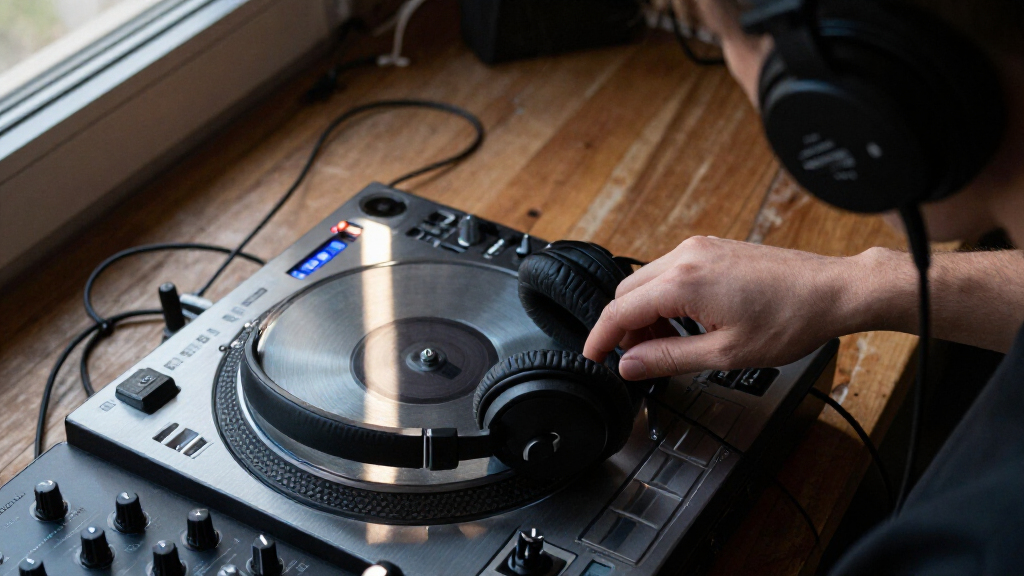
I ranked these headphones around the decisions that matter specifically to DJs: whether the wireless connection suits cueing, whether a wired option can cover battery or compatibility limits, how practical the fit and controls are for long sessions, and whether the design makes sense beyond the booth. I gave more weight to DJ-focused connection options and useful backup flexibility than to Bluetooth convenience alone, because ordinary Bluetooth can add delay that complicates beatmatching.
The order reflects distinct buyer roles rather than a claim that every model works equally well for every setup. The AlphaTheta HDJ-F10 options lead for their purpose-built wireless features, while the OneOdio Studio Max 2 earns a strong general-use position through its wireless-and-wired versatility. AIAIAI’s separate TMA-2 variants, the OneOdio A70, and the Pioneer CUE1BT models follow for buyers who prioritize different mixes of listening, portability, and straightforward Bluetooth use. I treat the two CUE1BT colors as one functional choice, and the TX version as a separate pick because the transmitter changes the connection setup.
Factors to Consider When Choosing Wireless DJ Headphones
Before choosing a pair, match the headphones to the way sound reaches you at the booth. A wireless feature that works well for casual listening may not suit real-time cueing, and a premium headset can still be the wrong fit if your controller, workflow, or monitoring habits call for a cable.
Match the wireless connection to cueing
Start by finding out what wireless system your headphones use and whether your DJ gear can connect to it. Bluetooth is convenient for music between sessions, but delay can make it a poor choice for beatmatching or tight cue monitoring. A dedicated low-latency link may be better suited to booth work, especially when the signal path includes a transmitter. Do not assume that a Bluetooth label means the headphones can pair directly with every mixer or controller. Check the transmitter, receiver, and compatibility requirements before buying. If your setup depends on hearing a cue exactly on time, keep a wired option available.
Treat a cable as a working backup
Wireless headphones still rely on a charged battery, and a depleted battery can turn a set into a problem if there is no fallback. A model that supports passive wired listening can keep working even when wireless power is unavailable, though the cable and connection still need to suit your gear. Check whether wired playback works with the headphones powered off; not every wireless model behaves the same way. Also confirm whether the supplied or compatible cable reaches comfortably from your mixer to your head. Buyers who travel or play long sets should value a dependable backup more than an extra convenience feature. That backup can matter more than a small difference in everyday listening specs.
Choose fit for booth movement and session length
Over-ear and on-ear designs create different tradeoffs: over-ear cups can cover the ear, while on-ear headphones may feel less bulky but press directly against it. Neither style is automatically more comfortable, since head shape, clamping force, and how often you move one earcup all affect the fit. DJs who cue one-sided should check whether the cups rotate or fold in a way that supports their habits. A comfortable fit also needs to stay secure when you turn your head or adjust the headphones. If possible, check return terms and try the headset for a realistic listening period rather than judging it by a brief fit. Long-session comfort is personal, so avoid choosing by appearance alone.
Prioritize isolation for the room you play in
Background noise changes how easily you can hear a cue, and a quiet home studio asks less of a headset than a busy booth. Strong isolation can help you monitor without turning the volume up, but a feature such as noise cancelling is not automatically the same as passive isolation or low-latency monitoring. Think about whether the main problem is crowd and speaker noise, or whether you need to hear a clean cue signal while mixing. In a loud venue, seal and fit matter alongside electronic noise control. At home, lighter isolation may be sufficient and can make headphones more comfortable for general use. Match the feature to your actual listening environment rather than treating it as a universal upgrade.
Decide whether one pair must cover other listening
Some DJs want a dedicated booth tool; others need headphones for practice, travel, and everyday music as well. A more versatile wireless-and-wired model can reduce the need for separate pairs, but a general-use design may not offer the connection behavior or handling you want for serious cueing. Dedicated DJ features can add setup steps or cost in exchange for more suitable monitoring. Think through where you will use the headphones most often, then rank those situations instead of trying to maximize every feature. If casual Bluetooth listening is the main use, a straightforward Bluetooth model may be enough. If live cueing comes first, prioritize connection performance and backup options.
Check the full setup, not just the headphone name
Wireless DJ systems can depend on accessories, compatible equipment, and charging routines that are easy to overlook. A transmitter-based setup may offer a different connection path from headphones that pair directly over Bluetooth, so check what is included and what your gear needs. Confirm how the headphones charge, how long they take to recharge, and whether the controls are easy to reach while working. For modular product families, verify the exact model name: similar branding can refer to versions with different intended uses. Before ordering, compare the product’s connection requirements with your controller or mixer manual. That simple check can prevent a capable headset from becoming an awkward match for your booth.
Frequently Asked Questions
Can I use Bluetooth headphones for live DJ cueing?
You can connect Bluetooth headphones to compatible equipment, but ordinary Bluetooth may introduce enough delay to make beatmatching and cue timing feel off. That makes Bluetooth more suitable for music between sets or casual practice than for every live workflow. Check whether your headphones support a separate low-latency connection and whether your mixer or controller can use it. A transmitter only helps if it is compatible with the headphone and the source. For dependable booth monitoring, keep a wired connection as a fallback.
Should I choose the HDJ-F10 or the HDJ-F10-TX?
Choose between them based on how you want to connect, not just on the shared model name. The HDJ-F10-TX includes a SonicLink transmitter, which can suit a setup built around that dedicated connection. The standard HDJ-F10 is the better fit if its SonicLink and noise-cancelling feature set matches your needs without the TX bundle. Before deciding, confirm how the chosen version connects to your mixer or controller and what accessories your setup requires. If your priority is simple Bluetooth listening, either may be more specialized than you need.
Is wired backup worth prioritizing if I want wireless headphones?
For DJ use, wired backup is often a practical safeguard rather than a contradiction. A cable can keep you monitoring when the battery runs low, wireless pairing fails, or the connection adds unwanted delay. Check whether a model supports wired listening while powered off, since that detail affects how useful the fallback will be. Also confirm that the cable works with your mixer and gives you enough room to move. If you only use headphones away from the booth, this feature may matter less than comfort and easy pairing.
Which connection should I prioritize for a home DJ controller?
Start with the controller’s headphone output and the wireless protocols it can support, rather than assuming it will pair with any headset. If the controller only provides a wired headphone output, a wired cable may be the simplest and most dependable monitoring route. If you want wireless, check whether the headphone system has a compatible transmitter and whether its delay suits practice. Bluetooth can still be handy for ordinary playback from a phone or computer, but that does not prove it is suitable for cueing. Match the connection to the controller’s actual outputs and your tolerance for setup steps.
Are the different AIAIAI TMA-2 wireless models interchangeable?
No. The TMA-2 Move Wireless, TMA-2 Studio Wireless, and TMA-2 DJ Wireless are separate models, and the shared family name does not mean they have identical use cases or features. Compare the exact version’s connection options, fit, and intended listening role before choosing. A model aimed at everyday listening may not match a DJ’s monitoring priorities, while a DJ-oriented version may be less appealing as a general travel headset. Check the product listing carefully for the full model name and included accessories. Choose by your primary use, not by the TMA-2 label alone.
Conclusion
For the best overall DJ-focused pick, I would start with the AlphaTheta HDJ-F10 for its SonicLink and noise-cancelling feature set. Choose the HDJ-F10-TX as the premium connection-focused option if its included transmitter fits your setup. The OneOdio Studio Max 2 is my value-minded versatile choice for buyers who want both wireless convenience and wired use, while the Pioneer DJ HDJ-CUE1BT is a straightforward entry point for beginners who mainly need Bluetooth listening and occasional DJ practice. For specific needs, compare the AIAIAI TMA-2 variants by their intended role, or look at the OneOdio A70 when general Bluetooth use matters more than dedicated booth features. Whichever you choose, verify compatibility with your controller and keep wired monitoring in mind if cue timing is central to your sets.