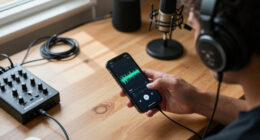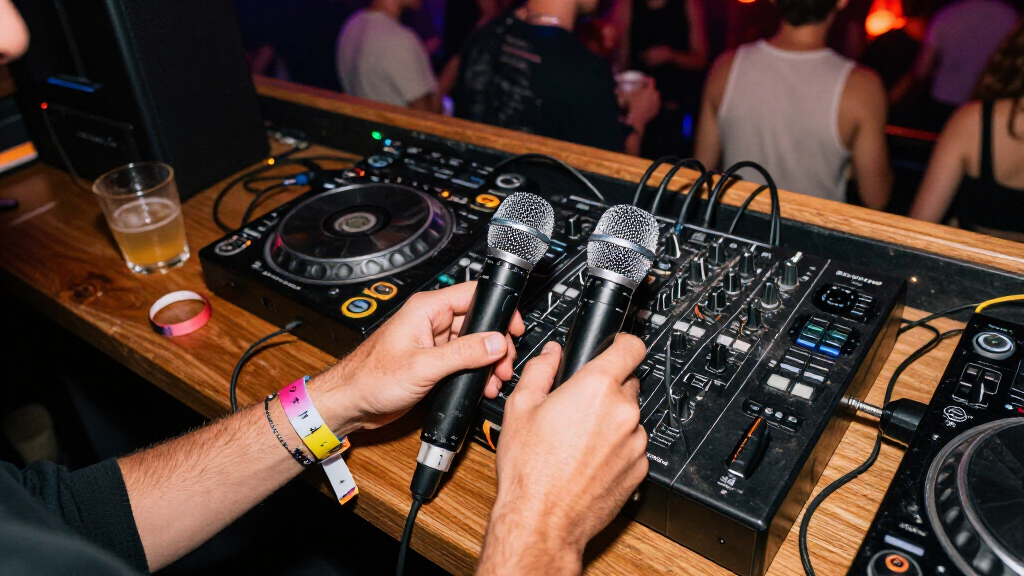

For most DJs who need two handheld mics, I’d start with the Phenyx Pro PTU-71-2H as the best overall pick in this lineup, while the TONOR TW-820 stands out as a straightforward dual-mic option and the Phenyx Pro PTU-5000-4H suits events that need four channels. The main tradeoff is between UHF systems, which offer dedicated radio operation but need frequency planning, and simpler party-oriented options built around convenience. I’d also match the system to the venue, mixer inputs, and number of speakers rather than choosing by advertised range alone. Read on for a ranked breakdown of all 15 wireless DJ microphones and guidance on which type fits your setup.

Get audio and creator gear delivered free with Prime
- Fast, free delivery on millions of items
- Prime Video, Amazon Music and more included
- Member-only deals all year
Complete the kit

Key Takeaways
- Two-mic UHF systems dominate this roundup: several Phenyx Pro and TONOR options suit DJs who need a host and guest mic without adding a second receiver.
- Channel count changes the use case: the Phenyx Pro PTU-5000-4H and Aveek 4-Pack address multi-speaker events, while most picks are better matched to one or two performers.
- Rechargeable designs trade battery convenience for charging discipline: the ALPOWL and Talomen systems may reduce disposable battery use, but they need a charging routine before events.
- PartyBox compatibility is a distinct priority: JBL PartyBox Wireless Microphones are aimed at users with compatible JBL PartyBox gear, not buyers seeking the most adaptable DJ receiver.
- Range claims and radio bands are not interchangeable: the advertised 300-foot option and the VHF Pyle system need venue-specific checks; walls, interference, and local wireless congestion can affect real operation.
| TONOR TW-820 UHF Wireless Microphone System, 2 Handheld Microphones |  | Best Value for Two-Mic DJ Setups | Wireless technology: UHF | Microphones: 2 handheld dynamic microphones | Adjustable frequencies: 15 per microphone | VIEW LATEST PRICE | See Our Full Breakdown |
| Professional 2.4 GHz Wireless Microphone System with 40-Hour Playtime |  | Best for Long Events | Wireless technology: 2.4 GHz | Microphone type: Dynamic handheld | Pickup pattern: Cardioid | VIEW LATEST PRICE | See Our Full Breakdown |
| Phenyx Pro PTU-71-2H Dual UHF Wireless Handheld Microphone System |  | Best for Frequency Flexibility | System type: Dual-channel UHF wireless | Selectable frequencies: 100 per channel; 200 total | Frequency ranges: Channel 1: 536.57–561.32 MHz; Channel 2: 562.37–587.12 MHz | VIEW LATEST PRICE | See Our Full Breakdown |
| JBL Wireless Two-Microphone System with Dual-Channel Receiver, Black |  | Best for Simple Speaker Pairing | Microphones: 2 wireless microphones | Receiver: Rechargeable dual-channel UHF | Playback time: Up to 6 hours | VIEW LATEST PRICE | See Our Full Breakdown |
| ALPOWL Wireless Dynamic Microphone System with Rechargeable Receiver |  | Best Rechargeable All-Rounder | Microphone type: Dynamic | Microphones: 2 handheld microphones | Wireless range: Up to 200 ft (60 m) | VIEW LATEST PRICE | See Our Full Breakdown |
| Wireless Dual Handheld Dynamic Microphone System |  | Best Simple Plug-In Pick | Microphones: 2 handheld dynamic microphones | Operating range: Up to 200 feet, line of sight | Receiver connection: 6.35 mm plug; 3.5 mm adapter included | VIEW LATEST PRICE | See Our Full Breakdown |
| Talomen Dual Handheld Wireless Microphone System with Rechargeable Receiver |  | Best Rechargeable Pair | Wireless connectivity: 2.4 GHz | Microphones: 2 handheld dynamic microphones | Operating range: Up to 160 feet (50 m) | VIEW LATEST PRICE | See Our Full Breakdown |
| Dual Wireless Handheld Microphone System with Metal Construction |  | Best for Long-Range Events | Microphones: 2 handheld dynamic microphones | Frequency channels: 200 adjustable channels | Operating range: Up to 500 feet (150 m) in open space | VIEW LATEST PRICE | See Our Full Breakdown |
| Phenyx Pro PTU-52-2H Dual UHF Wireless Microphone System |  | Best for Tunable UHF Setup | System type: Dual UHF wireless microphones | Frequency band: 500 MHz | Tunable frequency groups: 30 | VIEW LATEST PRICE | See Our Full Breakdown |
| Phenyx Pro PTU-5000-4H 4-Channel UHF Wireless Microphone System |  | Best for Four-Mic Events | Channels: 4 | Wireless frequencies: 541.9 MHz, 546.3 MHz, 561.6 MHz, 568.65 MHz | Wireless range: Up to 260 feet | VIEW LATEST PRICE | See Our Full Breakdown |
| Wireless Microphone System for Karaoke Singing – 300 ft Reception |  | Best for Long-Range DJ Setups | Wireless frequency: 2.4 GHz | Reception range: Up to 400 ft line of sight | Battery life: 12+ hours | VIEW LATEST PRICE | See Our Full Breakdown |
| TONOR TW360 UHF Wireless Microphone System, Gray | 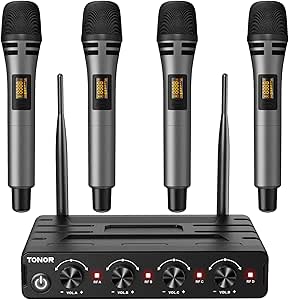 | Best for Channel Flexibility | Model: TW360 | Wireless type: UHF | Operating range: Up to 200 ft (60 m) | VIEW LATEST PRICE | See Our Full Breakdown |
| JBL PartyBox Wireless Microphones, 2-Pack |  | Best for JBL PartyBox Owners | Microphones: Two | Wireless connection: 2.4 GHz digital; requires wireless dongle | Wireless range: Up to 30 meters | VIEW LATEST PRICE | See Our Full Breakdown |
| Pyle PDWM2135 VHF Dual-Channel Wireless Microphone System |  | Best for Simple Two-Mic PA Setups | Model: PDWM2135 | Frequency range: 174–216 MHz VHF | Number of channels: 2 | VIEW LATEST PRICE | See Our Full Breakdown |
| Aveek 4-Pack Wireless Microphone System |  | Best for Four-Person Group Events | Microphones: Four handheld cardioid dynamic microphones | Wireless range: Up to 262 ft | Battery life: Up to 40 hours per microphone | VIEW LATEST PRICE | See Our Full Breakdown |
| wireless DJ microphone | Microphones |
|---|---|
| TONOR TW-820 UHF Wireless Micr | 2 handheld dynamic microphones |
| Professional 2.4 GHz Wireless | — |
| Phenyx Pro PTU-71-2H Dual UHF | — |
| JBL Wireless Two-Microphone Sy | 2 wireless microphones |
| ALPOWL Wireless Dynamic Microp | 2 handheld microphones |
| Wireless Dual Handheld Dynamic | 2 handheld dynamic microphones |
| Talomen Dual Handheld Wireless | 2 handheld dynamic microphones |
| Dual Wireless Handheld Microph | 2 handheld dynamic microphones |
| Phenyx Pro PTU-52-2H Dual UHF | — |
| Phenyx Pro PTU-5000-4H 4-Chann | — |
| Wireless Microphone System for | — |
| TONOR TW360 UHF Wireless Micro | — |
| JBL PartyBox Wireless Micropho | Two |
| Pyle PDWM2135 VHF Dual-Channel | — |
| Aveek 4-Pack Wireless Micropho | Four handheld cardioid dynamic microphones |
More Details on Our Top Picks
TONOR TW-820 UHF Wireless Microphone System, 2 Handheld Microphones
The TONOR TW-820 makes sense for DJs who need two vocal mics and straightforward connections without extra setup features. Its dual metal handhelds and separate receiver volume controls let a DJ balance announcements and a guest or host independently. The 15 selectable UHF frequencies per microphone offer some flexibility, though the Phenyx Pro PTU-71-2H gives you far more frequency choices and auto scan for busier RF environments. TONOR’s stated range reaches 60 m in open space, which suits many event rooms, but that figure depends on conditions and is shorter than the range claimed for some alternatives here. The receiver’s XLR and 6.35 mm outputs cover common PA connections. You will need to supply AA batteries and connect it to an amplifier or PA; it is not a self-contained speaker system.
Pros:- Two metal handheld microphones with steel mesh grilles
- Separate receiver volume controls for balancing the two voices
- XLR and 6.35 mm outputs suit common PA inputs
- Cardioid-style unidirectional pickup is designed to reduce background noise and feedback
Cons:- Only 15 adjustable frequencies per microphone, fewer than the Phenyx Pro PTU-71-2H offers
- AA batteries are not included
- Requires an external amplifier or PA speaker with a microphone input
Best for: Mobile DJs and event hosts who need two durable handheld mics, independent level controls, and standard PA connections.
Not ideal for: DJs working in crowded wireless environments who want auto-scanning or a large bank of selectable frequencies, or buyers without a PA or amplifier.
- Wireless technology:UHF
- Microphones:2 handheld dynamic microphones
- Adjustable frequencies:15 per microphone
- Transmission range:Up to 60 m in open space
- Pickup pattern:Unidirectional
- Outputs:XLR and 6.35 mm jack
- Microphone power:2 AA batteries per microphone; batteries not included
Our verdict“Choose the TONOR TW-820 for a practical two-mic PA setup; choose the Phenyx Pro PTU-71-2H instead if frequency scanning and selection matter more.”
Professional 2.4 GHz Wireless Microphone System with 40-Hour Playtime
For a DJ who values fewer battery changes during long events, this system’s stated up-to-40-hour playtime is its clearest distinction. Automatic pairing and power-off memory can also reduce setup repetition: the last volume and channel settings are retained when the system is switched off. Its cardioid dynamic microphones and noise reduction are aimed at keeping vocals prominent, while XLR and 6.35 mm outputs give it useful connections for mixers and PA equipment. The claimed 500-foot range is notably longer on paper than the TONOR TW-820’s 60 m, but the wireless format differs: this model uses 2.4 GHz, and the supplied details do not explain how it handles congestion in that band. Battery type and charging method are also unspecified, so I would verify those before relying on the runtime for a full event.
Pros:- Stated playtime of up to 40 hours
- Automatic pairing can simplify setup
- Power-off memory retains volume and channel settings
- XLR and 6.35 mm outputs support common audio equipment
Cons:- Battery type and charging method are not specified
- 2.4 GHz operation is provided without details on frequency selection or interference management
- Requires compatible audio equipment with a suitable input
Best for: DJs and event operators who prioritize long stated runtime, saved settings, and compatibility with a mixer or PA that has XLR or 6.35 mm inputs.
Not ideal for: Buyers who need clearly documented battery and charging details, or DJs who prefer a UHF system with specified selectable frequencies such as the Phenyx Pro PTU-71-2H.
- Wireless technology:2.4 GHz
- Microphone type:Dynamic handheld
- Pickup pattern:Cardioid
- Operating range:Up to 500 ft (150 m)
- Playtime:Up to 40 hours
- Outputs:6.35 mm and XLR
- Features:Noise reduction, automatic pairing, power-off memory, independent channel volume controls
Our verdict“Pick this system for its long stated runtime and saved settings, but confirm its power setup before choosing it for dependable event use.”
Phenyx Pro PTU-71-2H Dual UHF Wireless Handheld Microphone System
The Phenyx Pro PTU-71-2H is the strongest fit here for DJs who need tools to manage wireless interference. Its auto scan searches for a lower-interference frequency, and 100 selectable frequencies per channel provide substantially more choice than the TONOR TW-820’s 15 per microphone. The system is also specified to support up to 16 transmitters simultaneously, a useful advantage for events with several wireless users, though that capacity does not remove the need to coordinate frequencies. Its 290–328 ft range is stated for line of sight, so walls and venue layout can reduce practical coverage. Metal receiver and microphone construction add durability, while IR synchronization helps pair the handhelds with the receiver. Compared with the JBL system, this is a more adjustable tool for RF planning, but setup involves more choices and AA-powered mics rather than a simpler plug-and-play approach.
Pros:- Auto scan and 100 selectable frequencies per channel help with frequency coordination
- Supports up to 16 simultaneous transmitters
- Metal receiver and microphones with replaceable microphone heads
- Includes four AA batteries and the listed connection accessories
Cons:- 290–328 ft range is specified for line of sight and may not reflect obstructed venues
- Handheld microphones require AA batteries
- Frequency selection and coordination add setup work compared with the JBL plug-and-play system
Best for: Mobile DJs and event crews in venues with multiple wireless systems who want frequency scanning, broad channel selection, and two handheld mics.
Not ideal for: Casual hosts seeking the simplest possible setup, or buyers who need a guaranteed range through walls rather than a line-of-sight specification.
- System type:Dual-channel UHF wireless
- Selectable frequencies:100 per channel; 200 total
- Frequency ranges:Channel 1: 536.57–561.32 MHz; Channel 2: 562.37–587.12 MHz
- Maximum simultaneous transmitters:16
- Operating range:290–328 ft line of sight
- Pickup pattern:Cardioid
- Battery life:Up to 16 hours
- Batteries included:4 AA
Our verdict“Choose the PTU-71-2H when RF flexibility matters more than the simplest setup or rechargeable operation.”
JBL Wireless Two-Microphone System with Dual-Channel Receiver, Black
The JBL Wireless Two-Microphone System is the straightforward pick for a DJ or host who wants two voices running through a compatible speaker without a feature-heavy receiver setup. Its dual-channel rechargeable receiver mixes both microphones through the speaker, and plug-and-play operation is simpler than coordinating the many selectable frequencies on the Phenyx Pro PTU-71-2H. The tradeoff is limited detail: the supplied specifications do not state operating range, pickup pattern, or output connector types, so I would confirm the speaker connection before buying. Up to six hours of playback may cover a short event but gives less runtime than the ALPOWL system’s stated up to 10 hours or the 40 hours claimed for the 2.4 GHz system. The receiver recharges, while the microphones still depend on replaceable AA batteries.
Pros:- Runs two wireless microphones at once
- Plug-and-play setup reduces receiver configuration
- Rechargeable dual-channel receiver mixes both voices through a speaker
- Microphones use replaceable AA batteries
Cons:- Playback is stated at up to 6 hours, shorter than the ALPOWL and 2.4 GHz systems’ stated runtimes
- Microphones require AA batteries rather than rechargeable power
- The supplied product details do not specify range or output connector types
Best for: Hosts and DJs using a compatible speaker who want two microphones and a low-fuss plug-and-play setup for shorter events.
Not ideal for: DJs running extended events or buyers who need documented range, detailed frequency controls, or confirmed mixer and PA connector compatibility.
- Microphones:2 wireless microphones
- Receiver:Rechargeable dual-channel UHF
- Playback time:Up to 6 hours
- Microphone batteries:Replaceable AA batteries
- Speaker connection:Requires a compatible speaker
- Color:Black
Our verdict“Choose the JBL for simple two-mic use with a compatible speaker and shorter events, not for long runtime or detailed wireless control.”
ALPOWL Wireless Dynamic Microphone System with Rechargeable Receiver
The ALPOWL Wireless Dynamic Microphone System suits DJs who want to avoid keeping spare AA batteries on hand. It includes two handheld microphones and a USB-C rechargeable receiver, with a stated 1200 mAh battery capacity and up to 10 hours of operation. Its 200-foot claimed range lands between the TONOR TW-820’s 60 m and the much longer range stated for the 2.4 GHz system, though actual coverage depends on the venue. DSP noise reduction and plug-and-play setup support quick vocal use with compatible speakers, mixers, and karaoke equipment. The main limitation is connection fit: the receiver must plug into a MIC jack, so a device with only another type of input will not work as described. Initial pairing can take one to three minutes, and the product details give inconsistent battery-life claims, which makes runtime less certain than the headline suggests.
Pros:- USB-C charging for the receiver and rechargeable system components
- Stated wireless range of up to 200 ft
- DSP noise reduction is intended to keep vocals clearer
- Plug-and-play design is listed for several compatible audio devices
Cons:- Receiver must connect to a MIC jack and is not compatible with other jack types
- Initial pairing may take one to three minutes
- Product details contain inconsistent battery-life claims
Best for: DJs and karaoke hosts who want rechargeable operation and can confirm their speaker, mixer, or interface has a compatible MIC jack.
Not ideal for: Buyers whose equipment lacks a MIC jack, or event operators who need a clearly consistent runtime specification and immediate pairing.
- Microphone type:Dynamic
- Microphones:2 handheld microphones
- Wireless range:Up to 200 ft (60 m)
- Battery capacity:1200 mAh
- Operating time:Up to 10 hours; product details also report inconsistent battery-life claims
- Charging:USB-C; stated charging time 3–4 hours
- Noise reduction:DSP
- Connection requirement:Receiver must connect to a MIC jack
Our verdict“Choose ALPOWL if rechargeable convenience and a compatible MIC jack are priorities, but treat the runtime claim cautiously.”
Wireless Dual Handheld Dynamic Microphone System
I’d choose this set for a straightforward two-mic setup when the receiver needs to plug directly into a compatible speaker, amplifier, karaoke machine, or PA system. Its included 6.35 mm receiver plug and 3.5 mm adapter cover two common microphone-input sizes, while the stated 200-foot line-of-sight range gives performers room to move in open spaces. Compared with the Talomen Dual Handheld Wireless Microphone System, this model claims greater range, but Talomen adds USB-C charging and a stated battery runtime. This set instead relies on included lithium polymer batteries, and it won’t connect directly to phones, computers, tablets, or AUX inputs. I’d rank it as a simple plug-in option, not a fit for a flexible recording or Bluetooth-speaker setup.
Pros:- Includes two handheld dynamic microphones
- Receiver plug and included adapter fit 6.35 mm and 3.5 mm microphone inputs
- Stated range reaches up to 200 feet in line of sight
- Metal microphone enclosures and noise-reduction features
Cons:- Does not connect to phones, computers, or tablets
- Requires a microphone input; AUX interfaces are unsupported
- Battery runtime and charging details are not specified
Best for: Hosts and karaoke users who need two handheld mics for a PA or speaker with a 6.35 mm or 3.5 mm microphone input.
Not ideal for: Phone, tablet, and laptop users, or anyone whose speaker offers only AUX or Bluetooth connections.
- Microphones:2 handheld dynamic microphones
- Operating range:Up to 200 feet, line of sight
- Receiver connection:6.35 mm plug; 3.5 mm adapter included
- Polar pattern:Unidirectional
- Impedance:600 ohm
- Signal-to-noise ratio:70 dB
- Distortion:Less than 0.2%
- Construction:Metal microphone enclosures
Our verdict“Pick this for a simple two-microphone PA or karaoke setup if your equipment has a compatible microphone input.”
Talomen Dual Handheld Wireless Microphone System with Rechargeable Receiver
The Talomen is the practical choice when I want a paired handheld system without relying on disposable batteries for routine use. USB-C charging and a stated runtime of over 10 hours make it better suited to recurring karaoke nights or event hosting than the Wireless Dual Handheld Dynamic Microphone System, which lists included batteries but no runtime. Talomen also offers automatic pairing and noise reduction, with a stated range of up to 160 feet. The tradeoff is narrower reach on paper than that 200-foot model, and it shares a key limitation: the receiver needs a microphone input. It does not support AUX or line inputs and cannot connect to phones, computers, or tablets, so I’d skip it for recording or a speaker with no mic jack.
Pros:- Two handheld dynamic microphones are included
- USB-C charging and stated battery life of over 10 hours
- Automatic pairing simplifies setup
- Stated range of up to 160 feet
Cons:- Does not support AUX or line inputs
- Not compatible with phones, computers, or tablets
- Stated range is shorter than the 200-foot claim for the Wireless Dual Handheld Dynamic Microphone System
Best for: Regular karaoke hosts and community-event organizers who use a PA, amplifier, or speaker with a microphone input and want rechargeable microphones.
Not ideal for: DJs using AUX-only or line-input speakers, or anyone who wants to plug the system into a phone, computer, or tablet.
- Wireless connectivity:2.4 GHz
- Microphones:2 handheld dynamic microphones
- Operating range:Up to 160 feet (50 m)
- Receiver connection:6.35 mm plug; 3.5 mm adapter included
- Battery life:Over 10 hours per full charge
- Charging:USB-C; 2–3 hours stated charging time
- Frequency range:2402–2480 MHz
- Compatibility:Devices with a microphone input; no AUX or line input support
Our verdict“Choose the Talomen if you want rechargeable dual microphones for compatible PA or karaoke equipment and can work within its input limits.”
Dual Wireless Handheld Microphone System with Metal Construction
For larger open spaces, this system stands out for its stated 500-foot range and connection options that are more useful with a mixer than a plug-in receiver alone. It provides two individual XLR outputs plus a mixed 1/4-inch output, so a DJ or sound operator can route each microphone separately through compatible equipment. Automatic scanning across 200 adjustable channels also offers more control over channel selection than the fixed-frequency Phenyx Pro PTU-5000-4H. The range is specified for open space, so I would not treat it as a guarantee through walls or crowded venues. Its metal housings suit repeated event handling, but the system still needs compatible audio gear and is not directly suited to laptops or Bluetooth speakers.
Pros:- Stated open-space range of up to 500 feet
- Two individual XLR outputs and one mixed 1/4-inch output
- 200 adjustable channels with automatic scanning
- Metal receiver and microphone housings
Cons:- The stated range applies to open space and may not reflect obstructed venues
- Not directly compatible with laptops or Bluetooth speakers
- Requires compatible audio equipment with suitable inputs
Best for: Mobile DJs and event sound operators working in open venues who want two microphones, individual XLR feeds, and adjustable channel selection.
Not ideal for: Casual users with only a Bluetooth speaker or laptop, or performers who need a clearly specified operating range for obstructed indoor spaces.
- Microphones:2 handheld dynamic microphones
- Frequency channels:200 adjustable channels
- Operating range:Up to 500 feet (150 m) in open space
- Outputs:2 individual XLR outputs and 1 mixed 1/4-inch output
- Construction:Metal receiver and microphone housings
- Setup:Automatic pairing and auto scan
- Compatible equipment:Audio mixers, amplifiers, PA systems, and karaoke machines
Our verdict“Choose this system for open-space events where long stated range and separate XLR microphone feeds matter more than plug-and-play consumer connections.”
Phenyx Pro PTU-52-2H Dual UHF Wireless Microphone System
I’d favor the PTU-52-2H when channel selection and conventional mixer connections matter more than an especially long advertised range. Its 30 tunable frequency groups, automatic pairing, and frequency hopping give the operator more adjustment than the fixed-frequency Phenyx Pro PTU-5000-4H, which is built around four microphones instead. The PTU-52-2H also supplies two XLR outputs and a mixed 1/4-inch output, making it a more natural match for a dual-mic PA or mixer setup. Its stated range is up to 200 feet in open space, well below the 500-foot claim of the Dual Wireless Handheld Microphone System with Metal Construction. I’d also note that the frequency band is listed only as 500 MHz, so buyers needing more detailed band information may want clarification.
Pros:- 30 tunable frequency groups with automatic pairing and frequency hopping
- Two XLR outputs plus a mixed 1/4-inch output
- Metal receiver and microphone construction
- Includes AA batteries, audio cable, adapter, and other setup accessories
Cons:- Stated range is up to 200 feet in open space
- Frequency band is identified only as 500 MHz
- Uses four AA batteries for the two microphones
Best for: DJs and venue operators who need two UHF handheld mics, tunable frequency groups, and direct XLR connections to a mixer or PA.
Not ideal for: Buyers who need a four-microphone setup, a stated range beyond 200 feet, or more specific published frequency-band details.
- System type:Dual UHF wireless microphones
- Frequency band:500 MHz
- Tunable frequency groups:30
- Operating range:Up to 200 feet, line of sight
- Outputs:2 XLR outputs and 1 mixed 1/4-inch output
- Microphone capsule:Cardioid
- Power:4 AA batteries included
- Construction:Metal receiver and microphones
Our verdict“Pick the PTU-52-2H for a tunable dual-UHF setup with mixer-friendly outputs, not for maximum range or four-mic capacity.”
Phenyx Pro PTU-5000-4H 4-Channel UHF Wireless Microphone System
When an event needs more than two speakers on wireless handhelds, the PTU-5000-4H earns its place through four microphones and four independent XLR outputs. Its receiver also has an LCD screen and individual volume controls, giving an operator a way to manage each mic separately rather than treating a pair as a single mixed source. That makes it a better fit for panels, group performances, or busy karaoke sessions than the two-microphone Phenyx Pro PTU-52-2H. The compromise is flexibility: this model uses fixed UHF frequencies and is not intended for multi-set operation. It also needs an amplifier or speaker for sound output, so it is a system component rather than a standalone speaker solution. I’d choose it for four-mic capacity, not for adjustable frequency planning.
Pros:- Includes four handheld microphones and a four-channel receiver
- Four XLR outputs support separate microphone feeds
- LCD receiver with individual volume controls
- Stated wireless range of up to 260 feet
Cons:- Fixed frequencies limit flexibility when coordinating multiple systems
- Requires an amplifier or speaker for sound output
- Four microphones require eight AA batteries
Best for: Event organizers and karaoke hosts who need four simultaneous handheld microphones and can connect the receiver to a PA or amplifier.
Not ideal for: Mobile DJs who need tunable frequencies for multiple systems, or anyone expecting the receiver to produce sound without an amplifier or speaker.
- Channels:4
- Wireless frequencies:541.9 MHz, 546.3 MHz, 561.6 MHz, 568.65 MHz
- Wireless range:Up to 260 feet
- Microphone type:Handheld dynamic cardioid
- Receiver outputs:4 XLR outputs
- Battery life:Up to 8 hours
- Batteries included:8 AA batteries
- Receiver construction:All-metal
Our verdict“Choose the PTU-5000-4H when four independent wireless microphone channels matter more than adjustable frequencies or a compact dual-mic setup.”
Wireless Microphone System for Karaoke Singing – 300 ft Reception
The Golden Mars is a strong fit for DJs who need two handheld mics to cover a large room or outdoor event without frequent charging. Its stated 400-foot line-of-sight range exceeds the TONOR TW360’s 200 feet, while automatic channel connection helps keep setup simple. The 12-hour battery life also suits extended events, and USB-C charging is more convenient than carrying spare AA batteries for the Pyle PDWM2135. The tradeoff is connectivity: this receiver needs a compatible 6.35 mm or XLR input, so it will not plug straight into a phone, computer, or TV. Its range is a line-of-sight figure, too, so walls and venue interference can limit real-world coverage. I’d choose it for a compatible PA or mixer, not as a standalone device.
Pros:- Two handheld cardioid microphones are included
- Stated 400-foot line-of-sight range suits larger spaces
- Up to 12 hours of battery life with USB-C charging
- Automatic channel connection simplifies setup
Cons:- Requires compatible 6.35 mm or XLR audio equipment
- The 400-foot range is specified for line of sight, not obstructed venues
Best for: DJs and event hosts with a mixer, PA, or speaker input who need two rechargeable mics and long line-of-sight coverage
Not ideal for: People who want to connect a microphone directly to a laptop, phone, or TV without additional audio equipment
- Wireless frequency:2.4 GHz
- Reception range:Up to 400 ft line of sight
- Battery life:12+ hours
- Charging:USB-C; 2–3 hours
- Microphone type:Two handheld cardioid microphones
- Audio connections:6.35 mm MIC or XLR interface
- Included items:Receiver, two mics, 1/4-inch audio cable, power adapter, two USB charging cables, two roll rings, and manual
Our verdict“Choose the Golden Mars for long-range DJ or event use when you already have compatible audio equipment and want rechargeable dual mics.”
TONOR TW360 UHF Wireless Microphone System, Gray
The TONOR TW360 makes sense for DJs who value channel options and straightforward connections over an unusually long stated range. Its 40 selectable UHF channels give operators choices when a channel is busy, a useful contrast with the Aveek 4-Pack, whose receiver randomly assigns a channel when paired. Automatic receiver pairing keeps the initial setup manageable, and the cardioid pickup helps focus on the singer rather than surrounding room noise. Its 200-foot range is shorter than the Golden Mars system’s 400-foot line-of-sight claim, but may be ample for many smaller venues. The main ownership tradeoff is power: this mic uses two AA batteries, which are not included, instead of the rechargeable design found in the Golden Mars. It also needs a 6.35 mm input, so check your mixer or speaker first.
Pros:- 40 selectable UHF channels provide channel choices
- Automatic receiver pairing speeds up setup
- Cardioid pickup pattern helps limit background sound
- 6.35 mm connection suits many mixers, amplifiers, and powered speakers
Cons:- Microphone requires two AA batteries, which are not included
- Stated 200-foot range is shorter than the Golden Mars system’s claim
- Requires a compatible 6.35 mm microphone input
Best for: Mobile DJs and karaoke hosts using a mixer or powered speaker who want selectable channels for adapting to local wireless conditions
Not ideal for: Buyers who want rechargeable handhelds, longer stated coverage, or a direct connection to a phone or computer
- Model:TW360
- Wireless type:UHF
- Operating range:Up to 200 ft (60 m)
- Selectable channels:40 (4 × 10)
- Microphone type:Handheld, unidirectional cardioid
- Connector:6.35 mm jack
- Power:Two AA batteries; not included
- Warranty:2 years
Our verdict“Pick the TONOR TW360 if channel selection and common mixer connectivity matter more than rechargeable power or maximum stated range.”
JBL PartyBox Wireless Microphones, 2-Pack
For a DJ whose setup centers on a JBL PartyBox, this pair is the most purpose-built choice here. The microphones are compatible with all JBL PartyBox speakers, and their cardioid pickup, shock mount, and built-in pop filter are designed to keep vocals clearer by reducing breath and handling noise. Compared with the more general-purpose TONOR TW360, the JBL set trades broad 6.35 mm equipment compatibility for a simpler fit within the PartyBox ecosystem. Battery life is listed at up to 20 hours, but drops to up to 12 hours with the wireless dongle, the connection required for wireless use. That dongle requirement narrows where the mics can be used, and the supplied specs do not describe a standard mixer output. I’d shortlist these for PartyBox-based parties, not for a mixed PA rig.
Pros:- Compatible with all JBL PartyBox speakers
- Two cardioid microphones suit duets and event hosting
- Shock mount and pop filter help reduce handling and breath noise
- Rechargeable microphones offer up to 20 hours of listed playtime without the wireless dongle
Cons:- Wireless operation requires the digital wireless dongle
- Listed battery life falls to up to 12 hours when using the dongle
- PartyBox compatibility makes it less suited to general-purpose mixer setups
Best for: DJs and party hosts who already use a JBL PartyBox and want a matched pair of wireless vocal mics
Not ideal for: Mobile DJs using varied mixers or PA systems who need broadly compatible receiver outputs rather than a PartyBox-focused setup
- Microphones:Two
- Wireless connection:2.4 GHz digital; requires wireless dongle
- Wireless range:Up to 30 meters
- Battery life:Up to 20 hours; up to 12 hours with wireless dongle
- Battery capacity:700 mAh
- Charging:Rechargeable via PartyBox charging port
- Pickup pattern:Cardioid
- Compatibility:All JBL PartyBox speakers
Our verdict“Choose the JBL pair for a PartyBox-centered DJ setup; choose a more general system like the TONOR TW360 for broader mixer compatibility.”
Pyle PDWM2135 VHF Dual-Channel Wireless Microphone System
The Pyle PDWM2135 is a practical pick when a DJ needs two independent microphone channels and wants separate volume controls on the receiver. Its RF and audio LED indicators give a quick visual check when a mic is not coming through, a hands-on advantage over the simpler channel setup of the Golden Mars. The kit includes cables and AA batteries, so it is ready to connect to compatible PA or karaoke equipment without gathering as many add-ons. The tradeoff is its 174–216 MHz VHF band; compared with the UHF TONOR TW360, it offers no selectable-channel count in the supplied specifications, which may make it less adaptable in crowded wireless environments. It also relies on AA batteries for the handhelds and needs a 6.35 mm mono input. I’d favor it for straightforward indoor events, not venues with demanding frequency coordination.
Pros:- Two channels have independent microphone volume controls
- RF and audio LED indicators help identify connection or signal issues
- Includes receiver, two handheld transmitters, cables, and AA batteries
- 6.35 mm mono output suits compatible PA and karaoke equipment
Cons:- VHF operation may be less adaptable in crowded wireless environments than selectable-channel UHF systems
- Handheld transmitters require AA batteries
- Requires a compatible 6.35 mm mono input
Best for: Community event hosts, schools, and DJs who need two separately controlled handheld mics for a compatible PA or karaoke system
Not ideal for: DJs in wireless-crowded venues who want selectable UHF channels or rechargeable microphones
- Model:PDWM2135
- Frequency range:174–216 MHz VHF
- Number of channels:2
- Transmitter power:Two AA batteries
- Receiver power:AC 120V, 60Hz
- Signal-to-noise ratio:70 dB
- Audio dynamic range:95 dB
- Connector:6.35 mm (1/4-inch) mono jack
Our verdict“Choose the Pyle for a straightforward two-mic PA setup with independent volume controls, but look to the TONOR TW360 for selectable UHF channels.”
Aveek 4-Pack Wireless Microphone System
The Aveek stands apart from the dual-mic kits by supplying four handheld microphones, making it the clearest fit for group karaoke, panel hosting, or events where several people need a mic without passing one around. Its stated 40-hour battery life per microphone and Type-C charging reduce battery-management demands compared with the AA-powered Pyle PDWM2135. The claimed range reaches 262 feet, between the Pyle’s unspecified range and the Golden Mars system’s 400-foot line-of-sight claim. There is a setup compromise: the receiver randomly assigns a channel when paired, leaving less control than the 40 selectable channels on the TONOR TW360. Compatibility is also limited to equipment such as PA systems, mixers, karaoke machines, and powered speakers; it is not for direct laptop, tablet, phone, or AV receiver use. Check the connector and channel plan before buying.
Pros:- Four cardioid dynamic handheld microphones support group use
- Up to 40 hours of stated battery life per microphone
- Type-C charging avoids routine AA battery replacement
- Stated range of up to 262 feet
Cons:- Receiver randomly assigns a channel when paired
- Not compatible with laptops, iPads, cellphones, or AV receivers
- Requires compatible equipment with a 1/4-inch input
Best for: Karaoke hosts, DJs, and event organizers who regularly need four simultaneous handheld mics with a compatible PA, mixer, or powered speaker
Not ideal for: Buyers who need direct laptop, tablet, phone, or AV receiver connectivity, or who want to choose channels manually
- Microphones:Four handheld cardioid dynamic microphones
- Wireless range:Up to 262 ft
- Battery life:Up to 40 hours per microphone
- Charging:Type-C
- Receiver output:1/4-inch
- Compatible equipment:PA systems, mixers, karaoke machines, and powered speakers
- Not compatible with:Laptops, iPads, cellphones, or AV receivers
- Included items:Receiver, four mics, power adapter, 1/4-inch audio cable, two Type-C charging cables, four non-slip rings, and manual
Our verdict“Pick the Aveek when four rechargeable mics matter more than manual channel selection or direct connection to personal devices.”

How We Picked
I ranked these wireless DJ microphone systems by how well their stated configuration suits common DJ work: announcements, karaoke, guest participation, and small-to-medium event hosting. I gave priority to practical channel count, receiver and mixer compatibility, wireless band, handheld design, and power arrangement. Systems with two microphones rank ahead of single-use or narrowly compatible setups for general DJ work, while the four-channel models are judged on whether their added capacity serves a clear group-use case.
I also weighed usability and ownership tradeoffs, including rechargeable components, portability, and the setup demands that come with managing wireless frequencies. The list does not treat advertised range or feature count as a guarantee of performance; venue layout and radio traffic can change results. Because these products span UHF, VHF, 2.4 GHz, and PartyBox-oriented designs, the ranking favors practical fit and flexibility rather than pretending every model serves the same buyer.
Factors to Consider When Choosing Wireless DJ Microphones
Choosing wireless DJ microphones is less about finding one universally best system and more about avoiding a mismatch between the microphones, receiver, venue, and people using them. I’d settle the connection and channel questions before comparing convenience features.
Match the Wireless Band to Your Venue
UHF, VHF, and 2.4 GHz systems operate in different parts of the radio spectrum, and none is automatically interference-proof. A venue with many wireless devices may create congestion, while walls and crowded rooms can weaken a signal regardless of the range printed on a listing. Check whether the system offers selectable frequencies or channels and whether you can scan or coordinate them with other wireless gear. If you run several microphones, using systems that cannot be coordinated can lead to dropouts or unwanted noise. For mobile DJs, keep a wired backup available for speeches that cannot be interrupted. Choose based on your usual locations, not just an ideal open-space range claim.
Count Microphones and Receiver Channels
Two handheld microphones do not always mean two independently controlled audio channels, so check the receiver outputs and controls. Separate channel outputs let a mixer operator adjust each speaker or microphone independently, which helps when one voice is louder or needs different processing. A combined output can be simpler for a small setup but offers less control. Four-mic systems make sense for panels, karaoke groups, or events with multiple hosts; they add little value if only one person speaks at a time. Also count your mixer’s available inputs before buying. Adding microphones cannot solve a shortage of usable inputs.
Check Receiver and Speaker Compatibility
Confirm the receiver’s output type works with your mixer, powered speaker, or DJ controller before ordering. A microphone system’s receiver does not replace a mixer, and a receiver that connects directly to one party speaker may not suit a full DJ rig. Look for the actual output connectors and any included cables rather than assuming they match your equipment. PartyBox-specific systems can be convenient when that speaker is the center of the setup, but they may be less adaptable elsewhere. If you regularly move between venues, favor a receiver connection that fits the gear you already carry. A simple compatibility check can prevent last-minute adapter hunting.
Choose a Power Routine You Can Maintain
Rechargeable microphones or receivers can cut down on disposable batteries, but they shift the burden to charging and tracking battery status. For frequent events, make charging part of pack-up and pre-event checks; a rechargeable unit left in a case can still arrive empty. Replaceable batteries are easier to swap mid-event if you carry spares, though they require ongoing battery management. Check which parts are rechargeable, since a system may use different power arrangements for its handhelds and receiver. Consider whether charging cables can remain with the equipment without becoming a setup hazard. The right choice depends on whether your bigger risk is forgetting to charge or running out of spare batteries.
Treat Range as a Venue-Dependent Limit
Advertised operating distance is usually measured in favorable conditions and does not promise the same performance in a crowded room. The transmitter’s position, receiver placement, obstructions, and nearby radio equipment all affect usable range. DJs often get better results by placing the receiver in clear view of the performers instead of hiding it behind a rack or speaker. Avoid placing antennas next to other transmitters or metal surfaces when the system design allows flexible placement. Test the full performance area during setup, including the spots where guests are likely to walk. If your events require long audience interaction, prioritize stable coverage and a backup plan over a single headline distance.
Budget for Handling, Spares, and Setup
DJ microphones get passed between hosts, guests, and singers, so handling comfort and durable construction matter beyond sound output. Metal construction may appeal for frequent transport, while a lighter handheld can be easier for casual karaoke users to manage. Check whether replacement microphones or compatible transmitters are available before committing to a system; a lost handheld can otherwise sideline the whole setup. More channels also bring more setup work, since each microphone needs a clear frequency and an appropriate mixer level. Beginners may be better served by a simple two-mic package than a larger system with controls they will rarely use. Pay for added capacity or construction only when it solves a real event need.
Frequently Asked Questions
Can I use these wireless DJ microphones with any mixer or powered speaker?
No; compatibility depends on the receiver’s output and the inputs on your mixer or speaker. Check whether the receiver provides the connection type your equipment accepts, and confirm whether it offers individual microphone outputs or a combined signal. Some party-focused systems are designed around a specific speaker family and may not integrate as neatly with a conventional DJ rig. Adapters can help with connector differences, but they do not add independent channel control. I’d verify the signal path before buying and keep the receiver’s output level within the range your input can handle.
Is UHF a better choice than 2.4 GHz for DJ events?
Not in every venue: UHF and 2.4 GHz each have strengths and possible sources of interference. UHF systems may offer frequency choices suited to managing multiple wireless microphones, while 2.4 GHz shares space with common wireless devices and networks. Local radio conditions, system features, and receiver placement can matter more than the band name alone. If you operate several wireless systems, check frequency coordination options and test them together before an event. For a single casual setup, ease of use may matter more than choosing a band based on general assumptions.
Do I need four wireless microphones for a DJ setup?
Most solo DJs and two-person hosting teams can work with a dual-microphone system. Four channels become useful for karaoke groups, panel discussions, event staff, or formats where several people may speak without handing a mic around. More channels also mean more batteries or charging checks, more frequency coordination, and more mixer inputs. If your audio chain cannot control or accept four microphones, the added capacity may go unused. I’d choose four only when multiple simultaneous speakers are a regular part of the event plan.
Should I choose rechargeable microphones or models with replaceable batteries?
Rechargeable systems reduce the need to buy and carry disposable batteries, but only if you can keep every component charged between events. Replaceable batteries are easier to swap quickly during a long night, provided you keep fresh spares in your kit. Check whether the receiver also needs charging and whether the handhelds use the same power setup. A DJ with a regular charging and inventory routine may prefer rechargeable gear, while a mobile operator who needs fast recovery may favor replaceable batteries. Either way, test battery life at your intended volume and carry a backup plan.
Is the JBL PartyBox Wireless Microphones system suitable for a full DJ rig?
It may suit a setup centered on a compatible JBL PartyBox, especially when straightforward party use matters more than broad system flexibility. A full DJ rig may need separate channel control, particular receiver connections, or integration with a mixer that a speaker-oriented kit does not provide. Check the product’s supported connections and the exact PartyBox model before relying on it at an event. If you need microphones for several types of venues and audio systems, a more conventional receiver setup may fit better. The JBL option is best judged by compatibility with the speaker you already plan to use.
Conclusion
For a general DJ setup, I’d choose the Phenyx Pro PTU-71-2H as the best overall option because its dual UHF handheld format fits common host-and-guest use. The TONOR TW-820 is my best value-style pick for buyers who want a direct two-mic setup without stepping up to four channels, while the Phenyx Pro PTU-5000-4H is the best premium-style choice here for events that genuinely need four microphones. Beginners should start with a straightforward dual system such as the JBL Wireless Two-Microphone System or TONOR TW-820, after checking receiver compatibility with their speaker or mixer. For JBL PartyBox owners, the JBL PartyBox Wireless Microphones are the specific-use pick; for buyers who prioritize rechargeable operation, compare the ALPOWL and Talomen setups and plan a charging routine. Choose the system that matches your channel count, venue, and audio connections first—extra microphones and range claims cannot fix a mismatched setup.
Halloween Picks
halloween
As an affiliate, we earn on qualifying purchases.