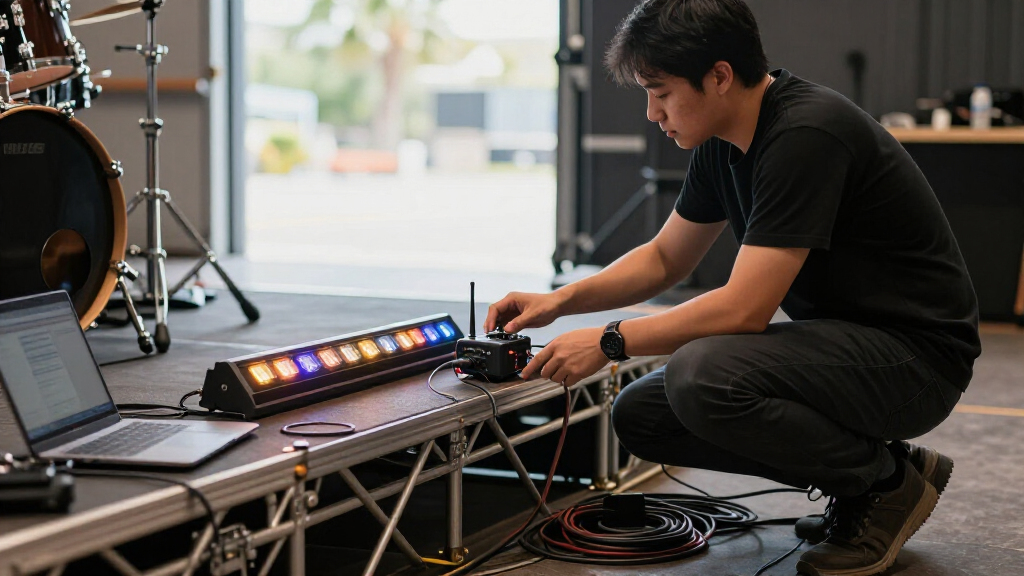

Wireless DMX lighting transmitters let you cut the cable between your console and your fixtures, which matters most on mobile DJ rigs, temporary stage setups, and venues where running DMX line is impractical. After comparing kit sizes, frequency coordination, and build quality across 15 popular options, the Donner Wireless DMX 8-Piece Kit stands out as the best overall pick for its metal housing and full 7-receiver coverage. The Lixada DMX512 with LCD Display is the strongest choice when you need adjustable power and a readable interface for troubleshooting mid-show, and the JERRAY 8-Piece Set wins on raw value for smaller budgets. The main tradeoff in this category is simple: cheap sets save money but often give you fixed IDs and flimsy plastic shells, while better kits add group coding and durable enclosures at a higher cost. Keep reading for the full breakdown of all 15 options.

Get audio and creator gear delivered free with Prime
- Fast, free delivery on millions of items
- Prime Video, Amazon Music and more included
- Member-only deals all year
Complete the kit


Key Takeaways
- Kit size was the biggest differentiator in this lineup — Donner‘s and CHINLY‘s 7-receiver kits covered full stage rigs, while 3-receiver sets like the JERRAY and generic 1+3 kits only suit small DJ setups.
- Adjustable ID/group coding (found on the Lixada and Donner dome-style units) separated the professional picks from budget sets with fixed channels, which matters when multiple wireless systems share a venue.
- Metal enclosures on the Donner 8-piece and silver 8-piece kit clearly outlasted the plastic shells common to JERRAY and CHINLY entry models — a real factor for touring and mobile use.
- Battery-powered receivers (CHINLY‘s 1+7 battery kit and the built-in battery DJ unit) added genuine setup flexibility but demanded charging discipline before every gig.
- LCD displays were rarer than expected across the 15 products; only the Lixada offered a truly readable status interface, which simplified troubleshooting during setup.
| JERRAY 2.4 GHz Wireless DMX512 Transmitter and Receiver Set for Stage Lighting, 8 Pieces |  | Best Budget Entry Point | Protocol: DMX512 | Frequency: 2.4 GHz | Channels: 126, automatic frequency hopping | VIEW LATEST PRICE | See Our Full Breakdown |
| Lixada DMX512 2.4GHz Wireless Transmitter & Receiver with LCD Display and Adjustable Power Repeater |  | Best for Configurable Multi-Rig Setups | Protocol: DMX512 | Frequency: 2.4 GHz | Channels: 126 | VIEW LATEST PRICE | See Our Full Breakdown |
| CHINLY Wireless DMX512 Transmitter and 7 Receivers, 2.4 GHz |  | Best Overall for Large Rigs | Protocol: DMX512 | Frequency: 2.4 GHz ISM | Communication range: Up to 400 m (line of sight) | VIEW LATEST PRICE | See Our Full Breakdown |
| CHINLY Wireless DMX512 Lighting Control Set with 1 Transmitter and 7 Battery-Powered Receivers |  | Best for Mobile and Battery-Powered Gigs | Protocol: DMX512 | Frequency: 2.4 GHz ISM | Set contents: 1 transmitter, 7 battery receivers, 8 adapters | VIEW LATEST PRICE | See Our Full Breakdown |
| JERRAY Wireless DMX512 Kit with 1 Transmitter and 3 Receivers |  | Best Value for Small Lighting Setups | Wireless frequency: 2.4 GHz ISM | Frequency hopping channels: 126 | Transmission range: Up to 400 meters line of sight | VIEW LATEST PRICE | See Our Full Breakdown |
| Donner Wireless DMX 8-Piece Kit – 7 Receivers + 1 Transmitter |  | Best for Large Fixed Installations | Receivers / Transmitters: 7 receivers, 1 transmitter | Wireless Range: 500 m line of sight | Channels: 126 | VIEW LATEST PRICE | See Our Full Breakdown |
| Donner DMX512 Wireless Controller with Light Dome – 1 Transmitter & 7 Receivers |  | Best for Status Monitoring at a Glance | Wireless Frequency: 2.4 GHz | Channels: 126 | Communication Distance: 500 m (visible) | VIEW LATEST PRICE | See Our Full Breakdown |
| JERRAY 3-Piece Wireless DMX512 Transmitter and Receiver Set | 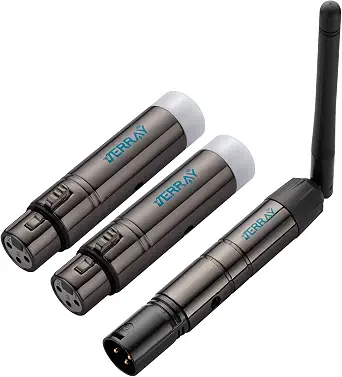 | Best Starter Set for Small Rigs | Included Units: 1 transmitter, 2 receivers | Wireless Frequency: 2.4 GHz ISM | Channels: 126 (frequency hopping) | VIEW LATEST PRICE | See Our Full Breakdown |
| CHINLY 2.4 GHz Wireless DMX512 Transmitter for LED Stage Lights |  | Best Single-Unit Add-On | Protocol: DMX512 | Operating Frequency: 2.4 GHz ISM | Communication Distance: Up to 400 m (visible) | VIEW LATEST PRICE | See Our Full Breakdown |
| CHINLY Wireless DMX512 Lighting Control Kit with 5 Receivers and 1 Transmitter |  | Best Battery-Powered Option | Kit Contents: 5 receivers, 1 transmitter, 6 adapters | Receiver Battery: Built-in rechargeable | Charging Time: About 2 hours | VIEW LATEST PRICE | See Our Full Breakdown |
| Rockville DMX-WTR 2.4GHz Wireless DMX Lighting Transmitter |  | Best Long-Range Single Transmitter | Wireless frequency: 2.4GHz | DMX protocol: DMX512 | Wireless range: Up to 1,968 ft (600 m) | VIEW LATEST PRICE | See Our Full Breakdown |
| Wireless DMX512 Transmitter Receiver Kit, 2.4GHz – 1 Transmitter & 3 Receivers |  | Best Starter Kit | Frequency: 2.4 GHz | Transmitter count: 1 | Receiver count: 3 | VIEW LATEST PRICE | See Our Full Breakdown |
| EYTSE Wireless DMX Built-in Battery DJ 2.4G DMX512 Transmitter Receiver System |  | Best Battery-Powered Kit | Brand: EYTSE | Channels: 126 | Range: Up to 500 meters | VIEW LATEST PRICE | See Our Full Breakdown |
| 8-Piece Wireless DMX512 Kit – Metal 2.4GHz Transmitter with 7 Female Receivers |  | Best Full-Rig Value | Frequency band: 2.4 GHz ISM, 126 channels | Communication distance: 400 m (line of sight) | Groups ID code: 7 settable groups | VIEW LATEST PRICE | See Our Full Breakdown |
| Donner 2.4 GHz Wireless DMX512 Transmitter and Receiver Set |  | Best Minimal Pair for Single-Fixture Control | Brand: Donner | Model: TS-WDMX01A | Set contents: 1 transmitter and 1 receiver | VIEW LATEST PRICE | See Our Full Breakdown |
| wireless DMX lighting transmitter | Channels |
|---|---|
| JERRAY 2.4 GHz Wireless DMX512 | 126, automatic frequency hopping |
| Lixada DMX512 2.4GHz Wireless | 126 |
| CHINLY Wireless DMX512 Transmi | 126, automatic frequency hopping |
| CHINLY Wireless DMX512 Lightin | — |
| JERRAY Wireless DMX512 Kit wit | — |
| Donner Wireless DMX 8-Piece Ki | 126 |
| Donner DMX512 Wireless Control | 126 |
| JERRAY 3-Piece Wireless DMX512 | 126 (frequency hopping) |
| CHINLY 2.4 GHz Wireless DMX512 | 126, automatic hopping |
| CHINLY Wireless DMX512 Lightin | — |
| Rockville DMX-WTR 2.4GHz Wirel | — |
| Wireless DMX512 Transmitter Re | — |
| EYTSE Wireless DMX Built-in Ba | 126 |
| 8-Piece Wireless DMX512 Kit | — |
| Donner 2.4 GHz Wireless DMX512 | 126, with automatic frequency hopping |
More Details on Our Top Picks
JERRAY 2.4 GHz Wireless DMX512 Transmitter and Receiver Set for Stage Lighting, 8 Pieces
For anyone cutting the DMX cable for the first time without spending much, this JERRAY set covers the fundamentals: 126-channel automatic frequency hopping, seven ID groups for separating lighting rigs, and a seven-color status display so you can see link status at a glance. Compared with the CHINLY 7-receiver set below, the hardware here is more basic — there’s no quoted transmission range, and the zinc-alloy build of pricier kits is replaced by a lighter 1.96 lb package. The most honest tradeoff is no built-in battery: every unit needs a wall adapter, so this kit belongs in fixed installs rather than mobile gigs. The listing also has a packaging quirk worth checking before ordering, since the title and contents list don’t fully agree on what’s inside.
Pros:- Eliminates long DMX cable runs in fixed installations
- Automatic frequency selection helps avoid 2.4 GHz interference
- Seven wireless ID groups support separate lighting networks
- Seven-color status display makes link confirmation quick
Cons:- No built-in battery — every unit needs a power adapter
- No stated transmission range, unlike the CHINLY and JERRAY 4-piece kits
- Package contents are ambiguously listed between title and contents
Best for: Small venues, churches, and DJs on a budget who want a first wireless DMX link for a fixed lighting rig near AC outlets
Not ideal for: Mobile performers and battery-powered rigs — every unit requires a power adapter, and no range spec is published
- Protocol:DMX512
- Frequency:2.4 GHz
- Channels:126, automatic frequency hopping
- Wireless ID groups:7
- Power:Power adapter required; no built-in battery
- Weight:1.96 lbs
Our verdict“A reasonable low-cost first step into wireless DMX for permanently powered setups, as long as you verify the box contents and don’t need battery power.”
Lixada DMX512 2.4GHz Wireless Transmitter & Receiver with LCD Display and Adjustable Power Repeater
This Lixada unit earns its place through configurability rather than raw hardware count. With 16 programmable ID groups — more than double the seven offered by the JERRAY and CHINLY kits — it suits production environments where several lighting universes share the same airspace. The LCD display beats the indicator-light approach on the CHINLY 7-receiver set, since you can read channel and group settings directly instead of decoding blinks. Four adjustable power output grades let you dial signal strength down in close quarters to reduce cross-rig interference, or up when fixtures sit far apart. The catch: all that flexibility assumes you’re comfortable programming groups and channels. Compared with the plug-and-pair JERRAY kits, expect a steeper learning curve before this pays off.
Pros:- 16 programmable groups — far more network separation than 7-group kits
- LCD display shows settings directly instead of blink codes
- Four power output levels for tuning range and interference
- Real-time transmission with no perceptible lag
Cons:- Steeper configuration learning curve than plug-and-pair alternatives
- Only one transmitter/receiver pair included — extra fixtures need more units
Best for: Lighting techs and mobile DJs running multiple separate lighting rigs who need granular group and power control
Not ideal for: Beginners who want a plug-and-play pair — the 16-group programming takes real effort to configure correctly
- Protocol:DMX512
- Frequency:2.4 GHz
- Channels:126
- Groups:16 ID-coded groups
- Power output levels:4 grades
- Display:LCD
Our verdict“The right pick if you run multiple lighting rigs and want on-screen control over groups and signal power; overkill for a single-fixture setup.”
CHINLY Wireless DMX512 Transmitter and 7 Receivers, 2.4 GHz
Seven receivers in the box is the reason this CHINLY kit sits near the top of the list — that’s enough to cut cables to an entire small stage in one purchase, where the JERRAY 8-piece entry above leaves you guessing about actual contents. The specs are unusually complete for the category: 20 dBm transmit power, -94 dBm receive sensitivity, and 3-pin XLR connectors on a zinc-alloy body, which explains why the 400 m line-of-sight rating feels more credible than unlisted ranges on cheaper kits. Frequency hopping across 126 channels handles congested 2.4 GHz spaces like venues packed with Wi-Fi. The tradeoff is wiring: all eight units need AC adapters, and receivers must have their ID set to match the transmitter — a small setup task that trips up first-timers expecting instant pairing.
Pros:- Seven receivers cover a full lighting rig in one purchase
- Full specs published: 20 dBm power and -94 dBm sensitivity
- Zinc alloy construction is more rugged than plastic-only kits
- 126-channel frequency hopping handles interference from Wi-Fi-heavy venues
Cons:- 400 m range only holds with clear line of sight
- All units require AC power and matching ID setup
- Long sausage-style transmitter is awkward to mount discreetly
Best for: Stage managers and installers outfitting a full lighting rig of six or seven fixtures at a fixed venue
Not ideal for: Battery-only or pop-up event spaces — every transmitter and receiver needs its own AC outlet
- Protocol:DMX512
- Frequency:2.4 GHz ISM
- Communication range:Up to 400 m (line of sight)
- Set contents:1 transmitter, 7 receivers, 8 adapters
- Channels:126, automatic frequency hopping
- ID groups:7
- Connectors:3-pin XLR
- Max transmit power:20 dBm
- Operating voltage:AC 100–240 V
Our verdict“The most complete wired-power package here for anyone running a full stage rig — just be sure you have outlets everywhere and patience for ID pairing.”
CHINLY Wireless DMX512 Lighting Control Set with 1 Transmitter and 7 Battery-Powered Receivers
This is the kit that solves the problem the standard CHINLY 7-receiver set can’t: power. Each receiver carries a built-in rechargeable lithium-ion battery good for roughly 8 hours — enough for a full gig night — and can run while charging, so a venue with partial outlet access stops being a dealbreaker. For mobile DJs, wedding uplighters, and outdoor events, that flexibility justifies the heavier 2.75 lb kit. The frequency-hopping behavior and seven ID groups match the AC-only CHINLY, so signal performance is comparable. The honest gap: the transmitter itself has no battery, so you’ll still need mains power (or a power bank meeting the 5 V / 500 mA minimum) at the console end. Charging all seven receivers between shows also takes planning at roughly two hours per cycle.
Pros:- Seven receivers with built-in batteries run up to 8 hours each
- Receivers operate while charging for extended events
- Same 126-channel frequency hopping and 7 ID groups as the wired CHINLY kit
- Dual modes cover both portable and permanently powered rigs
Cons:- Transmitter has no battery or charging function — console end still needs power
- Seven receivers must be recharged (~2 hours each) between gigs
- 400 m range only applies with direct line of sight
Best for: Mobile DJs and event uplighters who place fixtures where outlets don’t exist and need all-night battery runtime
Not ideal for: Fixed installations with reliable power everywhere — the battery hardware adds cost and charging chores you don’t need
- Protocol:DMX512
- Frequency:2.4 GHz ISM
- Set contents:1 transmitter, 7 battery receivers, 8 adapters
- Receiver battery:Built-in lithium-ion, ~8 hours runtime
- Charging time:About 2 hours
- Communication range:Up to 400 m line of sight
- ID groups:7 selectable
- Input voltage:5 V DC, 500 mA minimum
Our verdict“The clear choice when fixtures go where outlets can’t follow; skip it if every position already has mains power.”
JERRAY Wireless DMX512 Kit with 1 Transmitter and 3 Receivers
Not everyone needs seven receivers. This JERRAY kit matches the big CHINLY set on the specs that matter — 2.4 GHz frequency hopping across 126 channels, seven group IDs, 400 m line-of-sight range, standard 3-pin XLR connectors, and even a one-year warranty — but scales the hardware down to three receivers and four adapters. For a band rig, small DJ booth, or church stage with three or four fixtures, that right-sizing is where the value lives; you’re not paying for receivers sitting in a drawer. Compared with the battery-powered CHINLY, everything here is AC-powered, which means zero charging logistics but a hard dependence on outlets at every position. Like its siblings in this roundup, the 400 m figure shrinks fast once walls, truss, or people get between transmitter and receivers.
Pros:- Right-sized hardware for typical small rigs of 3–4 fixtures
- Full 126-channel frequency hopping and 7 group IDs despite the smaller kit
- Standard 3-pin XLR connectors work with common DMX consoles and fixtures
- Includes 4 power adapters plus a 1-year warranty
Cons:- AC power required at every unit — no battery option anywhere in the kit
- Only three receivers, so larger rigs need additional hardware
- 400 m range is line-of-sight only and degrades with obstacles
Best for: Bands, small venues, and mobile entertainers controlling three or four fixtures who want full-size specs without buying eight units
Not ideal for: Anyone growing past four fixtures soon — you’d end up buying a larger kit like the CHINLY 7-receiver set anyway
- Wireless frequency:2.4 GHz ISM
- Frequency hopping channels:126
- Transmission range:Up to 400 meters line of sight
- Group IDs:7
- Connectors:3-pin XLR male and female
- Power:AC-powered
- In the box:1 transmitter, 3 receivers, 4 power adapters
- Warranty:1 year
Our verdict“The smart buy for small lighting rigs that want big-kit wireless specs without paying for unused receivers.”
Donner Wireless DMX 8-Piece Kit – 7 Receivers + 1 Transmitter
This Donner 8-piece kit makes the most sense for anyone running a full seven-fixture rig from a single console. Where the JERRAY 3-piece set only covers two fixtures, this kit scales to a whole club or stage without buying add-ons, and the 500 m line-of-sight range comfortably outdistances the CHINLY single transmitter’s 400 m rating. The black metal housings feel built for permanent mounting in bars and venues rather than tossed into a gig bag. Frequency hopping across 126 channels keeps seven separate systems from stepping on each other, which matters if neighboring booths run their own wireless DMX. The catch is power: all eight units need wall adapters, so this is not a battery-friendly portable option — the CHINLY 5-receiver kit wins on that front.
Pros:- Complete 7-receiver kit covers a full lighting rig out of the box
- 500 m line-of-sight range beats most competitors in this roundup
- Metal construction suited to permanent installation
- Automatic frequency hopping supports multiple simultaneous systems
Cons:- All eight units require external power adapters — no battery operation
- Only works with fixtures supporting the DMX512 protocol
Best for: Venue owners and production crews wiring a full stage or club rig with seven or more DMX fixtures in fixed positions
Not ideal for: Mobile DJs who need battery-powered gear they can set up anywhere without hunting for eight power outlets
- Receivers / Transmitters:7 receivers, 1 transmitter
- Wireless Range:500 m line of sight
- Channels:126
- Housing:Black metal
- Power:8 external adapters included, no battery
- Weight:2.51 pounds
Our verdict“If you’re permanently installing a seven-fixture lighting system and have outlets to spare, this is the most complete package here.”
Donner DMX512 Wireless Controller with Light Dome – 1 Transmitter & 7 Receivers
On paper this Donner kit overlaps heavily with the Donner 8-piece kit (B00URFJ0MM) — same 126 channels, same 500 m range, same seven-receiver capacity. What separates it is the light dome and tricolor LED indicators on each receiver, which let a technician confirm power and signal status across a dark stage without pulling out a multimeter. For troubleshooting mid-show, that visibility is worth paying attention to. Compared with the CHINLY 5-receiver kit, you get two more receivers but lose the convenience of built-in batteries — every unit here needs a wall adapter. If you run events where you can’t afford blind debugging time, the indicator domes justify choosing this over the cheaper-looking alternatives; if your rig is simple, they’re a nice-to-have rather than a need-to-have.
Pros:- Tricolor LED light domes make receiver status visible from across a stage
- Full seven-group support with anti-jamming frequency hopping
- 500 m visible range matches the larger Donner kit
- Complete package with all eight power adapters included
Cons:- No battery operation — every unit needs an outlet
- Largely redundant if you don’t need the status indicators over the standard Donner kit
- DMX512-only compatibility
Best for: Event technicians and venue staff who need to verify signal and power status on receivers quickly during live shows
Not ideal for: Small home or bedroom lighting setups where status LEDs add cost without practical benefit
- Wireless Frequency:2.4 GHz
- Channels:126
- Communication Distance:500 m (visible)
- Groups:7 selectable ID groups
- Package Contents:1 transmitter, 7 receivers, 8 power adapters
- Power:External adapters required, no battery
Our verdict“Pick this over the standard Donner kit when mid-show diagnostics matter more than saving a few dollars.”
JERRAY 3-Piece Wireless DMX512 Transmitter and Receiver Set
Not everyone needs seven receivers. This JERRAY 3-piece set targets the DJ or band frontperson running two or three fixtures — a pair of moving heads and a wash, say — and it does that job without the bulk of the Donner 8-piece kit. The claimed 1,000 ft range sits between Donner’s 500 m and CHINLY’s 400 m ratings, though all of these figures assume unobstructed line of sight, so treat them as best-case numbers. Seven group IDs and 126 hopping channels mean it plays nicely alongside other wireless DMX systems at shared events, matching what the bigger kits offer. The tradeoff is the same one that runs through this category: all three units need power adapters, and unlike the CHINLY 5-receiver kit, there’s no battery option to fall back on when outlets are scarce.
Pros:- Right-sized for small two-fixture rigs without paying for spare receivers
- Adapters included for all three units
- Seven group IDs allow coexistence with other wireless DMX systems
- 2.4 GHz frequency hopping resists interference
Cons:- No built-in battery in any unit
- Only two receivers — limited headroom for growing rigs
- Range claims depend on clear line of sight
Best for: DJs and small bands with two or three DMX fixtures who want cable-free control without paying for unused receivers
Not ideal for: Anyone planning to expand beyond a few fixtures soon — you’d outgrow the two receivers and end up buying a larger kit anyway
- Included Units:1 transmitter, 2 receivers
- Wireless Frequency:2.4 GHz ISM
- Channels:126 (frequency hopping)
- Group IDs:7
- Claimed Range:1,000 ft
- Power:3 adapters included, no battery
- Compatibility:DMX512 lighting
Our verdict“A sensible entry point if you’re controlling exactly a couple of fixtures and nothing more.”
CHINLY 2.4 GHz Wireless DMX512 Transmitter for LED Stage Lights
Sometimes you don’t need a kit at all — you need one transmitter to link an existing console to receivers you already own. That’s the niche this CHINLY unit fills, and it fills it more cheaply than buying the CHINLY 5-receiver kit or the JERRAY 3-piece set when you only need the console-side half. It passes standard DMX512 data in real time with no perceptible processing delay, which matters for busking-style manual cueing. The 400 m visible range is the shortest rating in this batch — Donner’s kits claim 500 m — so it’s better matched to club-scale rooms than sprawling outdoor sites. With seven settable ID groups and GFSK modulation, it behaves like its bigger siblings; the limitation is simply that everything else (receivers, power) is on you to assemble.
Pros:- Real-time DMX512 transmission with no added latency
- Automatic frequency hopping across 126 channels
- Seven settable ID groups for multi-system venues
- Cheapest way to add or replace a transmitter
Cons:- 400 m range is the shortest in this batch
- Sold without receivers — not a complete solution
- Range spec assumes unobstructed line of sight
Best for: Lighting operators who already own receivers and just need a replacement or additional console-side transmitter
Not ideal for: Buyers starting from scratch — a single unit with no receivers means piecing together a system piece by piece
- Protocol:DMX512
- Operating Frequency:2.4 GHz ISM
- Communication Distance:Up to 400 m (visible)
- Channels:126, automatic hopping
- ID Groups:7 settable
- Modulation:GFSK
Our verdict“Buy this only if your receivers exist and work — it’s a component, not a system.”
CHINLY Wireless DMX512 Lighting Control Kit with 5 Receivers and 1 Transmitter
This is the only kit in this batch that frees your receivers from the wall. Each of the five receivers carries a built-in rechargeable battery good for about eight hours — and they run while charging, so a power strip tops them up mid-event if needed. For mobile DJs, wedding uplighters, and pop-up events where outlets are the scarcest resource, that beats the Donner 8-piece kit outright, even though Donner gives you two more receivers and 100 m more range. The honest tradeoff: the transmitter still needs wall power, so your console position isn’t fully wireless, and eight-hour runtime means charging discipline before every gig. The three-year warranty is the longest backing in this lineup, which softens the risk of battery degradation over time. A 2-hour charge time is reasonable for overnight prep between shows.
Pros:- Receivers run up to 8 hours on built-in batteries
- Can operate while charging, enabling mid-event top-ups
- Three-year warranty is the strongest in this roundup
- Zinc alloy construction is more durable than typical plastic shells
Cons:- Transmitter has no battery — console side still needs an outlet
- Only five receivers versus seven in the Donner kits
- 400 m range requires unobstructed line of sight
Best for: Mobile DJs and event uplighting crews who set up in venues with few outlets and need receivers that run untethered
Not ideal for: Permanent installations with reliable power — wired adapters in the Donner kits are simpler and never need recharging
- Kit Contents:5 receivers, 1 transmitter, 6 adapters
- Receiver Battery:Built-in rechargeable
- Charging Time:About 2 hours
- Receiver Runtime:About 8 hours
- Communication Range:400 m line of sight
- Channels / Groups:126 channels, 7 ID groups
- Materials:Zinc alloy and plastic
- Warranty:3 years
Our verdict“If your gigs happen where power access is a lottery, the battery receivers here solve a problem none of the Donner or JERRAY kits address.”
Rockville DMX-WTR 2.4GHz Wireless DMX Lighting Transmitter
The Rockville DMX-WTR stands out for one reason above all: range. With a stated 1,968-foot (600 m) reach, it outruns every other transmitter in this lineup — the Donner TS-WDMX01A and the 8-piece zinc-alloy kit both top out well below that. If you’re rigging lights across a festival ground or a large ballroom where a dropped signal means a dark stage, that headroom matters. Frequency hopping at 1,100 hops per second across 126 channels also makes it more resilient in RF-crowded venues than simpler kits. The tradeoff is that this is a transmitter only — you’ll need to source receivers separately, unlike the plug-and-play kits from EYTSE or CHINLY that bundle everything. Battery power adds flexibility for mobile rigs but adds charging logistics too.
Pros:- Class-leading 1,968 ft stated range beats every other option here
- Supports 7 lighting groups and up to 25 receivers for large rigs
- Aggressive frequency hopping (1,100 hops/sec) resists interference
- Compact 0.4 lb body with three-color LED status display
Cons:- Transmitter only — receivers sold separately, raising total system cost
- Battery-powered design means charging discipline is required before every gig
Best for: Mobile DJs and production companies running large venues who need maximum range and already own or will buy matching receivers
Not ideal for: Buyers wanting a complete out-of-the-box system — this is a transmitter only, so a kit like the Donner set is a simpler path
- Wireless frequency:2.4GHz
- DMX protocol:DMX512
- Wireless range:Up to 1,968 ft (600 m)
- Lighting groups:Up to 7
- Receivers supported:Up to 25
- Frequency hopping:126 channels; 1,100 hops per second
- Power source:Battery powered (lithium-based)
- Weight:0.4 lb
- Warranty:1 year
Our verdict“This is the pick when distance is your limiting factor and you’re building a system piece by piece rather than buying a complete kit.”
Wireless DMX512 Transmitter Receiver Kit, 2.4GHz – 1 Transmitter & 3 Receivers
For someone cutting DMX cables for the first time, this three-receiver kit is the gentlest entry point in the roundup. Compared with the 8-piece kit or the CHINLY 7-receiver sets, the smaller receiver count keeps the price of admission low while still covering a typical small stage — two uplights and a wash, say. Setup is genuinely plug-and-play: power on, match IDs, and you’re transmitting. The 2.4 GHz signal holds steady in device-heavy clubs thanks to channel agility across 126 frequencies. The limitation is scale — the same seven group IDs shared by nearly every budget kit here cap how complex your configurations can get, and if you later expand past three fixtures you’ll be buying additional receivers anyway. Think of it as a proving ground before committing to a larger system.
Pros:- Complete ready-to-run kit with transmitter and three receivers included
- Genuine plug-and-play setup with simple ID matching
- Stable 2.4 GHz link holds up in wireless-crowded venues
- 126 channels across 7 group IDs for basic multi-zone control
Cons:- Only three receivers limits fixture count from day one
- Seven group IDs can’t handle complex multi-operator configurations
Best for: First-time buyers, small bands, and mobile DJs lighting three or fewer fixtures who want a low-commitment wireless DMX trial
Not ideal for: Production crews running eight or more fixtures — the three-receiver ceiling forces an immediate upgrade to a bigger kit
- Frequency:2.4 GHz
- Transmitter count:1
- Receiver count:3
- Groups ID:7
- Channels supported:126
- Weight:1.48 pounds
- Package dimensions:7.05 x 5.98 x 2.72 inches
Our verdict“The right first wireless DMX purchase if you want to test the waters with a small rig before scaling up.”
EYTSE Wireless DMX Built-in Battery DJ 2.4G DMX512 Transmitter Receiver System
The EYTSE system solves the problem that sinks most wireless DMX kits at mobile gigs: power. With five battery-powered receivers running up to 15 hours on a 2-hour charge, you can uplight a wedding tent or warehouse party without hunting for outlets — something neither the Donner TS-WDMX01A nor the 8-piece zinc-alloy kit can claim, as both demand wall power at every receiver. The 500 m range sits near the Rockville’s territory, and automatic frequency hopping keeps the link clean alongside DJ laptops and wireless mics. Two caveats temper the appeal: the transmitter itself needs an external adapter, which undercuts the fully-cable-free pitch, and the receivers run on five separate 9V batteries, so you’re managing spares and replacements as an ongoing cost. The included carrying case softens the logistics burden for traveling rigs.
Pros:- Up to 15 hours of battery operation per 2-hour charge
- 500 m range rivals the Rockville for large venues
- Five receivers plus transmitter, adapters, and carrying case included
- Automatic frequency hopping and 7-group ID coding resist interference
Cons:- Transmitter lacks a built-in battery and must stay plugged in
- Five 9V receiver batteries add weight, cost, and replacement logistics
Best for: Mobile DJs and event uplighters who work venues without reliable power access and need receivers that run all night
Not ideal for: Permanently installed theater or club rigs — battery maintenance becomes a chore when outlets are already at every fixture
- Brand:EYTSE
- Channels:126
- Range:Up to 500 meters
- Battery life:Up to 15 hours
- Charging time:2 hours
- Receiver batteries:5 × 9V (included)
- ID groups:7
- Item weight:4.4 pounds
Our verdict“The strongest choice for off-grid mobile events, provided you accept battery management as part of the routine.”
8-Piece Wireless DMX512 Kit – Metal 2.4GHz Transmitter with 7 Female Receivers
If you’re lighting an entire stage, this one-transmitter, seven-receiver kit hits the sweet spot between coverage and cost per fixture. The three-receiver starter kit covers small rigs; this one handles a full concert or club setup in a single purchase, rivaling the CHINLY and Donner 7-receiver sets. The zinc-alloy housing is the standout build quality here — most competitors lean on plastic, and metal bodies survive the drops and case-stacking that touring gear endures. Auto-frequency selection across 126 channels and a 400 m line-of-sight range keep the signal dependable, while LED indicators make troubleshooting fast mid-show. The catch is the same one shared by the Donner TS-WDMX01A: every unit needs an external power adapter, so factor in power drops at each fixture position and plan cable runs accordingly despite going wireless for DMX.
Pros:- Complete 8-piece kit covers a full stage rig in one buy
- Zinc-alloy metal housing is tougher than plastic rivals
- 400 m visible range with auto-frequency selection
- 7 settable groups allow separate control zones
Cons:- External power adapters required for every unit — no battery option
- Fixed female receiver orientation may not suit every fixture connector setup
Best for: Bands, theaters, and club installations lighting seven or more fixtures that want a complete metal-built rig in one purchase
Not ideal for: Mobile uplighters working powerless venues — the EYTSE battery system is the better fit there
- Frequency band:2.4 GHz ISM, 126 channels
- Communication distance:400 m (line of sight)
- Groups ID code:7 settable groups
- DMX connector:3-pin male
- Material:Zinc alloy + plastic
- Work voltage:AC100-240V
- Max transmitting power:20 dBm
- Receive sensitivity:-94 dBm
Our verdict“The most sensible single purchase for a permanent or semi-permanent seven-fixture rig where durability matters more than portability.”
Donner 2.4 GHz Wireless DMX512 Transmitter and Receiver Set
Sometimes you only need to cut one cable. The Donner TS-WDMX01A is the leanest option here — a single transmitter and receiver pair, in contrast to the multi-receiver kits that dominate this category. That simplicity is its strength: it’s the cheapest way to link a console to one distant fixture, like a truss-mounted mover or a sign light across a room, without paying for receivers you won’t use. The 126 automatically jumping channels and 7 selectable ID groups mean you can run several of these pairs as independent networks later, scaling by buying sets as needed. Real constraints exist: it requires an external power adapter at both ends with no battery option, and it speaks strictly to devices marked DMX512 — older or proprietary fixtures are out. Compared with the starter three-receiver kit, this trades expansion room for a lower entry point.
Pros:- Lowest-commitment way to cut a single DMX cable run
- Automatic frequency hopping across 126 channels resists interference
- Seven ID groups let multiple pairs run as separate networks
- Solid metal construction in a compact 10.5 oz package
Cons:- External power adapter required at both transmitter and receiver
- Only compatible with devices explicitly marked DMX512
Best for: Anyone who needs to wirelessly link exactly one fixture — a single mover, wash, or architectural light — on a tight budget
Not ideal for: Multi-fixture stage rigs — buying several pairs costs more than a single 7-receiver kit like the zinc-alloy 8-piece set
- Brand:Donner
- Model:TS-WDMX01A
- Set contents:1 transmitter and 1 receiver
- Frequency:2.4 GHz ISM
- Channels:126, with automatic frequency hopping
- ID groups:7 selectable groups
- Protocol:DMX512
- Power:External adapter required; no built-in battery
Our verdict“A smart single-cable solution for one-fixture problems, but multi-light rigs should buy receivers in bulk instead.”

How We Picked
I evaluated each of these 15 wireless DMX transmitter and receiver sets against the factors that actually decide whether a show runs smoothly: kit coverage (how many receivers you get per transmitter), signal coordination features like adjustable ID codes and channel groups, build quality of the enclosures and antennas, and power flexibility including battery-powered receivers. Because most of these products operate on the same 2.4 GHz band, the differentiators came down to how well each system avoids interference and how easily it integrates into an existing DMX512 chain.
The ranking logic follows buyer outcomes rather than spec sheets. Kits with seven receivers rank higher because they cover a typical stage lighting rig out of the box, while three-receiver sets fill a budget niche for small DJ booths. Units with ID coding and displays rank above fixed-channel equivalents because they scale to multi-system venues. Durability also weighed heavily — a plastic shell that survives a bedroom setup will crack in a road case, so metal builds earned a genuine premium in the ordering.
Factors to Consider When Choosing Wireless DMX Lighting Transmitters
Choosing a wireless DMX transmitter set goes beyond matching receiver counts to fixture counts. These are the factors that catch buyers off guard — and where spending a little more upfront saves headaches at the venue.
Count Your Receivers Before You Count Your Budget
The most common mistake in this category is buying a three-receiver kit for a rig that needs six or seven receivers. Manufacturers design these systems to pair within their own ecosystem, so mixing a JERRAY transmitter with CHINLY receivers often fails silently — the units power on but never link. If you run a full stage rig, buy the seven-receiver kit even if it costs more, because receiver count is effectively your expansion ceiling. A cheaper path is choosing a kit with a repeater function, like the Lixada, which extends range and lets you add coverage later. Mobile DJs with two or three fixtures are the exception; for them, a 1+3 kit is genuinely enough and the savings are real.
Why ID Coding Matters More Than Range
Every product on this list broadcasts on 2.4 GHz — the same band as venue Wi-Fi, wireless microphones, and half the phones in the audience. The spec that separates a smooth show from a glitchy one is ID or group coding, not advertised range. Systems with seven group IDs and 126 channels let you move away from congested frequencies when interference appears, while fixed-channel budget units leave you with no escape. This matters doubly at multi-act events, trade shows, or shared venues where another lighting operator may already be running wireless DMX. If you work those environments regularly, treat adjustable IDs as non-negotiable rather than a nice-to-have.
Plastic Versus Metal Is a Touring Decision
Enclosure material feels like a minor spec until the first time a receiver gets tossed into a gear bag with clamps and cables. Plastic-housed units are fine for installed rigs that get set up once, but metal builds survive the road — which is why the Donner and silver 8-piece kits rank above similarly featured plastic options. Antenna design deserves the same scrutiny: fixed internal antennas are more compact but sacrifice range, while external antennas can be bent or snapped off in transit. If you tear down and load out weekly, factor replacement risk into the price difference. Installed venues and bedroom studios can safely take the cheaper plastic route.
Battery-Powered Receivers: Freedom With a Catch
Battery receivers, like those in CHINLY’s 1+7 battery kit and the standalone DJ unit, eliminate the hunt for power outlets behind truss and uplighting positions — a genuine time-saver during setup. The tradeoff is operational, not financial: battery units demand a charging routine before every gig, and a dead receiver mid-show looks identical to a signal failure, which makes troubleshooting miserable. Hybrid approaches work well here — run powered receivers where outlets exist and reserve battery units for genuinely inaccessible positions. Also check whether the batteries are replaceable, since sealed cells turn the whole receiver into e-waste when they degrade. Venues with clean power access should skip batteries entirely.
Displays and Indicators: Your Troubleshooting Lifeline
When a fixture stops responding twenty minutes before doors, you need to see whether the problem is the transmitter, the receiver, or the link between them. Units with LCD displays, like the Lixada, show channel and ID settings at a glance, while LED-only units force you to decode blink patterns from a manual you probably left at home. Status visibility directly shortens setup time on complex rigs, which is why display-equipped models rank above equals without them. Dome-style indicator lights, as on the Donner light-dome unit, are a middle ground — visible from across a stage but less informative than a screen. For one-rig owners, this matters less; for anyone running multiple systems, it pays for itself quickly.
When Wireless DMX Is the Wrong Tool
An honest buying guide has to admit the limits: wireless DMX adds latency and drop-out risk that a $20 cable never will. If your fixtures live within cable reach of your console — a permanent install, a bedroom studio, a small venue — wired DMX remains more reliable and dramatically cheaper. Wireless earns its cost when you’re running uplights across a ballroom, crossing walkways where cables are trip hazards, or moving rigs weekly. Also remember that every receiver still needs power for its fixture, so you’re eliminating the DMX line, not the electrician’s work. Buy wireless for the setups it solves, not as a default upgrade.
Frequently Asked Questions
Can I mix transmitters and receivers from different brands like JERRAY and CHINLY?
In most cases, no — and this catches a lot of buyers off guard. Although these brands all use the 2.4 GHz band and the DMX512 protocol, they encode and pair their signals differently, so a JERRAY transmitter typically will not link to a CHINLY receiver even though both power on normally. The failure mode is frustrating because everything looks like it should work. Your safe approach is to treat each kit as a closed system and buy all receivers from the same manufacturer as your transmitter. If you already own mismatched units, the generic 126-channel kit with seven group IDs sometimes bridges the gap, but test compatibility before relying on it for a show.
How many receivers do I actually need for my lighting rig?
Count your fixtures first, because each DMX fixture needs its own receiver in a wireless setup. A mobile DJ running three LED pars needs only a 1+3 kit, while a stage rig with seven or more fixtures justifies the 7-receiver kits from Donner or CHINLY. Remember that you can also daisy-chain wired DMX between fixtures in one position — two uplights placed together can share a single receiver with a short cable between them. That trick often lets a three-receiver kit cover a five-fixture rig. Buy for your rig plus one spare receiver, since a single failed unit shouldn’t kill your show.
Will 2.4 GHz wireless DMX interfere with venue Wi-Fi or wireless microphones?
It can, and the risk is real at venues saturated with wireless traffic. All fifteen products in this roundup use the same 2.4 GHz band as consumer Wi-Fi, Bluetooth devices, and some wireless audio gear. The mitigating feature is ID and channel coding — systems with seven group IDs and 126 channels, like the adjustable kits in this lineup, let you shift away from congested frequencies when dropouts appear. Fixed-channel budget units give you no such escape route. If you regularly work corporate events or venues with heavy Wi-Fi use, prioritize adjustable ID coding over almost every other spec, and do a full signal check during load-in rather than at soundcheck.
Are battery-powered receivers worth the extra cost?
They shine in one specific scenario: fixture positions with no accessible power for the receiver itself — behind truss, inside columns, or across open ballroom floors. In those cases, battery receivers like the CHINLY 1+7 battery kit save real setup time and eliminate extension cords. The tradeoff is discipline: you must charge every unit before each gig, and a dead battery mimics a signal fault, which wastes troubleshooting time under pressure. Check whether the batteries are replaceable before buying, since sealed cells limit the kit’s lifespan. If your fixture positions all have power nearby, standard USB-powered receivers are the smarter buy.
Do I still need a DMX controller or console with a wireless transmitter set?
Yes — a wireless transmitter and receiver set is a cable replacement, not a controller. You still need something generating the DMX signal: a lighting console, a hardware DMX controller, or DMX software with an interface. The transmitter plugs into your controller’s DMX output, and the receivers plug into your fixtures’ DMX inputs, replacing the cable run between them. Some buyers confuse these kits with standalone controllers and are disappointed when nothing programs the lights. If you’re starting from zero, budget for both the control source and the wireless link — the transmitter set only carries the signal; it never creates one.
Conclusion
After comparing all fifteen options, the right pick comes down to what you’re lighting and how often you load out. Best overall goes to the Donner Wireless DMX 8-Piece Kit, which combines a metal build, seven-receiver coverage, and dependable 2.4 GHz performance — the safest all-around choice for working stage rigs. Best value is the JERRAY 8-Piece Set, which matches the receiver count of pricier kits at a lower cost, provided you can live with the plastic housing. Best premium belongs to the Lixada with LCD display and repeater function, whose adjustable power and readable interface earn their price for operators who troubleshoot under time pressure.
For beginners, the JERRAY 3-Piece Set is the gentlest entry point — simple pairing, low commitment, and enough receivers for a first DJ rig. Specific needs break down cleanly after that: the CHINLY 1+7 battery kit for setups without accessible power, the Donner light-dome unit for at-a-glance status across a stage, and the generic 126-channel kit for multi-system venues where flexible ID coding matters most. Match the kit to your fixture count and workload, and you’ll land on the right transmitter set on the first try.
Halloween Picks
halloween
As an affiliate, we earn on qualifying purchases.