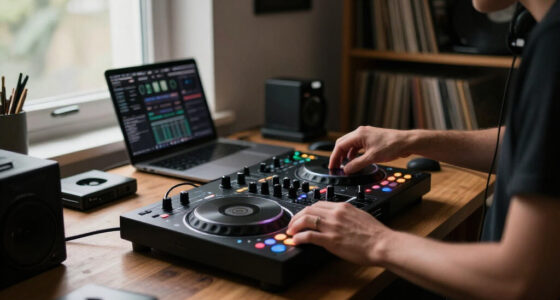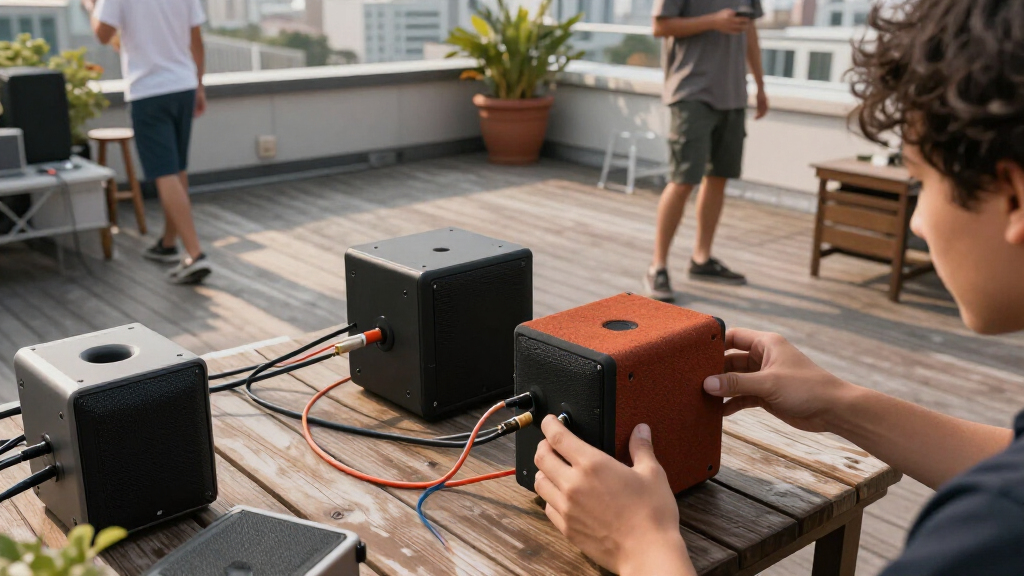

Choosing among the best portable modular speakers depends on what “portable” and “modular” mean for your setup. For live sound in small and medium venues, I’d start with the Bose L1 Pro16: its broader line array and integrated subwoofer suit performers who need room coverage without a traditional speaker-and-subwoofer rig. The Gemini WPX-2000TOGO is the stronger fit for events away from outlets because it runs on battery power, while the smaller Bose L1 Pro8 makes more sense for compact performances where a full-size system would be excessive.

Get audio and creator gear delivered free with Prime
- Fast, free delivery on millions of items
- Prime Video, Amazon Music and more included
- Member-only deals all year
These are not interchangeable types of speaker. The Bose and Gemini systems are portable PA rigs with inputs for performers, whereas the Bluvero Core Duo is a much smaller, stackable Bluetooth speaker pair for casual playback. I rank the systems by how well their modular construction supports practical setup and transport, then weigh coverage, power options, controls, and limitations. The main tradeoff is straightforward: venue-ready sound and mixer features bring more equipment to carry, while genuinely compact, battery-friendly speakers give up the inputs and output needed for live PA work.
Complete the kit


Key Takeaways
- Bose L1 Pro16: My leading choice for small and medium venues, with 180-degree coverage, an integrated subwoofer, and a three-channel mixer.
- Bose L1 Pro8: A better match than the Pro16 when a singer-songwriter or mobile DJ wants a smaller PA for a small room.
- Gemini WPX-2000TOGO: The most practical pick for events without nearby outlets, with battery operation rated for up to eight hours and a supplied wired microphone.
- Bluvero Core Duo: The lightest, simplest option here for casual portable music; it is a Bluetooth speaker system, not a substitute for a performance PA.
- Choose by the job: Compare venue coverage and mixer inputs for live sound, battery runtime for off-grid events, and size and splash resistance for everyday carry.
| Bose L1 Pro16 Portable PA System |  | Best Overall for Small and Medium Venues | Array drivers: 16 articulated 2-inch neodymium drivers | Horizontal coverage: 180 degrees | Subwoofer: 10 × 18-inch high-excursion Racetrack neodymium woofer | VIEW LATEST PRICE | See Our Full Breakdown |
| Gemini WPX-2000TOGO Battery-Powered Line Array PA System |  | Best for Events Without Nearby Outlets | Power: 700 watts | Battery runtime: Up to 8 hours | Charge time: 4–5 hours | VIEW LATEST PRICE | See Our Full Breakdown |
| Bose L1 Pro8 Portable PA System with Bluetooth and Built-In Mixer |  | Best Compact PA for Small Rooms | Array drivers: Eight articulated 2-inch neodymium drivers | Horizontal coverage: 180 degrees | Subwoofer driver: 7 × 13-inch RaceTrack driver | VIEW LATEST PRICE | See Our Full Breakdown |
| Bluvero Core Duo Modular Bluetooth Speaker System |  | Best Compact Stackable Speaker Pair | Audio output: 5W | Audio mode: Mono | Battery capacity: 2000mAh | VIEW LATEST PRICE | See Our Full Breakdown |
| portable modular speaker | Mixer | Connectivity | Array drivers | Horizontal coverage |
|---|---|---|---|---|
| Bose L1 Pro16 Portable PA Syst | Three channels with EQ, reverb, and phantom power | Bluetooth streaming | 16 articulated 2-inch neodymium drivers | 180 degrees |
| Gemini WPX-2000TOGO Battery-Po | 3-channel with dual XLR/1/4-inch combo inputs | Bluetooth, USB, TWS linking, and XLR mix output | — | — |
| Bose L1 Pro8 Portable PA Syste | Three channels with EQ, reverb, and phantom power | Bluetooth streaming and smartphone app control | Eight articulated 2-inch neodymium drivers | 180 degrees |
| Bluvero Core Duo Modular Bluet | — | — | — | — |
More Details on Our Top Picks
Bose L1 Pro16 Portable PA System
The Bose L1 Pro16 is my best overall pick because it combines a substantial column array with the controls and low-frequency support a mobile performer often needs. Its 16 articulated drivers provide stated 180-degree horizontal coverage, while the integrated Racetrack subwoofer keeps bass within the same portable system rather than requiring a separate sub. For a singer, small ensemble, or mobile DJ working in a small to medium venue, that combination can simplify a setup that would otherwise involve more separate pieces.
Compared with the L1 Pro8, the Pro16 is the more capable choice when coverage and fuller low end matter more than minimizing the rig. Both include a three-channel mixer, Bluetooth streaming, and app control, so the bigger model’s case rests mainly on its larger array and subwoofer. It is also more suited to a room where listeners are spread across a wide area than the Bluvero Core Duo, which is designed around personal-scale Bluetooth playback rather than public-address use.
The built-in mixer includes EQ, reverb, and phantom power, which gives a performer useful control without making a separate mixer mandatory for a simple setup. Bluetooth streaming and the L1 Mix app add convenient playback and wireless adjustment options. I would still treat the Pro16 as a small-to-medium venue system, not a fix for every room size: its stated use does not extend to larger spaces, and no water resistance means I would keep it out of wet outdoor conditions. It is also a more substantial PA choice than a casual listener needs. If smaller footprint is the overriding priority, the Pro8 is the more restrained Bose alternative.
Pros:- Stated 180-degree horizontal coverage from a 16-driver line array.
- Integrated Racetrack subwoofer adds low-frequency support without a separate sub cabinet.
- Three-channel mixer includes EQ, reverb, and phantom power.
- Bluetooth playback and wireless adjustment through the L1 Mix app.
Cons:- Not water resistant, limiting its suitability for wet or exposed outdoor setups.
- Designed for small to medium venues rather than larger spaces.
Best for: Performers and mobile DJs who need a self-contained PA with wide coverage, an integrated subwoofer, and mixer controls for small or medium venues.
Not ideal for: Buyers who need a battery-powered system, outdoor splash protection, or coverage for large venues; casual listeners wanting a lightweight Bluetooth speaker should choose a smaller category.
- Array drivers:16 articulated 2-inch neodymium drivers
- Horizontal coverage:180 degrees
- Subwoofer:10 × 18-inch high-excursion Racetrack neodymium woofer
- Mixer:Three channels with EQ, reverb, and phantom power
- Connectivity:Bluetooth streaming
- Wireless control:L1 Mix app
- Water resistance:Not water resistant
- Intended use:Live performances, mobile DJ setups, and portable audio
Our verdict“I’d choose the L1 Pro16 when a portable PA needs more coverage and low-end support than the Pro8 without moving to a multi-piece rig.”
Gemini WPX-2000TOGO Battery-Powered Line Array PA System
For venues where power access is the first concern, the Gemini WPX-2000TOGO is the most distinct pick in this group. Its rechargeable battery is rated for up to eight hours of playback, so it can support a mobile event without requiring the same immediate access to mains power as the Bose systems. The system pairs an 8-inch subwoofer with six 2.75-inch array speakers, and the column can be adjusted to a maximum height of 73 inches. That makes its modular arrangement useful for adapting the setup to different event needs rather than simply stacking small speakers for convenience.
Unlike the Bose L1 Pro16 and Pro8, the Gemini’s main advantage is its battery, not a stated 180-degree coverage figure or Bose’s app-based control. Its three-channel mixer has dual XLR/1/4-inch combo inputs, and the supplied wired microphone makes it a practical starting point for announcements, small performances, or a mobile event. Bluetooth and USB playback broaden its role, while TWS linking and an XLR mix output add connection options. At a listed 35 pounds, though, it is still a PA system to transport, not a tiny speaker you can casually tuck into a bag.
The battery rating needs a realistic reading: up to eight hours is a ceiling, and the product information does not promise that every volume level and use pattern will reach it. A four-to-five-hour charge time also calls for planning between events. The Gemini is not waterproof, so battery operation should not be mistaken for weather protection. Compared with the Pro16, it trades a broader stated coverage specification for off-grid flexibility; compared with the Bluvero, it brings the inputs and output needed for public sound at the cost of greater weight and setup. I’d rank it ahead of the Pro8 for buyers whose events lack outlets, but not for someone whose main goal is the simplest indoor PA.
Pros:- Battery-powered operation is useful at events away from convenient outlets.
- Three-channel mixer includes dual XLR/1/4-inch combo inputs.
- Bluetooth, USB playback, TWS linking, and XLR mix output support several setup styles.
- Includes a wired microphone and adjustable column spacers.
Cons:- Battery runtime is rated for up to eight hours, with charging listed at four to five hours.
- At 35 pounds and without waterproofing, it is not a carefree outdoor carry option.
Best for: Mobile performers, event hosts, and presenters who need a line-array PA that can run on battery power and accept microphones or instruments.
Not ideal for: People who need waterproof gear, a guaranteed full-day battery at high output, or the lightest possible speaker to carry.
- Power:700 watts
- Battery runtime:Up to 8 hours
- Charge time:4–5 hours
- Speakers:8-inch subwoofer and six 2.75-inch neodymium array speakers
- Mixer:3-channel with dual XLR/1/4-inch combo inputs
- Connectivity:Bluetooth, USB, TWS linking, and XLR mix output
- Maximum sound pressure level:111 dB SPL
- Maximum height and weight:73 inches; 35 pounds
- Waterproofing:Not waterproof
Our verdict“I’d pick the Gemini over either Bose when outlet independence matters more than Bose’s stated 180-degree coverage and app-based workflow.”
Bose L1 Pro8 Portable PA System with Bluetooth and Built-In Mixer
The Bose L1 Pro8 is the Bose system I’d choose when the setting is small enough that the Pro16’s larger array and subwoofer may be more than the job calls for. Its eight-driver array still has stated 180-degree horizontal coverage, and the system retains the three-channel mixer, Bluetooth streaming, and smartphone app support found on the Pro16. That shared control set makes the Pro8 a straightforward fit for a singer-songwriter or mobile DJ who wants the basic convenience of an integrated PA rather than a stack of separate components.
The meaningful comparison is with the Pro16: both have a built-in mixer with EQ, reverb, and phantom power, but the Pro16’s 16-driver array and larger listed subwoofer make it the stronger choice when the room and low-frequency needs call for more. The Pro8’s seven-by-13-inch RaceTrack subwoofer supports a compact system concept, but buyers should not treat the two Bose models as identical with different sizes. The Pro8 is specified for small venues; if an event calls for greater capacity, the Pro16 is the more appropriate candidate from this lineup.
Bluetooth and app control make it easier to handle playback and basic adjustments without adding an external control surface. The listed Bluetooth range is 10 meters, a useful boundary to keep in mind when placing a phone or tablet. Product information also gives conflicting speaker size and weight measurements, so I would not rely on those figures to make a precise transport comparison. Like the Pro16, it is not water resistant, and its small-venue focus limits its usefulness in larger spaces. For buyers who need battery power, the Gemini is a better match; for buyers who mainly want music in a compact, splash-resistant format, the Bluvero serves a different and less performance-oriented purpose.
Pros:- Eight-driver array provides stated 180-degree horizontal coverage.
- Built-in mixer includes EQ, reverb, and phantom power.
- Bluetooth streaming and smartphone app control are included.
- Integrated subwoofer keeps the system in a single PA format.
Cons:- Designed primarily for small venues, so it is less suited to larger spaces than the Pro16.
- Product information lists conflicting speaker size and weight measurements.
- Not water resistant and has no stated battery-powered operation.
Best for: Singer-songwriters and mobile DJs who need a self-contained Bose PA for small venues and value integrated mixing and Bluetooth playback.
Not ideal for: Performers covering larger rooms, buyers who need a battery-powered or water-resistant PA, or anyone choosing based on exact listed size and weight figures.
- Array drivers:Eight articulated 2-inch neodymium drivers
- Horizontal coverage:180 degrees
- Subwoofer driver:7 × 13-inch RaceTrack driver
- Mixer:Three channels with EQ, reverb, and phantom power
- Connectivity:Bluetooth streaming and smartphone app control
- Bluetooth range:10 meters
- Mounting type:Freestanding
- Intended use:Small venues, singer-songwriters, and mobile DJs
Our verdict“I’d choose the Pro8 for small-room performance when I want Bose’s integrated PA controls without making the larger Pro16’s coverage the priority.”
Bluvero Core Duo Modular Bluetooth Speaker System
The Bluvero Core Duo belongs in this roundup for a different reason than the three PA systems: it is designed for compact, casual playback, with two magnetic speakers that stack and sync. At 1.2 pounds and 3.5 × 3.5 × 5 inches, the pair is far easier to carry than the Gemini or either Bose rig. A USB-C charging dock that charges multiple speakers also makes the modular design practical for keeping the set together between listening sessions. For travel, a desk, or a small gathering, those are meaningful advantages over a freestanding performance system.
The distinction is its limits as much as its size. The Core Duo has 5W output and mono audio mode; it is not a line-array PA and does not offer the mixer inputs required for microphones and instruments. The Bose L1 Pro8 is the much stronger fit for a singer who needs public-address sound, while the Gemini makes more sense when a battery-powered PA must handle an event. The Bluvero’s magnetic stacking and synchronized playback create flexibility within its own compact category, not the venue coverage or sound-system control offered by those larger options.
Its IPX4 splash resistance is a useful step up from the PA systems’ stated lack of water resistance, but it does not make the speakers safe to submerge. The listed Bluetooth range is 33 feet, and the 2000mAh battery capacity gives a reference point without a stated playback runtime in the supplied specifications. I would not infer a full-day listening claim from the capacity alone. RGB light rings add a visual feature, but they do not change the system’s modest output or mono mode. Compared with the other products, this is the clearest pick for portability and simple Bluetooth listening, and the clearest one to skip if “modular speaker” means a modular live PA to you.
Pros:- Two magnetic speakers stack and synchronize for portable multi-speaker playback.
- Compact listed dimensions and 1.2-pound weight suit travel and small spaces.
- USB-C charging dock can charge multiple speakers.
- IPX4 splash resistance offers more everyday exposure protection than the PA systems listed here.
Cons:- 5W output and mono audio mode make it unsuitable as a live PA replacement.
- IPX4 protects against splashes, not submersion.
- The supplied specifications do not state a playback runtime.
Best for: Casual listeners who want a small, stackable Bluetooth speaker pair with splash resistance and a charging dock.
Not ideal for: Performers, DJs, or presenters who need a mixer, microphone inputs, high-output venue coverage, or stereo mode.
- Audio output:5W
- Audio mode:Mono
- Battery capacity:2000mAh
- Bluetooth range:33 feet
- Water resistance:IPX4 splash resistance; not for submersion
- Charging:USB-C charging dock
- Dimensions:3.5 × 3.5 × 5 inches
- Weight:1.2 pounds
- Speaker count:2
Our verdict“I’d pick the Core Duo for compact Bluetooth listening, but not when a modular speaker needs to cover a room or handle live inputs.”

How We Picked
I treated portable modular speakers as a buyer question about complete systems, not just loudspeakers with detachable parts. A useful portable rig needs to make setup and transport more manageable, and its pieces need to serve a clear purpose once assembled. That favors column-style PA systems for live performance, a battery-powered array for locations without mains power, and a compact stackable Bluetooth pair for casual listening. It also means the products should not be judged as if they were all built for the same audience.
My ranking puts the Bose L1 Pro16 first because its 16-driver array, stated 180-degree horizontal coverage, integrated subwoofer, and onboard mixer make it the most complete option for a performer who needs to cover a small or medium venue. I put the Gemini WPX-2000TOGO next for its distinct advantage: battery operation, multiple playback routes, and microphone and instrument-friendly inputs. The Bose L1 Pro8 follows as the more compact Bose PA choice, particularly for small rooms, while the Bluvero lands in a separate casual-listening role because its modest output and mono mode do not meet the same live PA needs.
I also compared setup flexibility, stated coverage, mixer and connection options, power source, and transport burden. Features only matter when they answer a practical question: battery operation can make an outdoor event possible, a built-in mixer can reduce extra gear, and wider coverage can help a PA serve listeners spread across a room. I treat stated runtime as an upper limit rather than a promise, and I distinguish water resistance from waterproofing. None of the listed models is a universal choice: Bose’s PA systems are not water resistant, Gemini is not waterproof and has a finite battery window, and Bluvero’s IPX4 rating covers splashes rather than submersion. I also take the listed conflicting size and weight information for the Pro8 as a reason not to base its ranking on an assumed transport advantage.
| portable modular speaker | Connectivity | Water resistance | Intended use |
|---|---|---|---|
| Bose L1 Pro16 Portable PA Syst | Bluetooth streaming | Not water resistant | Live performances, mobile DJ setups, and portable audio |
| Gemini WPX-2000TOGO Battery-Po | Bluetooth, USB, TWS linking, and XLR mix output | — | — |
| Bose L1 Pro8 Portable PA Syste | Bluetooth streaming and smartphone app control | — | Small venues, singer-songwriters, and mobile DJs |
| Bluvero Core Duo Modular Bluet | — | IPX4 splash resistance; not for submersion | — |
Factors to Consider When Choosing Best Portable Modular Speakers
I’d start by deciding whether you need public-address sound or portable Bluetooth playback. The Bose and Gemini are complete PA systems with mixers and performer-oriented features; Bluvero is a small consumer-style speaker pair. After that, compare where the system will run, how much room it must cover, and how much setup you are willing to carry.
Decide whether you need a PA or a listening speaker
A system for live vocals or announcements needs more than Bluetooth. I would look for microphone or instrument inputs, a mixer, and an array designed to distribute sound across a room. Both Bose models provide a three-channel mixer with EQ, reverb, and phantom power. Gemini adds dual XLR/1/4-inch combo inputs and includes a wired microphone. Bluvero instead focuses on paired, synchronized playback, with 5W output and mono audio mode. It is convenient for personal listening but does not replace a PA when people need to hear a performer across a venue.
Match coverage to the venue
The Bose L1 Pro16 and Pro8 both list 180-degree horizontal coverage, but their array sizes and intended venue roles differ. The Pro16 has 16 drivers and is designed for small to medium venues; the Pro8 has eight drivers and is aimed primarily at small venues. That makes the Pro16 the more sensible starting point when a room is larger or fuller coverage matters. Gemini lists six array speakers and a maximum sound pressure level of 111 dB SPL, but the supplied information does not give it the same 180-degree coverage figure. I would not assume identical room performance from driver counts alone; match the system to the stated use and your audience size.
Choose between mains power and battery operation
If events take place near outlets, the Bose systems’ built-in mixer, Bluetooth, and app control may be more relevant than battery capacity. For a park gathering, temporary outdoor event, or other location without a convenient outlet, the Gemini’s battery operation is its strongest advantage. Its runtime is listed as up to eight hours, with a charge time of four to five hours. Actual use can vary, so I would plan around the upper limit rather than treat it as a guaranteed full event at any output level. The Bluvero has a stated 2000mAh battery capacity, but no playback runtime is given in the supplied details.
Compare the full transport burden, not the word portable
Portable PA systems still require more planning than a small Bluetooth speaker. The Gemini weighs 35 pounds and includes a subwoofer base, column components, spacers, and a wired microphone. Bose’s modular column-and-subwoofer format combines several PA functions, but neither listed Bose system is water resistant. Bluvero is listed at 1.2 pounds and has compact dimensions, so it is a much easier everyday carry—but it cannot take on the other products’ performance role. The Pro8’s product information includes conflicting size and weight measurements, so I would verify the specific unit details rather than base a purchase decision on a precise comparison with the Pro16.
Treat splash resistance and outdoor use separately
Outdoor use is not only a question of power. The Bluvero’s IPX4 rating means splash resistance, not protection from submersion or rough weather. The Bose models are not water resistant, and Gemini is not waterproof. I’d keep all four away from rain and standing water unless the product’s specific handling instructions say otherwise. Battery operation can solve the problem of finding an outlet, but it does not make the Gemini weatherproof; likewise, a splash rating does not turn a small Bluetooth speaker into a suitable outdoor PA.
Look at connections and controls before adding accessories
Built-in controls can reduce the amount of extra equipment a mobile setup needs. The Bose systems each provide three mixer channels, EQ, reverb, and phantom power, with Bluetooth and app support for playback and adjustment. Gemini offers a three-channel mixer with combo inputs, Bluetooth and USB playback, TWS linking, and an XLR mix output. Those different connection sets will matter more than a general label such as “modular”: check that your microphones, instruments, playback source, and any second speaker can connect in the way your event requires. Bluvero is the simpler option when wireless playback is enough.
Set expectations for battery and output claims
Specifications are useful for comparing models, but they do not promise the same experience in every room. Gemini’s up-to-eight-hour runtime is a maximum claim, not a guarantee at every volume. Bluvero’s 2000mAh battery figure is not paired with a supplied playback-time claim, so it cannot be compared directly with Gemini’s runtime. Bose’s listed use cases describe small-to-medium or small venues rather than every possible room. I’d match stated power, coverage, and intended use to the size of the audience, then leave some margin instead of buying based on a headline number alone.
Frequently Asked Questions
What does modular mean for these portable speakers?
Here, modular describes systems arranged from pieces that can be assembled or used together, but the idea differs by product. The Bose and Gemini systems use column-array PA components paired with a subwoofer base, while Bluvero uses magnetic speakers that stack and synchronize. I’d choose a PA column system for live sound and Bluvero’s smaller stackable format for casual Bluetooth listening; they do not serve the same job.
Which speaker is best for a live singer-songwriter?
I’d shortlist the Bose L1 Pro8 for a small room and the L1 Pro16 for a small-to-medium venue where more array drivers and a larger listed subwoofer are useful. Both Bose models include a three-channel mixer with EQ, reverb, and phantom power. The Gemini is a strong alternative when battery operation or its combo inputs and included wired microphone matter more than the Bose coverage specification.
Which option can operate without a nearby outlet?
The Gemini WPX-2000TOGO is the clear choice in this group for battery-powered PA use, with playback listed for up to eight hours per charge. That is an upper-limit rating, so I would plan for less depending on how the system is used and allow for the listed four-to-five-hour recharge time. The supplied details do not list battery-powered operation for either Bose PA system.
Can the Bluvero Core Duo replace a portable PA?
No. The Core Duo is a compact Bluetooth speaker pair with 5W output and mono audio mode, not a PA with the microphone and instrument mixer connections offered by Bose and Gemini. Its magnetic stacking, small dimensions, and IPX4 splash resistance make it better suited to everyday listening. For a performance, announcement, or event that needs room coverage, I’d choose one of the PA systems instead.
Are any of these speakers waterproof?
None of the listed options is described as waterproof. Bluvero has an IPX4 splash-resistance rating, which is not protection for submersion, while the Bose L1 Pro16 is listed as not water resistant and Gemini is listed as not waterproof. I’d protect all four from rain and standing water, and I would not treat the Gemini’s battery operation as evidence of weather protection.
Conclusion
My recommendation depends on the work the speaker needs to do. For a performer covering a small or medium venue, I’d choose the Bose L1 Pro16 for its 16-driver array, integrated subwoofer, and built-in mixer. For a singer-songwriter in a small room, the Bose L1 Pro8 keeps the same core mixer and Bluetooth convenience in a system aimed at smaller venues, though its listed size and weight information is inconsistent. For an event away from outlets, Gemini is the practical pick because it is battery powered and includes a microphone, with the caveat that eight hours is an upper limit and the system is not waterproof. For casual listening and easy carry, Bluvero’s magnetic pair is the clear fit, as long as you do not expect PA output or stereo sound.
That separation is the key to choosing well: the Bose and Gemini options are portable performance systems, while Bluvero prioritizes compact Bluetooth playback. I’d buy for the actual venue, inputs, and power needs first, then weigh portability within that category. There is no single model here that combines PA capability, off-grid runtime, weather protection, and pocketable size.
Halloween Picks
halloween
As an affiliate, we earn on qualifying purchases.