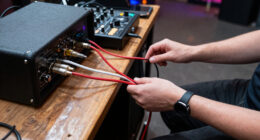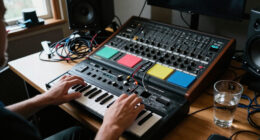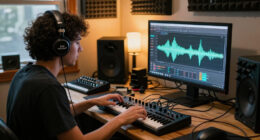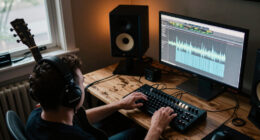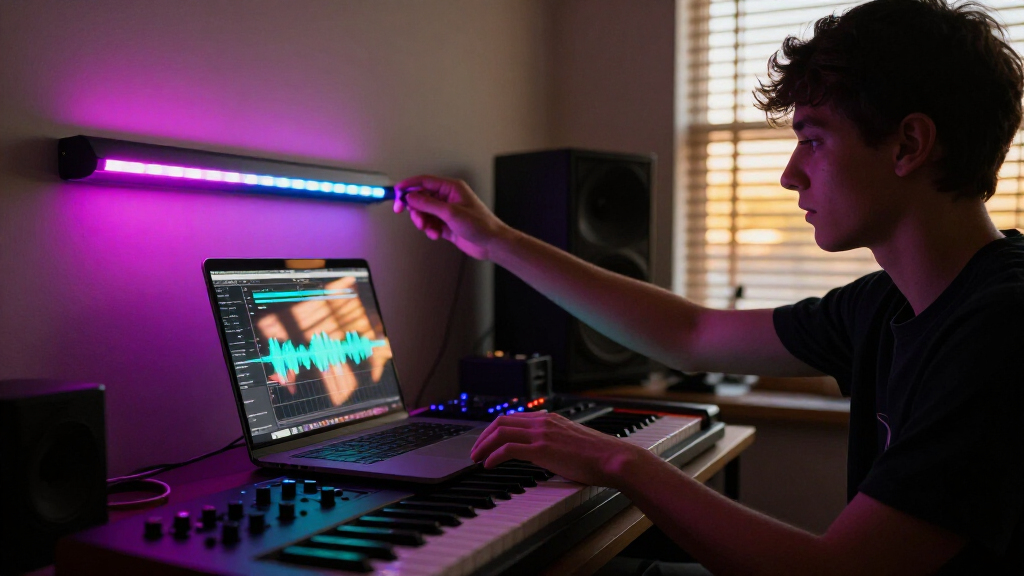

The Zunate LED Music Spectrum Display takes the top spot among the best audio reactive LED displays thanks to its wireless audio analysis, 240 RGB lights spread across 12 tubes, and a walnut base that makes it look like decor rather than a gadget. Two other standouts: the Douk Audio VU9-MINI for buyers who want classic VU-meter styling with serious build quality, and the Soulpunk 4-Pack for anyone who wants app control and placement flexibility on a budget. The main tradeoff in this category is between audio input method — wireless pickup is convenient but less precise, while wired 3.5mm connections capture every frequency accurately — and between display resolution, where more pixels means richer visuals but higher cost. Read on for the full breakdown of all nine displays and which one fits your setup.

Get audio and creator gear delivered free with Prime
- Fast, free delivery on millions of items
- Prime Video, Amazon Music and more included
- Member-only deals all year
Complete the kit


Key Takeaways
- Wireless audio capture (Zunate, Rechargeable Light Bar) offers cleaner setups but reacts less precisely to bass frequencies than wired 3.5mm options like the Qiase and fosa displays.
- Pixel count is the single biggest driver of visual quality: 384-pixel displays like the Diyeeni render noticeably smoother spectrum motion than 240-light and 64-light models, but demand more desk space.
- Display customization separates the leaders from the pack — the Qiase’s 36 display styles and Diyeeni’s 20 dynamic modes give long-term staying power that single-mode visualizers lack.
- The Soulpunk 4-Pack is the only option that solves the placement problem, letting you spread audio-reactive lighting across a room instead of concentrating it in one box.
- AGC (Automatic Gain Control), found on the fosa model, matters more than most buyers expect — it keeps visuals balanced across quiet and loud tracks without manual adjustment.




| audio reactive LED display | Power Source |
|---|---|
| Zunate LED Music Spectrum Disp | — |
| PUSOKEI Sound-Activated LED Mu | AC/DC |
| fosa LED Music Spectrum Displa | — |
| Qiase Music Rhythm Spectrum Di | — |
| Soulpunk RGB Voice-Controlled | Rechargeable (1 C battery, included) |
| Diyeeni Music Spectrum Display | — |
| Poksolfy LED Music Spectrum Vi | USB |
| Douk Audio VU9-MINI RGB LED So | DC 5V ≥1A (USB-C) |
| Rechargeable RGB Sound Activat | Corded Electric / Rechargeable Lithium battery (included) |
More Details on Our Top Picks
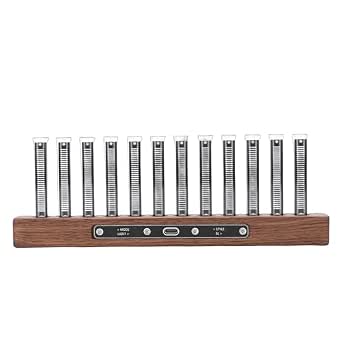
Zunate LED Music Spectrum Display with 12 Light Tubes, 240 RGB Lights, Wireless Audio Analyzer with Walnut Base
This pick earns the top spot because it balances visual density with genuine furniture-grade presentation. With 12 quartz glass tubes and 240 RGB LEDs, it renders frequency detail that the single-bar PUSOKEI display simply cannot match, and its AGC noise filtering means the wireless mic doesn’t drift into random flicker when the room gets loud. The CNC-machined black walnut base gives it the presence of an audiophile accent piece rather than a gadget. Compared with the fosa, the hardware is nearly identical in spec, so the decision comes down to styling and which finish suits your shelf.
The tradeoff: there’s no remote or app, so every adjustment to color, brightness, or sensitivity happens on the unit itself. That’s a fair price for a display this polished, but tinkerers may find it limiting.
Pros:- 240 RGB LEDs across 12 tubes deliver fine-grained frequency visualization
- AGC noise filtering keeps wireless pickup accurate in loud rooms
- Premium CNC-machined walnut base reads as furniture, not plastic
- Dust-proof quartz glass tubes are easy to keep clean
Cons:- No remote or app control for adjusting modes from a distance
- Ships with no accessories beyond the display itself
Best for: Audiophiles and design-conscious buyers who want a spectrum display that doubles as living-room decor
Not ideal for: Buyers who want remote or app-based control from the couch — everything here is adjusted manually on the unit
- Brand:Zunate
- Light Source:240 RGB LEDs
- Light Tubes:12 quartz glass tubes
- Base Material:CNC-machined black walnut
- Special Features:Sound activated, RGB color changing, multiple lighting modes, adjustable color/brightness/sensitivity
- Connectivity:Wireless sound pickup with AGC
- Display Modes:Spectrum, night light, magic
Our verdict“If you want one display that nails both visuals and aesthetics, this walnut-and-glass unit is the one to beat.”
PUSOKEI Sound-Activated LED Music Spectrum Display
Where the Zunate is a statement piece, this PUSOKEI unit is a low-commitment first step into audio-reactive lighting. Its claim to relevance is the 20 Hz–25 kHz frequency range and a 3.5 mm audio input — meaning you can wire it straight into a headphone jack for clean, lag-free signal instead of relying on a microphone. That wired option is something the fosa doesn’t offer at all. It’s a sensible fit for a desk, a car, or a party where you’d rather not worry about breaking an expensive glass tube array.
The catch: a single light source means far less visual drama than multi-tube rivals, and setup or customization details are thin, so expect fewer knobs to turn. As a demo of what spectrum lighting can do, though, it does the job without demanding much.
Pros:- Wired 3.5 mm input gives a direct, clean audio signal
- Wide 20 Hz–25 kHz frequency range
- Compact and suitable for cars, desks, and party spaces
- Simple AC/DC table-mount setup
Cons:- Single light source limits visual complexity and wow factor
- Sparse documentation on setup and control options
Best for: First-time buyers or car/KTV decorators who want to try audio-reactive lighting cheaply and with a wired connection
Not ideal for: Anyone wanting a rich, tube-style visualization — a single light bar produces very basic motion compared with 12-tube displays
- Brand:PUSOKEI
- Light Source:LED (single)
- Frequency Range:20 Hz–25 kHz
- Audio Input:3.5 mm
- Power Source:AC/DC
- Mounting Type:Table mount
- Warranty:90 days
Our verdict“A sensible starter unit if you want wired audio reactivity on a desk or dash without paying for premium materials.”
fosa LED Music Spectrum Display, 240 RGB LED Audio Visualizer with AGC
This fosa model sits in the same premium tier as the Zunate — 240 RGB LEDs, AGC wireless pickup, walnut base — and the real differentiator is intent: fosa leans harder into the night light and ‘magic’ display modes, making it feel like a lighting object first and a spectrum analyzer second. That makes it the better choice for a bedroom or living room where it should look good in silence as well as in song. Compared with the Qiase, it skips the clock-and-weather extras entirely, so you’re choosing ambience over gadget functions.
The tradeoff: wireless-only pickup is its Achilles’ heel. In a noisy space — a busy bar, a room with chatty guests — there’s no 3.5 mm fallback like PUSOKEI offers, and the quartz glass demands gentle handling over time.
Pros:- AGC filtering delivers accurate wireless sound pickup in normal conditions
- Night light mode gives it everyday use beyond music visualization
- Walnut base and quartz glass construction look premium on any shelf
- Adjustable color, brightness, and sensitivity for fine-tuning
Cons:- No wired audio fallback when wireless pickup struggles
- Glass tube construction requires careful long-term maintenance
Best for: Buyers who want a display that looks intentional even when the music is off — bedrooms, studios, and styled shelves
Not ideal for: Loud or noisy environments — with no wired audio input, mic-only pickup can misread sound in crowded rooms
- Brand:fosa
- Light Source:240 RGB LEDs
- Display Modes:Spectrum, night light, magic
- Base Material:CNC-machined black walnut
- Shade Material:Quartz glass
- Special Features:Sound activated, RGB color changing, AGC automatic gain control, wireless operation
Our verdict“The pick for design-led buyers who want premium materials and dual-purpose ambience, provided their space isn’t too noisy for mic pickup.”
Qiase Music Rhythm Spectrum Display – Dynamic LED Spectrum Analyzer with 36 Display Styles, 16 Colors, and 3.5mm Audio Input
If the fosa is about restraint, the Qiase is about sheer customization: 36 display styles, 16 colors, 9 spectrum modes, 6 floating-dot effects, and 4 frequency bands give it more visual variety than anything else in this lineup. The dual sync options — built-in microphone or the included 3.5 mm cable — put it ahead of the wireless-only fosa for reliability, and USB power from any 5V/1A source means no dedicated adapter hunt. The unexpected bonus is that it doubles as a digital clock with weather once the music stops, which makes it easier to justify permanent desk placement.
The tradeoff: this is a younger product with limited track record, so long-term reliability is an open question — the Zunate and fosa feel more like proven, polished objects even with fewer modes.
Pros:- 36 display styles and 16 colors offer unmatched visual variety in this lineup
- Dual sync via microphone or included 3.5 mm cable for flexibility
- Clock and weather display adds everyday utility
- Plug-and-play USB power from a charger, PC, or power bank
Cons:- Short market track record makes long-term durability unverified
- Plastic desktop build lacks the premium feel of walnut-base rivals
Best for: Desktop and gaming-setup owners who love tweaking settings and want a visualizer that earns its desk space as a clock too
Not ideal for: Buyers prioritizing proven reliability or premium materials — the focus here is features, not walnut-and-glass build
- Manufacturer:Qiase
- Display Styles:36
- Colors:16
- Spectrum Modes:9
- Floating Dot Effects:6
- Frequency Bands:4
- Audio Input:3.5 mm audio cable or built-in microphone
- Power:USB 5V/1A
Our verdict“The most customizable and functional option here — ideal for tinkerers, as long as they accept a less proven product.”
Soulpunk RGB Voice-Controlled Music Rhythm Lights (4-Pack, App Control)
The Soulpunk solves a different problem than everything above: instead of one desk centerpiece, you get four slim, battery-powered bars that can be scattered across a car interior, bar shelf, or gaming corner. App control lets you manage all four lights at once, and the 32-bit audio spectrum processing keeps their reactions tight and synchronized — something a single PUSOKEI bar can’t coordinate at all. At 7.1 inches tall and under three ounces each, they go wherever a wall outlet can’t.
The tradeoffs are structural: the app is effectively mandatory for full control, which won’t suit anyone who dislikes managing devices from a phone, and table-mount-only placement rules out the shelf-and-wall flexibility that wired displays like the Qiase enjoy when paired with mounting hardware.
Pros:- Four separate lights can be placed around a space for room-wide reactivity
- App control synchronizes all lights simultaneously
- 32-bit audio spectrum processing delivers smooth, accurate reactions
- Battery power enables cable-free placement in cars and unusual spots
Cons:- Full feature control requires the mobile app
- Table mount only limits placement options
Best for: Car owners, gamers, and bar decorators who want multiple synchronized lights without running cables
Not ideal for: App-averse buyers or anyone wanting flexible mounting — control is phone-dependent and placement is table-only
- Brand:Soulpunk
- Model:BK4
- Number of Lights:4
- Modes:15 music sync modes
- Audio Processing:32-bit audio spectrum
- Power Source:Rechargeable (1 C battery, included)
- Voltage:3.7 volts
- Special Features:Sound activation, voice control, app control
- Warranty:12 months
Our verdict“The only pick that fills a whole space with sound-reactive light — buy it for coverage and portability, not for premium display quality.”
Diyeeni Music Spectrum Display, 16×24 384 RGB LED Display
Among everything in this roundup, the Diyeeni 16×24 offers the widest visual palette: 140 total display combinations from 20 dynamic effects and 7 color modes. That range makes it the pick for buyers who get bored watching the same animation loop after a week. Compared with the Qiase spectrum display, which leans on a 3.5mm audio input, Diyeeni gives you two pickup methods — a built-in voice sensor or an audible cable — and switches between them automatically to cut background noise. The 384-LED grid produces a denser, more detailed spectrum than the Douk Audio VU9-MINI’s 55 LEDs, though it lacks that model’s precision gain tuning. The real tradeoff is power: there is no battery option, so it lives at the end of a USB cable. Clock and alarm modes add everyday desk utility beyond music visualization.
Pros:- 140 effect combinations give it the most visual variety in the roundup
- Dual audio pickup (sensor or cable) with automatic noise-free switching
- Dense 384-LED grid renders a more detailed spectrum than smaller models
- Doubles as a clock and alarm, adding everyday utility
Cons:- No battery option — requires a constant USB 5V connection
- Brightness caps at 7 levels with no fine sensitivity tuning like the Douk VU9-MINI
Best for: Desk setup owners who want maximum visual variety and don’t mind a permanently tethered display
Not ideal for: Anyone wanting a portable or battery-powered visualizer for cars or parties — it must stay plugged into USB power
- Display:16×24 grid (384 RGB LEDs)
- Dynamic Effects:20
- Color Effects:7
- Total Display Combinations:140
- Brightness Levels:1-7
- Power:USB 5V 1A 3W
- Material:ABS
Our verdict“Choose this if variety is your priority and your display will live on a desk near a power outlet.”
Poksolfy LED Music Spectrum Visualizer with Sound-Reactive Display
The Poksolfy visualizer earns its slot as the simplest, most affordable-feeling entry here. It is true plug-and-play: connect USB power and the sound-activated sensor handles everything with zero configuration, which makes it far less fiddly than the Soulpunk 4-pack that pushes you toward app control. At 3.2 ounces and freestanding, it moves between a bedroom shelf, gaming desk, or car interior without mounting hardware — something the surface-mount Rechargeable RGB light bar can’t match as easily. The compromise is depth: 14 colors and basic touch/push-button control mean far fewer visual options than the Diyeeni’s 140 combinations, and there’s no sensitivity or gain adjustment to keep the display stable in noisy rooms. It also has no water resistance, so it stays indoors. For a low-effort ambient accent, though, it does the core job cleanly.
Pros:- True plug-and-play operation with automatic sound activation
- Lightweight freestanding design moves easily between rooms and cars
- Touch and push-button control keeps operation simple
Cons:- No sensitivity or gain adjustment, so loud environments can overwhelm the display
- Limited effect and color depth compared with the Diyeeni or Douk models
Best for: First-time buyers or gift-givers who want a zero-setup ambient light without paying for advanced customization
Not ideal for: Tinkerers who want adjustable sensitivity and deep effect libraries — the fixed automation leaves little room to tune
- Power Source:USB
- Wattage:5 watts
- Colors:14
- Switch Type:Sound-activated / Touch
- Dimensions:7.27″D x 1.46″W x 3.74″H
- Weight:3.2 ounces
- Mounting:Freestanding
- Warranty:1 year
Our verdict“A sensible entry point if you want sound-reactive lighting without setup or a steep learning curve.”
Douk Audio VU9-MINI RGB LED Sound Level Tube Meter Music Spectrum Display
The Douk Audio VU9-MINI is the most refined object in this lineup. Its magnetic tube attachment, metal-and-plastic construction, and retro nixie-style aesthetic give it a finished, hi-fi feel that the plasticky Poksolfy or Diyeeni units can’t match — this is the one you’d put next to a turntable or amplifier. Functionally, its standout is 2.5x RMS signal compression, which translates to stable, musically accurate rhythm response instead of the jittery overreaction common to cheap microphone visualizers. Adjustable gain and brightness across 10 levels add tuning depth the Poksolfy lacks entirely. The tradeoff: only 55 LEDs, so its spectrum is coarser than the Diyeeni’s 384-LED grid, and there’s no direct audio input — everything runs through the mic, which can struggle in very loud rooms.
Pros:- Metal construction and nixie-style design look at home beside hi-fi gear
- 2.5x RMS signal compression delivers stable, musically accurate response
- Magnetic mounting allows quick repositioning
- Power-off memory retains your settings between sessions
Cons:- Microphone-only pickup with no 3.5mm or line-in audio connection
- Only 55 LEDs, producing a coarser spectrum than higher-count rivals
Best for: Audio enthusiasts and desktop hi-fi owners who value accurate rhythm response and premium styling
Not ideal for: Buyers wanting the densest, most detailed spectrum display — 55 LEDs can’t match the resolution of larger grid models
- LED Beads:55
- Display Modes:8
- Audio Input:Microphone pick-up
- Signal Processing:2.5x RMS signal compression
- Brightness Adjustment:10 levels
- Power Source:DC 5V ≥1A (USB-C)
- Dimensions:85 x 85 x 145 mm (3.35 x 3.35 x 5.71 in)
- Weight:167 g (0.37 lb)
Our verdict“The pick for design-conscious listeners who prioritize accuracy and build quality over pixel density.”
Rechargeable RGB Sound Activated Audio Visualizer Light Bar – 250 Pixels, 10-Tube Spectrum
This 10-tube light bar is the roundup’s only battery-powered option, and that changes who it’s for. Unlike the Diyeeni, which is chained to a USB outlet, or the freestanding Poksolfy, this one runs cordless on its included lithium battery — ideal for car interiors, parties, and shelves far from a plug. Its 250 individually addressable pixels also give it finer resolution than typical 2-, 6-, or 8-tube models like the Zunate 12-tube display territory, while the built-in mic syncs to music without extra wiring. I’d flag two real caveats: the manufacturer doesn’t publish runtime or charging details for the battery, so expect to keep a 5V source handy for long sessions, and control is limited to three physical buttons — no app, which is either refreshing simplicity or a limitation depending on your taste compared with the app-driven Soulpunk 4-pack.
Pros:- Cordless battery operation enables true portable use anywhere
- 250 addressable pixels across 10 tubes outperform smaller tube models
- Adjustable color, brightness, sensitivity, and speed via simple buttons
- Includes mounting clips, adhesive pads, and gift-ready packaging
Cons:- Battery runtime and charging specifications are not documented
- Three-button control with no app limits fine-grained customization
Best for: People who want a wireless visualizer for cars, parties, and spots without convenient outlets
Not ideal for: Buyers who want app-based control or documented battery runtime for all-day unplugged use
- Light Tubes:10
- LED Pixels:250 individually addressable
- Power Source:Corded Electric / Rechargeable Lithium battery (included)
- Wattage:5 watts
- Dimensions:6.89″L x 0.86″W x 3.46″H
- Weight:0.17 lbs (net)
- Controls:3 physical buttons (no app/WiFi)
- Special Features:Dimmable, sound activated, built-in microphone
Our verdict“The most flexible placement option here if wireless operation matters more to you than deep app control.”

How We Picked
I evaluated each display against four criteria that actually affect ownership: audio responsiveness (how accurately the display translates frequency data into light, and whether it stays calibrated across volume levels), visual quality and customization (pixel density, color options, and display modes that prevent the novelty from wearing off), input flexibility (wireless versus wired capture, and how each handles different music sources), and build and design (whether the unit looks at home on a desk, shelf, or studio rack). Setup difficulty and power method factored in as well, since some buyers want plug-and-play simplicity while others enjoy tuning.
The ranking reflects a simple logic: displays that combine precise audio capture with distinctive visuals placed highest, single-purpose but well-executed units filled the middle, and models with limited customization or niche appeal landed lower despite being strong picks for specific buyers. Price-per-feature was considered without letting it dominate — a cheap display that gets boring in a week is worse value than a premium one you keep using.
| audio reactive LED display | Power Source |
|---|---|
| Zunate LED Music Spectrum Disp | — |
| PUSOKEI Sound-Activated LED Mu | AC/DC |
| fosa LED Music Spectrum Displa | — |
| Qiase Music Rhythm Spectrum Di | — |
| Soulpunk RGB Voice-Controlled | Rechargeable (1 C battery, included) |
| Diyeeni Music Spectrum Display | — |
| Poksolfy LED Music Spectrum Vi | USB |
| Douk Audio VU9-MINI RGB LED So | DC 5V ≥1A (USB-C) |
| Rechargeable RGB Sound Activat | Corded Electric / Rechargeable Lithium battery (included) |
Factors to Consider When Choosing Best Audio Reactive LED Displays
Before picking a display, it helps to understand the design choices that separate these products and how they match different listening habits. These are the factors I would weigh before buying.Wireless vs. Wired Audio Input
This is the most consequential choice in the category. Wireless audio analyzers like the Zunate pick up sound from the room, which means no cables, no dongles, and the freedom to place the display anywhere — but they can struggle in noisy rooms or when music plays at low volume. Wired 3.5mm connections, used by the Qiase and fosa displays, tap the signal directly, so the visualization stays perfectly synchronized with what you hear, even at whisper volumes. The catch is that wired models force a physical link between your source and the display, which clutters a desk and limits placement. A common mistake is assuming wireless always means worse — a well-tuned wireless analyzer beats a poorly calibrated wired one. If your music lives on a phone across the room, wireless wins; if you run a desk setup with a DAC or interface, go wired.
Pixel Count and Display Resolution
Pixel density determines how smooth and detailed the spectrum motion looks. A 384-LED display like the Diyeeni renders fine frequency gradations and fluid transitions, while 64-light tube meters produce chunkier, more blocky visuals — though some buyers actually prefer that retro chunkiness. More pixels also enable more display styles, since there’s more canvas to work with. The tradeoff is physical size and power draw: high-resolution displays are bigger, brighter, and harder to tuck into a small shelf arrangement. Before buying, measure where the display will live and decide whether you want fine-grained visualization or bold statement lighting — they lead to different products.
Gain Control and Calibration
One underappreciated spec is AGC, or Automatic Gain Control, which adjusts the display’s sensitivity in real time. Without it, quiet acoustic tracks produce barely-visible flickers while loud electronic tracks max out every bar at once — the display looks impressive for a demo and frustrating for daily use. Models with AGC or manual sensitivity dials let you dial in the response so the visualization stays dynamic regardless of genre. Buyers who listen to varied music should treat this as a near-requirement rather than a bonus. If a display lacks any gain adjustment, expect to be disappointed the first time you switch from a quiet playlist to a bass-heavy one.
Display Modes and Long-Term Appeal
The biggest failure mode in this category isn’t poor sound reaction — it’s boredom. A display with a single visualization pattern becomes furniture within a month, which is why models like the Qiase (36 styles) and Diyeeni (20 modes) rank highly for long-term owners. Color options matter for the same reason: 16 selectable color schemes let the display match room lighting or seasonal moods. Ask yourself honestly whether you’ll fiddle with settings over time or set it once and forget it. If you’re a set-and-forget type, mode count matters less and build quality should guide your choice instead.
Form Factor and Placement
These products solve placement differently, and it changes how they fit your space. Single-box spectrum displays work as desk centerpieces but concentrate all the visual impact in one spot. Multi-unit kits like the Soulpunk 4-Pack spread lighting across shelves, monitor edges, or a whole wall, creating ambience rather than a focal point. Tube-meter designs like the Douk Audio VU9-MINI borrow from studio aesthetics and suit audio-heavy setups. Consider whether you want the display to dominate the room or blend into it — the answer points to entirely different products on this list.
Power and Portability
Most displays here run on USB power, which is convenient but tethers them to an outlet or port. The rechargeable light bar breaks that constraint, making it the only real option for portable use — parties, travel, or spots without easy power access. Battery capacity adds weight and cost, so it only makes sense if you’ll actually use it untethered. A common mistake is buying a rechargeable model for a permanent desk position, where you’re paying for a battery that never discharges. Match the power method to how you’ll realistically use the display, not how you imagine using it.
Frequently Asked Questions
Do audio reactive LED displays work with any music source?
Wired displays with a 3.5mm input work with essentially anything that has a headphone jack or line output — phones, computers, interfaces, and receivers — because they read the electrical signal directly. Wireless analyzers are more flexible in placement but depend on a built-in microphone, so they work with speakers, live instruments, or even your voice, yet struggle when ambient noise competes with the music. If your music plays from Bluetooth speakers across the room, a wireless model is actually easier since there’s no cable run to manage. The limitation to watch for is volume: mic-based units need a minimum sound level to register anything. For headphone listening, only wired models connected to the source will visualize at all.
What’s the difference between a spectrum display and a VU meter?
A spectrum analyzer splits audio into frequency bands and shows each band’s energy separately — you literally see bass on one side and treble on the other moving independently. A VU meter shows overall signal level as a smaller number of bars or needles, closer to the classic analog meters on vintage amplifiers. The Douk Audio VU9-MINI sits closer to the VU tradition with its nine sound-level tubes, giving a warmer, more nostalgic feel. Spectrum displays are more visually dynamic and information-rich; VU-style meters are calmer and suit studio or hi-fi aesthetics. Neither is objectively better — it depends whether you want to see the music’s structure or just its energy.
Are cheaper audio reactive displays worth buying?
They can be, if you match expectations to the price tier. Budget models generally cut corners on pixel count, color options, and gain control rather than basic functionality — even the cheapest unit here reacts to music reliably. Where cheap displays disappoint is longevity of interest and calibration stability, meaning quiet tracks may look dead and loud ones may flatline the display. If you’re buying one as a gift, for a kid’s room, or as a novelty, the cheaper end is a perfectly reasonable bet. If it will sit on your daily desk next to a serious audio setup, the extra spend on resolution and AGC pays for itself in weeks of actual use rather than ignored decor.
Can I use multiple displays together for a larger setup?
It’s possible but harder than it should be, because most of these displays are designed as standalone units without synchronization features. The practical route is buying a multi-pack like the Soulpunk 4-Pack, which is built from the ground up for coordinated, app-controlled placement across a room. Mixing brands almost never synchronizes cleanly, since each unit calibrates to sound independently and will react at slightly different moments. If you envision a whole-wall installation, plan around one expandable product family rather than accumulating different displays over time. For a single-desk setup, this concern disappears entirely.
How much desk or shelf space do these displays need?
Footprints vary more than photos suggest. Multi-tube designs like the Zunate’s 12-tube array and the 10-tube rechargeable bar need horizontal space comparable to a small speaker, roughly the width of a keyboard’s half. Compact tube meters like the Douk Audio VU9-MINI fit where a coffee mug would, making them the best choice for crowded desks. The 16×24 matrix display needs both width and height, closer to a small picture frame than an accessory. Before ordering, check the listed dimensions against your actual available space, including the depth needed for the base and any cables exiting the back — a display that overhangs a shelf edge looks wrong no matter how good its visuals are.
Conclusion
For best overall, the Zunate 12-Tube Spectrum Display balances wireless convenience, high light count, and furniture-grade design better than anything else here. The best value pick is the Soulpunk 4-Pack, which delivers four app-controlled units and room-wide ambience at a price that undercuts most single displays. For a premium choice, the Douk Audio VU9-MINI offers the most refined build and studio credibility, while the Diyeeni 384-LED display is the premium pick for pure visual richness. Beginners should start with the fosa 240 RGB display with AGC — its automatic gain control forgives the calibration mistakes that frustrate first-time buyers. For specific needs: the Rechargeable Light Bar for portable, outlet-free use, and the Qiase for anyone who wants maximum display styles to keep the visuals fresh long-term.
Fall Picks
fall essentials
As an affiliate, we earn on qualifying purchases.