TL;DR
Prime for Young Adults — start your free trial
Fast free delivery, streaming and member deals for eligible 18–24 year olds.
Try it freeAs an affiliate, we earn on qualifying purchases.
For small venues, 2-4 compact moving heads deliver impressive lighting. Focus on safe rigging, proper DMX setup, and using haze to make beams pop. Power and positioning are key to a successful show.
Imagine turning a modest room into a lively dance floor with just a few well-placed moving head lights. It’s easier than you think—if you know the basics of setup, safety, and control. Whether you’re a DJ upgrading your rig or a small venue owner, understanding what makes a fixture work and how to position it saves time and avoids costly mistakes.
This guide walks you through choosing the right fixtures, rigging them safely, setting up DMX control, and creating eye-catching effects that fill small spaces with vibrant movement and color. No fluff, just practical advice you can follow today.
Choose compact LED fixtures with 100W+ engines that combine spot, wash, and beam features for small venues.
Always secure fixtures with rated clamps and safety cables—overhead rigging safety is non-negotiable.
Set DMX addresses carefully, daisy-chain fixtures properly, and use a terminator at the end for reliable control.
Position lights thoughtfully—front, back, and sides—plus use haze to make beams visible and dramatic.
Power your rig on dedicated circuits, calculate total wattage, and avoid overloading outlets or extension cords.
Setting Up Moving Head Lights for Small Venues
Turn a modest room into a living dance floor with just 2–4 compact fixtures. This guide covers what actually matters: choosing the right heads, rigging them safely, wiring clean DMX control, and using haze to make every beam read in the air — no fluff, just the setup that works.
“Modern LED moving heads with 100W+ engines match the output of traditional 250W discharge lights — while drawing a fraction of the power.”
Pick the Right Heads: Spot, Wash, or Beam?
Small venues reward compact, versatile LED fixtures. Look for 100–150W engines, at least 540° pan, and a 10°–40° zoom — e.g. Chauvet DJ Intimidator Spot 260 or ADJ Focus Spot 4Z. Hybrids that merge spot + wash keep a small rig flexible.
Patterns & Precision
Projects gobos, sharp patterns and branded focal points. The detail fixture of the rig.
- Gobo wheels + rotating prisms
- Compact 8–12 in body
- Sharp focus, framing looks
Color & Coverage
Broad, smooth color fields that set the room’s mood and keep performers visible.
- RGBW color mixing
- Small, lightweight bodies
- Front-of-room visibility
Aerial Energy
Narrow, intense shafts that carve the air — the dance-floor adrenaline fixture. Needs haze.
- Mini / micro formats
- Ultra-tight beam angle
- High-speed pan/tilt sweeps
| Feature | Spot | Wash | Beam |
|---|---|---|---|
| Purpose | Gobos, patterns, projections | Color washes, broad coverage | Narrow aerial effects |
| Typical Size | Compact, 8–12 in | Small, lightweight | Mini or micro models |
| Brightness | Up to 10,000 lumens | 2,000–4,000 lumens | 5,000+ lumens |
| Small-room fit | ✓ Excellent | ✓ Excellent | ~ Needs ceiling height |
| Power draw | ✓ 100–200W | ✓ 100–200W | ~ Varies by engine |
Output Comparison · Approx. Lumens by Fixture Type
Remember the inverse square law: brightness falls off with distance, so in small rooms throw distance matters more than raw lumens — compact LEDs punch far above their wattage at short throws.
Rig It Safe — No Exceptions
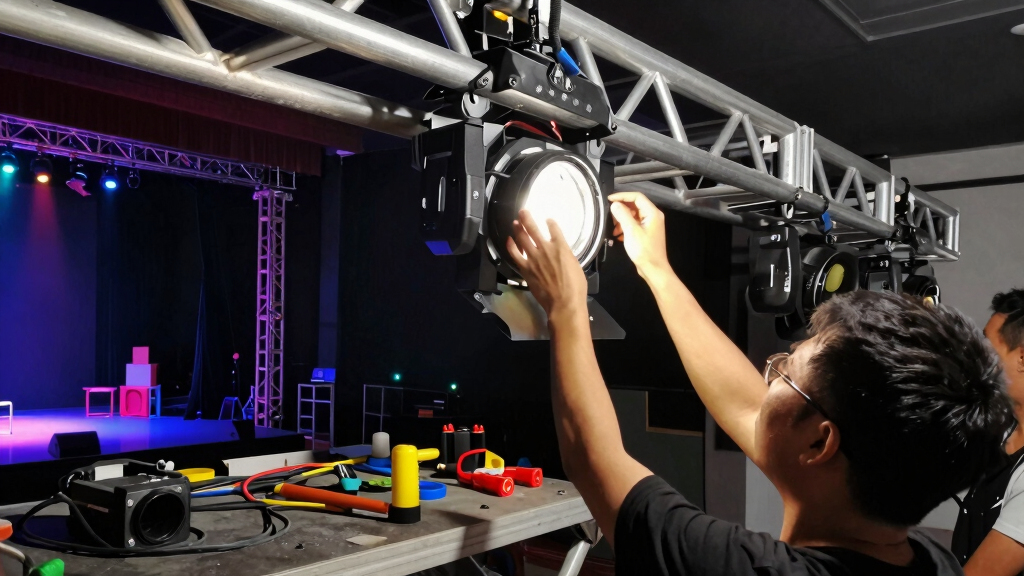
Overhead rigging is safe when every fixture hangs from a rated clamp plus an independent safety cable. Proper mounting also kills vibration, drift and mid-show misalignment.
Rated Clamps Only
Match the clamp’s load rating to the fixture weight. Pan/tilt torque can work undersized hardware loose over time — inspect before every show.
Safety Cables, Always
The second line of defense if a clamp loosens or fails. Tie to a rated point on both fixture and structure — this rule protects lives, gear and your reputation.
Clear the Sweep Zone
Keep pan/tilt travel clear of walls, curtains and the audience — and never aim close-range sweeps directly into eyes.
No Ceiling? Go Low
Floor-mounted inverted truss totems or speaker-stand T-bars work just as well — provided every point is rated and stable.
Never hang a fixture without a safety cable.
It isn’t a guideline — it’s the single most emphasized rule in lighting practice. Quality hardware is a small price against injury, damage and liability.
Master DMX in 3 Simple Steps
DMX512 is the language your fixtures speak — one universe carries 512 channels, and each moving head typically consumes 12–16. Address carefully, chain cleanly, terminate always.
Set Unique Addresses
Assign each head a different start channel via its menu or DIP switches so channel blocks never overlap. Addressing is the foundation of predictable looks.
FIX 1 → 001 · FIX 2 → 017 · FIX 3 → 033Daisy-Chain the Fixtures
Run DMX OUT → IN with 3-pin or 5-pin XLR (5-pin is the pro standard; never substitute mic cable on long runs). Cap the last fixture with a 120Ω terminator to stop signal reflections.
CONSOLE → F1 → F2 → F3 → [120Ω]Control & Create Scenes
A basic console like the Chauvet Obey 40 — or free software like QLC+ — turns static heads into synchronized chases of movement, color and gobos.
SCENE → CHASE → BPM SYNCUniverse Budget · Eight 16-Channel Fixtures
A full 8-fixture rig uses only 128 of 512 channels — just 25% of one universe. Small venues have enormous headroom: test in a dark room, re-address anything that answers the wrong fader, and your DMX backbone is done.
Position, Haze & Power
Symmetry reads beautifully in small rooms: front wash for visibility, back and side positions for depth and aerials — then haze makes every beam a physical object in the air.
Front, Back, Sides
Front fixtures keep faces readable; back and side heads create depth, silhouette and mid-air beams. Keep the look symmetrical.
- Front = visibility wash
- Back = aerial depth
- Sides = texture & motion
Haze Is Essential
Beams are invisible without particles in the air. Use a hazer, not heavy fog — a fine, even haze makes light shafts dramatic without clouding the room.
- Haze > fog for beams
- Even, thin coverage
- Run before doors open
Power Discipline
A 4–8 fixture LED rig usually fits one or two standard circuits — but calculate total wattage, use dedicated circuits, and respect power-linking limits.
- Dedicated circuits only
- Sum the wattage first
- No overloaded extensions
Beam Angle Spectrum · Where Each Fixture Lives
From Empty Room to Running Rig
Pick the Right Moving Head Lights for Small Venues—Here’s What Works
Small venues benefit from compact, versatile fixtures. Look for LED-based models like the Chauvet DJ Intimidator Spot 260 or ADJ Focus Spot 4Z. They offer 100-150W LED engines, pan/tilt ranges of at least 540°, and zoom capabilities from 10° to 40°. These features give you sharp gobos, broad washes, and aerial effects without overloading your power circuits.
Compare fixture types:
| Feature | Spot | Wash | Beam |
|---|---|---|---|
| Purpose | Project gobos, patterns | Color washes, broad coverage | Narrow, aerial effects |
| Size | Compact, 8-12 in | Small, lightweight | Mini or micro models |
| Brightness | Up to 10,000 lumens | 2,000–4,000 lumens | 5,000+ lumens |
Choosing the right fixture type impacts your entire setup. Spot fixtures excel at creating detailed projections and patterns that can serve as focal points or branding elements, while wash fixtures provide the broad, smooth color coverage essential for setting moods. Beam fixtures, with their intense, narrow light, add dramatic aerial effects that can energize a dance floor. Tradeoffs include brightness versus power consumption—LED fixtures are more energy-efficient but may have slightly less raw output than traditional discharge lights. Understanding these differences helps you select fixtures that balance performance, cost, and space constraints, ensuring your lighting complements your venue’s atmosphere without overwhelming your electrical capacity.
Hybrid fixtures that combine spot and wash functions offer the flexibility to adapt to different events or moods without cluttering your rig. Features like built-in prisms and rotating gobos expand creative possibilities but also add complexity. Weigh these options based on your technical skills, budget, and desired effects—overcomplicating your setup can lead to confusion during performances, so choose fixtures that match your experience level and needs.
compact LED moving head lights for small venues
As an affiliate, we earn on qualifying purchases.
As an affiliate, we earn on qualifying purchases.
How to Safely Mount Moving Heads Without Rigging Experience
Overhead rigging is safest when you use rated clamps and safety cables. But beyond just safety, proper mounting ensures your fixtures perform reliably over time. Using the right clamps rated for your fixture’s weight prevents accidental falls—a critical safety and equipment longevity concern. Attaching fixtures securely to a sturdy truss or ceiling mount minimizes vibrations and movement, which can cause misalignment or damage.
Safety cables act as a second line of defense, especially important if a clamp loosens or fails. They don’t just prevent accidents—they also protect your investment and ensure the safety of everyone in the venue. Properly securing fixtures reduces the risk of injury or damage, and it gives you peace of mind during lively shows where fixtures might be moved or adjusted frequently.
If ceiling rigging isn’t an option, consider floor-mounted or inverted truss setups. These alternatives can be just as effective if you ensure all mounting points are rated and stable. Always double-check that your fixtures are balanced and that the mounting hardware is in good condition. Remember: investing in quality hardware and safety measures is a small price for preventing potential accidents and costly repairs.
Never hang fixtures without safety cables. This rule isn’t just a guideline—it’s a vital safety measure that safeguards lives and equipment. Proper rigging involves understanding load capacities, inspecting hardware regularly, and ensuring all components are rated for the weight and type of fixtures used. Tying in safety cables to secure points on the fixture and the mounting structure prevents catastrophic failures. While it might seem tedious, consistent safety practices reduce the risk of accidents that could result in injury, damage, or legal liabilities. A professional setup prioritizes these safety protocols, which ultimately protect your investment and reputation.
DMX stage lighting controller for small setups
As an affiliate, we earn on qualifying purchases.
As an affiliate, we earn on qualifying purchases.
Master DMX Control in 3 Simple Steps—No Confusion
DMX is the language your fixtures speak. Here’s how to make it work for your small setup:
- Set unique addresses. Use the fixture’s menu or DIP switches to assign each moving head a different starting DMX channel (e.g., 1, 17, 33). This prevents signals from overlapping and ensures each fixture responds to the correct controls. Proper addressing is the foundation for predictable, synchronized lighting effects—without it, fixtures might respond erratically or to the wrong scenes, ruining the visual flow.
- Connect fixtures in a daisy chain. Use 3-pin or 5-pin XLR cables—5-pin is more professional, but 3-pin is common and sufficient. Connect the DMX OUT of one fixture to the IN of the next, maintaining a continuous chain. Ending the chain with a DMX terminator (a 120Ω resistor plug) prevents signal reflections that can cause flickering or erratic behavior, especially in longer runs. Proper cabling and termination are critical for reliable control, especially in complex setups. Recognize that a good DMX chain minimizes signal degradation, which is crucial for complex scenes or multiple fixtures operating simultaneously. Failing to properly address or terminate can lead to inconsistent behaviors, making your show look unprofessional. Investing time in correct setup ensures your lighting reacts precisely as programmed, creating seamless visual effects.
- Control with a simple console or software. Use a basic DMX controller like the Chauvet Obey 40 or software such as QLC+. Assign each fixture’s start address, then create scenes or chases that coordinate movement, color, and effects. This step transforms static fixtures into a dynamic, synchronized light show. Taking the time to program scenes ensures your lighting responds seamlessly to music or mood, elevating the entire experience. Proper programming involves understanding how scenes transition and how timing affects the overall vibe. Spending time to learn these controls allows you to create more professional and engaging shows, even with minimal experience. Remember, a well-structured programming approach reduces on-the-fly troubleshooting and results in smoother performances.
Test your setup in a dark room to identify any issues. Adjust addresses if fixtures respond to the wrong controls. Remember, a well-organized DMX setup is the backbone of professional lighting—invest time here for consistent, impressive results.
safety rated mounting clamps for stage lights
As an affiliate, we earn on qualifying purchases.
As an affiliate, we earn on qualifying purchases.
Frequently Asked Questions
How many moving heads do I need for a small venue?
Typically, 2-4 fixtures can provide enough coverage for a small venue, with 4-8 creating more dynamic effects. It depends on your space size and desired complexity.Should I buy spot, wash, or beam fixtures first?
Start with wash fixtures for general coverage, add spots for gobos and patterns, and include beam fixtures for aerial effects. A balanced mix gives your lighting more flexibility.Do I need a DMX controller, or can I use auto/sound mode?
Auto and sound modes are easy but limited. For synchronized, professional-looking shows, programming scenes via DMX control provides full flexibility and precision.What’s the best control option for a beginner?
A simple hardware DMX controller like the Obey 40 or software such as QLC+ offers an intuitive interface to get started with scene programming and live control.How do I hang lights safely without experience?
Use rated clamps, safety cables, and secure mounting points. Never hang fixtures without safety measures—it’s the best way to prevent accidents.haze machine for stage lighting effects
As an affiliate, we earn on qualifying purchases.
As an affiliate, we earn on qualifying purchases.
Conclusion
Small venues don’t need big, complicated rigs to make a big visual impact. Focus on safe rigging, smart positioning, and effective control—your lighting can transform the atmosphere instantly.
Remember: a well-placed fixture, a little haze, and proper power management turn even a modest setup into a captivating show. Now, go light up that room and turn heads.
Fall yard work Picks
leaf blowers
As an affiliate, we earn on qualifying purchases.