
TL;DR
Listen free for 30 days with Audible
Thousands of audiobooks and originals — cancel anytime.
Start your free trialAs an affiliate, we earn on qualifying purchases.
Transporting small venue lighting equipment requires sturdy cases, secure fastening, and careful handling. Innovations like modular cases and climate control keep gear safe, reducing damage and setup time.
Ever had your lighting fixtures arrive scratched, broken, or worse—completely unusable? It’s a common nightmare for mobile DJs and event pros. The good news: a few simple steps can keep your gear safe, saving you money and headaches.
In this guide, you’ll learn how to pack, secure, and handle small venue lighting equipment like a pro. Whether you’re loading into a van or flying to a gig, these tips will help your gear arrive in perfect shape—ready to dazzle.
Use sturdy, foam-lined flight cases for maximum protection of fragile fixtures.
Secure every case and fixture inside your vehicle with straps and padding to prevent movement.
Wrap fragile components with foam or bubble wrap, and disassemble when possible.
Always inspect and test your gear before and after transport to catch damage early.
Protect your equipment from weather with waterproof covers and climate-aware practices.
Transport lighting without losing the show.
Scratches, cracked lenses, loose connections and weather damage are preventable. Build a transport routine around protective cases, zero-movement packing, secure loading and a test at both ends of every journey.
Five rules that prevent most damage
Protection comes from layers. The case absorbs the impact, internal padding stops micro-movement, vehicle restraints prevent momentum, careful handling avoids drops and inspection catches hidden faults.
Case it
Use sturdy, foam-lined flight cases for fragile or expensive fixtures.
Strap it
Fasten every case to stable vehicle anchor points before moving.
Cushion it
Wrap lenses and loose components; isolate each part in a compartment.
Test it
Inspect and power-check fixtures at departure and destination.
Shield it
Block rain, dust and temperature extremes with sealed protection.
Match protection to the journey
Hard cases add weight, but they deliver the best shock and crush protection. Soft bags suit lighter fixtures and controlled, short-distance gigs where careful handling is assured.
| Case type | Hard flight case | Molded modular case | Soft padded bag |
|---|---|---|---|
| Impact protection | ✓ Excellent | ✓ Strong | ✗ Limited |
| Crush resistance | ✓ Excellent | ✓ Strong | ✗ Low |
| Carry weight | ~ Heavy | ✓ Moderate | ✓ Light |
| Stackability | ✓ Excellent | ✓ Excellent | ~ Variable |
| Best use | Fragile gear, freight, frequent touring | Mobile rigs and modular inventories | Light fixtures and controlled local trips |
Build a protective cocoon
Even tiny shifts can scratch surfaces, loosen wiring or create micro-fractures. Pack in a repeatable order so every component is supported, separated and easy to identify.
Inspect
Record existing cracks, loose parts and cable condition.
Disassemble
Remove detachable lenses, glass and vulnerable accessories.
Wrap
Use foam sleeves, bubble wrap or clean soft cloth.
Immobilize
Fill voids and give each component its own compartment.
Label
Mark contents, fragile handling and correct orientation.
Create a mini fortress
A loose 20-pound fixture becomes a dangerous projectile during hard braking. Load from heavy to light, eliminate gaps and secure cases to rated anchor points.
Smart load placement
Protection hierarchy
Illustrative protection scores show the value of combining safeguards rather than relying on one measure alone.
Weather can damage gear silently
Moisture can corrode contacts, heat accelerates electronic failure and dust blocks fans and vents. Environmental protection preserves reliability long after the current gig.
Keep water out
Use waterproof covers, sealed containers and covered loading paths. Dry wet exteriors before opening cases.
Risk: corrosion · short circuitsAvoid extremes
Do not leave fixtures in hot trunks for hours. Insulate gear in freezing weather and allow gradual acclimation.
Risk: component stress · condensationSeal and clean
Cover vents during transport, keep cases closed and inspect fans before powering fixtures at the venue.
Risk: blocked airflow · overheatingThe safe-transport chain
When every link holds, fixtures arrive organized, functional and ready to deploy—reducing repairs, safety risks and setup delays.
Inspect twice. Perform once.
Hidden damage often appears only when a fixture is powered. A written checklist makes condition changes visible and gives the crew time to troubleshoot before doors open.
Before loading
After arrival
Choose the Right Cases to Keep Gear Safe
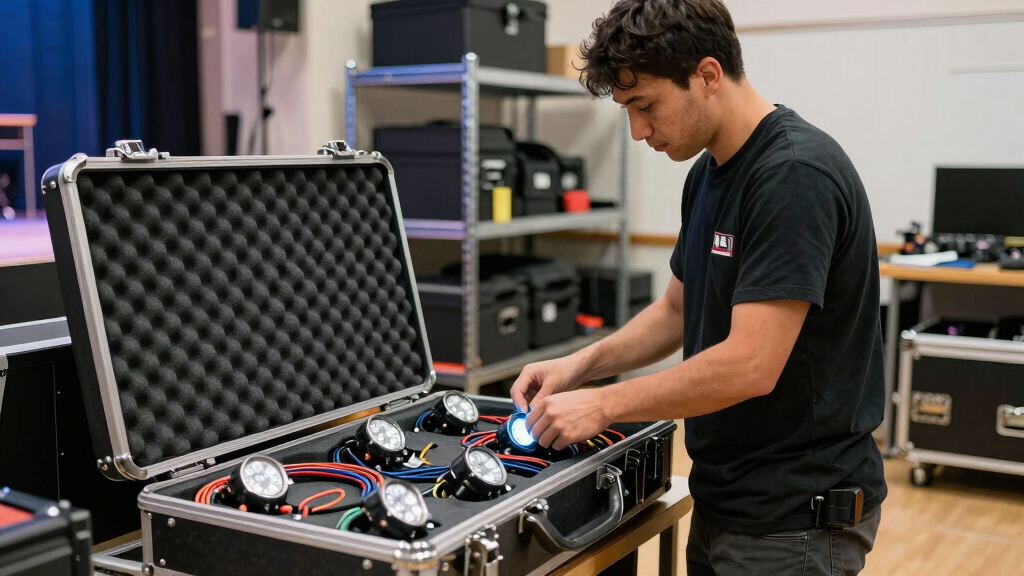
Picking the right case is your first line of defense. Hard flight cases with foam inserts are the gold standard—they absorb shocks and prevent rattling. For example, a Road Ready RR1U ($150–200) with custom foam fits most LED PARs and moving heads snugly.
Soft padded bags might seem easier, but they offer less protection against impacts. If you’re hauling lightweight fixtures or doing quick gigs, they can work—just be prepared for a bit more risk.
It’s essential to understand that the choice of case impacts both safety and convenience. Hard cases are heavier but provide superior shock absorption and protection against crushing or punctures—crucial if your gear will endure rough handling or multiple trips. Soft bags are lighter and easier to carry, but they trade off impact resistance, which could lead to damage if not handled carefully. Consider your typical transport conditions and prioritize protection for fragile or expensive fixtures. The right balance between weight and protection depends on your specific needs and budget.
foam-lined flight case for lighting fixtures
As an affiliate, we earn on qualifying purchases.
As an affiliate, we earn on qualifying purchases.
How to Pack Lighting Fixtures for Maximum Safety
Proper packing starts with wrapping fragile parts—use foam, bubble wrap, or soft cloths. For example, wrapping LED pars with foam sleeves prevents scratches and shocks during transit.
Disassemble fixtures if possible. Removing fragile components like lenses or glass covers reduces breakage risks. Secure each piece in its own compartment within the case.
Label everything clearly. Mark cases as ‘fragile’ and specify orientation—like ‘this side up’—to guide handlers.
Think of packing your fixtures as creating a protective cocoon around each component. Using foam or padding minimizes movement inside the case, which is critical because even slight shifts can cause micro-fractures or dislodge delicate parts. Disassembly reduces the risk of breakage during impacts, but it also means more careful reassembly on-site. Labeling is not just about organization; it communicates handling instructions to handlers, reducing accidental drops or mishandling. Remember, the goal is to prevent micro-movements and absorb shocks so your fixtures arrive intact and ready to impress.
small venue lighting equipment protective case
As an affiliate, we earn on qualifying purchases.
As an affiliate, we earn on qualifying purchases.
Secure Your Gear During Transit — Don’t Leave It to Chance
Once packed, securing your gear inside the vehicle is key. Use straps, bungee cords, or custom foam inserts to prevent movement. A loose fixture bouncing around can crack or disconnect.
Imagine a 20-pound LED wash flying forward in your van because it wasn’t strapped down. It’s avoidable—always fasten fixtures to stable points.
Securement isn’t just about preventing damage; it also ensures safety during transit. Loose fixtures can become dangerous projectiles in sudden stops or accidents, risking injury and damage to other gear. Using high-quality straps and anchors minimizes this risk. Additionally, consider the vehicle’s interior layout—placing heavier fixtures on the floor or against walls reduces movement. Think of it as creating a mini fortress for your gear, where each piece is snugly held in place. This not only protects your equipment but also reduces setup time, as everything stays organized and ready to go when you arrive.
As an affiliate, we earn on qualifying purchases.
Handle Your Gear Like a Pro—Lift Smart, Avoid Breaks
Proper lifting technique is crucial. Always bend your knees, keep your back straight, and lift with your legs. Imagine lifting a heavy speaker—you wouldn’t bend your back and yank it up.
Use carts or dollies for heavy or bulky fixtures. For instance, a DJ Cart Model 3000 makes moving multiple fixtures into a van a breeze, saving your back.
Avoid dragging fixtures across the floor—they can scratch or disconnect delicate parts. Instead, lift and carry with two hands, and take your time.
Remember: rushing can cause drops. Think of it like handling glassware—slow and steady wins the race.
Understanding proper lifting techniques and handling tools like carts significantly reduce the risk of accidents and damage. Improper lifting can lead to strains, tears, or accidental drops that damage fixtures or cause injury. Using carts not only makes transportation easier but also ensures you maintain control, especially with heavier or awkwardly shaped fixtures. The tradeoff is investment in equipment and some extra time for setup, but the long-term savings in repair costs and personal safety are well worth it.
climate-controlled lighting gear case
As an affiliate, we earn on qualifying purchases.
As an affiliate, we earn on qualifying purchases.
Protect Your Gear From the Elements During Transport
Moisture, dust, and extreme temperatures can wreck your gear. Use waterproof covers or sealed containers for outdoor gigs. For example, a waterproof tarp over your cases can save fixtures from rain or splashes.
If transporting in hot weather, avoid leaving fixtures in a hot car trunk for hours. High temperatures can fry sensitive LEDs or electronics.
On cold days, keep fixtures insulated from freezing temps—use thermal blankets or insulated cases.
Think of your gear like delicate plants—protect them from weather to keep them healthy and working.
Environmental protection isn’t just about avoiding immediate damage; it also extends your gear’s lifespan. Excessive heat can cause electronic components to fail prematurely, while moisture can lead to corrosion or short circuits. Dust and dirt can clog vents and fans, reducing cooling efficiency. Using weather-resistant covers and sealed containers creates a barrier against these threats. Additionally, planning your transport route to avoid prolonged exposure to extreme conditions can be a game-changer. In essence, treating your gear like a fragile ecosystem ensures it remains functional and reliable over many gigs, saving money and reducing downtime.
Inspect and Test Before and After Transport
Always check your gear before loading and after reaching your destination. Look for cracks, loose wires, or missing parts. Testing fixtures on-site can catch damage early.
For example, plug in a fixture upon arrival and verify it turns on, dims, and responds correctly. If something’s off, you can troubleshoot before the event.
Keeping a detailed checklist helps ensure nothing gets left behind or damaged.
Remember: catching damage early saves time and money on repairs, and keeps your reputation intact.
Regular inspections are essential because some damage might not be immediately obvious. Microfractures or loose wires can cause failures during operation, which might not be apparent until powered on. Testing fixtures on-site allows you to verify their condition and address issues proactively, preventing last-minute surprises. Maintaining a detailed checklist helps track your gear’s condition and helps ensure nothing is forgotten or overlooked. This routine not only minimizes downtime but also demonstrates professionalism to clients, reinforcing your reputation as a reliable technician.
Frequently Asked Questions
What is the best type of case for transporting small venue lighting equipment?
Hard flight cases with foam inserts are the most protective option. They absorb shocks, prevent scratches, and keep fixtures stable during transit.How can I prevent damage during transport?
Secure your fixtures with straps or foam padding inside the vehicle. Wrap fragile parts, disassemble when possible, and avoid impacts or jolts.Are there special tips for fragile LED fixtures?
Yes. Use padded, shock-absorbing cases and avoid impacts. Also, disconnect power and remove lenses or covers to reduce breakage risk.What should I do if my equipment gets damaged during transport?
Document the damage immediately, take photos, and contact your insurance if applicable. Assess whether repairs are needed before your next gig.How can I organize my gear for quick setup?
Label all cases clearly, keep related items together, and create a checklist. This saves time and prevents missing essential pieces.Conclusion
Transporting small venue lighting gear isn’t glamorous, but it’s the secret to flawless shows. Use the right cases, secure everything tightly, and handle with care. Your gear will thank you—and so will your audience.
Think of your equipment as a prized instrument. Treat it well, and it’ll perform every time you plug in. After all, reliable gear means one less worry on show night—and more focus on making your lights dazzle.
NFL season / tailgating Picks
team gear
As an affiliate, we earn on qualifying purchases.