
TL;DR

Get audio and creator gear delivered free with Prime
- Fast, free delivery on millions of items
- Prime Video, Amazon Music and more included
- Member-only deals all year
The best controller cover fits precisely, offers the right impact and water resistance, and matches your transport method. A well-chosen cover prevents damage, scratches, and accidents during travel and handling.
Transporting your DJ controller isn’t just about tossing it into a bag. It’s about choosing a cover that shields against impacts, dust, and moisture—especially during flights or rough handling. The right cover can mean the difference between a flawless gig and costly repairs.
In this guide, you’ll learn how to pick a protective cover that fits your controller like a glove, suits your travel style, and keeps your gear safe from the chaos of on-the-go gigs. No fluff, just straightforward advice rooted in real-world use.
Always measure your controller including protruding controls before buying a cover.
A snug, model-specific case offers the best impact and water protection for frequent travelers.
Use foam padding or adjustable dividers to prevent gear shifting inside the case.
Lighter materials like thermoformed EVA reduce weight but still need proper fit and padding.
Verify protection ratings and airline requirements before flying with your controller.
How to select a protective cover for your controller during transport
The best cover fits precisely, delivers the right impact and moisture resistance, and matches how you travel. Good protection prevents scratches, broken controls, dust intrusion, and gig-ending accidents.
Fit the shape, not only the size.
A controller can fit within a case’s stated dimensions and still be unsafe. The interior must clear delicate controls, support the chassis, and leave only intentional room for padding.
Measure maximum dimensions
Record length, width, and height at the controller’s widest points. Include all extended and fixed components.
Map pressure-sensitive zones
Mark joysticks, faders, screens, knobs, ports, and connectors. Padding must never load these areas.
Check the packed fit
The controller should feel snug without force. A gentle shake should reveal no sliding, knocking, or accessory movement.
Too loose allows impact momentum. Too tight transfers pressure into delicate controls. Custom-cut foam or adjustable dividers should restrain the chassis while preserving clearance above the control surface.
Choose for the journey ahead.
Protection increases with rigidity, sealing, and internal shock absorption—but so do weight, bulk, and cost. Select for your most demanding regular trip.
| Protection type | Best suited to | Impact | Weather | Main limitation |
|---|---|---|---|---|
| Silicone skin | Grip, scratches, daily handling | Almost no crush protection | ||
| Dust cover | Storage and surface protection | Not designed for transport | ||
| Padded sleeve | Commuting and careful carrying | Limited crush resistance | ||
| Molded rigid cover | Protecting controls inside another bag | Usually needs an outer bag | ||
| EVA carrying case | Moderate protection at low weight | Less rigid than a hard case | ||
| Flight case | Touring and repeated professional transport | Heavy and bulky | ||
| Sealed hard case | Rough handling, moisture, and dust | Expensive and relatively heavy |
Measure twice. Pack once.
Protection comes from the entire packing system—not the shell alone. Follow the sequence and remove every source of internal movement.
Measure
Capture maximum dimensions and all protruding controls.
Confirm
Match the exact model or verify the universal size range.
Pad
Support the chassis with foam or adjustable dividers.
Separate
Remove cables, adapters, mounts, and loose accessories.
Test
Close the case and gently check for shifting or pressure.
With the case fully closed, move it gently in several directions. Silence and stability are good signs. Any knock, slide, or rattle means the interior needs adjustment before travel.
Score the whole protection system.
A premium shell cannot compensate for a poor fit. Evaluate compatibility first, then impact protection, internal restraint, portability, and environmental resistance.
Smarter protection, less dead weight.
Recent case designs focus on close-fitting geometry, adaptable interiors, and travel-friendly features that improve protection without creating unnecessary bulk.
Molded precision shells
Closer contours reduce empty space and protect the control surface without pressing on knobs or faders.
Rigid shell + soft carry system
Backpack straps, luggage sleeves, and removable shells combine structure with everyday mobility.
Thermoformed EVA
Engineered shells reduce carrying weight while offering more structure than a conventional padded sleeve.
Modular foam interiors
Reconfigurable dividers support changing setups while keeping pressure away from sensitive controls.
Dedicated travel features
Wheels, comfortable handles, discreet tracker pockets, and separate cable zones simplify busy journeys.
Tested sealing claims
Independent dust-and-water ratings are more meaningful than vague terms such as “weather-ready.”
The protection chain
Buy for your roughest regular journey.
Choose the lightest case that still delivers precise fit, adequate structural protection, secure internal restraint, and verified environmental resistance for the conditions you actually face.
Know Your Controller Inside and Out — Why Exact Fit Matters
Matching a cover to your controller isn’t just about size. It’s about understanding every bump, button, and port. For example, a Pioneer DDJ-SX3 measures 27.3″ x 10.2″ x 3.3″. A cover that’s just a tiny bit bigger allows room for padding but not so loose that your controller shifts around.
Imagine a soft sleeve that leaves room for a few cables but presses tightly on knobs or faders. It’s a recipe for damage. Always check the model and dimensions, including protruding controls. A snug fit prevents movement, reduces impact damage, and keeps dust out.
Tip: When measuring, include all extended parts—antennae, knobs, and handles. Use a ruler or tape measure for precision. If buying a universal cover, verify the size range it covers versus your controller’s dimensions.
Deep understanding of your controller’s shape and features ensures you select a cover that offers optimal protection. A too-loose cover can allow your gear to slide around, increasing the risk of impact damage during transit. Conversely, an overly tight fit might put stress on delicate parts or make installation difficult, leading to accidental damage. Recognizing which parts protrude and their tolerances helps in choosing a cover that balances snugness with accessibility, ultimately safeguarding your investment.
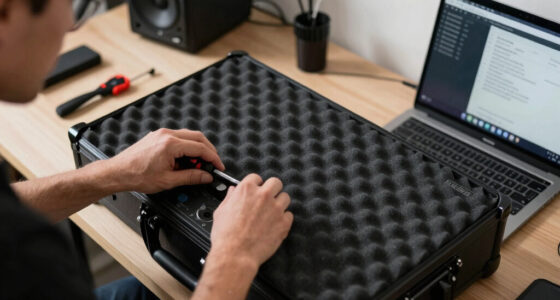
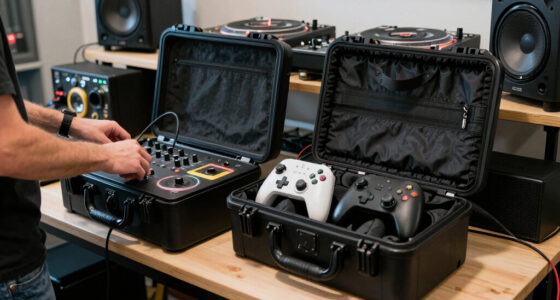
DJ controller protective hard case
As an affiliate, we earn on qualifying purchases.
As an affiliate, we earn on qualifying purchases.
Pick the Right Type of Protection — From Soft to Rigid
Protection options range from a simple silicone skin to a rugged flight case. Here’s a quick rundown:
| Protection Type | Best For | Main Limitation |
|---|---|---|
| Silicone Skin | Minor scratches, grip, everyday handling | Little impact or crush resistance |
| Padded Sleeve | Commuting, careful hand carrying | Limited crush or impact protection |
| Rigid Molded Cover | Protecting controls during packing or light handling | May require an outer bag for full protection |
| EVA or Soft Case | Low-weight, moderate impact protection | Less crush-resistant than hard cases |
| Flight or Hard Case | Frequent touring, rough handling, air travel | Heavier, bulkier, more expensive |
For example, if you regularly fly with your controller, a molded hard case with foam inserts offers the best impact and water resistance. For local gigs, a padded sleeve might suffice. The key is matching the protection level to your travel conditions.
Deep consideration of each protection type reveals tradeoffs. Soft covers are lightweight and convenient but sacrifice impact resistance, potentially risking damage if dropped. Rigid cases provide superior protection but add weight and bulk, which can be a burden during long travels or when lifting multiple items. Choosing the right protection means balancing convenience with the level of safety your environment demands, ensuring your gear remains intact without unnecessary hassle.
Tip: Always verify the protection ratings—like waterproof or dustproof standards—and consider your typical environment. The right choice depends on whether you’re navigating city streets, airport security, or dusty club venues.
custom fit controller travel cover
As an affiliate, we earn on qualifying purchases.
As an affiliate, we earn on qualifying purchases.
Measure Twice, Pack Once — The Packing Checklist
Getting the size right is half the battle. Here’s a step-by-step packing checklist:
- Measure your controller’s maximum length, width, and height, including protrusions.
- Confirm the cover is designed for your specific model or size range.
- Allow space for padding but avoid excessive empty room that lets your gear slide.
- Use foam padding or adjustable dividers to keep your controller from shifting inside the case.
- Remove loose accessories—cables, mounts, or antennas—before packing.
- Secure removable parts, like knobs or sticks, as per manufacturer instructions.
- Test the packed case gently—shake it a little to see if anything moves.
- Label the case clearly and keep essential items with you when possible.
Example: You pack your controller in a molded case with custom foam. Cables are stored in separate compartments. The case doesn’t press on any controls, and it feels snug but not tight. That’s a safe bet.
Deeply understanding your packing process helps prevent accidental damage. Proper measurement ensures the case fits like a glove, reducing movement that can cause scratches or impact damage during transit. Using padding and dividers distributes force evenly, preventing concentrated impacts on sensitive parts. Testing the fit before travel confirms your packing method is secure, saving you from last-minute surprises. Remember, a well-packed controller not only protects your gear but also makes unpacking smoother and faster, especially during tight schedules or multiple stops.
Tip: For frequent flyers, lightweight cases with wheels or straps can reduce fatigue and streamline handling, making your protection both effective and convenient.
As an affiliate, we earn on qualifying purchases.
Latest Trends — What’s New in Controller Protection
Protection gear keeps evolving. Some recent trends include:
- Model-specific molded covers that fit like a glove, reducing unnecessary space.
- Hybrid systems combining rigid shells with soft backpacks for flexibility.
- Engineered lightweight materials like thermoformed EVA, cutting weight without sacrificing strength.
- Modular foam interiors that adapt to different gear setups.
- Added features like luggage sleeves, backpack straps, and discreet tracking pockets for convenience.
For example, a DJ flying weekly might opt for a molded polycarbonate case with a built-in lock and padded interior. It’s durable, lightweight, and ready for the road.
Deep awareness of these trends allows you to choose solutions that maximize protection while minimizing inconvenience. For instance, modular interiors provide customization, ensuring your gear is snug and secure regardless of configuration. Lightweight materials reduce fatigue during long journeys, encouraging safer handling. Features like tracking pockets and backpack straps improve convenience and security, especially in busy airports or crowded venues. Staying informed about these innovations helps you invest in cases that offer the best balance of protection, weight, and usability tailored to your specific needs.
Tip: Always verify the protection standards and independent testing labels, especially for environments with high dust, moisture, or rough handling. A case with proven durability ensures your gear is safe no matter where your gigs take you.
As an affiliate, we earn on qualifying purchases.
What You Need to Know — Key Facts About Controller Protection
Here are the must-know facts:
- “Water-resistant” isn’t the same as “waterproof.” Always check for actual ratings if you’re in wet environments.
- Thick padding doesn’t replace a snug, custom fit. Both are needed for real impact protection.
- A dust cover alone isn’t enough for transport. It’s mainly for storage and light handling.
- Impact protection comes from a combination of a rigid shell and interior padding—never rely on just one.
- Loose accessories should stay separate—cables and mounts can scratch or damage your controller if left floating inside the case.
- Locks add tamper resistance but won’t prevent theft or break-ins.
- Model-specific cases generally fit better and offer more reliable protection than universal ones.
- Always check airline and battery regulations before flying with a hard case. Some sizes and weights are restricted.
- Moisture inside a waterproof case can still occur—pack dry gear and consider desiccants if needed.
Deep understanding of these facts helps you avoid costly mistakes and ensures your gear remains protected in all scenarios. For instance, knowing that waterproof ratings don’t guarantee complete moisture-proofing prompts you to add desiccants or moisture absorbers inside the case. Recognizing that impact resistance relies on both shell and padding guides you to choose a well-balanced protection setup. Being aware of airline regulations prevents delays or confiscations during travel, saving time and stress. Overall, these facts form the foundation for making informed, effective decisions about your controller’s safety during transport.
Frequently Asked Questions
Do I need a hard case or is a soft case sufficient?
A soft case works well for careful, local transport where drops or heavy impacts are unlikely. For frequent traveling, especially flights, a hard case offers better impact and moisture protection.How much extra space should a case have?
Aim for enough room to add padding and secure accessories without letting your controller slide or press on controls. Measure your gear precisely and choose a case that fits snugly but comfortably.Can I leave cables connected during transport?
It’s best to disconnect cables. Connected plugs can act as levers, risking port damage if the case is bumped or dropped. Store cables separately or in padded compartments.Is a silicone cover enough for travel?
No. Silicone covers mainly prevent scratches and dirt. They do little against impacts or crushing forces, so combine them with a more rigid protection for travel.What protection rating should I look for?
Look for independent ingress protection ratings—like IP67—if you face wet, dusty, or harsh environments. Verify what each rating covers before choosing a case.Conclusion
Choosing the right protective cover isn’t just about size—it’s about matching your travel needs with the right level of impact, water, and dust resistance. A well-fitting, sturdy case keeps your controller safe and ready for every gig.
Remember, your gear deserves protection tailored to your journey. Invest in the right case, and it will reward you with peace of mind — and fewer repairs.
Fall Picks
fall essentials
As an affiliate, we earn on qualifying purchases.