
TL;DR
Listen free for 30 days with Audible
Thousands of audiobooks and originals — cancel anytime.
Start your free trialAs an affiliate, we earn on qualifying purchases.
Hard flight cases provide superior impact protection, ideal for heavy-duty transport like air travel. Soft gig bags are lighter, cheaper, and better suited for local gigs, but offer less impact resistance.
Hard flight cases offer unmatched impact protection, making them ideal for air travel and rough handling scenarios.
Soft gig bags are lighter and easier to carry, perfect for quick local gigs and rehearsals, but provide less impact resistance.
Recent innovations combine lightweight materials with strong shells, offering a middle ground that balances protection and portability.
Always measure your speaker’s dimensions carefully to ensure a good fit, especially with soft bags that lack molded interiors.
Consider your typical gig environment—distance, handling, and accessories—when choosing between soft and hard options.
Using Soft Gig Bags vs. Hard Flight Cases for Speakers
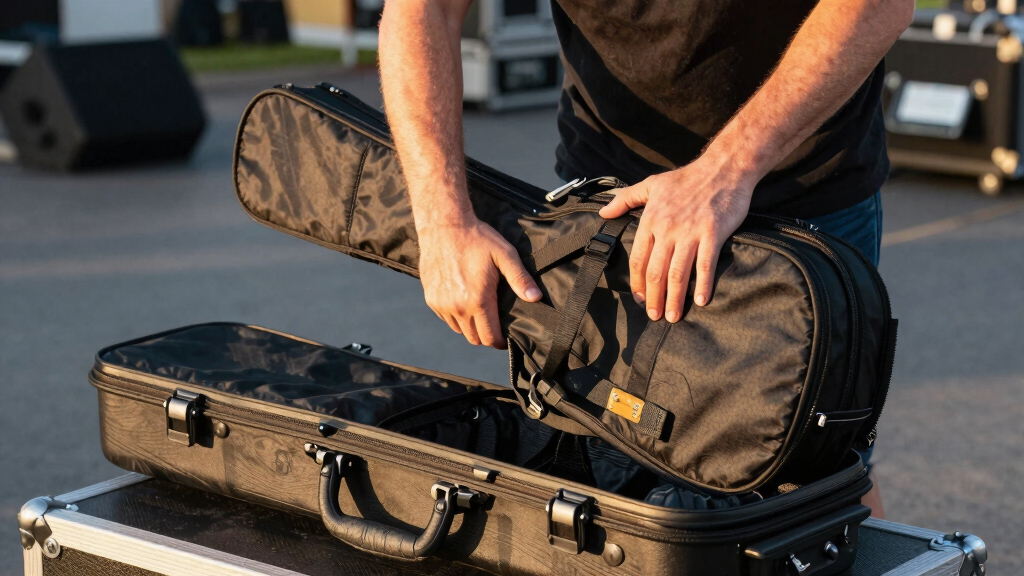
Choosing between them is like choosing between a backpack and a tank. Soft bags keep local load-ins light and fast. Hard cases add weight and cost, but remain the clear choice when crushing, drops, rough handling, or airline travel enter the picture.
Protection, portability, or balance?
No option wins every category. Your best choice depends on who handles the speaker, how far it travels, how tightly it must pack, and how expensive a failure would be.
Fast and flexible
Durable nylon or polyester, padding, handles, pockets, and backpack straps make soft bags ideal for owner-handled transport. They resist dust, scratches, and minor bumps, but cannot stop strong crushing forces.
Built for impact
Molded plastic, plywood, or aluminum creates a rigid barrier. Foam interiors absorb shock and reduce movement, while reinforced corners and latches protect against drops, stacking, and rough handling.
The middle path
Composite panels, high-impact inserts, reinforced fabric, and soft exteriors can improve protection without full flight-case bulk. A practical option for frequent road gigs without airline handling.
What changes in the real world
A flight case protects through structural rigidity and fitted foam. A soft bag protects through padding and surface coverage. That distinction becomes decisive as handling gets rougher.
| Decision factor | Soft gig bag | Hard flight case | Practical winner |
|---|---|---|---|
| Impact resistance | Minor bumps and abrasion | Drops, shocks, and rough handling | |
| Crush resistance | Minimal structural protection | Rigid shell resists stacking pressure | |
| Carry weight | Significantly lighter | Heavier and bulkier | |
| Storage flexibility | Compresses into tight spaces | Fixed dimensions | |
| Speaker fit | Flexible but may allow movement | Molded or foam-fitted interior | |
| Accessory access | External cable and microphone pockets | Fewer pockets; optional compartments | |
| Airline suitability | Not recommended for checked handling | Preferred for heavy-duty transit | |
| Initial cost | $50–150 | $200–600+ |
Where each format earns its keep
These qualitative scales translate the construction differences into everyday transport performance. Longer bars indicate a stronger advantage in that category.
Cost logic: A hard case costs more upfront, but it can prevent a repair or replacement after one severe impact. A soft bag costs less and reduces physical strain, but repeated use in rough conditions may shorten both bag life and equipment life.
Protection starts with the right fit
Even excellent materials underperform when the speaker can shift inside the case. Measure the full enclosure—including handles, feet, control panels, and protrusions—before buying.
Secure the speaker
A snug foam or molded interior minimizes motion and spreads impact energy around the enclosure.
- Confirm internal length, width, and height
- Check foam clearance around controls and grilles
- Look for reinforced corners and recessed latches
- Add wheels when total loaded weight is high
Control internal movement
Flexible walls accommodate more models, but extra space can allow the speaker to slide or strike the bag during transport.
- Choose the closest compatible dimensions
- Prefer reinforced bases and dense padding
- Check handle alignment before loading
- Use waterproof zippers and covered seams outdoors
The four-question decision chain
Match the case to the journey
The most protective case is not always the most practical. The right choice is the lightest solution that safely covers the worst handling your speaker is likely to face.
When you control the load-in
Ideal for rehearsals, local performances, quick setups, stairs, tight vehicles, and musicians carrying their own equipment.
- Short-distance travel
- Low likelihood of drops or stacking
- Budget and low weight are priorities
- Accessory pockets improve workflow
When the journey controls you
Ideal for airlines, touring crews, freight handling, rough terrain, high-value speakers, and frequent professional transport.
- Unpredictable or third-party handling
- High likelihood of crushing or impact
- Long service life is important
- Repair risk outweighs added weight
Consider a hybrid for demanding local work
Lightweight composites, reinforced fabrics, hard inserts, modular padding, and weather-resistant hardware can deliver more protection than a conventional bag without the full bulk of a flight case.
Protection and Impact Resistance: Why Hard Cases Win Every Time
Hard flight cases stand out because they’re built for impact. Made from molded plastic, plywood, or aluminum, they absorb shocks and prevent crushing. Imagine dropping your speaker during a quick move—hard cases stop the damage cold.
Soft gig bags, however, offer only basic protection. They shield against scratches, dust, and minor bumps, not heavy impacts. For instance, if a DJ accidentally kicks a bag or it’s jostled in a truck, soft bags might show wear, or worse, damage the speaker inside.
In real-world terms, a hard case’s foam interior cradles your gear like a cushioned nest, which is essential for air travel or rough handling. This foam absorbs the energy from impacts, preventing the force from reaching your speaker’s sensitive components. The rigidity of the case itself provides a barrier against crushing forces, which soft bags cannot offer. The tradeoff is weight—hard cases are bulkier and heavier, which can complicate transport and setup. But for scenarios where impact resistance is critical—air travel, outdoor events with rough terrain—the added weight and cost are justified because they significantly reduce the risk of damage, saving you money and hassle in the long run.
As an affiliate, we earn on qualifying purchases.
Portability and Ease of Transport: Why Soft Bags Are Lighter and Faster
Soft gig bags weigh significantly less—sometimes 30-50% lighter than hard cases. That might not sound like much until you’ve carried your gear across a parking lot or up several flights of stairs.
Imagine a typical 12-inch powered speaker weighing around 20 pounds. A soft bag might cut that weight down to 12-14 pounds. This difference is crucial because reducing weight directly impacts your physical strain, fatigue, and setup speed. Lighter gear means less time and effort to load in and out, which is especially important during back-to-back gigs or when working alone.
Furthermore, soft bags are more flexible—they can be squeezed into tight spaces or stacked more efficiently. This flexibility minimizes the need for extensive rigging or disassembly, saving time. For DJs or musicians who frequently move their equipment, this ease of transport can be the deciding factor. It’s not just about convenience; it’s about reducing the physical toll and increasing efficiency, enabling you to focus more on your performance and less on logistics.
As an affiliate, we earn on qualifying purchases.
Cost: How Much Will You Spend on Protection?
Hard flight cases tend to be pricier—ranging from $200 to $600 or more depending on size and materials. They’re often custom-molded, with reinforced corners, heavy-duty latches, and sometimes even racks or compartments for accessories. This investment reflects their durability and the level of protection they provide, which is essential for high-stakes gigs or touring where gear is subjected to frequent handling and transport through unpredictable environments. The upfront cost can be offset by the long-term savings—preventing damage that could otherwise lead to expensive replacements or repairs.
Soft gig bags are usually much cheaper—$50 to $150. They’re often made from durable nylon or polyester with padding, but without the high-grade hardware or impact-resistant shells. While the initial expense is lower, the tradeoff is that they may need replacing sooner if used in rough conditions or mishandled frequently. For casual users or those with limited budgets, soft bags offer a practical solution that balances cost and convenience, but they may not withstand repeated impacts or harsh environments over time. Therefore, your choice should consider not just immediate expenses but also the longevity and protection needs of your gear.
As an affiliate, we earn on qualifying purchases.
Custom Fit and Compatibility: Do Soft Bags Really Fit All Speakers?
Hard cases often come in specific sizes—like a 12-inch speaker with a molded interior that fits snugly. That snug fit means less movement and better protection during transport. The rigidity ensures your speaker remains securely in place, minimizing internal shifting that can cause internal damage over time or during transit. This precision fit is especially valuable when traveling by air or handling your gear roughly, as it reduces the risk of internal components rattling or getting jostled.
Soft gig bags tend to be more forgiving—they often have adjustable straps, extra padding, and more flexible shapes to accommodate various models. However, this flexibility can be a double-edged sword. Without a precise fit, your speaker might shift inside the bag, increasing the risk of damage from impacts or jostling. If your speaker has unusual dimensions or protrusions, a soft bag might not provide adequate support, leading to potential internal movement. Therefore, it’s crucial to measure your gear carefully and choose a bag or case that offers a close fit. Proper fit ensures your gear remains stable, protected, and ready for the rigors of gigging or travel.
As an affiliate, we earn on qualifying purchases.
Extra Features: What Do You Get Beyond Just a Shell?
Hard cases often feature built-in locks, reinforced corners, and compartments for cables or accessories. Some even include wheels for easier rolling through airports or venues. These features are designed to enhance security, ease of transport, and organization, which are especially valuable during high-stakes or high-volume gigs where quick setup and teardown are essential. Locks prevent tampering, reinforced corners resist impacts, and compartments keep your gear organized, reducing setup time and potential damage.
Soft bags usually have multiple external pockets, straps for backpacks, and sometimes waterproof zippers. These features add convenience—allowing you to carry cables, microphones, or small accessories without extra bags. Waterproof zippers and rugged fabrics protect your gear from weather, but they don’t add much to impact resistance. The tradeoff is that while soft bags excel in accessibility and organization, they rely on external features rather than structural protection. For gigs in unpredictable weather or environments where security is a concern, choosing a soft bag with lockable compartments or waterproof features can be advantageous, but always consider whether these features compensate for the lower impact protection compared to hard cases.
Recent Trends and Innovations in Gear Transport
Manufacturers are blending the best of both worlds. Lightweight composite materials are making soft gig bags more impact-resistant—think high-impact plastics combined with rugged fabrics. These innovations allow soft bags to absorb shocks more effectively without adding significant weight, bridging the gap between portability and protection.
Hybrid cases with a hard shell exterior and soft, padded lining inside are increasingly common. They provide impact resistance where needed while maintaining a lighter overall weight. This combination helps musicians and DJs adapt to diverse gig environments—offering a durable solution that doesn’t compromise on ease of transport.
Features like waterproof zippers, reinforced handles, and modular designs have become standard, making gear more adaptable to different scenarios. These advancements mean that you can now find transport options that are both resilient and manageable, reducing the need to choose between protection and portability. Staying informed about these innovations can help you select gear that best suits your evolving gig requirements, ensuring your investment remains relevant and effective over time.
Which Should You Pick? Making the Right Choice for Your Gigs
Here’s a quick decision guide based on your typical gigs:
- For heavy-duty travel or touring: go for a hard flight case. It’s worth the investment for peace of mind during air or long-distance ground transport, especially when your gear faces frequent handling, stacking, and potential impacts. The durability reduces the risk of costly damage, which can disrupt your schedule and incur repair costs.
- For local gigs or rehearsals: soft gig bags are often enough. They’re lighter, easier to carry, and more convenient for quick setups. While they provide less impact resistance, the lower cost and increased mobility make them suitable for environments where your gear isn’t subjected to rough handling or long-distance travel.
- Need extra storage for cables and accessories? soft bags with multiple pockets and compartments can streamline organization, saving time during setup and teardown. This convenience can be a significant advantage in fast-paced gig settings.
- Concerned about impact protection? choose a hard case, especially if you frequently handle your gear roughly or transport it in unpredictable conditions. The extra protection minimizes the risk of internal damage, giving you peace of mind.
Frequently Asked Questions
Is a soft gig bag enough for flying with my speakers?
For airline travel, hard flight cases are generally safer because they protect against rough handling and impacts. Soft bags can be risky unless they have reinforced padding and impact-resistant features.Can soft gig bags protect my speakers from drops?
Soft gig bags provide minimal impact protection. They’re better for dust and scratches, but if you frequently handle your gear roughly, a hard case is a smarter choice.What’s the most cost-effective option for local gigs?
Soft gig bags usually cost less—often under $150—and work well for short-distance, low-impact transport. They’re perfect if you’re on a budget or doing casual gigs.Are hybrid cases worth considering?
Yes. Hybrid cases combine a hard shell with soft, padded exteriors. They offer good impact protection without the weight of full hard cases, making them versatile for various gigs.Conclusion
Your gear’s safety hinges on understanding what your gigs demand. If impact protection tops your list, hard cases are the way to go. But for everyday convenience and quick setups, soft gig bags are often enough. Think about your typical gigs, and choose the gear that keeps your sound rolling without the hassle.Fall yard work Picks
leaf blowers
As an affiliate, we earn on qualifying purchases.