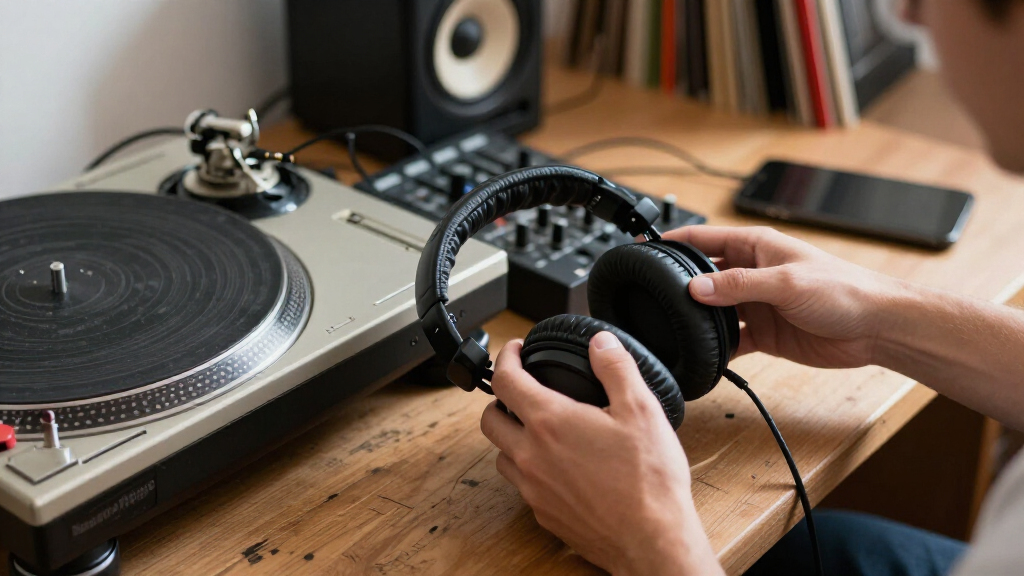

DJ headphones take a beating — sweat, drink spills, late-night transport — and the ear pads are almost always the first thing to wear out. That’s why buying a pair with user-replaceable ear pads can double or triple the life of your investment instead of sending the whole headphone to a drawer of dead gear. After comparing ten options side by side, the Pioneer DJ HDJ-X5 stands out as the best overall pick: it pairs genuine replaceable pads with professional swivel architecture and the durability Pioneer builds for working DJs. If your budget is tighter, the OneOdio Pro-10 delivers surprising booth-ready sound at a fraction of the cost, while the Reloop RHP-10 serves single-ear cueing specialists. The main tradeoff in this category is professional replaceability versus generic pads on budget models — read on for the full breakdown.

Get audio and creator gear delivered free with Prime
- Fast, free delivery on millions of items
- Prime Video, Amazon Music and more included
- Member-only deals all year
Complete the kit


Key Takeaways
- The Pioneer DJ HDJ-X5 separated itself from every other pick because it combines officially supported replaceable pads with reinforced hinges and a swivel mechanism built for nightly booth use — most cheaper models only technically allow pad swaps.
- All three OneOdio models (Pro-10, A71, A70) use standard-size pads that are cheap and easy to source, which is why they dominate the value end of the ranking despite lighter plastic builds.
- The Reloop RHP-10 is the only single-ear mono design in the lineup, making it a niche pick for DJs who cue exclusively one-eared — most buyers should skip it in favor of a swiveling stereo pair.
- Both Pioneer HDJ-CUE1 variants made the list, but the bundle with case and polishing cloth is the smarter beginner buy since the accessories offset the cost of the same core headphone.
- The OneOdio A70 is the only wireless-capable option here, but its Bluetooth mode adds latency that makes it unsuitable for live cueing — treat it as a wired DJ headphone with a wireless bonus.
- The Numark HF125 is the cheapest way into replaceable-pad DJ headphones, but its thin padding and fragile frame mean it suits casual home practice rather than regular gigs.


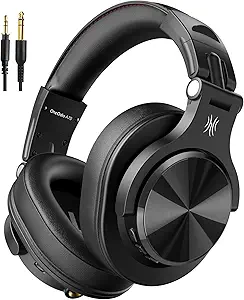
| DJ headphones with replaceable ear pad | Driver size | Brand | Model | Design |
|---|---|---|---|---|
| AOC Over-Ear DJ Studio Monitor | 40 mm | AOC | ACW3211 | Foldable with memory-foam cushions |
| Numark HF125 Closed-Back DJ He | 40 mm | Numark | HF125 | — |
| Pioneer DJ HDJ-CUE1 On-Ear Wir | — | Pioneer DJ | HDJ-CUE1 | Foldable |
| OneOdio Pro-10 Wired Over-Ear | 50 mm | — | — | — |
| Syndesmos CM7005 Wired Over-Ea | 50 mm | Syndesmos | CM7005 (Captain 370) | — |
| Pioneer DJ HDJ-CUE1 DJ Headpho | — | Pioneer DJ | HDJ-CUE1 | Folding |
| Reloop RHP-10 Mono Neon Profes | 50 mm | Reloop | RHP-10-NEON | Single-ear |
| OneOdio A71 Hi-Res Wired Over- | 40 mm | — | — | — |
| Pioneer DJ HDJ-X5 Professional | 40 mm | Pioneer DJ | HDJ-X5 | Swivel earcups |
| OneOdio A70 Bluetooth Over-Ear | 40 mm | — | — | Over-ear, rotatable, and foldable |
More Details on Our Top Picks
AOC Over-Ear DJ Studio Monitor Headphones, Black
This option stands out for its audio-sharing output, which lets a second pair of headphones plug directly in — a genuine advantage for back-to-back DJ sets or teaching a friend to beatmatch. Compared with the Numark HF125, the memory-foam cushions here feel plusher during long practice sessions, and the foldable frame makes transport easier. The 90° rotating earcups handle one-ear cueing the way any DJ expects. Where it falls short is clarity: the listing mixes wired and wireless claims, so a buyer expecting cordless freedom will be disappointed — this is a strictly tethered design. Still, the dual 3.5 mm and 6.35 mm options cover both controllers and mixers without adapters, which the Numark handles only through an included plug. This pick makes the most sense for collaborative setups over solo club work.
Pros:- Audio-sharing output connects a second pair for back-to-back sets
- Memory-foam cushions stay comfortable through long sessions
- 90° rotating earcups support one-ear monitoring
- Foldable design with both 3.5 mm and 6.35 mm connectivity
Cons:- Listing contains conflicting wired and wireless claims, creating uncertainty
- Wired connection restricts movement in the booth
- No detachable cable, so cable damage means replacing the whole unit
Best for: DJs who practice with a partner or teach others and want to share audio through a second headphone jack
Not ideal for: Anyone who needs to move around the booth freely — the wired-only design and conflicting wireless claims make cordless use a gamble
- Brand:AOC
- Model:ACW3211
- Driver size:40 mm
- Impedance:32 ohm
- Sensitivity:108 dB
- Connection:Wired; 3.5 mm input and 6.35 mm audio-sharing output
- Earcup rotation:90°
- Design:Foldable with memory-foam cushions
Our verdict“Choose these if collaborative cueing and shared listening matter more to you than wireless freedom.”
Numark HF125 Closed-Back DJ Headphones
For a first pair of cueing headphones, this model keeps things simple and honest. The closed-back design delivers real sound isolation at a fraction of what the Pioneer DJ HDJ-CUE1 costs, and the 7-position adjustable cups swivel cleanly for one-ear monitoring. At 40 mm, the drivers won’t push bass the way the OneOdio Pro-10’s 50 mm units do, but new DJs learning to beatmatch don’t need club-level low end — they need isolation and a clear beat, which this delivers. The lightweight build is a double-edged sword: comfortable for hours, but it won’t survive the rough treatment that traveling DJs dish out. The fixed cable is the real limitation compared with the Syndesmos CM7005’s detachable coiled cord, since a snagged cable can end these headphones’ life. That tradeoff is acceptable at an entry-level price.
Pros:- Closed-back design provides genuine sound isolation in loud rooms
- 7-position rotating cups adjust easily for one-ear monitoring
- Lightweight and padded for extended practice sessions
- Includes a 1/8-inch to 1/4-inch adapter for mixer connections
Cons:- Fixed cable means damage to the cord ends the headphones
- 40 mm drivers lack the bass weight of larger-driver alternatives
- Only a 90-day warranty, shorter than the one-year coverage elsewhere in this roundup
Best for: Beginner DJs and bedroom producers who need reliable one-ear cueing without a big upfront investment
Not ideal for: Working mobile DJs — the fixed cable and lightweight plastic build won’t hold up to frequent gig transport
- Brand:Numark
- Model:HF125
- Type:Wired over-ear DJ headphones
- Driver size:40 mm
- Cable length:6 ft
- Connector:1/8-inch TRS with 1/4-inch adapter
- Ear cup adjustment:7-position rotating
- Warranty:90 days
Our verdict“A sensible first pair for learning to cue — just upgrade before you start gigging regularly.”
Pioneer DJ HDJ-CUE1 On-Ear Wired DJ Headphones, Foldable, Dark Silver
This is the cheapest way into the Pioneer DJ ecosystem, and that pedigree shows in tuning that prioritizes clear midrange for beatmatching over the bass-heavy signature of the OneOdio Pro-10. The on-ear fit is the defining tradeoff: compared with full over-ear models like the Syndesmos CM7005, these sit on the ear rather than around it, which keeps them light and cool for travel but provides less passive isolation in loud clubs. Soft earpads and a folding frame make them a natural companion for a controller bag. Since Pioneer’s earpads are sold as replaceable accessories, worn cushions don’t mean a dead headphone — a real long-term advantage over budget models with glued pads. This model is better suited to developing DJs who want gear that feels professional and will grow with their skills toward the HDJ-X5.
Pros:- Clear, beatmatch-friendly tuning from a trusted DJ brand
- Lightweight on-ear fit with soft, replaceable earpads
- Swivel earcups for one-ear monitoring
- Folds down small for gig bags and travel
Cons:- On-ear design offers less isolation than over-ear alternatives in this lineup
- Wired only, with no wireless option at this tier
- Bass response is more restrained than 50 mm-driver competitors
Best for: Developing DJs who want brand-accurate monitoring and a portable, club-standard upgrade path from Pioneer DJ
Not ideal for: DJs playing very loud venues — the on-ear fit isolates less than closed over-ear designs, making cueing harder in big rooms
- Brand:Pioneer DJ
- Model:HDJ-CUE1
- Type:On-ear wired DJ headphones
- Design:Foldable
- Earcups:Swivel mechanism for one-ear monitoring
- Color:Dark silver
Our verdict“The smartest on-ramp to Pioneer DJ gear if isolation demands are moderate and portability matters.”
OneOdio Pro-10 Wired Over-Ear DJ Headphones, Black
Where the Numark HF125 plays it neutral, this model leans hard into low end — the 50 mm neodymium drivers push bass you can feel, which helps DJs who cue on kick drums in loud environments. The padded cushions are replaceable, which matters here because bass-heavy listening tends to mean long, loud sessions that wear pads quickly. Dual 3.5 mm and 6.35 mm jacks plus a sharing port give it near-parity with the Syndesmos CM7005 on connectivity, though it lacks that model’s detachable cable — a real durability concern for gig use. The 90-degree swiveling cups are smooth and hold their position well during one-ear monitoring. Compared with the Pioneer DJ HDJ-CUE1, the boosted bass suits hip-hop and electronic sets but can muddy vocals for those mixing more melodic material.
Pros:- 50 mm neodymium drivers deliver powerful, palpable bass
- Replaceable padded cushions extend the headphone’s lifespan
- 90° swiveling cups hold position for single-ear monitoring
- Both 3.5 mm and 6.35 mm jacks plus audio-sharing port
Cons:- Fixed cable cannot be replaced if damaged
- Bass-forward tuning sacrifices some midrange clarity
- Wired only, with no wireless sibling option at this model tier
Best for: Bass-music DJs mixing hip-hop, drum and bass, or house sets who want powerful low end and replaceable pads without a premium price
Not ideal for: DJs mixing vocal-centric or acoustic sets — the boosted bass can mask midrange detail needed for clean blends
- Driver size:50 mm
- Magnets:Neodymium
- Connectivity:Wired
- Audio jacks:3.5 mm and 6.35 mm
- Ear cup rotation:90 degrees
- Monitoring:Single-ear monitoring
- Color:Black
Our verdict“A strong value for bass-driven sets and pad-swapping longevity, provided a fixed cable doesn’t scare you off.”
Syndesmos CM7005 Wired Over-Ear DJ Headphones
This pick makes the most sense for DJs who treat headphones as long-term tools, because the detachable coiled cable solves the failure point that dooms the Numark HF125 and OneOdio Pro-10 — when the cord goes, you replace the cord, not the headphones. The 50 mm drivers cover a full 20 Hz–20 kHz range with more balance than the Pro-10’s bass-heavy tuning, making these equally credible for DJ mixing and studio monitoring. Memory-foam earpads and a self-adjusting headband distribute weight comfortably across the 9.12-ounce frame, and those pads are designed to be swapped when they compress. With both 3.5 mm and 6.35 mm connections plus a sharing output, connectivity matches anything else here. The absence of active noise cancellation keeps it behind premium models like the HDJ-X5 for isolation, and it remains wired-only, but for pure longevity this is the standout.
Pros:- Detachable coiled cable eliminates the most common headphone failure point
- Balanced 50 mm drivers with full 20 Hz–20 kHz response suit mixing and monitoring
- Memory-foam earpads and self-adjusting headband for long-session comfort
- Dual 3.5 mm/6.35 mm connections plus audio-sharing output
Cons:- No active noise cancellation for very loud environments
- Wired-only design limits movement compared with Bluetooth options like the OneOdio A70
- Coiled cable can feel heavy and pull on the earcup during active sets
Best for: Working DJs and home studio owners who want one headphone that survives cable snags, pad wear, and years of dual DJ-plus-monitoring duty
Not ideal for: Anyone wanting wireless flexibility or active noise cancellation — this is a strictly wired, passive-isolation design
- Brand:Syndesmos
- Model:CM7005 (Captain 370)
- Driver size:50 mm
- Frequency response:20 Hz–20 kHz
- Fit:Over-ear
- Earcup swivel:90°
- Cable:Detachable coiled cable, 5.7–6 ft
- Connections:3.5 mm and 6.35 mm
- Weight:9.12 oz
Our verdict“The most future-proof pick here — buy it once, replace the cable and pads as they wear, and it keeps working.”
Pioneer DJ HDJ-CUE1 DJ Headphones, Black, with Case and Polishing Cloth
Compared with the OneOdio Pro-10, the HDJ-CUE1 makes a stronger case for DJs who carry their kit between gigs. Its folding design plus the included carrying case means it slips into a gear bag without the bulk of full-size studio cans. The reinforced metal sliders matter more here than they might sound — plastic hinges are where budget DJ headphones usually fail first. Rotating ear cups reach 90 degrees, so one-ear monitoring works the way it should during beatmatching.
The tradeoff is that Pioneer publishes almost no technical audio specs for this model, which makes it hard to judge against the Pioneer DJ HDJ-X5 on paper. The bundled case also runs smaller than product photos suggest. This option makes the most sense for mobile and beginner DJs who prioritize portability and brand pedigree over verified specs.
Pros:- Powerful bass with clear mids and highs tuned for DJ monitoring
- Folding design plus included case for easy transport
- Reinforced metal sliders resist the hinge failures common in budget headphones
- 90-degree rotating ear cups support proper one-ear cueing
Cons:- No published technical audio specifications to compare against rivals
- Included case is smaller than product images imply
Best for: Beginner and mobile DJs who need a compact, road-ready pair with club-brand tuning and a bundled case
Not ideal for: Spec-driven buyers who want published driver impedance and frequency response data before purchasing
- Brand:Pioneer DJ
- Model:HDJ-CUE1
- Color:Black
- Driver type:Dynamic
- Design:Folding
- Ear cup rotation:90 degrees
- Included accessories:Case, polishing cloth
Our verdict“A portable, well-built entry point from a club-trusted brand for DJs whose gear lives in a bag rather than a booth.”
Reloop RHP-10 Mono Neon Professional Single-Ear DJ Headphone
Most headphones in this roundup offer swiveling cups for one-ear cueing, but the RHP-10 commits to the format entirely — there is only one ear cup. That makes it purpose-built for club DJs who cue with one ear while staying connected to the room’s sound with the other. The 50 mm neodymium driver is the largest here, tuned with kick-bass emphasis so bassdrums land clearly in loud booths, something the smaller 40 mm drivers in the OneOdio A71 don’t match for low-end punch.
The locking XLR connection with coiled cable resists accidental pulls mid-set, though a coiled cord can drag on some mixer placements. The water-resistant vegan leather pad is a practical touch for sweaty booth environments. Compared with the Reloop‘s specialist focus, two-ear models like the Pioneer DJ HDJ-X5 are better all-rounders — but worse pure cueing tools.
Pros:- Large 50 mm neodymium driver with kick-bass emphasis for loud booths
- Locking XLR connection prevents cable pull-outs mid-set
- Water-resistant vegan leather ear pad handles sweaty environments
- Lightweight, ergonomic single-ear design with included carry bag
Cons:- Single-ear mono design rules out stereo listening
- Coiled cable can be awkward depending on mixer placement
Best for: Working club DJs who cue one-eared all night and want bass-forward monitoring that stays locked to the mixer
Not ideal for: DJs who also want stereo headphones for practice listening, production, or casual use between gigs
- Brand:Reloop
- Model:RHP-10-NEON
- Driver size:50 mm
- Design:Single-ear
- Ear pad material:Vegan leather
- Cable connection:Locking XLR with 6.3 mm jack
- Cable length:1.3–2.8 m
- Warranty:1 year
Our verdict“A dedicated one-ear cueing tool for booth DJs who value lockable connections and bass punch over versatility.”
OneOdio A71 Hi-Res Wired Over-Ear Studio Headphones, Black
The A71 earns its slot by refusing to pick a side between DJ booth and studio desk. Its 40 mm drivers deliver a flatter, more neutral presentation than the bass-forward Pioneer DJ HDJ-CUE1, which makes it better suited to mixing and editing while still handling beatmatching duty. The standout trick is the shared audio port, letting a second pair of headphones chain directly off the first — genuinely useful for back-to-back sets or collaborative sessions.
Both 6.35 mm and 3.5 mm plugs are included, so no adapter hunting when moving between mixers and controllers. The tradeoff is straightforward: being wired-only, it tethers you to the booth, and there’s no noise cancellation to isolate against loud systems — the Pioneer DJ HDJ-X5 is the stronger pick for passive insulation in loud environments.
Pros:- Neutral tuning works for both DJ cueing and studio mixing
- Includes both 6.35 mm and 3.5 mm plugs for gear flexibility
- Shared audio port chains a second headphone pair for B2B sets
- 90-degree swiveling earcups enable one-ear monitoring
Cons:- Wired-only design restricts movement
- No active noise cancellation for loud environments
Best for: Home producers and hobbyist DJs who want one affordable pair that works for both cueing and mixing
Not ideal for: DJs who prioritize sound isolation in loud clubs or want any wireless freedom
- Driver size:40 mm
- Type:Wired over-ear headphones
- Cable length:6.6–9.8 ft coiled cord
- Connectors:6.35 mm and 3.5 mm plugs
- Earcup rotation:90° swiveling
- Color:Black
Our verdict“A versatile budget workhorse for anyone splitting time between the DJ desk and the studio desk.”
Pioneer DJ HDJ-X5 Professional DJ Headphones, Black
Where the HDJ-CUE1 is Pioneer’s portable entry point, the HDJ-X5 sits a tier up as a proper booth headphone. Its defining strength is sound insulation — the closed design seals against booth monitors in a way the OneOdio A71, with no isolation claims, simply doesn’t. That seal is what lets a DJ hear the cue track cleanly at lower volumes, which protects hearing over years of gigging. The 40 mm drivers are tuned for clear, accurate cueing and beatmatching rather than exaggerated bass, keeping transitions honest.
The ergonomic earpads are built for long practice sessions, though Pioneer leaves connectivity details and included accessories unspecified, so buyers can’t confirm cable formats before ordering — an annoyance the OneOdio models avoid by listing everything. Compared with the single-ear Reloop RHP-10, this is the two-ear generalist that still handles one-eared swivel work.
Pros:- Strong sound insulation keeps cue tracks audible in loud booths
- Accurate tuning for precise cueing and beatmatching
- Swivel earcups support one-ear monitoring
- Ergonomic earpads hold up through long sessions
Cons:- Connectivity and included accessories are not specified
- Positioned above entry models without published technical specs to justify the gap on paper
Best for: Gigging DJs who play loud venues and need strong passive isolation with accurate, honest cueing
Not ideal for: Buyers who need to know exactly what cables and accessories ship in the box before committing
- Brand:Pioneer DJ
- Model:HDJ-X5
- Driver size:40 mm
- Color:Black
- Design:Swivel earcups
- Intended use:DJ monitoring
Our verdict“The pick for DJs whose home is a loud booth and who value isolation and accuracy over feature transparency.”
OneOdio A70 Bluetooth Over-Ear Headphones, Hi-Res Wired DJ Studio, Black
The A70 is the only model in this lineup that works without a cable, and that changes who it’s for. With up to 72 hours of wireless playback, it covers weeks of practice and commuting between charges, then switches to a wired mode with the included 3.5 mm and 6.35 mm cables when battery-free monitoring matters — effectively doing both jobs of the wired-only OneOdio A71 plus everyday listening. The rotatable, foldable build with memory cotton padding makes it comfortable enough to wear outside the booth entirely.
The tradeoff for that versatility is focus. Bluetooth adds latency and a wireless layer that pure booth headphones like the Pioneer DJ HDJ-X5 skip in favor of insulation and ruggedness. Serious club DJs who never leave wired mode are paying for features they won’t touch, while casual DJs, streamers, and producers get the most from the built-in mic and audio-sharing port.
Pros:- Up to 72 hours of wireless playtime between charges
- Wired mode works without battery power using included cables
- Foldable design with memory cotton and protein leather padding
- Audio-sharing connection and built-in HD microphone add everyday versatility
Cons:- Bluetooth adds latency and complexity wired-only booth headphones avoid
- Versatile generalist design sacrifices the isolation focus of dedicated DJ models
Best for: DJs and producers who want one pair for booth cueing, wireless practice, calls, and everyday listening
Not ideal for: Pure club DJs who need maximum isolation and would never use Bluetooth features they’re paying for
- Connectivity:Bluetooth and wired
- Wireless playtime:Up to 72 hours
- Driver size:40 mm
- Driver type:Neodymium
- Included cables:3.5 mm to 6.35 mm and 3.5 mm to 3.5 mm
- Microphone:Built-in HD microphone with noise reduction
- Design:Over-ear, rotatable, and foldable
- Color:Black
Our verdict“The most flexible pick here — ideal if headphones need to survive beyond the booth, less ideal if the booth is all there is.”

How We Picked
I judged every option through one specific lens: how well these headphones survive booth life when the pads can be replaced. That meant verifying that replacement pads are actually obtainable — official first-party spares, standard-size third-party pads, or universal velour and pleather fits — rather than taking marketing claims at face value. A headphone with pads you can’t source is functionally disposable, no matter how good it sounds.
Beyond pad replaceability, I weighed cueing performance (isolation, punchy mid-bass for beatmatching), build durability at the hinges and headband where DJ headphones usually break, single-ear swivel flexibility, and comfort over long sets. Price-tier value also shaped the order: options that deliver professional longevity on a budget rank above similarly priced models that feel disposable. That’s why the Pioneer HDJ-X5 leads, the OneOdio trio anchors the value range, and single-purpose designs like the Reloop RHP-10 sit lower for most buyers despite excelling at one job.
| DJ headphones with replaceable ear pad | Brand | Model | Design | Color |
|---|---|---|---|---|
| AOC Over-Ear DJ Studio Monitor | AOC | ACW3211 | Foldable with memory-foam cushions | — |
| Numark HF125 Closed-Back DJ He | Numark | HF125 | — | — |
| Pioneer DJ HDJ-CUE1 On-Ear Wir | Pioneer DJ | HDJ-CUE1 | Foldable | Dark silver |
| OneOdio Pro-10 Wired Over-Ear | — | — | — | Black |
| Syndesmos CM7005 Wired Over-Ea | Syndesmos | CM7005 (Captain 370) | — | — |
| Pioneer DJ HDJ-CUE1 DJ Headpho | Pioneer DJ | HDJ-CUE1 | Folding | Black |
| Reloop RHP-10 Mono Neon Profes | Reloop | RHP-10-NEON | Single-ear | — |
| OneOdio A71 Hi-Res Wired Over- | — | — | — | Black |
| Pioneer DJ HDJ-X5 Professional | Pioneer DJ | HDJ-X5 | Swivel earcups | Black |
| OneOdio A70 Bluetooth Over-Ear | — | — | Over-ear, rotatable, and foldable | Black |
Factors to Consider When Choosing DJ Headphones With Replaceable Ear Pads
Replacing ear pads is only worth it if the rest of the headphone is built to last. These are the factors that actually determine whether your purchase survives years of booth duty or ends up as a false economy.Confirm the Pads Are Actually Sourceable
The single most common mistake buyers make is assuming any ear pad can be replaced. In practice, some budget models use proprietary mountings or odd oval shapes with no aftermarket support, which quietly turns a mid-priced headphone into disposable gear. Before committing, check whether the manufacturer sells first-party replacement pads or whether the cups accept a common round or oval pad size. Brands like Pioneer DJ and OneOdio are the safest bets here — their pad sizes are widely stocked by third parties. A good habit is to search for replacement pads for the exact model before buying the headphone itself. If you can’t find them in two minutes, that’s your answer.
Match the Pad Material to Your Gigs
Replaceable pads open up a choice most buyers never think about: pleather versus velour. Pleather (the stock material on most DJ headphones) isolates better in loud booths, which helps you hear your cue channel over monitor speakers — but it degrades faster with sweat and heat. Velour breathes better and lasts longer under heavy use, at the cost of some isolation. If you play long club sets, pleather’s grip on isolation usually wins; if you mostly practice at home or in studio settings, velour swaps can dramatically improve comfort. The point of replaceable pads is precisely this flexibility, so factor pad type into your decision rather than treating all stock pads as equal.
Hinges Break Before Pads Do
Here’s the catch with focusing on replaceable pads: on many DJ headphones, the swivel hinge or headband fails before the pads wear out. That’s why build quality at the joints matters as much as pad availability. Reinforced metal hinges — like those on the Pioneer HDJ-X5 — justify a higher price because they keep the headphone alive long enough for you to replace the pads two or three times. Cheaper plastic-frame models can still be smart buys, but only if you accept a shorter overall lifespan and handle them gently in transit. A hard case or careful cable wrapping does more for budget headphones than any spec sheet claims.
Isolation and Fit Drive Cueing Accuracy
Beatmatching one-eared in a loud booth depends heavily on how well the pads seal around your ears. Over-ear designs with clamping force and dense pads — the OneOdio A71 is a good example — block ambient sound more effectively than shallow on-ear models like the HDJ-CUE1. A weak seal forces you to push volume up, which accelerates hearing fatigue and makes subtle timing differences harder to catch. When you swap pads later, thicker third-party memory foam can actually improve isolation over the stock pads. Try the seal before a gig: if you hear the room clearly with music playing, the fit will fight you all night.
Detachable Cables Are the Other Half of Longevity
Don’t Overpay for Bluetooth You Won’t Use
Wireless features creep into DJ headphone lineups, but latency makes Bluetooth unusable for live cueing — by the time you hear the track, you’re already behind the beat. The OneOdio A70 is the clearest example in this roundup: it’s genuinely good as a wired DJ headphone, and its Bluetooth mode is fine for casual listening between gigs. The mistake is paying a premium for wireless as a primary feature and expecting it to work in the booth. If you want one headphone for both DJing and everyday use, a hybrid like the A70 makes sense. If it’s booth-only, put that money toward better drivers and hinges instead.
Frequently Asked Questions
How often should I replace the ear pads on DJ headphones?
For a working DJ playing weekly gigs, pleather pads typically show visible flaking and flattening within 12 to 18 months, and sweat accelerates this considerably. Home users can often go two to three years before the foam loses its rebound. Rather than watching the calendar, watch the material: cracks in the pleather surface, hardened foam that no longer springs back, and reduced isolation are the signs it’s time to swap. Replacing pads at the first sign of flaking also protects your ears, since degraded pads shed particles and force you to raise the volume. This is exactly why choosing a model with cheap, sourceable pads upfront pays off.
Can I use third-party ear pads, or do I need official replacements?
Third-party pads are usually fine and often cheaper, provided you match the pad’s diameter, depth, and mounting style. Models with standard round cups — the OneOdio lineup is a good example — accept dozens of universal aftermarket options in both pleather and velour. Official pads matter more for premium models like the Pioneer HDJ-X5, where the pad geometry is tuned to the driver’s acoustic design, and a badly matched pad can noticeably change bass response and isolation. My suggestion: start with official pads on professional headphones to preserve the intended sound, and experiment with third-party options once the warranty period has passed.
Are cheap replaceable-pad headphones a false economy?
Not necessarily, and the OneOdio Pro-10 is the proof — its standard pad size and detachable cable give it genuine long-term serviceability despite the low price. The false economy happens at the very bottom of the market, where pads technically come off but replacements aren’t stocked anywhere, or where the plastic frame cracks within months. The real question is whether the parts that aren’t replaceable — hinges, headband, drivers — are built well enough to outlast two or three pad changes. Budget models are a smart buy for beginners and home practice; professionals who gig weekly will still get better cost-per-year from a reinforced model like the HDJ-X5.
Is a single-ear mono headphone like the Reloop RHP-10 better for DJing?
Single-ear designs like the RHP-10 exist because many DJs cue with one ear while monitoring the room with the other, and a mono single-cup design strips away everything you don’t need. It’s lighter, and there’s no headband pressure on the ear you keep free. However, it locks you into that one workflow — if you ever want to listen in stereo, preview tracks privately, or use the headphone for production, a mono single-cup model can’t do it. A stereo pair with a swiveling cup, like the HDJ-X5 or Pro-10, covers both one-ear and two-ear styles. I’d only recommend the RHP-10 if you already know you cue exclusively one-eared.
Should a beginner buy the cheapest option or stretch for a pro model?
Beginners benefit most from the middle of the range, and that’s exactly why the HDJ-CUE1 bundle ranks as the starter pick — it costs little, includes a case and polishing cloth that protect the investment, and still offers replaceable pads and a proper swivel mechanism. Going cheaper, like the Numark HF125, is defensible if you’re unsure whether DJing will stick, but expect thin pads and a fragile frame that won’t survive enthusiastic handling. Stretching straight to the HDJ-X5 makes sense only if you’re already committed and gigging. A reasonable path is starting with the CUE1, learning your cueing style, then upgrading once you know whether you need better isolation or a tougher build.
Conclusion
For most buyers, the Pioneer DJ HDJ-X5 is the best overall choice — it’s the rare option where replaceable pads, reinforced hinges, and booth-ready sound all come together, making it the cheapest headphone to own once you factor in longevity. If value is the priority, the OneOdio Pro-10 is the standout budget pick, with the OneOdio A71 worth the small step up for longer sessions thanks to its more comfortable over-ear fit. Beginners should start with the Pioneer DJ HDJ-CUE1 bundle with case, which protects the headphone while you’re still learning to handle it. For specific needs: the Reloop RHP-10 serves dedicated single-ear cueing, the OneOdio A70 suits DJs who want one headphone for both the booth and everyday wireless listening, and the Numark HF125 covers the absolute-minimum home-practice niche. Whatever you choose, buy a spare set of pads at the same time — future you, mid-set with crumbling pleather, will be grateful.
Fall Picks
fall essentials
As an affiliate, we earn on qualifying purchases.