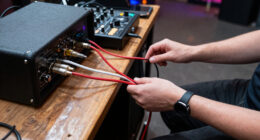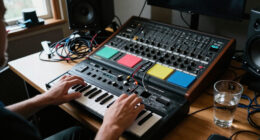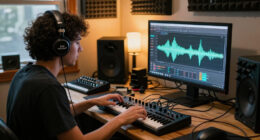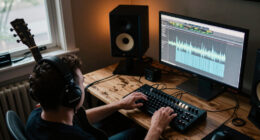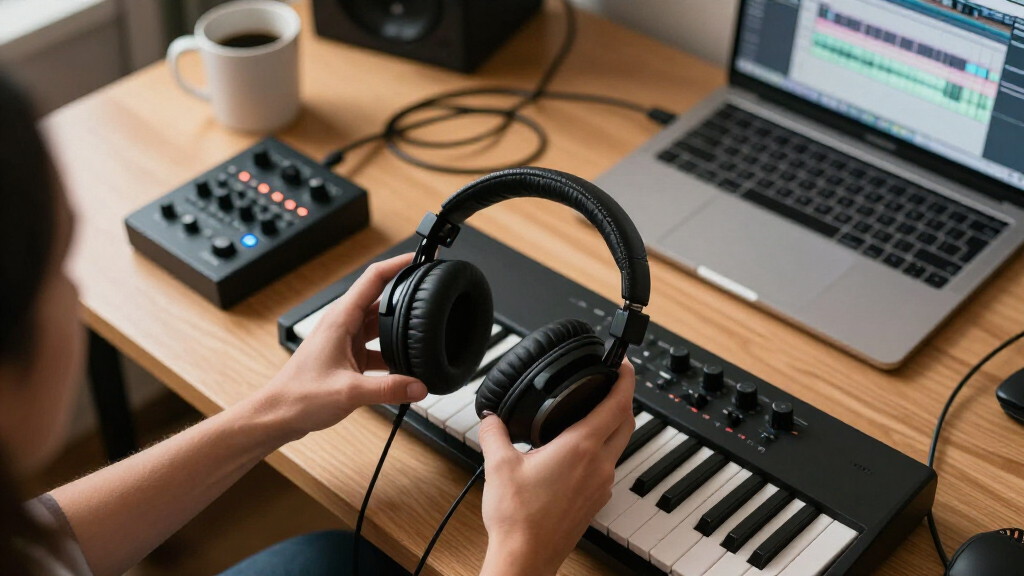
The beyerdynamic DT 770 Pro (80 Ohm) earns the top spot among the best studio headphones for 2026 because it blends accurate closed-back monitoring, all-day comfort, and rugged build at a mid-range price. If your work centers on mixing rather than tracking, the Sennheiser HD 560S delivers a more open, neutral presentation for less money, while the Sony MDR7506 remains the default budget workhorse for engineers who need a reliable reference without a big spend. The main tradeoff in this category is closed-back isolation versus open-back accuracy: closed models suit vocal tracking and noisy rooms, open models suit critical mixing but leak sound both ways. Impedance is the second sticking point — high-ohm models like the DT 990 Pro (250 Ohm) demand a proper headphone amp to sound right. Keep reading for the full breakdown of all 15 models and which one fits your studio setup.

Get audio and creator gear delivered free with Prime
- Fast, free delivery on millions of items
- Prime Video, Amazon Music and more included
- Member-only deals all year
Complete the kit


Key Takeaways
- Closed-back models dominated the top of the ranking because most buyers need tracking and isolation first; the beyerdynamic DT 770 Pro (80 Ohm) won on the best balance of isolation, comfort, and tonal accuracy.
- Open-back picks like the Sennheiser HD 600 and beyerdynamic DT 900 PRO X sound more accurate and spacious but only make sense if you mix in a quiet room and never record vocals while wearing them.
- The Audio-Technica ATH-M50x and Sony MDR7506 are the strongest value picks, but both have boosted low or high ends that make them better for tracking and checking than final mix decisions.
- Impedance split the lineup sharply: 250-ohm models (HD 600, DT 990 Pro) need a headphone amp, while the new DT 770 Pro X (48 Ohm) and HD 490 PRO are built to run straight from interfaces and laptops.
- Entry-level models like the ATH-M20x and ATH-M30x are usable for basic recording, but their harsher treble and cheaper build explain why spending a bit more pays off quickly.
| Sennheiser HD 280 Pro Over-Ear Headphones, Black |  | Best for Tracking and Isolation | Brand: Sennheiser | Model: HD 280 Pro | Design: Closed-back, over-ear, collapsible | VIEW LATEST PRICE | See Our Full Breakdown |
| Sennheiser HD 560S Open-Back Over-Ear Wired Audiophile Headphones |  | Best Open-Back Value | Brand: Sennheiser | Model: HD 560S | Design: Open-back, over-ear | VIEW LATEST PRICE | See Our Full Breakdown |
| AKG K240 Studio Semi-Open Studio Headphones | 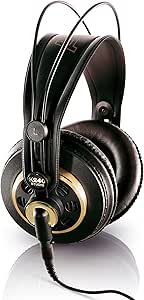 | Best Budget Studio Workhorse | Brand: AKG | Model: K240 Studio | Design: Semi-open, over-ear, wired | VIEW LATEST PRICE | See Our Full Breakdown |
| Sennheiser HD 600 Audiophile Open-Back Wired Headphones |  | Best Premium Reference | Impedance: 300 Ω | Frequency Response: 12–39,000 Hz | THD: 0.1% | VIEW LATEST PRICE | See Our Full Breakdown |
| beyerdynamic DT 990 Pro (250 Ohm) Open-Back Studio Headphones, Black |  | Best for Mixing Comfort and Sparkle | Brand: beyerdynamic | Model: DT 990 PRO 250 | Impedance: 250 Ohms | VIEW LATEST PRICE | See Our Full Breakdown |
| Sennheiser HD 490 PRO Open-Back Professional Studio Headphones |  | Best Open-Back for Producers | Design: Open-back | Frequency Response: 5 – 36,000 Hz | Ear Pads: Two washable, replaceable sets (mixing and producing) | VIEW LATEST PRICE | See Our Full Breakdown |
| Audio-Technica ATH-M30x Professional Studio Monitor Headphones, Black |  | Best Value Closed-Back | Driver Size: 40mm | Driver Type: Rare earth magnets with copper-clad aluminum wire voice coils | Design: Circumaural (over-ear), collapsible | VIEW LATEST PRICE | See Our Full Breakdown |
| Sony MDR7506 Professional Large Diaphragm Headphones | 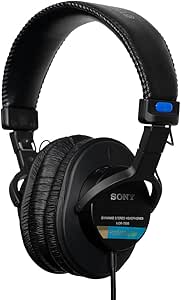 | Best Industry Classic | Driver Size: 40mm | Magnet Type: Neodymium | Frequency Response: 10 Hz – 20 kHz | VIEW LATEST PRICE | See Our Full Breakdown |
| beyerdynamic DT 900 PRO X Open-Back Studio Headphones |  | Best for Mixing Without an Amp | Type: Open-back studio headphones | Driver: STELLAR.45 dynamic | Impedance: 48 ohms | VIEW LATEST PRICE | See Our Full Breakdown |
| Audio-Technica ATH-M50x Professional Studio Monitor Headphones, Black | 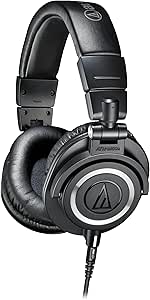 | Best Closed-Back All-Rounder | Driver Size: 45mm large-aperture with rare earth magnets | Earcup Design: Circumaural, 90-degree swiveling | Cable: Detachable | VIEW LATEST PRICE | See Our Full Breakdown |
| beyerdynamic DT 770 Pro (80 Ohm) Closed-Back Studio Headphones, Black |  | Best for Vocal Tracking | Impedance: 80 Ohms | Type: Closed-back, over-ear studio headphones | Ear Pads: Replaceable grey velour | VIEW LATEST PRICE | See Our Full Breakdown |
| beyerdynamic DT 770 Pro X (48 Ohm) Closed-Back Studio Headphones, Black |  | Best Amp-Free Recording | Impedance: 48 Ohm | Driver: STELLAR.45 | Design: Closed-back, over-ear | VIEW LATEST PRICE | See Our Full Breakdown |
| Audio-Technica ATH-M20x Professional Studio Monitor Headphones, Black |  | Best Budget Starter Pair | Driver Size: 40 mm | Driver Type: Rare earth magnets with copper-clad aluminum wire voice coils | Design: Circumaural (over-ear) | VIEW LATEST PRICE | See Our Full Breakdown |
| Audio-Technica ATH-M40x Professional Studio Monitor Headphones, Black |  | Best Value Workhorse | Driver Size: 40 mm | Driver Type: Rare earth magnets with copper-clad aluminum wire voice coils | Design: Circumaural (around-ear) | VIEW LATEST PRICE | See Our Full Breakdown |
| Shure SRH440A Over-Ear Wired Studio Headphones for Recording |  | Best Portable Monitoring Pair | Type: Over-ear, closed-back, wired | Use: Recording, monitoring, mixing, critical listening | Headband: Adjustable | VIEW LATEST PRICE | See Our Full Breakdown |
| studio headphone | Design |
|---|---|
| Sennheiser HD 280 Pro Over-Ear | Closed-back, over-ear, collapsible |
| Sennheiser HD 560S Open-Back O | Open-back, over-ear |
| AKG K240 Studio Semi-Open Stud | Semi-open, over-ear, wired |
| Sennheiser HD 600 Audiophile O | Open-back, over-ear |
| beyerdynamic DT 990 Pro | Open-back, over-ear |
| Sennheiser HD 490 PRO Open-Bac | Open-back |
| Audio-Technica ATH-M30x Profes | Circumaural (over-ear), collapsible |
| Sony MDR7506 Professional Larg | Closed-ear, foldable |
| beyerdynamic DT 900 PRO X Open | — |
| Audio-Technica ATH-M50x Profes | Closed-back studio monitor |
| beyerdynamic DT 770 Pro | — |
| beyerdynamic DT 770 Pro X | Closed-back, over-ear |
| Audio-Technica ATH-M20x Profes | Circumaural (over-ear) |
| Audio-Technica ATH-M40x Profes | Circumaural (around-ear) |
| Shure SRH440A Over-Ear Wired S | Collapsible |
More Details on Our Top Picks
Sennheiser HD 280 Pro Over-Ear Headphones, Black
The HD 280 Pro earns its place as the isolation workhorse of this lineup. With up to 32 dB of passive noise attenuation, it outperforms every other closed-back model here when the goal is keeping click tracks and bleed out of a live microphone — something the open-back HD 560S simply cannot do. Compared with the AKG K240 Studio, the closed design trades some openness for a tight, focused low end that works well when drummers need to hear themselves.
The tradeoffs are real: the coiled cable can drag and tangle on a desk, and the sound is more utilitarian than revealing, so this model is better suited to tracking duties than final mixing. Still, replaceable earpads, headband padding, and cord mean it can survive years of studio abuse that would retire lesser headphones.
Pros:- Up to 32 dB of passive noise attenuation beats most closed-back rivals
- Replaceable earpads, headband padding, and cord extend lifespan
- Lightweight, comfortable fit for long tracking sessions
- Collapsible earpieces for easy transport
Cons:- Coiled cable can be cumbersome at a desk or on the move
- Sound is competent but not revealing enough for critical mixing
- No wireless option and no detachable cable
Best for: Home and project studio owners who track vocals or instruments and need serious noise isolation on a budget
Not ideal for: Mixing engineers who want a wide, transparent soundstage — the closed, sealed tuning hides spatial detail that the HD 560S reveals
- Brand:Sennheiser
- Model:HD 280 Pro
- Design:Closed-back, over-ear, collapsible
- Connectivity:Wired, coiled cable 3.3–9.8 ft
- Noise Attenuation:Up to 32 dB passive
- Included Adapters:Screw-type 1/4″ adapter
- Warranty:2 years
Our verdict“This pick makes the most sense for anyone tracking in the same room as the microphone and needing isolation above all else.”
Sennheiser HD 560S Open-Back Over-Ear Wired Audiophile Headphones
The HD 560S stands out for delivering genuine reference-grade open-back sound without the premium pricing of the HD 600 or the amp demands of the DT 990 Pro. The E.A.R. driver tilting creates a soundstage that feels genuinely wide, and the polymer-blend membrane keeps bass controlled rather than bloated — a clarity that makes mixing decisions easier than on the flatter-sounding HD 280 Pro.
Where the HD 600 adds refinement and low-level detail, the HD 560S gets you roughly 80 percent of that experience while running happily from an audio interface. The open-back design is the obvious limitation: it leaks sound both ways, so tracking vocalists beside a mic is off the table. This is a mixing and listening tool, not an all-in-one studio headphone.
Pros:- Natural, accurate reference tuning for confident mixing decisions
- Wide soundstage with lifelike depth from angled drivers
- Runs well from ordinary audio interfaces without a dedicated amp
- Comfortable for extended sessions
Cons:- Open-back design leaks sound and provides virtually no isolation
- Build and refinement fall short of the HD 600’s audiophile standard
- Wired only, with no portability features
Best for: Producers and mixers who want an accurate open-back soundstage for mixing at a mid-range price
Not ideal for: Anyone recording in the same room as live microphones or working in shared, noisy spaces — the open-back design leaks and isolates almost nothing
- Brand:Sennheiser
- Model:HD 560S
- Design:Open-back, over-ear
- Connectivity:Wired, 1/4-inch connector
- Weight:600 g
- Warranty:2 years
Our verdict“This model is better suited to mixers and critical listeners who want open-back honesty without paying HD 600 money or feeding it a headphone amp.”
AKG K240 Studio Semi-Open Studio Headphones
The K240 Studio has been a studio staple for decades, and its role here is clear: the most affordable path into legitimate semi-open studio sound. Compared with the HD 280 Pro, it gives up nearly all isolation in exchange for a more open, natural presentation with solid bass and clear highs from the Varimotion diaphragms — a fair trade for editing and rough mixing at a desk.
What makes this option stand out at its price is comfort and practicality: the self-adjusting headband disappears on your head during long sessions, and the 3-meter cable with both 1/8″ and 1/4″ plugs covers every interface. It is not a precision instrument — the HD 560S resolves noticeably more detail — and the semi-open leak rules out vocal tracking, but as an all-day companion for editing, podcasting, and general studio work, it is hard to beat.
Pros:- Proven studio tuning with wide dynamic range at an entry-level price
- Self-adjusting headband stays comfortable through marathon sessions
- Includes both 1/8″ and 1/4″ connectivity
- Durable build trusted in studios for decades
Cons:- Semi-open design leaks sound and offers little isolation
- Detail retrieval trails the HD 560S and HD 600 noticeably
- Bass is solid but not tightly controlled for critical low-end decisions
Best for: Beginners, podcasters, and editors who want a comfortable, proven studio headphone at an entry price
Not ideal for: Recording engineers tracking loud sources — the semi-open design leaks badly enough to bleed into microphones
- Brand:AKG
- Model:K240 Studio
- Design:Semi-open, over-ear, wired
- Transducers:30 mm XXL with Varimotion diaphragms
- Cable Length:3 meters (9.9 ft)
- Connectors:1/8″ plug with screw-on 1/4″ adapter
- Intended Use:Mixing, mastering, podcasting, Hi-Fi
Our verdict“The sensible first studio headphone for editing and casual mixing, provided you never need to record with it on.”
Sennheiser HD 600 Audiophile Open-Back Wired Headphones
The HD 600 remains the benchmark for neutral, unforgiving accuracy, and its role in this lineup is the premium critical-listening reference. Where the DT 990 Pro leans slightly bright and the HD 560S smooths edges for comfort, the HD 600 presents mixes exactly as they are — which is exactly what you want when trusting your ears for final mastering decisions. The Kevlar-reinforced detachable cable also adds a layer of longevity the fixed-cable DT 990 Pro can’t match.
The catch is the 300 Ω impedance: straight out of a laptop or phone these sound thin and lifeless, and a proper headphone amplifier is a practical requirement, not a luxury. Add the open-back leak, and this becomes a dedicated listening and mastering tool rather than an everyday studio headphone. For listeners who already own a capable amp, few options at any price resolve this much detail.
Pros:- Benchmark neutral tuning with 0.1% THD for mastering-grade accuracy
- Excellent soundstage and imaging for critical listening
- Detachable Kevlar-reinforced cable with low handling noise
- Comfortable, lightweight 260 g design for long sessions
Cons:- 300 Ω impedance requires a dedicated headphone amplifier
- Open-back design offers no isolation and leaks sound
- No microphone or wireless functionality
Best for: Mastering engineers and audiophiles who already own a headphone amp and want maximum neutrality
Not ideal for: Mobile or interface-only producers — the 300 Ω impedance demands amplification that phones and budget interfaces can’t provide
- Impedance:300 Ω
- Frequency Response:12–39,000 Hz
- THD:0.1%
- Weight:260 g
- Cable:Detachable Kevlar-reinforced OFC copper
- Connector:1/4″ / 1/8″ jack
- Design:Open-back, over-ear
Our verdict“This pick makes the most sense for amplified setups where nothing should stand between your ears and the truth of a mix.”
beyerdynamic DT 990 Pro (250 Ohm) Open-Back Studio Headphones, Black
The DT 990 Pro takes a different mixing philosophy than the HD 600: instead of strict neutrality, it offers a wide stereo image with energetic treble that makes detail pop during long mixing sessions. Its legendary velour ear pads and spring-steel headband make it arguably the most comfortable option in this entire roundup — the HD 560S is pleasant, but the DT 990 Pro feels built for eight-hour days. Its honest, slightly forward presentation means mixes translate well across consumer playback systems.
Two limitations shape who should buy it. The 250 Ω impedance needs an audio interface or headphone amp — plugged into a phone it sounds dull and underpowered. And the fixed coiled cable cannot be swapped if damaged, unlike the HD 600’s detachable cord. The lifted treble that reveals detail can also fatigue sensitive ears over marathon sessions.
Pros:- Wide, natural stereo image that flatters mixing work
- Exceptionally comfortable velour pads and spring-steel headband
- Mixes translate reliably to consumer playback systems
- German-built quality with replaceable ear pads
Cons:- 250 Ω impedance requires an interface or headphone amp
- Fixed coiled cable cannot be replaced if damaged
- Forward treble can fatigue sensitive ears over long sessions
Best for: Mixing engineers with an audio interface who value long-session comfort and a wide, detailed stereo image
Not ideal for: Treble-sensitive listeners and mobile producers — the bright tuning and 250 Ω impedance demand amplification and a tolerance for sparkle
- Brand:beyerdynamic
- Model:DT 990 PRO 250
- Impedance:250 Ohms
- Frequency Response:5–35,000 Hz
- Design:Open-back, over-ear
- Cable:Fixed 3 m coiled with 1/4″ adapter
- Ear Pads:Replaceable grey velour
- Warranty:2 years
- Country of Origin:Germany
Our verdict“The best choice for interface-equipped mixers who prioritize comfort and stereo width, provided bright highs don’t bother you.”
Sennheiser HD 490 PRO Open-Back Professional Studio Headphones
The HD 490 PRO stands out for a trick nothing else in this lineup offers: two switchable ear pad sets with distinct sound signatures, one tuned for producing and one for mixing. That means a single pair can serve both beat-making and final mixdowns, where the beyerdynamic DT 900 PRO X locks you into a single tuning. The wide, dimensional soundstage makes precise instrument localization feel effortless — an advantage over closed models like the ATH-M50x when placement decisions matter. The bundled dearVR MIX-SE plugin extends its usefulness for virtual mixing environments. The tradeoff is the same one all open-backs carry: sound leaks in and out, so tracking vocals or working in a shared space is off the table.
Pros:- Two swappable ear pad sets with distinct producing and mixing tunings
- Exceptionally wide soundstage with precise instrument localization
- Uncolored frequency response supports confident mix decisions
- Washable, replaceable pads and sustainable FSC-certified packaging
Cons:- Open-back design leaks sound and provides virtually no isolation
- Premium price typical of professional-grade studio gear
Best for: Producers and mix engineers who want one headphone that adapts to both creative production and critical mixing work
Not ideal for: Anyone tracking in the same room as the microphone, or working in noisy environments — the open-back design offers almost no isolation
- Design:Open-back
- Frequency Response:5 – 36,000 Hz
- Ear Pads:Two washable, replaceable sets (mixing and producing)
- Cable:1.8 m detachable
- Included Software:dearVR MIX-SE plugin
- Origin:German-engineered
- Packaging:FSC-certified, forest-friendly
Our verdict“A versatile pro tool for producers who move between creating and mixing, as long as isolation isn’t a requirement.”
Audio-Technica ATH-M30x Professional Studio Monitor Headphones, Black
Sitting between the entry-level ATH-M20x and the flagship ATH-M50x in Audio-Technica’s lineup, the ATH-M30x delivers the core studio formula at a more accessible price: closed-back isolation, mid-focused tuning, and a collapsible build with a protective case. The excellent mid-range definition is the real selling point — vocals and guitars sit forward in a way that makes it easy to judge balance, something the bass-forward M50x deliberately colors. Where it gives ground to the M50x is flexibility: the cable is fixed rather than detachable, and there’s no swiveling earcup for one-ear monitoring. The contoured circumaural fit still blocks a respectable amount of room noise for tracking on a budget.
Pros:- Tuned for enhanced detail with especially strong mid-range definition
- Good passive isolation from contoured over-ear cups
- Collapsible design ships with a protective case for travel
- Pro-grade materials hold up through long sessions
Cons:- Fixed, non-detachable cable limits longevity and convenience
- Monitoring-focused tuning may feel dry for casual listening
Best for: Home studio owners and field recordists who want reliable closed-back monitoring without paying flagship prices
Not ideal for: Engineers who need detachable cables or swiveling earcups for DJ-style cueing and one-ear monitoring
- Driver Size:40mm
- Driver Type:Rare earth magnets with copper-clad aluminum wire voice coils
- Design:Circumaural (over-ear), collapsible
- Cable Exit:Single-sided
- Included Accessories:Cable, protective case, screw-on 1/4-inch adapter, user manual
- Warranty:2 years (parts and labor)
Our verdict“The sensible middle child of Audio-Technica’s monitor line — accurate and portable, if short on the M50x’s flexibility.”
Sony MDR7506 Professional Large Diaphragm Headphones
If you’ve seen a photo of a recording session, you’ve probably seen the MDR7506 — it remains the de facto standard in broadcast and film production decades after launch. Compared with modern rivals like the ATH-M30x, its strengths are familiarity and practicality: a rugged folding frame, gold-plated connectors, and a tuning that generations of engineers have learned to trust — mixes translated on a 7506 tend to translate everywhere. The generous 9.8-foot OFC cord is a gift in a control room and a nuisance everywhere else, and unlike the ATH-M50x, the cable can’t be swapped if it fails. It won’t match the refinement of the HD 490 PRO, but it doesn’t need to; its job is dependability.
Pros:- Decades-long industry standard with a trusted, familiar tuning
- Rugged foldable construction built for professional abuse
- Closed-ear design effectively reduces external noise
- Includes 1/4-inch adapter and soft carrying case
Cons:- Non-detachable cord means a cable failure retires the headphones
- 9.8-foot cord is cumbersome for portable listening
- Soundstage and refinement trail newer open-back competitors
Best for: Engineers, location sound recordists, and broadcasters who want a proven reference they can find and replace anywhere
Not ideal for: Portable or mobile users — the long, non-detachable cable is awkward outside a studio or desk setup
- Driver Size:40mm
- Magnet Type:Neodymium
- Frequency Response:10 Hz – 20 kHz
- Design:Closed-ear, foldable
- Cord:9.8 ft oxygen-free copper, non-detachable
- Plug:Gold-plated 1/8 inch with 1/4 inch adapter
- Included Accessories:Soft case, 1/4 inch adapter
Our verdict“The safe, universally recognized pick for professional monitoring — buy it for reliability, not for modern conveniences.”
beyerdynamic DT 900 PRO X Open-Back Studio Headphones
The DT 900 PRO X solves the problem that has always plagued open-back studio cans: the 48-ohm STELLAR.45 driver runs at full resolution straight from a laptop or phone, no headphone amp required. That’s a real advantage over higher-impedance relatives like the DT 990 Pro (250 Ohm), which needs amplification to perform, and over the HD 490 PRO, which sits at a higher price for its swappable-pad system. The natural, wide-open soundstage makes it the strongest candidate in this batch for mixing and mastering, where hearing depth and placement accurately matters more than isolation. As with all open-backs, nearby people will hear your audio — pair it with a closed model like the DT 770 Pro X for tracking duties.
Pros:- 48-ohm impedance drives full performance from any source, amp-free
- Wide, natural soundstage well suited to mixing and mastering
- Detachable mini-XLR cable with 1/4-inch adapter and case included
- German-made build quality backed by a 2-year warranty
Cons:- Open-back design leaks audio to anyone nearby
- Wired only — no wireless option exists
Best for: Mixing and mastering engineers who want open-back clarity powered directly by a laptop, interface, or phone
Not ideal for: Anyone in a shared or noisy space — the open design leaks sound both ways and provides no isolation
- Type:Open-back studio headphones
- Driver:STELLAR.45 dynamic
- Impedance:48 ohms
- Connectivity:Wired, 3.5 mm jack
- Weight:12.2 ounces
- Made In:Germany
- In the Box:Headphones, detachable mini-XLR cable, 1/4-inch adapter, protective case
- Warranty:2 years manufacturer
Our verdict“The most practical open-back here for anyone without a headphone amp, provided isolation isn’t part of the workflow.”
Audio-Technica ATH-M50x Professional Studio Monitor Headphones, Black
The ATH-M50x earns its place as the most versatile closed-back option in this roundup. Its 45mm large-aperture drivers deliver deeper, more authoritative bass than the smaller ATH-M30x, while the 90-degree swiveling earcups make one-ear cueing easy — a feature the budget M30x and the Sony MDR7506 both lack. Unlike the 7506’s fixed cord, the detachable cable means a damaged wire is a cheap fix rather than a dead headphone. It also doubles well as an everyday listening pair, where more clinical options like the MDR7506 can feel flat. The compromises: the clamp force runs tight on larger heads, and it won’t match the open, spacious imaging of the DT 900 PRO X or HD 490 PRO for critical mixing.
Pros:- Deep, accurate bass and clear detail from 45mm large-aperture drivers
- Strong passive isolation for tracking in untreated rooms
- Detachable cable extends lifespan and adds convenience
- Swiveling earcups enable quick one-ear monitoring
Cons:- Firm clamp can feel tight on larger heads during long sessions
- Closed-back imaging trails open-back competitors for critical mixing
Best for: Engineers and creators who want one closed-back headphone that handles tracking, mixing, travel, and everyday listening
Not ideal for: Listeners with larger heads who find a tight clamp uncomfortable, or purists needing open-back soundstage for mastering
- Driver Size:45mm large-aperture with rare earth magnets
- Earcup Design:Circumaural, 90-degree swiveling
- Cable:Detachable
- Design:Closed-back studio monitor
- Color:Black
- Warranty:2 years (parts and labor)
Our verdict“The do-everything closed-back pick — isolate, track, mix, and travel with one pair, accepting a snug fit and a narrower soundstage.”
beyerdynamic DT 770 Pro (80 Ohm) Closed-Back Studio Headphones, Black
Decades after its launch, the DT 770 Pro (80 Ohm) remains the benchmark for closed-back tracking, and its passive isolation is why. In a vocal booth, this level of sealing keeps click tracks and backing mixes from bleeding into the microphone — something the semi-open AKG K240 Studio simply cannot do. The spring-steel headband and replaceable velour pads make it a long-term workhorse rather than a disposable accessory.
The 80-ohm version sits in a sweet spot: loud enough from most laptops, but genuinely better when driven by an interface. The tradeoff is the fixed 3m cable, which the newer DT 770 Pro X solves with a detachable mini-XLR — if cable management matters, that model earns its premium.
Pros:- Best-in-class passive isolation that keeps headphone bleed out of your mic
- Tank-like German build with replaceable velour pads and a spring-steel headband
- 80-ohm impedance works from laptops while scaling up with a headphone amp
- Comfortable velour pads for long tracking sessions
Cons:- Sounds noticeably better driven by an audio interface or headphone amp
- Fixed, non-detachable 3m cable is cumbersome and irreparable if damaged
Best for: Vocalists, podcasters, and engineers tracking in booths or loud rooms who need maximum isolation and a headphone that survives daily studio abuse
Not ideal for: Producers who mix primarily on laptops in cafés or on the go — the 3m fixed cable and amp-hungry character make portable use frustrating
- Impedance:80 Ohms
- Type:Closed-back, over-ear studio headphones
- Ear Pads:Replaceable grey velour
- Headband:Spring steel
- Cable:Fixed 3m straight cable
- Adapter:1/4-inch (6.35mm)
- Origin:Made in Germany
Our verdict“The default choice if tracking and isolation are your primary jobs — just pair it with a decent interface.”
beyerdynamic DT 770 Pro X (48 Ohm) Closed-Back Studio Headphones, Black
The DT 770 Pro X takes everything that made the original DT 770 Pro a tracking staple and removes its biggest friction point: the need for amplification. At 48 ohms with the STELLAR.45 driver, it plugs straight into phones, consoles, and laptops without losing composure — a genuine advantage over the 80-ohm original for mobile rigs and bedroom setups.
The detachable mini-XLR cable also fixes the older model’s weakest point, letting you replace a damaged cable instead of the whole headphone. Compared to the Audio-Technica ATH-M40x, which also offers detachable cables, the Pro X leans closer to the DT 770’s refined, detailed signature rather than the M40x’s flatter, more utilitarian tuning. The cost is real: it’s the pricier closed-back here, and there’s no folding hinge for transport.
Pros:- 48-ohm impedance delivers full sound from phones and laptops with no amp required
- Detachable mini-XLR cable extends the headphone’s lifespan
- Closed-back isolation keeps bleed out of microphones while tracking
- Handmade in Germany with the flagship STELLAR.45 driver
Cons:- Wired only, with no wireless option at this price
- Non-folding design makes it bulky to carry
Best for: Home studio owners and content creators who record from laptops, phones, or consoles without a headphone amp and want DT 770-class isolation
Not ideal for: Buyers on a tight budget or anyone who needs headphones that fold down for a mobile bag — this is a desk-first tool
- Impedance:48 Ohm
- Driver:STELLAR.45
- Design:Closed-back, over-ear
- Connectivity:Wired, 3.5 mm jack
- Cable:Detachable mini-XLR, 3m
- Ear Pads:Replaceable velour
- Warranty:2 Year Manufacturer
- Origin:Handmade in Germany
Our verdict“The modern DT 770 for people who never bought a headphone amp — and the smarter long-term buy thanks to the detachable cable.”
Audio-Technica ATH-M20x Professional Studio Monitor Headphones, Black
Not everyone needs a hundred-dollar workhorse before knowing whether they’ll stick with recording, and that’s exactly the gap the ATH-M20x fills. You still get the family DNA — the same 40mm rare-earth driver architecture as the pricier ATH-M40x — plus a circumaural seal that holds its own in loud rooms.
The tuning leans bass-forward, which makes tracking feel energetic but flatters low end in a way the more neutral M40x does not — a real consideration if you’re making mix decisions. There’s no swiveling earcup and no detachable cable either, so a broken cord means the end of the headphone. For a first pair, a spare pair for collaborators, or cue mixing where nuance matters less, those compromises are reasonable ones.
Pros:- Genuine Audio-Technica studio driver architecture at an entry price
- Circumaural design delivers strong isolation in loud environments
- Single-side cable exit reduces tangles and clutter
- Simple, sturdy design suited to being tossed in a gig bag
Cons:- Bass-boosted tuning masks true low-end balance for mixing
- No detachable cable or swiveling earcups, so damage or DJ-style monitoring is off the table
Best for: Beginners, students, and home recorders who want legitimate studio isolation and tuning on a tight budget
Not ideal for: Anyone mixing critical low-end decisions — the enhanced bass response colors judgment compared to the flatter M40x
- Driver Size:40 mm
- Driver Type:Rare earth magnets with copper-clad aluminum wire voice coils
- Design:Circumaural (over-ear)
- Cable Exit:Single side
- Intended Use:Studio tracking and mixing
- Color:Black
Our verdict“The cheapest credible way into closed-back studio monitoring — buy it for tracking, not for final mix decisions.”
Audio-Technica ATH-M40x Professional Studio Monitor Headphones, Black
The ATH-M40x has earned its reputation as the value sweet spot in Audio-Technica’s M line: it delivers the flat, honest tuning of the flagship ATH-M50x at a lower price, minus the M50x’s slightly folded character and swappable cable options in the box. For mixing, that neutrality is the point — you hear what’s actually in the recording.
Its party trick is the 90-degree swiveling earcups, which no other pick in this batch offers. DJs, live engineers, and anyone who cues one-ear will find this alone worth the ticket. Compared to the Shure SRH440A, the M40x feels more rugged and clamp-secure, but that firm headband pressure takes breaking in; the first few long sessions can be a squeeze. Detachable cables mean a snagged cord is a replacement, not a funeral.
Pros:- Flat, trustworthy tuning that translates well to mixing decisions
- 90-degree swiveling earcups enable one-ear DJ and live monitoring
- Detachable cables make damage cheap to fix
- Professional-grade earpads and headband built for daily use
Cons:- Firm clamp and stiff pads feel tight during long sessions before break-in
- Plastic build feels more utilitarian than the German-made beyerdynamic options
Best for: Producers and DJs who want neutral monitor tuning, one-ear cueing, and a repairable cable without paying flagship prices
Not ideal for: Listeners with sensitive heads — the clamp force and firm stock pads stay uncomfortable until broken in
- Driver Size:40 mm
- Driver Type:Rare earth magnets with copper-clad aluminum wire voice coils
- Design:Circumaural (around-ear)
- Earcup Rotation:90 degrees
- Cables:Detachable, included
- Color:Black
Our verdict“The best balance of price, neutrality, and durability in this lineup — the default recommendation for most home studios.”
Shure SRH440A Over-Ear Wired Studio Headphones for Recording
Where most studio headphones are built to live on a desk, the Shure SRH440A is the one that travels. The collapsible design plus a detachable locking cable means it packs into a bag and survives the trip — a combination neither the non-folding beyerdynamic DT 770 Pro X nor the fixed-cable DT 770 Pro can match.
Its tuning prioritizes accuracy and transparency, sitting closer to the ATH-M40x in honesty but with a lighter, more forgiving fit for marathon editing sessions. The locking cable is a double-edged feature: it won’t pull out mid-take, but replacements must be compatible rather than any random 3.5mm cord. Note that isolation is purely passive — fine for treated rooms, but it won’t hush an airplane cabin the way active noise cancellation would.
Pros:- Collapsible build makes it the most travel-friendly studio pick here
- Accurate, balanced signature suited to mixing and critical listening
- Detachable locking cable prevents accidental pull-outs and extends lifespan
- Comfortable adjustable headband for long editing sessions
Cons:- Wired-only design limits mobility during use
- Passive isolation only — no active noise cancellation for loud surroundings
- Locking cable means replacements must match the connector, not any spare cable
Best for: Location recordists, podcasters on the move, and editors who need honest monitoring that folds into a bag between sessions
Not ideal for: Anyone expecting silence in very loud environments — passive isolation alone can’t compete with ANC for commuting or travel hubs
- Type:Over-ear, closed-back, wired
- Use:Recording, monitoring, mixing, critical listening
- Headband:Adjustable
- Design:Collapsible
- Cable:Detachable locking cable
- Compatibility:Audio interfaces, mixers, laptops, portable devices
Our verdict“The pick for accurate monitoring that actually travels well — ideal for location work, less so for noisy commutes.”

How We Picked
I ranked these 15 headphones on five factors that actually affect studio work: tonal neutrality (how honestly a mix translates to speakers), isolation and bleed (whether closed-backs can handle vocal and drum tracking), comfort over long sessions, build and part availability, and value relative to price tier. Because different studio tasks reward different designs, I separated closed-back and open-back contenders before comparing within each group, then ordered the final list by how well each model serves the largest number of buyers.
That logic is why the DT 770 Pro (80 Ohm) sits at the top: it scores well on every criterion without needing a headphone amp. The HD 600 and DT 900 PRO X rank highly for pure mixing accuracy but are marked down for zero isolation and amp requirements. Budget models like the ATH-M20x and Shure SRH440A were judged against their price tier, not against flagships, which is why a cheap pick still earns a respectable mid-list position.
Factors to Consider When Choosing Best Studio Headphones
Choosing studio headphones comes down to matching the design to your actual workflow. These are the factors that separate a smart purchase from an expensive mistake.Closed-Back or Open-Back: Match the Design to Your Task
This is the single biggest decision, and it depends on what you do most. Closed-back headphones like the DT 770 Pro and ATH-M50x seal your ears, which keeps click tracks and backing music out of your vocal mic — that makes them the right call for recording and any work in shared or noisy spaces. Open-back headphones like the HD 600 and DT 900 PRO X leak sound in both directions but deliver a wider, more natural stereo image with less ear fatigue, which is why mixing engineers prefer them. A common mistake is buying one pair and expecting it to do both jobs perfectly. If you track and mix, many engineers eventually own one of each rather than compromising on a single design.
Impedance and What You’ll Plug Them Into
Impedance determines whether your headphones will actually reach proper volume and bass response with your gear. High-impedance models (250–300 ohms) such as the DT 990 Pro and HD 600 need a dedicated headphone amp or a high-quality audio interface output; plugged into a phone or laptop they sound thin and quiet. Low-impedance models (under 60 ohms) like the MDR7506, ATH-M50x, and the newer DT 770 Pro X run at full performance from almost anything. Check your interface’s headphone output specifications before buying — this is the most frequent mismatch I see in this category, and it turns an accurate headphone into a disappointing one through no fault of the product.
Neutrality Versus Flattering Sound
Consumer headphones are tuned to sound exciting; studio headphones are tuned to tell the truth. A neutral response means if your mix sounds good on the headphones, it will likely translate to car speakers, earbuds, and hi-fi systems. Some studio staples — the MDR7506 with its bright top end, the M50x with its lifted bass — are not perfectly flat, and experienced engineers learn to compensate. The trap for beginners is buying headphones that sound pleasant and then producing mixes that are muddy or harsh everywhere else. Read the strengths and weaknesses of each model honestly, and check your mixes on multiple systems regardless of what you buy.
Comfort and Long-Session Fatigue
Clamping force, ear cup depth, and weight decide whether you can wear a pair for a six-hour mixing session or need to remove them hourly. Velour ear pads on open-back beyerdynamic and Sennheiser models stay cooler than the pleather pads common on closed-backs, which matters in warm rooms. Replacement pads are a real long-term cost: pads compress and wear out in one to three years, and models with cheap third-party pad availability (the DT 770 Pro and M50x are excellent here) will serve you longer than models with proprietary parts. Heavier closed-backs can also cause neck fatigue during long tracking days, so weight matters more than most buyers expect.
Replaceable Parts and Longevity
Professional studio headphones are designed to be repaired, not replaced — but only some models follow through. Look for user-replaceable cables, pads, and headband parts: the DT 770 Pro, MDR7506, and HD 600 all have inexpensive, widely stocked parts, which is a major reason they stay in studios for a decade or more. Fixed-cable designs like the K240 Studio’s attached lead become a liability once the cable frays, since repair means soldering. If you travel with your headphones, a collapsible design with a case (the M50x folds; most open-backs do not) prevents the most common form of premature death in this category. Spend on repairability now and the per-year cost of ownership drops sharply.
When to Pay More — and When Not To
The jump from entry-level (ATH-M20x, SRH440A) to mid-range (DT 770 Pro, HD 560S, M40x) buys real improvements in neutrality, comfort, and durability, and it is almost always worth making. The jump from mid-range to premium (HD 600, DT 900 PRO X, HD 490 PRO) buys refinement in imaging and detail — worthwhile for mixing engineers, unnecessary for podcasters and home recordists. Pay for premium open-backs only if you already have a decent interface or amp to drive them. Another honest point: above the mid tier, room treatment and monitoring speakers usually deliver bigger improvements to your results than another hundred dollars on headphones. Buy the tier that matches your bottleneck, not the biggest number on the box.
Frequently Asked Questions
Can I use one pair of headphones for both recording and mixing?
You can, but you will compromise on one side. Recording demands closed-back isolation so your backing track doesn’t bleed into the microphone, while mixing benefits from the open, accurate presentation of open-back designs. If you can only buy one pair, a neutral closed-back like the DT 770 Pro or ATH-M40x is the safer choice because tracking bleed is an immediate, audible problem, while the limitations of mixing on closed-backs can be worked around with reference tracks. Engineers who mix regularly almost always add an open-back pair later. Treat the first purchase as solving your most frequent task, not every task.
Do I need a headphone amp for 250-ohm headphones like the DT 990 Pro or HD 600?
In most cases, yes. High-impedance headphones need more voltage to reach proper listening levels and full bass response, and most laptops, phones, and budget interfaces cannot deliver it. Plugged into weak sources, a 250-ohm or 300-ohm model sounds quiet and thin, which leads buyers to wrongly blame the headphones. If you already own a quality interface with a strong headphone output, check its specifications — some drive high-impedance models fine. If you don’t want to buy an amp, the DT 770 Pro X (48 Ohm) or HD 490 PRO deliver comparable studio performance at an impedance any interface can handle.
Why do so many professional studios still use the Sony MDR7506 if it isn’t perfectly neutral?
Because consistency and honesty about its flaws beat theoretical perfection. The MDR7506 has a well-documented bright top end that experienced engineers have learned to interpret — if a mix sounds smooth on these, it rarely sounds harsh anywhere else. It is also cheap enough to own multiple pairs, rugged enough for location work, and repairable with a standard screw-on plug and replaceable pads. Its real weakness is comfort on long sessions; the stock pads are shallow and the headband is basic. For tracking, editing, and as a secondary reference, its decades-long reputation is earned. For primary mixing, most engineers prefer something flatter.
Are the ATH-M50x actually studio monitors, or are they overhyped?
They sit somewhere in between, and the hype comes from using them for the wrong job. The M50x has a slightly boosted low end and energetic tuning that makes music sound exciting — great for tracking, DJ monitoring, and casual listening, but a mixed blessing for final mix decisions. Beginners who mix exclusively on them tend to produce bass-light mixes because the headphones themselves add low-end weight. As a rugged, foldable, do-everything pair for producers who record and check mixes on the move, they are genuinely good value. If your work is 80 percent critical mixing, the M40x or an open-back model serves you better for less or similar money.
How long should studio headphones last, and which of these models age best?
A well-built pair should last five to ten years if parts are replaceable, and the standings here reflect that. The DT 770 Pro, MDR7506, and HD 600 are the longevity leaders because every wear item — pads, cables, and in the HD 600’s case even the drivers — can be replaced cheaply and easily. Models with fixed cables, like the K240 Studio, often die when the cord frays unless you can solder. Pads are the first thing to go on any pair: expect to replace them every one to three years depending on use. Factor roughly one pad replacement into your long-term cost, and favor models with a healthy third-party parts market.
Conclusion
The right pick depends on what your studio day actually looks like. For best overall, the beyerdynamic DT 770 Pro (80 Ohm) handles tracking, editing, and rough mixing with a comfort and durability level nothing else at its price matches. For best value, the Sony MDR7506 gives you a professional reference for entry-level money, with the Audio-Technica ATH-M40x as the pick if you want a more modern, flatter tuning and folding design. For best premium, the Sennheiser HD 600 remains the mixing reference standard, with the beyerdynamic DT 900 PRO X as the easier-driving alternative if you lack a dedicated amp.
For beginners, the Shure SRH440A or ATH-M30x get you honest sound without a painful first investment. For specific needs: vocal tracking goes to the DT 770 Pro X (48 Ohm) for its lower impedance, mixing-only setups with a quiet room should move to the open-back HD 560S or HD 490 PRO, and mobile producers who need isolation and portability in one pair will land on the ATH-M50x. Match the design to your workflow, check your amp situation before choosing impedance, and any of these picks will serve you for years.
Halloween Picks
halloween
As an affiliate, we earn on qualifying purchases.