TL;DR
Prime for Young Adults — start your free trial
Fast free delivery, streaming and member deals for eligible 18–24 year olds.
Try it freeAs an affiliate, we earn on qualifying purchases.
Proper cable management for mobile DJs prevents live audio dropouts, trip hazards, and setup delays. Using methods like over-under coiling, labeling, and separation of power and audio cables keeps your rig reliable and tidy.
Use the over-under coiling method to extend cable life and avoid tangles.
Label both ends of every cable for quick troubleshooting and setup speed.
Separate power and audio cables at all times to prevent hum and RF noise.
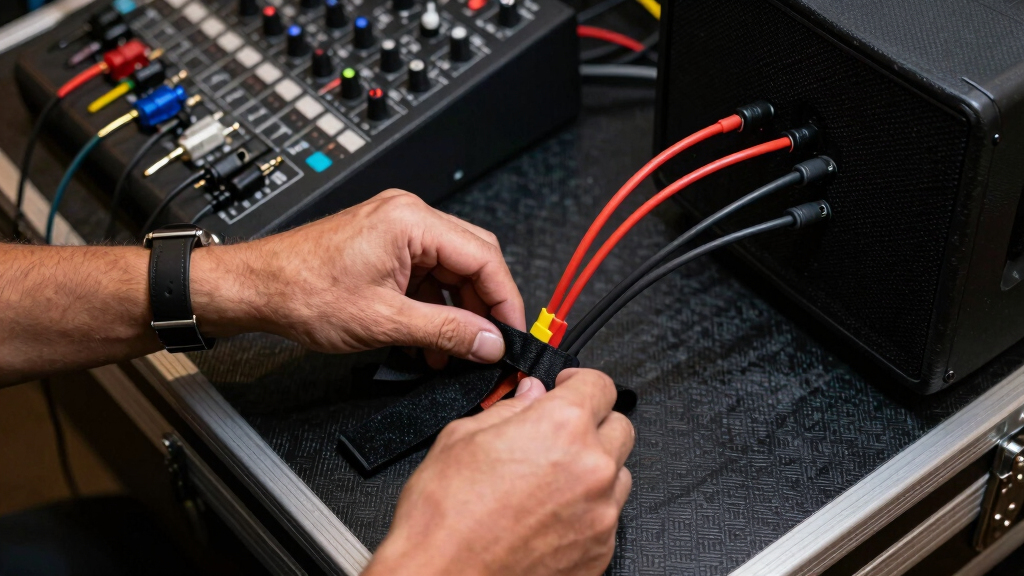
Invest in Velcro ties for flexible, safe, and reusably secure cable bundles.
Secure cables with ramps, tape, or reels to eliminate trip hazards and protect your gear.
The Secret to No-Tangle Cables: Master the Over-Under Coil
The over-under coiling method is the gold standard for mobile DJs. It’s not just about neatness; it significantly impacts cable longevity and setup efficiency. By properly coiling cables, you reduce internal stresses that can cause conductor breaks or insulation damage over time. This is crucial because damaged cables can lead to intermittent sound issues, signal loss, or complete failure during a gig, which can be embarrassing and costly. Additionally, tangled cables slow down your setup and tear-down, wasting valuable time and increasing the risk of damage from pulling or twisting. The tradeoff involves a slight learning curve — initially, it takes more focus to master the technique — but once you develop the muscle memory, it becomes second nature. This saves you time, reduces replacement costs, and ensures your cables perform reliably over many gigs.
Follow this process:
- Hold both ends of the cable and create loops about 3-4 feet long.
- For the first coil, wrap the cable in the traditional way — the ‘over’ loop.
- For the next coil, reverse the wrapping direction — the ‘under’ loop.
- Alternate between over and under for each coil.
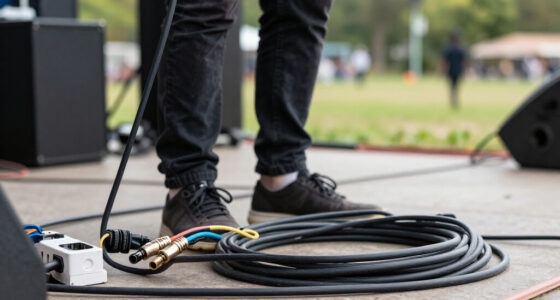
This technique keeps cables smooth and ready for quick deployment, especially after multiple gigs. A typical 25-foot XLR or RCA can be coiled in under a minute, ready to store or deploy without tangles. Properly coiled cables last longer, maintain their signal integrity, and are less prone to internal damage caused by twisting or kinking, which are common pitfalls with improper coiling.
As an affiliate, we earn on qualifying purchases.
How to Keep Cables Organized in Your Gear Bag or Case
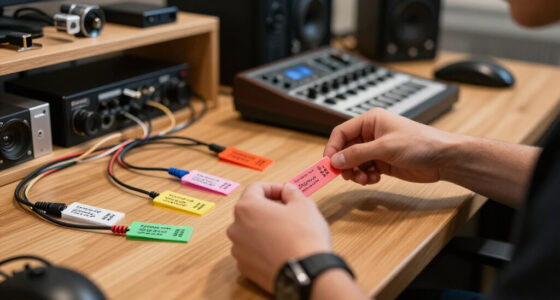
Think of your gig bag as a well-organized toolbox. Use dedicated compartments, color-coded labels, or Velcro straps to separate cables by type and length. This isn’t just about neatness; it directly affects your efficiency and the longevity of your gear. When cables are stored haphazardly, they’re more prone to kinks, internal conductor damage, or accidental pulls that weaken connections. Proper organization minimizes unnecessary handling, which reduces wear and tear on connectors and insulation, extending the lifespan of your cables. Labeling both ends of each cable with colored tape or heat-shrink labels allows for rapid identification during live troubleshooting. This can be a game-changer — quickly swapping out a faulty cable or rerouting signals without wasting time looking for the right one. Using cable reels or snakes for multi-channel runs not only speeds setup but also keeps cables neatly contained, reducing the risk of tangling or damage during transport. The key is creating a system that promotes quick access, minimizes damage, and streamlines your workflow, so your setup is reliable and professional every time.
Remember, the goal isn’t just tidiness but creating a system that promotes quick access, reduces damage, and streamlines your workflow, which ultimately means less stress during gigs and more confidence in your setup.
Velcro cable ties for audio cables
As an affiliate, we earn on qualifying purchases.
As an affiliate, we earn on qualifying purchases.
Comparison Table: Velcro Ties vs. Zip Ties — Which Protects Your Cables Better?
| Feature | Velcro Ties | Zip Ties |
|---|---|---|
| Damage risk | Low — gentle on cables, reducing pinching and cracking. Over-tightening is less likely, preserving cable insulation and conductors, which is crucial for maintaining signal integrity and preventing failures. They allow for adjustable tension, so you can secure cables without risking damage. | High — excessive tightening can pinch or crack cables, especially if overused. This damage can lead to internal conductor breaks, causing intermittent or complete signal loss. The rigidity of zip ties can also stress cable connectors over time, especially if used excessively or overtightened. |
| Reusability | Yes — reusable and adjustable, allowing for flexible configurations and quick changes during setup or teardown. This reduces waste and ongoing costs, making them eco-friendly and economical for frequent use. | No — single-use, often discarded after use, which can lead to increased waste and repeated costs. Once tightened, they are difficult to adjust, which may cause over-tightening or difficulty in reconfiguring cables, leading to potential damage or improper securing. |
| Ease of use | Simple — quick to tighten and loosen without tools, making adjustments during setup or tear-down straightforward and safe. They can be easily repositioned as needed, offering flexibility during setup. | Fast — can be applied quickly but less forgiving to adjustments once tight, potentially causing damage if over-tightened or if re-adjustments are needed. They require cutting to remove, which can risk damaging cables if not careful. |
| Durability | Long-lasting, gentle grip that can be reused multiple times without degrading. This makes them ideal for frequent setups, reducing costs and environmental impact. They maintain their grip over many cycles if not exposed to extreme conditions. | Breaks or weakens over time, especially if subjected to repeated tightening or harsh conditions. They may become brittle or lose grip, compromising cable safety and organization, and often need replacement after a few uses. |
As an affiliate, we earn on qualifying purchases.
Frequently Asked Questions
How do I coil cables properly so they don’t tangle?
Use the over-under method: create loops, alternate wrapping directions, and avoid wrapping around your elbow. It keeps cables smooth, prevents internal twists, and speeds up setup and teardown.What length cables should I carry as a mobile DJ?
Bring a variety of lengths — typically 10, 25, and 50 feet. Shorter cables are perfect for close setups, while longer ones cover distance without excess slack. Standard XLRs in 25-foot and 50-foot are versatile staples.Should I use XLR or RCA for my speakers?
Use XLR for most professional setups because it’s balanced, reducing noise over long distances. RCA is unbalanced and best for short runs or consumer-grade gear, but avoid long RCA runs to prevent hum.How do I stop hum or buzz in my setup?
Separate power and audio cables, cross at 90 degrees if they must intersect, and consider using DI boxes or ground lifts to eliminate ground loops. Proper grounding and shielding are key.What cables should I always carry spares of?
Keep spare XLRs, RCA adapters, IEC power cords, and a DI box. These are your safety nets for unexpected failures or damage during gigs.cable management reel for audio cables
As an affiliate, we earn on qualifying purchases.
As an affiliate, we earn on qualifying purchases.
Conclusion
Great cable management isn’t about adding complexity — it’s about saving time, avoiding disasters, and looking professional. Spend a few minutes on these tips, and you’ll set yourself apart from the chaos. Your rig will run smoother, and your clients will notice the difference. After all, a tidy setup is a confident setup.Fall yard work Picks
leaf blowers
As an affiliate, we earn on qualifying purchases.