TL;DR
Play games included with Prime
Start a Prime free trial and play with Amazon Luna on your devices.
Start playingAs an affiliate, we earn on qualifying purchases.
Adapting your DJ gear for different venue sizes involves choosing the right speakers, gear, and layout. Small venues need compact setups, while large spaces require more powerful, scalable systems. Planning ahead makes every gig smoother.
What’s the best way to pick speakers for any venue size?
Speakers are your most vital gear. For small venues, compact powered monitors or small PA speakers—like the JBL EON 615, which measures 15″ and weighs just 29 lbs—offer clarity without clutter. Choosing the right size and power rating ensures your sound is clear and balanced without overwhelming the space. For medium spaces, consider a larger PA system with subwoofers, such as the QSC K12.2, which delivers 2000W and spreads sound evenly. These systems provide the necessary volume and coverage to fill bigger rooms without distortion. Large venues demand line array systems or multiple speaker clusters—think Bose F1 Model 812 or similar—covering wide areas with crisp sound. These are designed to project sound over long distances, but they also require more setup and calibration to avoid muddiness or dead zones.
**Quick tip:** Match your speaker wattage and coverage to your audience size. A 500-watt speaker might suit 50 people, but a 3000-watt line array can handle 300+ with ease. The key is understanding that more power and coverage provide greater flexibility but also come with increased complexity and cost. Properly balancing these factors ensures your sound is neither too weak nor overwhelming, which directly impacts audience engagement and overall performance quality.
compact powered PA speakers for small venues
As an affiliate, we earn on qualifying purchases.
As an affiliate, we earn on qualifying purchases.
How to modify your gear and layout for small, medium, and large venues
Adjusting your gear involves more than just size. Here’s a quick step-by-step with deeper understanding of why each step matters:
- Identify the venue size: Is it a cozy lounge or a 1000-capacity hall? Recognizing the venue size helps determine the necessary sound pressure levels and coverage, preventing underwhelming sound or excessive volume that can damage hearing or annoy patrons.
- Pick appropriate gear: Use lightweight, portable gear for small spaces to ensure quick setup and teardown, which is critical for mobile DJs. For bigger venues, scalable systems like line arrays or multiple speakers provide the necessary coverage and volume, but they also demand more setup time and technical know-how. The tradeoff is between simplicity and coverage—knowing when to switch gears ensures your performance isn’t compromised.
- Plan your stage layout: Keep your equipment accessible and audience-focused. Small gigs benefit from minimal stage clutter, which enhances mobility and quick adjustments. Large gigs often require dedicated DJ booths or elevated platforms to maximize sound projection and visibility. Proper staging also minimizes trip hazards and allows for better crowd engagement, which is crucial for maintaining energy and ensuring safety.
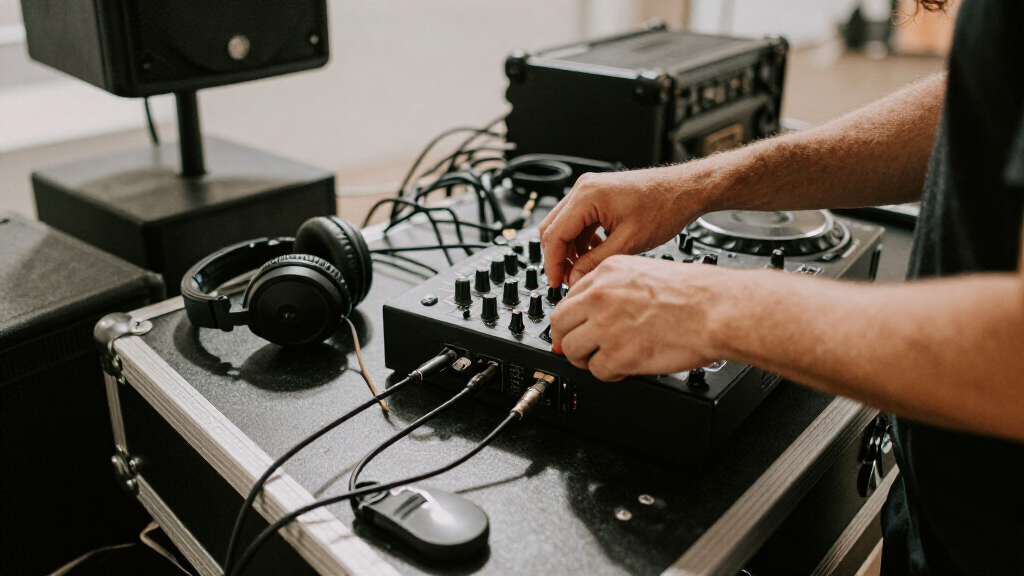
For example, at a small house party, a compact controller like the Pioneer DDJ-SB3 paired with a pair of JBL EON 610s makes setup fast and sound great, emphasizing portability and ease of use. At a festival, you might deploy a line array system with multiple speakers, external mixers, and a dedicated sound engineer—this setup offers scalability and high-quality sound but requires more planning and resources. Knowing the tradeoffs between simplicity and coverage helps you choose the right gear for each situation, ensuring consistent performance regardless of venue size.
large line array sound system for DJ
As an affiliate, we earn on qualifying purchases.
As an affiliate, we earn on qualifying purchases.
DJ monitor speakers for medium venues
As an affiliate, we earn on qualifying purchases.
As an affiliate, we earn on qualifying purchases.
As an affiliate, we earn on qualifying purchases.
Fall yard work Picks
leaf blowers
As an affiliate, we earn on qualifying purchases.