TL;DR
Get ready for Prime Big Deal Days — try Prime free
Exclusive member deals on October 6–7, plus fast free delivery. Cancel anytime.
Start your free trialAs an affiliate, we earn on qualifying purchases.
Choosing the right portable PA for outdoor markets means prioritizing battery life, portability, and wide sound coverage. Look for units with 6+ hours of runtime, lightweight design, and weather-resistant features for best results.
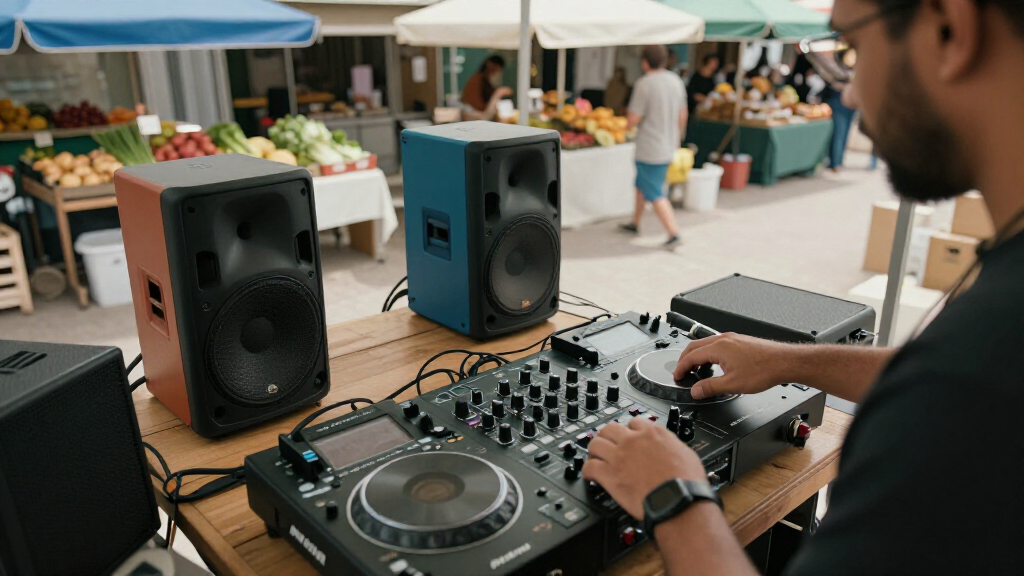
Imagine setting up your DJ booth at an outdoor market—no power outlet in sight, the sun beating down, and a crowd eager for music. Your gear has to be lightweight, reliable, and loud enough to fill the space, all while lasting through a long day. That’s where the best portable PA systems come in, designed specifically for these challenges.
Choosing the right system isn’t about the biggest wattage or the flashiest features. It’s about matching your needs—battery life, portability, sound dispersion, and weather resilience—to what you do. This guide breaks down what matters most and points you toward systems that keep your setup simple and your sound clear.
Prioritize battery life—aim for 6–8 hours real-world runtime at gig volume.
Choose lightweight, compact systems under 25 pounds for solo setup ease.
Focus on wide dispersion coverage over raw wattage to fill outdoor spaces.
Ensure your PA has reliable wired connections and a good built-in mixer.
Protect your gear with weather-resistant covers or select IP-rated units for rain.
Best Portable PA for DJ Hosts at Outdoor Markets
No power outlet in sight, sun beating down, a crowd waiting for music. The right portable PA isn’t about the biggest wattage — it’s about battery life, solo portability, wide dispersion, and weather resilience matched to a full day in open air.
“Most battery-powered PAs deliver only about half their claimed runtime at gig volume — plan for 5–8 hours of actual use.”
Six buying priorities, ranked by the field
Choosing a system isn’t about flashy features. Match these six criteria to how you actually work a market — solo, outdoors, all day.
Battery Life First
Aim for 6–8 hours of real-world runtime, not spec-sheet numbers. Swappable packs — like Soundboks’ Batteryboks or JBL’s replaceable batteries — extend your day past any single charge.
Solo Portability
Under 25 pounds is the sweet spot — think backpack, not workout. Wheels, telescoping handles, and compact bodies matter when it’s multiple trips from car to stall.
Dispersion Over Wattage
Open air has no walls to reinforce sound. Wide horizontal dispersion fills a stall and reach walk-bys at moderate volume — without distortion or listener fatigue.
Inputs & Built-in Mixing
Minimum kit: two mic/line channels, Bluetooth or aux, EQ, reverb, and ducking — priority mode automatically dips the music when you speak. No extra mixer to haul.
Weather Resilience
Markets run rain or shine, and most PAs are not weatherproof. Look for IP-rated units like the Everse 8 (IP43), or budget for covers and careful placement.
Expandability
Stereo linking / TWS lets two smaller speakers create a wider, more even field than one heavy box — and your rig grows as your gigs do.
The field-tested shortlist
Five systems that keep showing up in this niche — compared on the specs that decide a market day, not a spec-sheet beauty contest.
| System | Weight | Claimed Battery | @ Gig Volume | Mixer / Ducking | Weather Rating | Best For |
|---|---|---|---|---|---|---|
| JBL EON One CompactSwappable battery | ~18 lbs | 12 h | 5–8 h | ✓ 4-ch + ducking | ✗ none | All-round pick |
| Bose S1 Pro+Wireless mic ecosystem | ~15 lbs | 11 h | 5–7 h | ~ app control | ✗ none | Ultra-portable |
| EV Everse 8Purpose-built for outdoors | ~17 lbs | 12 h | 5–7 h | ✓ mixer + ducking | ✓ IP43 | Rain-or-shine |
| Mackie Thump GOBackpack-sized 8″ box | ~12 lbs | 12 h | 5–6 h | ~ basic 2-ch | ✗ none | Budget entry |
| Soundboks 4126 dB claimed peak | ~35 lbs | 40 h | 6–10 h, hot-swap | ✗ no ducking | ✗ none | Maximum loudness |
✓ yes · ✗ no · ~ partial / via app | Gig-volume figures are realistic estimates, not manufacturer claims.
Spec-sheet battery vs. market reality
Manufacturer runtimes are measured at moderate listening levels. At the volume a market crowd needs, expect roughly half — then plan your day around that number.
Hours of runtime, per full charge
The $400–700 tier is where battery, mixer, and dispersion converge for solo market work — entry units cut mixing features, premium buys volume you rarely need.
A market-day setup that never drops
Five steps from car to crowd — built around the failure points that actually kill outdoor sets.
Load In
One trip: speaker, cable kit, cover. Under 25 lbs keeps setup a warm-up, not a workout.
Position
Elevate the speaker and aim it across the stall — wide dispersion beats raw volume outdoors.
Wire Up
Run the main feed over 3.5mm, XLR, or RCA. Crowded RF makes Bluetooth shaky — keep a spare cable.
Ducking On
Enable priority mode so announcements automatically dip the music — polished, no fader riding.
Cover Ready
Keep a weatherproof cover or tarp within arm’s reach. A sudden shower shouldn’t end the day.
From your device to the whole aisle
Every link in the chain is a potential dropout. This is the path your sound travels — and where to keep it reliable.
Use Bluetooth for setup and walk-in music, then switch to a wired connection for the main set. Markets are crowded RF environments — phones and card readers cause dropouts. Carry a backup cable, always.
How to Pick a Portable PA That Actually Lasts All Day
The most crucial factor for outdoor market DJ hosts? Battery life. You need a system that can run 6–12 hours without stopping, even at high volume. Look for units with battery specs that match real-world conditions—manufacturer claims often overstate runtime at moderate volume, but in practice, expect about half that at gig volume.
For example, the JBL EON One Compact boasts a 12-hour battery, but that’s at low volume. At full blast, expect around 5–8 hours. Swappable batteries can extend your day, letting you switch out power packs during a break. Always check whether the system’s runtime aligns with your event length.
Why does this matter? Because misjudging battery life can leave you in the middle of a set with dead gear, disrupting your flow and frustrating your audience. Understanding the real-world implications helps you choose a system that truly supports a full day of outdoor performance, avoiding surprises and ensuring your music keeps playing from start to finish.
As an affiliate, we earn on qualifying purchases.
Making Portability Count: How Light and Easy to Carry Should Your PA Be?
Portability isn’t just about weight; it’s about how easily you can load, carry, and set up your system. For solo DJs, a system under 25 pounds is ideal—think of it as a manageable backpack or a small rolling suitcase. Systems weighing over 45 pounds can turn setup into a full workout.
Take the Mackie Thump GO—just 8 inches tall, 12 pounds, and fits in a regular backpack. Or the Yamaha Stagepas 200BTR with its slim, columnar design. Wheels, telescoping handles, and compact form factors make all the difference when you’re making multiple trips from your car to the market stall.
Why does this matter? Because ease of transport directly impacts how quickly and efficiently you can set up and tear down. Heavy or awkward systems can lead to fatigue before your set starts, reducing your energy and focus. The tradeoff is often between size and power; smaller units may have less output, so balancing portability with sound needs is key to staying effective and stress-free during outdoor gigs.
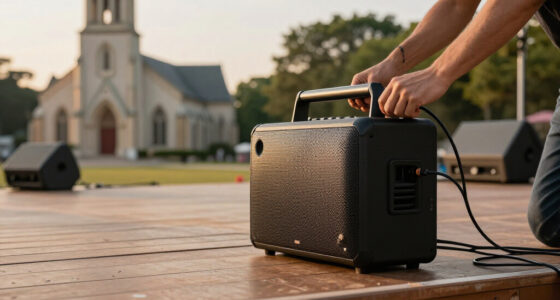
battery-powered outdoor PA speaker
As an affiliate, we earn on qualifying purchases.
As an affiliate, we earn on qualifying purchases.
Why Sound Coverage and Dispersion Matter More Than Power
In open-air markets, sound dissipates quickly—your 1000W indoor system might struggle outdoors. Instead, focus on coverage. A speaker with wide horizontal dispersion spreads your sound evenly across the stall and nearby walk-bys. Systems like the JBL EON One Compact or Electro-Voice Everse 8 excel here, offering 8–10 inch drivers with broad coverage.
Imagine a system that fills a 20×20 foot area without needing to turn the volume up to max. That’s the sweet spot—loud enough for clarity, wide enough to reach everyone, without distortion or excessive volume. Why is this important? Because increasing volume doesn’t always mean better coverage; it can lead to distortion and fatigue for your audience. Choosing systems with broad dispersion ensures your sound reaches everyone clearly, making your performance more professional and enjoyable. It’s a tradeoff worth considering—better coverage with moderate volume creates a more natural, pleasant listening experience in outdoor environments.
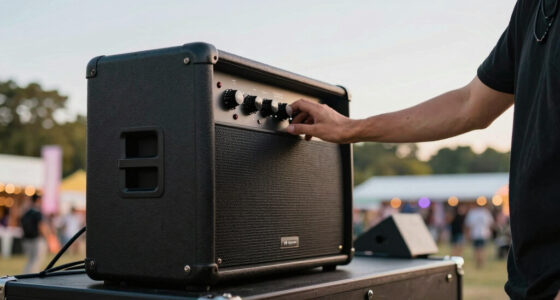
weather-resistant portable PA for events
As an affiliate, we earn on qualifying purchases.
As an affiliate, we earn on qualifying purchases.
Inputs and Features Every DJ Needs for Outdoor Markets
Your portable PA should have at least two mic/line inputs for announcements and microphones. A Bluetooth or auxiliary input is essential for playing music from your device. Look for built-in EQ, reverb, and a priority mode—so your voice can automatically dip the music when you speak.
For example, the JBL EON One Compact offers a 4-channel mixer with Bluetooth, EQ, and ducking. The Bose S1 Pro+ adds wireless mic options and app control. These features help you stay flexible and professional without hauling extra gear.
Why do these features matter? Because they enable smoother transitions, clearer announcements, and a more polished sound. A built-in mixer reduces setup complexity and space, allowing you to quickly adapt to changing needs during your outdoor event. The right features can elevate your performance, making you look more prepared and professional while simplifying your workflow.
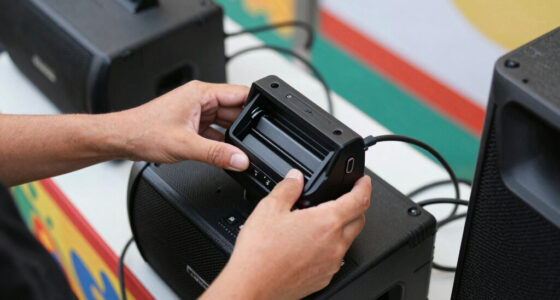
lightweight outdoor PA system with long battery life
As an affiliate, we earn on qualifying purchases.
As an affiliate, we earn on qualifying purchases.
Weather Resistance: Can Your PA Handle Rain and Wind?
Many portable PAs are not fully weatherproof, but some offer water resistance or weathered controls. The Electro-Voice Everse 8, for example, features an IP43 rating, making it better suited for outdoor use in light rain or wind. But even weather-rated systems need covers and careful handling.
Imagine a sudden shower—you don’t want your gear to turn into a paperweight. Protect your system with a weatherproof cover or a plastic tarp, and avoid setting up in exposed wind zones if possible. The tradeoff here is between portability and protection—more weather-resistant units tend to be bulkier or more expensive, so weigh your needs based on typical weather conditions and how often you’ll be outdoors. Being prepared with proper covers and setup choices can prevent costly damage and ensure your equipment stays functional across different outdoor scenarios.
Bluetooth and Wired Connections: Which Is More Reliable?
Bluetooth streaming is convenient but can be shaky in crowded RF environments like outdoor markets. Dropouts happen, especially when multiple phones and card readers are nearby. Wired connections—via 3.5mm, XLR, or RCA—offer rock-solid reliability.
Pro tip: Use Bluetooth for setup and background music, but switch to wired for the main act or announcements. Carry a backup cable in your kit, just in case. Why? Because stable sound is crucial for professional performances—any dropout or interference can disrupt your flow and diminish audience engagement. Wired connections eliminate this risk, providing a dependable link between your device and your speaker, especially in busy outdoor environments where RF interference is common.
Can You Link Two Speakers for Wider Sound and Better Coverage?
Yes. Many portable PAs support stereo linking or TWS (True Wireless Stereo). For outdoor markets, linking two smaller speakers can create a wider, more even sound field without the weight of a single large unit. Check if your system supports Bluetooth stereo pairing or dedicated link ports.
For example, the JBL EON One Compact can be paired with a second unit, doubling your coverage area and giving your sound a more immersive quality. This setup is perfect for larger stalls or if you want to broadcast to a larger crowd. Why does this matter? Because a single small speaker might not provide enough coverage, especially in windy or open spaces. Linking two units not only expands coverage but also provides a more balanced stereo image, making your sound more natural and engaging across the entire market area. The tradeoff is added complexity and cost, but for serious outdoor setups, the benefits often outweigh these considerations.
Do You Need a Separate Mixer, or Is the Built-in Enough?
Most modern portable PAs include a built-in mixer with at least two channels, EQ, and reverb. For outdoor markets, this is typically enough, especially if you’re only connecting a mic and your phone or tablet. If you need multiple mics or instruments, look for a system with more channels or an auxiliary input.
Imagine plugging in your mic, Bluetooth device, and a backup music source—all at once. The right built-in mixer can save space and money, making setup easier for solo DJs. Why is this important? Because a flexible mixer allows you to adapt to various scenarios—whether you’re making announcements, playing background music, or managing multiple microphones. A good integrated mixer reduces the need for external gear, streamlining your setup and minimizing points of failure, which is crucial when you’re out in the field with limited time and space.
Frequently Asked Questions
How much wattage do I really need for outdoor markets?
For outdoor markets, aim for at least 500W peak power—more if you expect larger crowds or want to fill a wide space. Remember, outdoor sound dissipates quickly, so higher wattage helps reach everyone clearly.How long does the battery last at loud volume?
Most portable PAs claim 10–12 hours, but expect about half that at full volume—around 5–8 hours. Always test your setup at gig volume beforehand to plan your day.Can I run it plugged in and on battery interchangeably?
Yes. Many units support both AC and battery power, letting you switch seamlessly. Using AC can extend your total operational time, but always have fresh batteries or backup power on hand.Is Bluetooth reliable enough for live DJ use?
Bluetooth works well for casual background music, but it can drop out in crowded markets. For live announcements or critical sound, wired connections are more dependable.Can I link two speakers for better coverage?
Absolutely. Many portable systems support stereo pairing or TWS, doubling your sound coverage without adding weight. It’s a smart move for larger stalls or to reach more of the crowd.Conclusion
The right portable PA turns outdoor markets from a sound challenge into an opportunity. Think light, long-lasting, and broad—then add a touch of weather resilience. Your perfect setup isn’t just about loudness; it’s about clarity, ease, and reliability.
Next time you pack the car for a market day, remember: a smart choice in gear makes all the difference between a good gig and a great one. Keep your sound simple, your batteries charged, and your setup ready for anything.
Fall Picks
fall essentials
As an affiliate, we earn on qualifying purchases.