
TL;DR
Get ready for Prime Big Deal Days — try Prime free
Exclusive member deals on October 6–7, plus fast free delivery. Cancel anytime.
Start your free trialAs an affiliate, we earn on qualifying purchases.
Proper labeling of cables and accessories makes troubleshooting faster and reduces mistakes. Use durable materials, clear fonts, and consistent standards, and consider tech like QR codes for smarter asset management.
Imagine trying to fix a tangled mess of cables at a gig, only to spend 15 minutes deciphering which is which. Proper label marking isn’t just about neatness — it’s about clarity, safety, and saving time. When you know exactly what each cable does, setup becomes smoother, issues get fixed faster, and you avoid costly mistakes.
In this guide, you’ll learn how to choose the right labels, where to place them, and how to keep them lasting through tough gigs. We’ll cover everything from traditional techniques to the latest tech trends so you can keep your setup organized and professional.
Use high-contrast, weather-resistant labels for outdoor gigs.
Standardize your labeling format and color scheme for consistency.
Place labels at both ends of the cable for quick ID from any angle.
Invest in durable tools like thermal transfer printers or heat shrink tubing.
Explore RFID and smart labels for advanced asset management.
How to Pick the Right Labels for Every Job
Choosing the right label starts with understanding your environment. Are you outdoors? Expect rain, sun, or heat? Indoors? Humidity is less of a concern. For outdoor gigs, look for labels made from polyester or vinyl with UV and waterproof coatings. These materials aren’t just weather-resistant—they prevent the labels from fading, peeling, or cracking under harsh conditions, which is critical for maintaining clarity over time. For indoor use, paper labels may suffice temporarily, but even then, choosing a durable paper with a protective coating can extend their lifespan.
Use labels that are at least 1 inch (25mm) wide for readability. For example, a 1.5-inch (38mm) vinyl label with white text on a black background is easy to read even from a distance. Keep font size around 10-12 points, and choose simple, bold fonts like Arial or Helvetica. The clarity of font and size directly affects quick identification, especially in low-light or crowded environments. Smaller fonts may save space but can lead to misreads, causing delays or errors during setup or troubleshooting.
For high-voltage or specialized cables, include info like voltage or circuit number. A clear example: a power cable marked ‘250V’ in bright red ink on a durable label helps prevent accidental misuse, which could lead to equipment damage or safety hazards. Including this info isn’t just about compliance; it’s about preventing costly mistakes and ensuring operator safety. The tradeoff is that adding too much info can clutter the label, so prioritize critical data for quick recognition.
As an affiliate, we earn on qualifying purchases.
Standardize Your Labels to Avoid Confusion
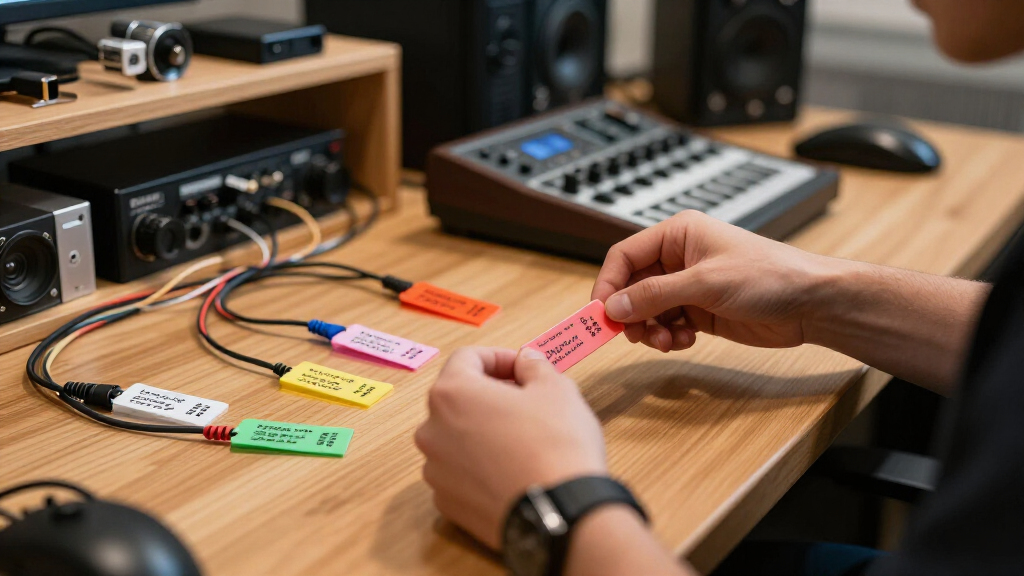
Consistency is your best friend when labeling. Use the same format across all cables: start with the cable type (e.g., ‘XLR’), followed by its function (‘Main Out’), and a unique identifier if needed. For example, ‘XLR-Main-01’.
Stick to a color code if possible: red for power, blue for audio, yellow for data. This visual shorthand speeds up identification on busy stages and reduces cognitive load, allowing technicians to quickly locate and differentiate cables without reading every label. The psychological benefit is significant — it minimizes mistakes caused by misreading or overlooking labels during critical moments.
Follow industry standards like IEC or ANSI where applicable. For instance, using standardized abbreviations helps everyone understand the labels, whether you’re working with a tech team or a new crew member. These standards promote universal comprehension, which is crucial in multi-vendor environments or when multiple teams share the same equipment. The tradeoff is that strict adherence might limit creativity or customization, but the clarity gained outweighs the potential downsides, especially in professional settings.
thermal transfer printer for labels
As an affiliate, we earn on qualifying purchases.
As an affiliate, we earn on qualifying purchases.
Placement and Visibility Tips for Labels That Last
Proper placement makes all the difference. Attach labels at both ends of the cable — near connectors or plugs — so you can identify it quickly from either side. Avoid wrapping labels around the cable; instead, stick them flat on the surface. Flat labels are less likely to peel or catch on other gear, which prolongs their usability. Position labels where they are visible and accessible, like at the top or side of a cable bundle, so they can be read without untangling or repositioning the cable.
Keep labels away from areas prone to abrasion, heat, or chemical exposure, which can cause peeling or fading. For example, near connectors or heat-generating equipment, labels are more likely to degrade prematurely. Consider protective overlays or using heat shrink tubing to shield labels from environmental damage. In practice, placing labels in these strategic spots reduces the need for frequent replacements, saving time and ensuring consistent readability during gigs.
For instance, at a DJ gig, a label on the power cable near the mixer saves time when troubleshooting or re-routing during a set, as it provides immediate visual confirmation without the need for extensive searching or guessing.
high-contrast waterproof cable labels
As an affiliate, we earn on qualifying purchases.
As an affiliate, we earn on qualifying purchases.
Tools and Methods for High-Quality Cable Labeling
Choose printing methods that stand up to your gig’s conditions. Thermal transfer printers like the Brother P-touch series produce crisp, long-lasting labels with excellent adhesion and resistance to smudging or fading. For quick labeling, hand-held label makers are handy, but they may lack the durability needed for frequent setup and teardown. When choosing tools, consider the environment: for outdoor or rugged use, invest in printers that can produce weatherproof, chemical-resistant labels.
Heat shrink tubing with engraved or printed labels offers a rugged solution for cables exposed to the elements. The process involves sliding the tubing over the cable and shrinking it with a heat gun, creating a waterproof, abrasion-resistant label integrated into the cable. This method is especially useful for long-term installations or outdoor events, where labels must withstand harsh conditions without peeling or fading.
QR codes and barcodes are gaining popularity for digital tracking. They allow quick access to detailed info about the cable via smartphone scans, streamlining inventory management and troubleshooting. However, they depend on electronic devices and may be less effective in environments with poor lighting or interference. Combining traditional durable labels with digital methods provides a comprehensive system that maximizes reliability and information access.
As an affiliate, we earn on qualifying purchases.
Latest Tech in Cable Labeling: Smart Labels & RFID
Smart labels and RFID tags are changing the game in cable management. These labels store more info and can be read via mobile devices or RFID readers, allowing instant asset tracking and detailed diagnostics without unplugging or manually checking each cable. This tech is particularly valuable in large or complex setups, such as multi-day festivals or touring productions, where manual tracking becomes impractical. RFID tags can be integrated into labels or embedded directly into cables, providing a seamless, tamper-proof solution.
Advances in materials also mean labels are more resistant to UV, chemicals, and extreme temperatures. Combining these tech trends with traditional labels creates a robust, future-proof system that enhances efficiency, reduces human error, and simplifies inventory management. The tradeoff is higher initial cost and the need for compatible readers and software, but for large-scale or long-term operations, the ROI can be significant due to time saved and error reduction.
5 Common Pitfalls and How to Avoid Them
Ignoring durability is a mistake. Cheap paper labels peel after a few gigs, leading to lost or unreadable information. Always opt for weatherproof, high-quality materials like vinyl or polyester, which withstand environmental stressors and maintain legibility over multiple uses. Overloading labels with info makes them cluttered and unreadable, defeating their purpose. Keep it simple: include only essential details such as cable type, function, and a quick ID number. This ensures quick recognition and reduces cognitive overload during hectic setups.
Placing labels where they can fall off or get damaged — like near connectors, heat sources, or areas prone to abrasion — hampers quick ID and can lead to misidentification. Stick to accessible, protected spots, and consider additional reinforcement like heat shrink tubing for added durability. Finally, neglecting to update or replace labels as setups evolve causes confusion and inefficiency. Regularly review your labeling system, especially after major gigs or reconfigurations, to ensure all labels remain clear, accurate, and securely attached. This proactive approach prevents errors and maintains operational clarity.
Frequently Asked Questions
How long should cable labels last during a gig?
High-quality labels, especially made from vinyl or polyester with UV and waterproof coatings, can last several years even with frequent setup and teardown. For outdoor or rugged environments, expect at least 1-2 years before replacement is needed.What materials are best for outdoor or harsh environments?
Look for labels made from weatherproof materials like vinyl, polyester, or heat shrink tubing with UV and chemical resistance. These withstand moisture, sunlight, and temperature fluctuations without fading or peeling.Are there industry standards I should follow?
Yes. Standards like IEC, ANSI, and UL provide guidelines for labeling formats, symbols, and safety markings. Following these helps ensure readability, safety, and compliance across different setups.Can digital labels or QR codes replace traditional labels?
Digital labels, QR codes, and RFID tags are increasingly popular for managing large inventories. They provide quick access to detailed info but should complement, not replace, robust physical labels for fail-safe identification.How do I keep labels attached over time?
Use durable materials like heat shrink tubing or vinyl labels and attach them at accessible, protected spots. Regular inspections and replacements prevent labels from falling off or fading, especially after heavy use.Conclusion
Clean, clear, and consistent labeling turns chaos into clarity. Your setup becomes faster, safer, and more professional — every time you plug in.
Keep your labels durable, visible, and standardized. That’s the simple secret to smoother gigs and fewer headaches.
NFL season / tailgating Picks
team gear
As an affiliate, we earn on qualifying purchases.