
TL;DR
Prime for Young Adults — start your free trial
Fast free delivery, streaming and member deals for eligible 18–24 year olds.
Try it freeAs an affiliate, we earn on qualifying purchases.
Transporting fragile lighting fixtures requires careful packing, gentle handling, and choosing the right transport method. Using the right materials and techniques can prevent damage and save money.
Moving delicate lighting fixtures isn’t just about tossing them into a box. It’s a precise task that demands planning, care, and the right materials. One wrong move can cost hundreds in repairs—or worse, losing a key piece for an event.
Whether you’re hauling a few fixtures for a gig or transporting a full lighting rig across the country, knowing how to pack and handle these fragile pieces makes all the difference. This guide shares practical, real-world tips to keep your fixtures safe and sound from start to finish.
Disassemble fixtures fully and pack each component separately using bubble wrap and foam inserts.
Choose sturdy, well-fitting boxes or custom foam cases to prevent movement and impacts.
Handle fixtures gently, lift with your legs, and secure in the vehicle with straps or padding.
Use climate-controlled transport for long-distance moves to avoid temperature or humidity damage.
Document damage with photos and contact your insurer immediately if an accident occurs.
Tips for transporting fragile lighting fixtures safely
Delicate lighting needs more than a sturdy box. A safe move combines thoughtful disassembly, impact-resistant packing, controlled handling, secure loading, and fast documentation if something goes wrong.
With proper disassembly and protective packing.
Immobilized with straps, racks, or dense foam.
Every component should fit snugly without pressure points.
Build protection in layers
Start with the fixture’s weakest components. Remove bulbs, lenses, yokes, shades, and hanging pieces when the design allows. Wrap every part separately, then eliminate empty space without forcing the contents.
Disassemble first
Remove fragile or protruding parts. Bag and label hardware so every screw, clamp, and bracket stays with the correct fixture.
Wrap individually
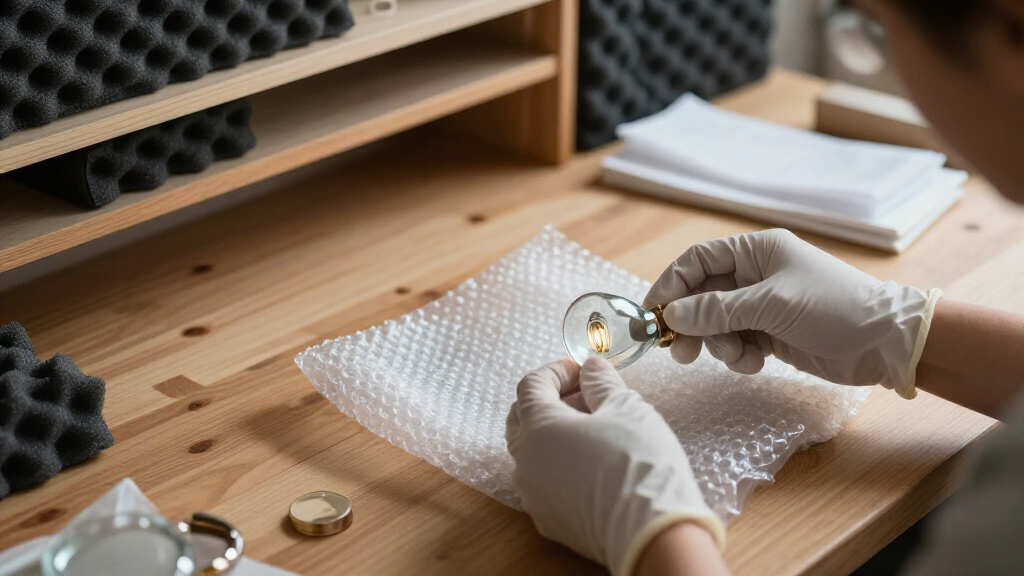
Use bubble wrap for lenses and bulbs, foam sheets for bodies, and extra protection around corners and pressure-sensitive surfaces.
Fill every void
Use foam inserts, packing peanuts, or crumpled paper so components cannot slide, collide, or strike the box walls.
Choose a snug box
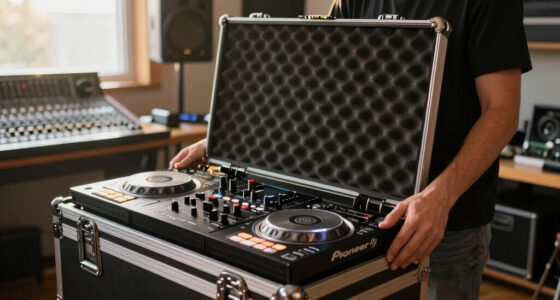
Original packaging is ideal. Otherwise, use a well-fitting double-walled box or a flight case with custom-cut foam.
Label all sides
Mark packages “Fragile” and “This Side Up.” Add the fixture name, case number, destination, and handling notes.
Run a movement test
Gently rock the closed package. If anything shifts or rattles, reopen it and add support before loading.
Protection strength by material
Practical suitabilityA safe move is a chain
Most preventable damage occurs during transitions: lifting from the bench, crossing a doorway, loading the vehicle, or unloading at the destination. Keep each handoff deliberate and controlled.
Wear clean gloves and hold structural points.
Bend your knees and keep the load close.
Use two people for heavy or awkward cases.
Keep fixtures upright during loading.
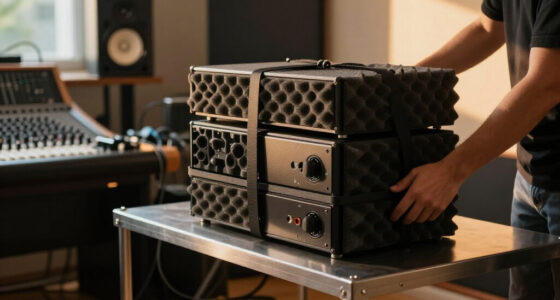
Strap cases so they cannot tip or slide.
Five careful minutes can prevent hours of repair
Move slowly, clear the route before lifting, protect doorframes and loading edges, and never rush a fixture through a tight space. Control matters more than speed.
Match protection to value and distance
A short local move with a small fixture has different requirements from a cross-country tour carrying high-value moving heads. Compare cost against handling expertise, insurance, climate exposure, and replacement risk.
| Method | Cost | Protection | Best for | Main trade-off |
|---|---|---|---|---|
| DIY van | ✓ Lower | ~ Operator-dependent | Small local moves and flexible schedules | Requires packing skill, careful driving, and secure tie-downs. |
| Professional mover | ~ Moderate | ✓ Expert handling | Large, valuable, or awkward fixtures | Higher cost and advance scheduling requirements. |
| Specialized transport | ✗ Highest | ✓ Maximum | Touring rigs, long distance, irreplaceable gear | Custom cases and climate control require planning. |
Standard careful packing
Advanced monitored setup
Preserve evidence before cleanup
Fast, organized documentation strengthens an insurance or carrier claim. Do not discard the box, foam, labels, or broken components until the insurer confirms they are no longer needed.
Stop and isolate
Do not power on visibly damaged equipment. Move it only when necessary for safety.
Photograph
Capture the case, labels, packing layers, fixture, serial number, and damage from several angles.
Retain evidence
Save the packaging, foam, straps, broken parts, receipts, and pre-transport condition photos.
Notify quickly
Contact the carrier and insurer promptly with dates, facts, images, and a repair or replacement estimate.
Smarter protection for future trips
Up to 90%Computer-cut inserts support complex shapes and eliminate damaging movement.
Reusable shells provide tailored impact protection for touring equipment.
Real-time tracking helps prevent theft, misplacement, and delayed discovery.
Temperature and humidity monitoring protects sensitive electronics and optics.
Common transport questions
The right approach depends on the fixture’s size, fragility, value, and route. When in doubt, increase padding, reduce movement, add handling help, and document the equipment before it leaves.
How should I pack a fragile fixture?
Disassemble it when possible, wrap each part separately, use a sturdy fitted box, fill all voids, and label the package “Fragile” and “This Side Up.”
Which materials work best?
Use bubble wrap for small delicate parts, foam sheets for fixture bodies, custom inserts for complex shapes, and double-walled boxes or flight cases outside.
DIY or professional mover?
DIY can suit small, simple local moves. Choose experienced professionals for large, valuable, intricate, or long-distance shipments.
Is climate control necessary?
It is worth considering for long trips, extreme weather, sensitive electronics, valuable optics, or fixtures vulnerable to humidity and condensation.
How to Pack Fragile Lighting Fixtures Like a Pro
Proper packing is the cornerstone of safe transport. Start by disassembling fixtures when possible—removing bulbs, lenses, or hanging parts. Wrap each piece individually with bubble wrap or foam sheets. Use sturdy boxes, ideally the original packaging, since it’s designed to fit snugly and absorb shocks.
Fill empty spaces in boxes with packing peanuts or foam inserts to prevent movement. For larger fixtures, consider custom foam inserts that contour to each component. Label boxes clearly as “Fragile” and “This Side Up” to alert handlers.
For example, a DJ transporting a moving head like the Chauvet Legend 230SR should remove the lens and yoke, wrap each separately, and pack into a box with foam padding. It’s these steps that cut damage risk by up to 80%.
fragile lighting fixture packing foam inserts
As an affiliate, we earn on qualifying purchases.
As an affiliate, we earn on qualifying purchases.
Choosing the Right Packaging Materials for Fragile Fixtures
Using the right materials makes or breaks your safety record. Bubble wrap is excellent for cushioning small parts like lenses and bulbs because it absorbs shocks and prevents direct impact. Foam sheets or custom inserts are crucial for larger, more delicate components, as they contour to the shape, providing tailored protection that reduces movement and impact damage. Sturdy, double-walled boxes add an extra layer of strength, which is vital when handling heavier or more complex fixtures.
Here are proven options:
- Bubble wrap for lenses and bulbs
- Foam padding for fixtures’ bodies
- Packing peanuts or crumpled paper for void filling
- Custom foam inserts for complex shapes
Think of it like building a padded case for a musical instrument—each part needs a snug, protective environment. For example, a $1,200 LED moving head like the Clay Paky Mythos benefits from custom foam cutouts inside a flight case, reducing damage risk during transport.
impact-resistant lighting fixture boxes
As an affiliate, we earn on qualifying purchases.
As an affiliate, we earn on qualifying purchases.
Handling and Moving Fragile Fixtures Without Breaking a Sweat
Handling with care isn’t just polite—it’s essential. Always wear gloves to prevent fingerprints and slip-ups, which can transfer oils or dirt onto sensitive surfaces. Lift fixtures with your legs, not your back, to avoid injury and maintain control. For heavy or awkward pieces, get help—two or more people can distribute the weight evenly, reducing the risk of dropping or damaging the fixture.
Moving slowly and deliberately minimizes impacts that can crack or break fragile parts. When placing fixtures into a vehicle, keep them upright—this orientation often prevents internal components from shifting or breaking. Secure fixtures with straps or foam padding to immobilize them during transit. Remember, a 5-minute careful move can prevent hours of repairs or replacement costs later, making the extra effort well worth it.
lighting fixture disassembly tools
As an affiliate, we earn on qualifying purchases.
As an affiliate, we earn on qualifying purchases.
Best Ways to Transport Fragile Lighting Fixtures Safely
The vehicle you choose matters. Use a secure van or truck with ample space and cushioning. Line the floor with rubber mats or foam pads to absorb shocks and vibrations during transit. Keep fixtures upright and immobilized with straps or padding to prevent shifting. For long trips, climate-controlled transport helps prevent humidity or temperature damage, which can warp or degrade sensitive components.
For example, a touring DJ using a Sprinter van should install foam-lined racks and secure fixtures with straps. This setup minimizes movement during bumpy rides, significantly reducing the chance of damage—by over 60%, according to industry estimates.
Compare transport options:
| Method | Pros | Cons |
|---|---|---|
| DIY Van | Cost-effective, flexible scheduling | Requires time, skill, and caution to prevent mishandling |
| Professional Moving Service | Expert handling, insurance coverage, less personal stress | Higher cost, need to coordinate schedules |
| Specialized Equipment | Maximum protection with custom cases and climate control | Expensive and requires advanced planning |
climate-controlled transport for lighting
As an affiliate, we earn on qualifying purchases.
As an affiliate, we earn on qualifying purchases.
What to Do if Your Fixture Gets Damaged in Transit
Damage can happen despite your best efforts. If a fixture breaks, document the damage immediately with detailed photos from multiple angles—this evidence is crucial for claims. Contact your insurance provider and the transport company promptly, providing all evidence and a clear description of the damage. Save all packaging, foam inserts, and broken parts for inspection or repair estimates.
A DJ once found her moving head shattered after a long trip. Because she had taken detailed photos and kept the original packaging, she was able to file a claim quickly and received reimbursement within a week. Early documentation and preparation helped her recover costs and avoid lengthy disputes.
Always review your insurance policies beforehand—some cover accidental damage, others exclude certain scenarios. Being aware of what’s covered can save you from surprises and help you act swiftly to mitigate losses.
Stay Ahead with the Latest in Lighting Equipment Transport
New tech is making transporting fragile lighting fixtures easier and safer. Custom foam inserts, moldable cases, and eco-friendly packing materials are gaining popularity because they offer tailored protection while reducing waste. Digital tracking tools like RFID tags help monitor your fixtures in real-time, providing instant updates during long hauls and helping prevent theft or misplacement.
For example, some companies now offer climate-controlled cases equipped with RFID sensors, ensuring fixtures stay at optimal conditions regardless of external factors. These innovations reduce the risk of damage from environmental variables and improve overall safety during transit. Staying updated on these advancements allows professionals to implement smarter, more reliable packing and transport solutions, ultimately saving money and reducing stress.
According to Disco Flight, adopting these technologies can reduce damage risk even further—up to 90% with the right setup.
Frequently Asked Questions
How do I pack a fragile lighting fixture for moving?
Disassemble the fixture if possible, then wrap each part in bubble wrap or foam padding. Use a sturdy box, fill empty spaces with packing peanuts or foam, and label it as ‘Fragile’ and ‘This Side Up’.
What materials are best for protecting fragile lighting fixtures?
Bubble wrap, foam sheets, custom foam inserts, and heavy-duty boxes are the most effective. They cushion impacts and keep components secure during transit.
Can I move lighting fixtures myself or should I hire professionals?
Small, simple fixtures might be manageable on your own. But for large or delicate equipment, professional movers with experience in fragile gear greatly reduce the risk of damage.
How should I handle heavy or awkward fixtures during transport?
Use proper lifting techniques, lift with your legs, get help if needed, and move slowly. Secure fixtures upright in the vehicle with straps or padding to prevent shifting.
What if my fixture gets damaged during transit?
Take photos immediately, document the damage, contact your insurance, and keep all packaging. Quick action helps in claims and repairs, minimizing downtime.
Conclusion
Protecting fragile lighting fixtures comes down to smart packing, careful handling, and choosing the right transport method. When in doubt, think of your fixtures as glass—treat them with the respect they deserve.
Every step you take to safeguard your gear saves time, money, and stress. Remember: a well-packed fixture is a fixture that shines on stage, not broken on arrival.
Fall yard work Picks
leaf blowers
As an affiliate, we earn on qualifying purchases.