TL;DR
Prime for Young Adults — start your free trial
Fast free delivery, streaming and member deals for eligible 18–24 year olds.
Try it freeAs an affiliate, we earn on qualifying purchases.
Securing gear properly in moving vehicles prevents dangerous shifts, damage, and legal penalties. Use the right straps, follow best practices, and inspect regularly to stay safe on the road.
Imagine this: you’re cruising down the highway, your gear perfectly packed. Suddenly, an abrupt stop sends a speaker flying into the dashboard. That chaos is entirely preventable. Every year, loose cargo leads to accidents, damages, and hefty fines.
In this guide, you’ll learn how to keep your gear anchored like a pro. Whether you’re hauling DJ equipment, fragile gear, or heavy cases, mastering these best practices can turn your vehicle into a fortress against shifting loads—and save you money, time, and stress.
Choose the right securing tools: ratchet straps, cargo nets, and load bars are essential depending on your load.
Always inspect and re-tighten your gear during long trips—every 50-100 miles is ideal.
Distribute weight evenly and secure fragile items with padding or cushioning.
Follow your local regulations on cargo securement to avoid fines and legal trouble.
Double-check tie-down points and use multiple securing methods during sharp turns or sudden stops.
Why Proper Securing Stops Dangerous Shifts
Securing gear isn’t just about avoiding fines; it’s about safety. During sudden stops or sharp turns, unsecured gear can become deadly projectiles. Think of your gear as a set of dominoes—once one shifts, everything else can fall apart.
Take, for example, a DJ driving to a gig. If their speakers aren’t strapped down, a sudden brake could send them flying into the dashboard or worse, into other drivers. Proper securing keeps everything in place, preventing injuries and costly accidents.
As an affiliate, we earn on qualifying purchases.
The Best Gear Securing Tools for Every Load
Choosing the right tools makes all the difference. Here’s a quick rundown of the most reliable options:
| Tool | Strengths | Best For |
|---|---|---|
| Ratchet Straps | High tension, easy to tighten, durable | Heavy gear, long trips |
| Cam Buckle Straps | Simpler, quicker to use, lighter | Medium loads, quick stops |
| Cargo Nets | Cover large areas, flexible | Loose items, multiple small pieces |
| Load Bars & Rails | Stabilize large or heavy items | Upright or stacked gear |
For example, a DJ might use ratchet straps for heavy speakers and cargo nets for loose cables or smaller gear. Picking the right device depends on your load’s size, weight, and fragility.
As an affiliate, we earn on qualifying purchases.
Step-by-Step: How to Secure Gear for a Safe Trip
- Assess your load: Identify heavy, fragile, or loose items.
- Select appropriate securing devices: Use straps, nets, or load bars based on the cargo.
- Anchor everything to solid points: Use hooks, anchors, or vehicle tie-down points.
- Distribute weight evenly: Place heavier items low and centered.
- Tighten straps properly: Use ratchets or cam buckles until secure, avoiding over-tightening.
- Check and double-check: Walk around, shake items, and ensure nothing shifts.
- Inspect regularly: Especially during long trips or rough roads, stop and re-tighten if needed.
Imagine you’re packing a van for a wedding DJ gig. You place speakers low and center, strap them tightly with ratchets, and cover loose cables with a cargo net. Before hitting the highway, you give everything a firm shake—no movement. That’s how you keep gear safe and sound.
As an affiliate, we earn on qualifying purchases.
Legal Rules You Can’t Ignore When Securing Cargo
Every region has rules about how cargo should be secured. Failing to follow them can lead to fines or worse. For instance, in the US, the FMCSA recommends using at least four tie-downs for loads over 1,100 pounds.
In Europe, similar standards exist, emphasizing load balance and proper anchoring. Many local laws require visible warning signs if your load poses a hazard. Ignoring these can mean hefty penalties and insurance issues.
Pro tip: Always check your local regulations before hitting the road. It’s a small step that keeps your trip smooth and legal.
As an affiliate, we earn on qualifying purchases.
Inspection Routine: Keep Your Load Tight and Safe
Regular checks during your trip are a must. Every 50-100 miles, stop, walk around, and verify your securing points. Look for slack in straps, loose nets, or shifted cargo.
Imagine driving through a rainstorm or over rough terrain. Those conditions can loosen your securing devices fast. Staying vigilant prevents surprises and keeps your gear—and everyone else—safe.
For example, a mobile DJ who stops every hour on a long trip to re-tighten straps reports fewer gear shifts and zero accidents over a year of gigs.
Fragile vs. Heavy: How to Secure Different Types of Gear
Fragile items need cushioning and gentle restraint, while heavy gear demands sturdy anchors and low placement. Both require attention to detail.
For fragile gear like glass speakers or delicate cables, use padded straps or bubble wrap, and secure them to prevent movement. Heavy items, like large subwoofers, should be placed low and strapped tightly with ratchets to prevent tipping or sliding.
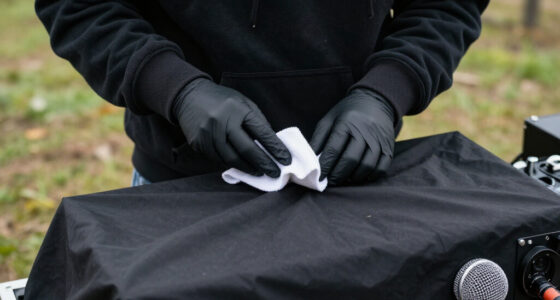
For example, a DJ securing a fragile mic stand with foam padding and a cargo net, while heavy amps sit on load bars with ratchet straps, keeps everything protected and stable.
Understanding these differences is crucial because improper securing of fragile items can lead to breakage, costly repairs, or dangerous projectiles if they shift unexpectedly. Conversely, neglecting heavy gear’s stability can cause tipping or sliding, risking damage and accidents. Both scenarios highlight the importance of tailored securing methods based on the item’s nature and weight.
Small Vehicles vs. Large Trucks: Securing Tips for Every Size
Securing gear varies depending on your vehicle’s size and cargo. Small cars need lighter straps and careful packing, while trucks require more robust methods.
In a small sedan, use adjustable cam straps and anchor points inside the trunk or rear seats. For trucks or vans, employ multiple ratchet straps, load bars, and cargo nets to cover larger areas and heavier loads. The key is understanding the load distribution and the vehicle’s capacity to hold it securely, which helps prevent shifts that could cause accidents or damage.
Imagine a DJ loading a van for a multi-day festival. They use load bars to stabilize stacked gear and multiple ratchets for heavy speakers. In contrast, a solo artist with a compact car might just strap gear down inside the trunk with a few adjustable straps and a cargo net. Recognizing these differences ensures your securing methods match your vehicle’s capabilities, minimizing risks during transit.
Preventing Shifts During Sharp Turns or Sudden Stops
The key to preventing shifts during sudden maneuvers: tighten everything thoroughly and use multiple securing points. Think of it as tying down a kite in a storm—more lines, better control.
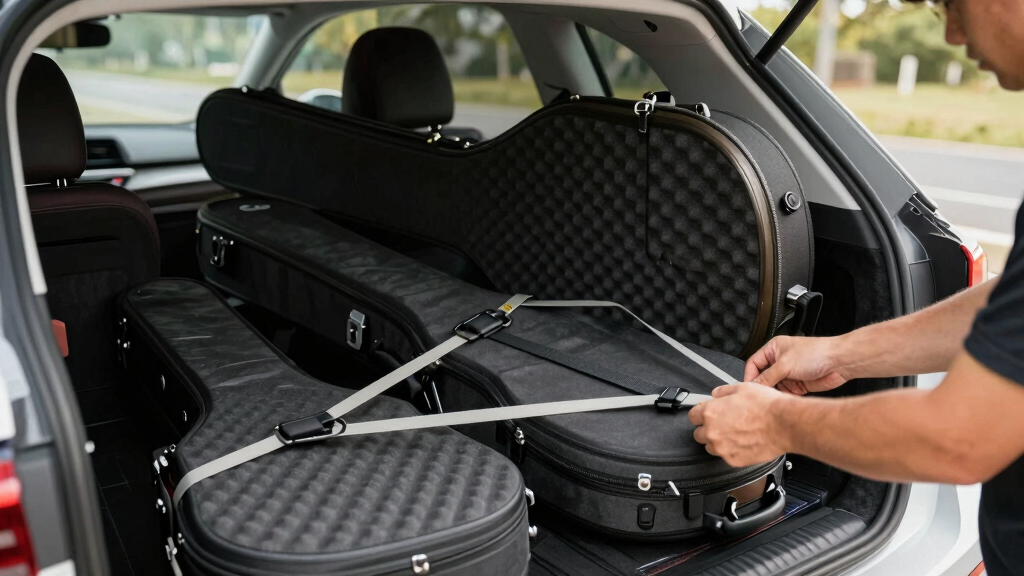
Use cross-strap patterns, double-check anchor points, and include additional tie-downs on top of primary ones. This layered approach creates redundancy, reducing the chance of a single failure causing a shift. For example, a DJ might add extra straps across a stack of speakers to prevent rolling or sliding during a quick lane change. Recognizing the importance of multiple securing points and proper tension helps maintain load stability, especially during aggressive driving maneuvers, ultimately preventing accidents caused by shifting cargo.
Pro tip: Keep some extra straps handy in case you need to reinforce your load mid-trip. It’s better to over-secure than risk a shift that could cause an accident.
What Happens If You Don’t Secure Your Gear Properly?
Improper securement can lead to fines, accidents, and damaged gear. You could face hefty penalties—up to $10,000 in some regions—and serious injury risks.
In 2018, a delivery truck’s improperly secured cargo shifted during a sharp turn, causing a crash that injured three people and resulted in a $7,500 fine. That incident illustrates how neglecting securing protocols can have real, costly consequences. The implications extend beyond fines: unsecured cargo can cause catastrophic accidents, injuries, and damage to other vehicles or infrastructure. Not securing your load properly compromises safety, increases liability, and can lead to legal actions. Prioritizing correct securing techniques isn’t just about following rules—it’s about protecting lives and avoiding preventable disasters.
Always prioritize safety over speed. Your gear and your safety depend on it.
Frequently Asked Questions
What are the most effective methods for securing fragile gear?
Use padded straps, bubble wrap, or foam padding to cushion fragile items. Secure them tightly to prevent movement, ideally anchoring to stable points in the vehicle. Adding extra padding reduces shock during sudden stops or bumps.
How often should I check my cargo during a long trip?
Inspect your load every 50-100 miles or whenever you stop for fuel or rest. Look for slack, shifted items, or loosened straps. Regular checks prevent surprises and ensure everything stays in place.
Are there specific techniques for heavy equipment?
Yes. Place heavy gear low and centered, secure with heavy-duty ratchet straps, and use load bars or anchor points designed for heavy loads. Distribute weight evenly to prevent tipping or rolling during turns or stops.
What are the legal consequences of not properly securing cargo?
Fines vary by region but can reach thousands of dollars. You risk liability for accidents, injuries, and damage. Proper securing isn’t just good practice—it’s a legal requirement.
How do I prevent cargo from shifting during sharp turns?
Use cross-strap patterns, add extra tie-downs, and ensure all securing devices are tight and properly anchored. Reinforce high-risk areas where shifting is most likely to occur.
Conclusion
Securing gear isn’t just a good idea—it’s a must. Think of it as building a shield around your equipment, so it stays put no matter how rough the road gets.
Next time you load up, remember: thorough, thoughtful securing saves you time, money, and potential injuries. Your gear—and your sanity—will thank you for it.
NFL season / tailgating Picks
team gear
As an affiliate, we earn on qualifying purchases.