
TL;DR
Play games included with Prime
Start a Prime free trial and play with Amazon Luna on your devices.
Start playingAs an affiliate, we earn on qualifying purchases.
The best DJ controllers for mobile DJs are lightweight, durable, and highly compatible with popular DJ software. Recent trends include wireless connectivity and integration with mobile devices, making setups faster and more flexible. Focus on size, build quality, and connectivity options to find your perfect match.
Imagine arriving at a venue, lights dimmed, crowd waiting. You pull out your DJ controller, and it feels like an extension of yourself—compact, ready, and simple to set up. That’s the beauty of choosing the right gear for mobile DJing. It’s not just about sound; it’s about portability, reliability, and quick deployment. Whether you’re spinning at a backyard party or a wedding, your controller needs to be a dependable companion.
This guide walks you through what makes a DJ controller ideal for mobile use, from size and durability to compatibility and features. Expect concrete examples, real-world tips, and a clear comparison of options tailored for DJs on the move.
Prioritize lightweight, durable controllers with a compact footprint for easy transport.
Check for multiple connectivity options—USB, RCA, XLR—and built-in sound cards for quick setup.
Use padded cases and label cables to protect gear and speed up setup times.
Balance feature set with simplicity; more controls aren’t always better if they complicate portability.
Wireless tech is convenient but confirm it’s reliable enough for live performances before trusting it entirely.
Why Size and Weight Matter for Mobile DJs
The first thing to ask: How portable is this controller? For gigs at parks, rooftops, or tight spaces, size and weight are king. A 3-pound controller like the Pioneer DJ DDJ-200 (roughly 14 x 7 inches) slips into a backpack, making it perfect for quick trips. Large units, like the Numark NS7III, clock in at over 20 pounds and are better suited for fixed setups.
Think about your typical gigs. Do you carry gear by hand or vehicle? Will you set up outdoors or indoors? The goal is to find a balance: lightweight enough to carry easily but sturdy enough to withstand travel wear and tear. Foldable or detachable components are a bonus, letting you pack efficiently.
Choosing a lightweight controller reduces physical strain and allows for quicker setup, especially when time is limited. However, lighter models sometimes compromise on build quality or features, so consider where durability matters most for your environment. For example, outdoor gigs demand ruggedness to withstand weather and rough handling, whereas indoor events may prioritize compactness.
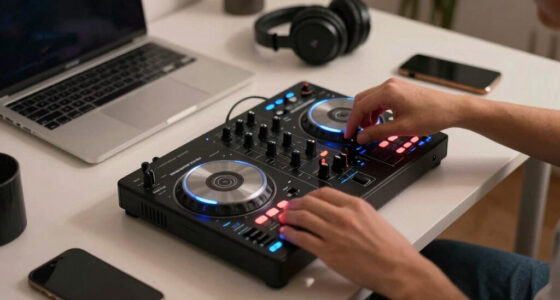
lightweight DJ controller for mobile DJs
As an affiliate, we earn on qualifying purchases.
As an affiliate, we earn on qualifying purchases.
Durability and Build Quality That Lasts
When you’re on the road, your gear faces more risks—drops, weather, rough handling. A DJ controller like the Pioneer DDJ-400 (around $350) offers a solid metal chassis and rubberized jog wheels, standing up to the bumps of travel. Weather-resistant features or rugged cases can protect your investment during outdoor gigs.
Imagine a summer wedding in a park—sweat, dust, sudden rain. Your controller needs to be tough enough to handle these conditions without missing a beat. Durable controllers often feature reinforced knobs, spill-resistant surfaces, and ruggedized casing options, which serve as insurance against accidental damage. This durability directly impacts your long-term reliability—fewer repairs, less downtime, and confidence in performing under unpredictable conditions.
Ultimately, investing in durable gear means less stress during transit and more focus on your performance. The tradeoff may be a slightly higher cost or added weight, but the peace of mind and longevity often justify it, especially for frequent mobile gigs where rough handling is inevitable.
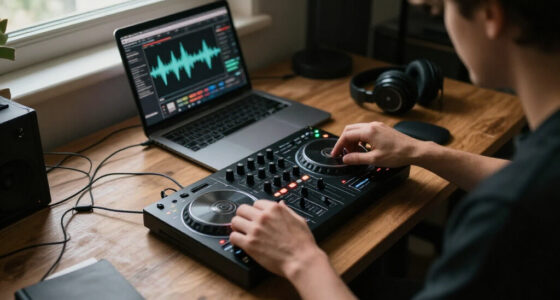
durable portable DJ controller with sound card
As an affiliate, we earn on qualifying purchases.
As an affiliate, we earn on qualifying purchases.
Connectivity Options for Seamless Setup
Mobile DJs need controllers that connect effortlessly. Look for models with multiple outputs—USB for digital connection, RCA or XLR for sound systems. The Native Instruments Traktor Kontrol S2 MK3 (around $500) offers a built-in sound card, simplifying setup and reducing clutter. The ability to connect quickly to different sound systems ensures you can adapt to various venues without fuss.
For example, connecting to a PA system becomes quick with a controller featuring balanced outputs, which help eliminate hum and interference, ensuring cleaner sound. Wireless options like Bluetooth or Wi-Fi are emerging but vary in latency—so check reviews before relying on them for live mixing. Latency issues can cause delays between your actions and the sound output, disrupting the flow of your performance. Therefore, understanding the tradeoffs between wired reliability and wireless convenience is crucial.
Pro tip: Always carry a set of cables—USB, RCA, and adapters—to handle different venues quickly. Having backup options ensures you won’t be caught unprepared if a connection fails or equipment compatibility issues arise.
wireless DJ controller for live performances
As an affiliate, we earn on qualifying purchases.
As an affiliate, we earn on qualifying purchases.
Must-Have Features for Mobile DJ Success
Features like jog wheels, performance pads, EQ controls, and effects make or break your ability to mix smoothly. The Pioneer DDJ-200 has large performance pads and intuitive layout, perfect for quick learning and fast transitions. If you need more control, the Numark DJ2GO2 offers a compact 2-channel setup with responsive pitch sliders. These features allow DJs to perform fluid transitions, add effects, and customize their sound on the fly, which is especially vital in dynamic mobile environments.
For outdoor events, a controller with built-in LED lighting can add flair and visibility in low-light conditions. Advanced features like touch-sensitive jogs or customizable FX controls enable more creative expression and adaptability during performances. The tradeoff is that more features can increase complexity and setup time, so prioritize those that enhance your style without overburdening your workflow.
Always prioritize features that match your style—less is more if it keeps your setup simple and reliable. For instance, if you’re a beginner, focusing on essential controls prevents confusion, while experienced DJs might seek advanced options for creativity.
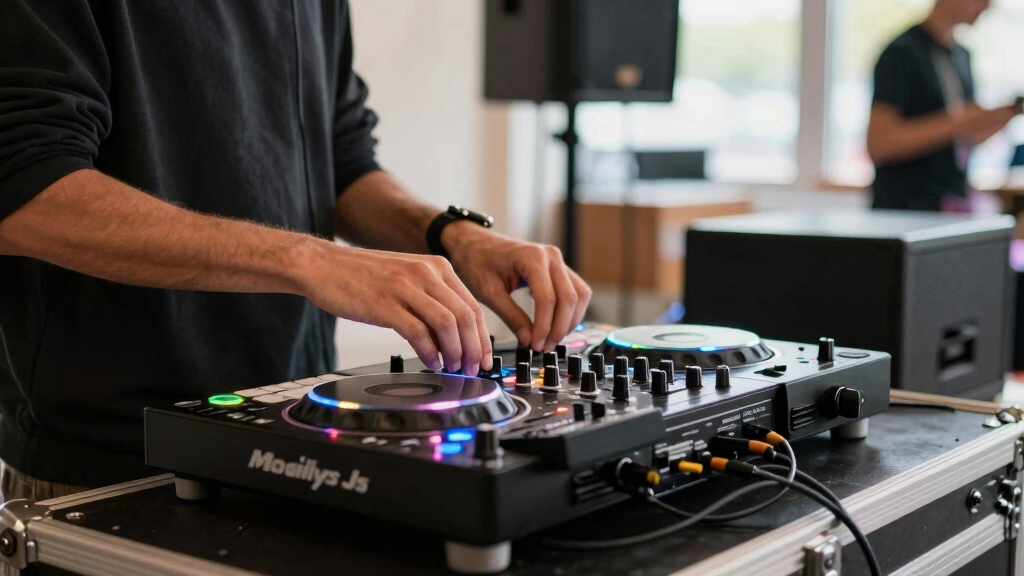
compact DJ controller with multiple connectivity options
As an affiliate, we earn on qualifying purchases.
As an affiliate, we earn on qualifying purchases.
Comparison Table: Compact Controllers for Mobile DJs
| Model | Weight | Size (inches) | Price Range | Key Features |
|---|---|---|---|---|
| Pioneer DDJ-200 | 1.8 lbs | 14 x 7 | $150-200 | Bluetooth, compact, easy to use |
| Numark DJ2GO2 | 1.3 lbs | 10 x 6 | $100-150 | 2-channel, responsive jogs, portable |
| Native Instruments Traktor Kontrol S2 MK3 | 4.4 lbs | 15 x 11 | $500-600 | Built-in sound card, versatile controls |
| Pioneer DDJ-SB3 | 4.4 lbs | 19 x 12 | $350-400 | Serato DJ Lite, professional features |
Smart Tips for Packing and Transporting Your Gear
Transport is where many mobile DJs face headaches. Always use padded cases or gig bags designed for your controller. Wrapping with foam or bubble wrap keeps delicate knobs and jog wheels safe during bumps. Proper packing extends the lifespan of your gear and minimizes repair costs, which can be significant for high-end controllers.
For example, a Pioneer DJ Controller Bag with foam inserts can turn your setup into a portable fortress. Label cables and store them in compartments—fewer tangles and quicker setups. Organized packing reduces setup time and prevents last-minute scrambling to find the right cable or component.
And don’t forget to double-check connections before leaving. A quick test at home saves surprises at the gig. This proactive approach ensures a smooth start and lets you focus on your performance instead of troubleshooting technical issues under pressure.
Wireless and Mobile Connectivity: Are They Reliable?
Wireless tech is making mobile DJing easier—less cable clutter, faster setups. Bluetooth-enabled controllers like the Pioneer DDJ-200 connect effortlessly to tablets and smartphones. But beware: latency can be an issue, especially in live settings. High latency can cause audio delays, disrupting beatmatching and timing, which are critical in live performances. This means your mixes might not sync perfectly, leading to a less professional sound.
For example, streaming playlists directly from your phone via Bluetooth might be fine for casual listening or background music, but during a live set, even a slight delay can throw off your rhythm. Wired connections, on the other hand, offer near-instant response, making them the gold standard for reliability. Wireless can be a great supplement for quick playlist access or casual events, but always have a wired backup ready to ensure seamless performance without interruptions.
In essence, weigh convenience against potential latency issues. For professional mobile gigs, prioritize wired setups, and use wireless only when the environment allows for it without compromising your performance quality.
Frequently Asked Questions
What is the most portable DJ controller for travel-heavy gigs?
The Pioneer DDJ-200 stands out as one of the lightest and most compact options, weighing under 2 pounds with a size of 14 x 7 inches, perfect for slipping into a backpack for quick trips.Can I use these controllers with my iPad or Android device?
Yes. Many controllers like the Numark DJ2GO2 and Pioneer DDJ-200 connect via Bluetooth or USB-C, making them compatible with both iPads and Android tablets. Just ensure your device supports the controller’s connectivity options.Are wireless controllers reliable for live gigs?
Wireless controllers offer convenience but can introduce latency issues. For critical live mixing, wired connections remain more reliable. Use wireless for quick playlists or casual events, but keep a wired backup ready.What should I look for when choosing a mobile DJ controller?
Focus on portability, build quality, connectivity options, features relevant to your style, and compatibility with your DJ software. A controller like the Native Instruments Traktor Kontrol S2 MK3 balances all these for professional mobile use.How do I protect my DJ gear during transport?
Use padded gig bags or hard cases designed for your controller. Wrap cables and components carefully, and always double-check connections before arriving at your gig to avoid surprises.Conclusion
Choosing the right DJ controller for mobile gigs isn’t just about features; it’s about how well it fits into your workflow—light, tough, and ready when you are. The perfect gear turns setup from a chore into a seamless part of your performance. Keep your focus on the crowd, not the gear.
Remember, your gear is your partner—treat it like one. Pick smart, pack carefully, and your mobile DJ setup will always be ready to hit the next gig with confidence.
Fall Picks
fall essentials
As an affiliate, we earn on qualifying purchases.